pro $24.99 per month
- access to all Manning books, MEAPs, liveVideos, liveProjects, and audiobooks!
- choose one free eBook per month to keep
- exclusive 50% discount on all purchases
- renews monthly, pause or cancel renewal anytime
lite $19.99 per month
- access to all Manning books, including MEAPs!
team
5, 10 or 20 seats+ for your team - learn more

Look inside
As a software engineer, you’ll encounter countless programming challenges that initially seem confusing, difficult, or even impossible. Don’t despair! Many of these “new” problems already have well-established solutions. Advanced Algorithms and Data Structures teaches you powerful approaches to a wide range of tricky coding challenges that you can adapt and apply to your own applications. Providing a balanced blend of classic, advanced, and new algorithms, this practical guide upgrades your programming toolbox with new perspectives and hands-on techniques.
about the technology
Can you improve the speed and efficiency of your applications without investing in new hardware? Well, yes, you can: Innovations in algorithms and data structures have led to huge advances in application performance. Pick up this book to discover a collection of advanced algorithms that will make you a more effective developer.about the book
Advanced Algorithms and Data Structures introduces a collection of algorithms for complex programming challenges in data analysis, machine learning, and graph computing. You’ll discover cutting-edge approaches to a variety of tricky scenarios. You’ll even learn to design your own data structures for projects that require a custom solution.what's inside
- Build on basic data structures you already know
- Profile your algorithms to speed up application
- Store and query strings efficiently
- Distribute clustering algorithms with MapReduce
- Solve logistics problems using graphs and optimization algorithms
about the author
Marcello La Rocca is a research scientist and a full-stack engineer. His focus is on optimization algorithms, genetic algorithms, machine learning, and quantum computing.concepts explained in this book
- A k-d tree is a binary space-partitioning tree that organizes points in multidimensional space by recursively comparing coordinate dimensions.
- An objective function is a mathematical function that assigns values to candidate solutions or parameter settings, which an optimization procedure seeks to minimize or maximize.
- Simulated annealing is a stochastic optimization method that gradually reduces the probability of accepting worse solutions to escape local optima.
- A bounding box is a coordinate-defined rectangular region in two or more dimensions that encloses or localizes an object, area, or set of points.
- A trie is a tree-based data structure that stores sequences by sharing nodes for common prefixes, enabling efficient key and prefix lookup.
- A Bloom filter is a space-efficient probabilistic data structure for testing set membership that permits false positives but not false negatives.
- centroid: A point representing the center of a set of points or a region, commonly calculated as the coordinate-wise mean or, for weighted points, the weighted mean.
- A binary heap is an almost complete binary tree in which each parent obeys an ordering property relative to its children, allowing efficient access to a minimum or maximum element.
An accessible introduction to the fundamental algorithms used to run the world.
Easy to follow and filled with practical examples, this book is a fantastic introduction to data structures and algorithms.
Look no further if you’re looking for a rich book to bridge the stuff of computer science courses and the pragmatic world of software development.
Teaches how to modify algorithms and data structures to solve practical problems.
related titles
related titles


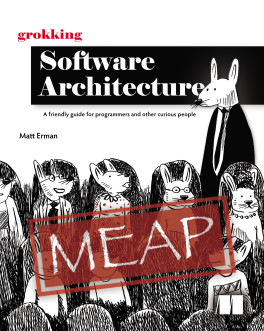

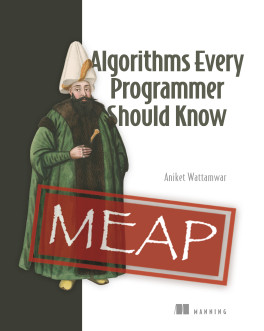
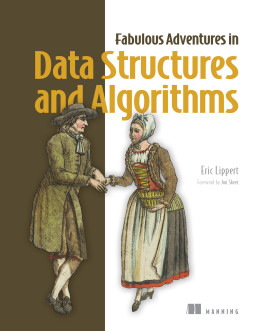
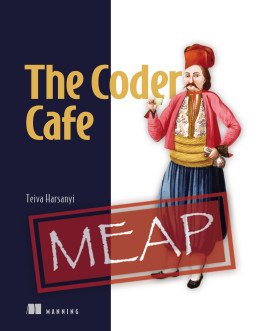


choose your plan
pro
monthly
annual
$24.99
$249.99
only $20.83 per month
- access to all Manning books, MEAPs, liveVideos, liveProjects, and audiobooks!
- choose another free product every time you renew
- choose twelve free products per year
- exclusive 50% discount on all purchases
- renews monthly, pause or cancel renewal anytime
- renews annually, pause or cancel renewal anytime
-
![Advanced Algorithms and Data Structures]() Advanced Algorithms and Data Structures ebook for free
 Advanced Algorithms and Data Structures ebook for free
team
monthly
annual
$49.99
$499.99
only $41.67 per month
- five seats for your team
- access to all Manning books, MEAPs, liveVideos, liveProjects, and audiobooks!
- choose another free product every time you renew
- choose twelve free products per year
- exclusive 50% discount on all purchases
- renews monthly, pause or cancel renewal anytime
- renews annually, pause or cancel renewal anytime
-
![Advanced Algorithms and Data Structures]() Advanced Algorithms and Data Structures ebook for free
choose your plan
pro
monthly
annual
$24.99
$249.99
only $20.83 per month
- access to all Manning books, MEAPs, liveVideos, liveProjects, and audiobooks!
- choose another free product every time you renew
- choose twelve free products per year
- exclusive 50% discount on all purchases
- renews monthly, pause or cancel renewal anytime
- renews annually, pause or cancel renewal anytime
-
![Advanced Algorithms and Data Structures]() Advanced Algorithms and Data Structures ebook for free
team
monthly
annual
$49.99
$499.99
only $41.67 per month
- five seats for your team
- access to all Manning books, MEAPs, liveVideos, liveProjects, and audiobooks!
- choose another free product every time you renew
- choose twelve free products per year
- exclusive 50% discount on all purchases
- renews monthly, pause or cancel renewal anytime
- renews annually, pause or cancel renewal anytime
-
![Advanced Algorithms and Data Structures]() Advanced Algorithms and Data Structures ebook for free
