Chapter 1. What is cloud computing?
The chapter introduces cloud computing as a major shift in IT: computing services are provided by a third party, accessed when needed, and scaled dynamically to meet changing demand. Rather than treating cloud computing as hype alone, it frames the idea as a practical response to real-world adoption and economic pressure, emphasizing that the cloud changes how organizations build, buy, and operate technology. It also sets out to replace buzzword confusion with a clear framework for understanding what cloud computing is, why it matters, and when it is worth using.
At the core of the chapter are five defining principles: pooled resources, virtualization, elasticity, automation, and metered billing. Cloud systems pool shared resources for subscribing users, use virtualization to maximize hardware efficiency, scale up or down as demand changes, automate provisioning and deprovisioning through APIs, and charge only for actual usage. Together, these characteristics lower startup costs, shift spending from capital expense to operating expense, reduce the need for up-front infrastructure purchases, and make experimentation and new projects much easier to launch.
The chapter also explains that cloud computing emerged through decades of evolution in computing architecture, networking, data centers, virtualization, and software delivery. It connects cloud services to earlier shifts such as mainframes, client-server systems, and the web, showing how each stage helped prepare the way for today’s cloud model. Finally, it distinguishes major cloud layers and deployment styles, including infrastructure, platform, software, framework, private, public, and hybrid clouds, highlighting that these options differ in flexibility, abstraction, and control, and should be chosen based on the needs of the application and organization.
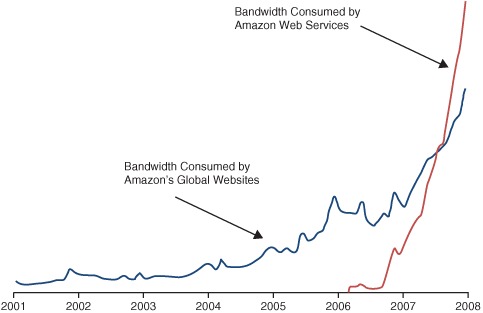
Amazon originally deployed a large IT infrastructure to support its global e-commerce platform. In less than 18 months after making the platform available as a cloud service to external users, its usage, as measured by amount of bandwidth consumed, outstripped bandwidth used internally.
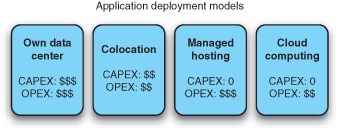
IT organizations have several alternatives for hosting applications. The choice of deployment model has different implications for the amount of CAPEX (up-front capital expenditure) and OPEX (ongoing operational costs). The number of $ signs represent the relative level of CAPEX and OPEX involved with the choice of deployment model.
Cloud computing as a concept entered our collective consciousness in mid-2007. This figure shows the rapid rise in popularity of the search term cloud computing as measured by Google. The labels correspond to major cloud announcements. A: Microsoft announces it will rent cloud computing space; B: Philadelphia Inquirer reports, “Microsoft’s cloud computing system grow is growing up”; C: Winnipeg Free Press reports, “Google looks to be cloud-computing rainmaker.” Source: Google Trends (www.google.com/trends), on the term cloud computing.

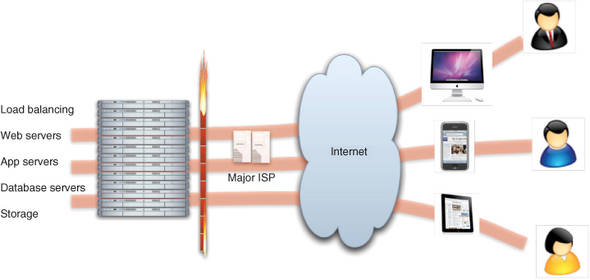
A picture of a cloud is a ubiquitous representation of the internet and is used almost universally in discussions or drawings of computer architecture.
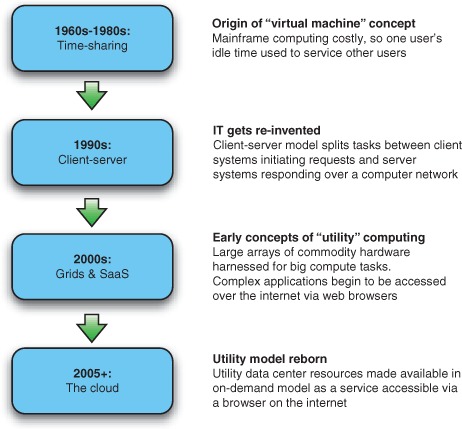
Cloud computing is best understood as an evolutionary change. The key elements and concepts of cloud computing emerged gradually over several decades through the various predominant computing paradigms.
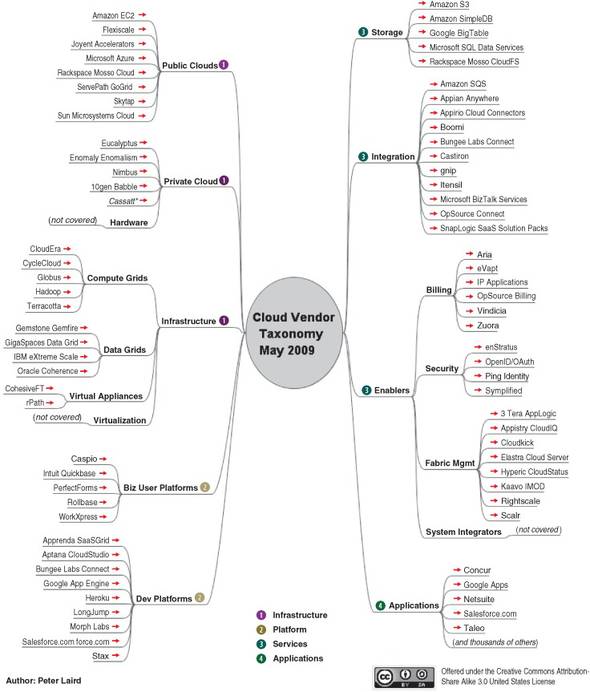
Cloud technologies are evolving as various vendors attempt to provide services populating the cloud ecosystem. These services run the gamut from the hardware systems used to build cloud infrastructure to integration services and cloud-based applications. Source: Peter Laird, http://peterlaird.blogspot.com.
In the X-as-a-Service taxonomy, cloud services are classified by the level of prepackaging offered to the consumer of the specific service. An IaaS provides computing capabilities in the rawest form and hence offers the greatest flexibility. At the highest layers, there is less flexibility but also less complexity to be managed.


 The Cloud at Your Service ebook for free
