Overview
10 Cloud Governance
Cloud governance is presented as the operating framework that turns FinOps principles into repeatable practice at scale. It clarifies what is allowed, required, and owned by whom, and operationalizes policies through automation, enforcement, and measurement. By aligning domains such as tagging and metadata, identity and access, provisioning, monitoring, security, and data management, governance provides the guardrails that sustain cost allocation, prevent sprawl, and surface budget risks early. In large, multi-account environments, centralized controls and visibility make every resource and dollar traceable and auditable, ensuring agility without sacrificing accountability.
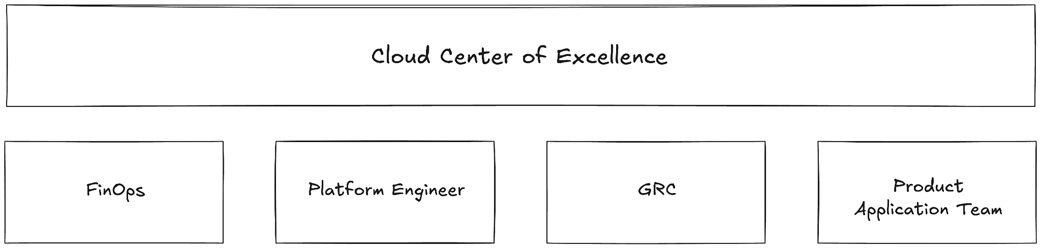
Ownership typically sits with a Cloud Center of Excellence (CCoE), a cross-functional team that balances enablement and control. The CCoE evolves from a small core into a hub-and-spoke model, spanning FinOps leadership, platform engineering, GRC, and product representatives. Success is tracked with KPIs tied to FinOps outcomes—spend versus budget, utilization, coverage of governed workloads, forecast accuracy, tag compliance, and deployment velocity—so governance accelerates rather than blocks delivery. Mature organizations embed guardrails into developer workflows via self-service templates and portals, bringing real-time cost insights and policy-as-code into the path of delivery, and progress through a crawl–walk–run maturity model toward pervasive automation and business-aligned cost metrics.
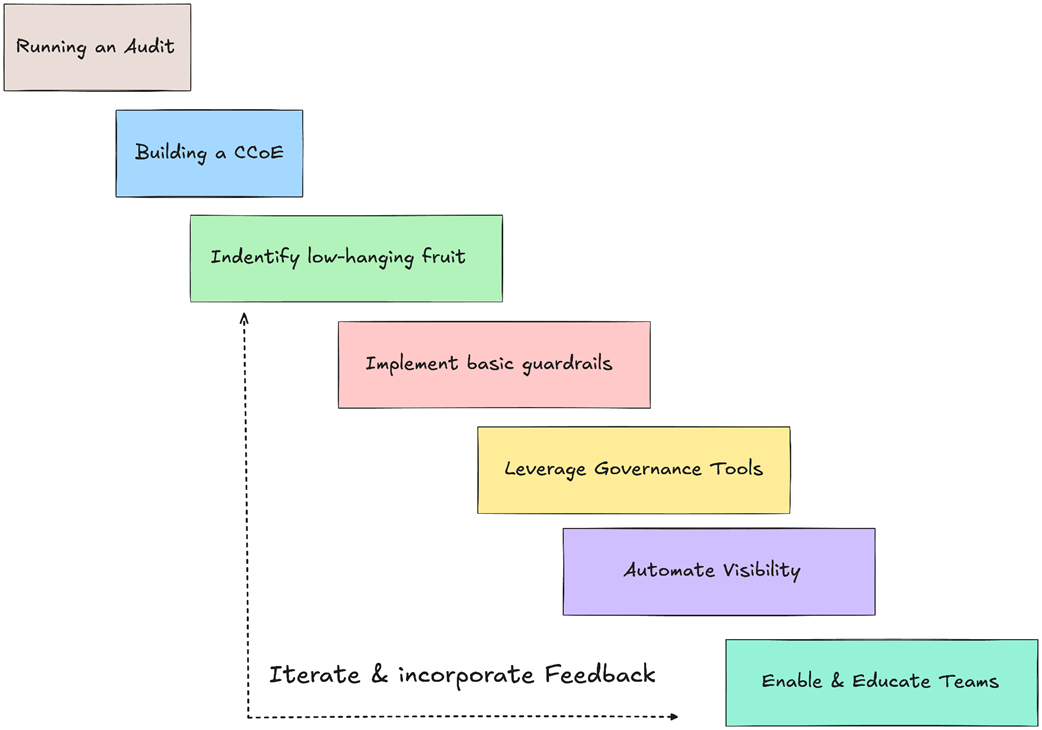
Accountability is enforced through role-based ownership, showback and chargeback models, and clearly defined RACI responsibilities for activities like anomaly response or long-term commitment purchases. Practical bootstrapping focuses on incremental wins: auditing current gaps, forming a governance working group with executive sponsorship, establishing minimal tagging and cleanup policies, documenting and iterating guardrails, leveraging native cloud controls, and making progress visible in dashboards and monthly reports. Continuous enablement, feedback loops, and a living roadmap keep governance adaptive and outcome-driven. The result is a culture where cloud spend is treated as a managed investment and governance becomes an enabler of responsible, cost-aware innovation.
Summary
- Governance provides the operational backbone for FinOps. It moves beyond ad hoc practices by providing a structured framework of policies, processes, and tools to ensure cloud usage is consistently aligned with financial, security, and operational objectives.
- A Cloud Center of Excellence (CCoE) drives the governance strategy. This cross-functional team is responsible for balancing developer agility with necessary guardrails, and typically includes roles from FinOps, platform engineering, and GRC.
- True accountability requires clear, assigned ownership. Governance makes accountability actionable by defining cost responsibilities for engineering, finance, and business teams, often operationalized using RACI models and showback reports.
- Implementation should be pragmatic and iterative. Organizations can bootstrap governance by starting with high-impact "quick wins," such as implementing a tagging policy or optimizing idle resources, before evolving toward more advanced, automated controls.
- Mature governance scales through enablement, not gatekeeping. The most effective CCoEs focus on embedding automated controls and policies directly into developer workflows via self-service portals and templates, making the compliant path the easiest path for teams to follow.
FAQ
What is cloud governance and how is it different from a policy?
Cloud governance is the operating framework of policies, processes, roles, and tooling that ensures cloud use aligns with financial, security, and operational goals. A policy is a rule (for example, “all resources must be tagged with Owner and CostCenter”). Governance is how that rule is implemented, monitored, and enforced in practice—via automation, CI/CD gates, alerts, and reporting.Which core governance components support FinOps outcomes?
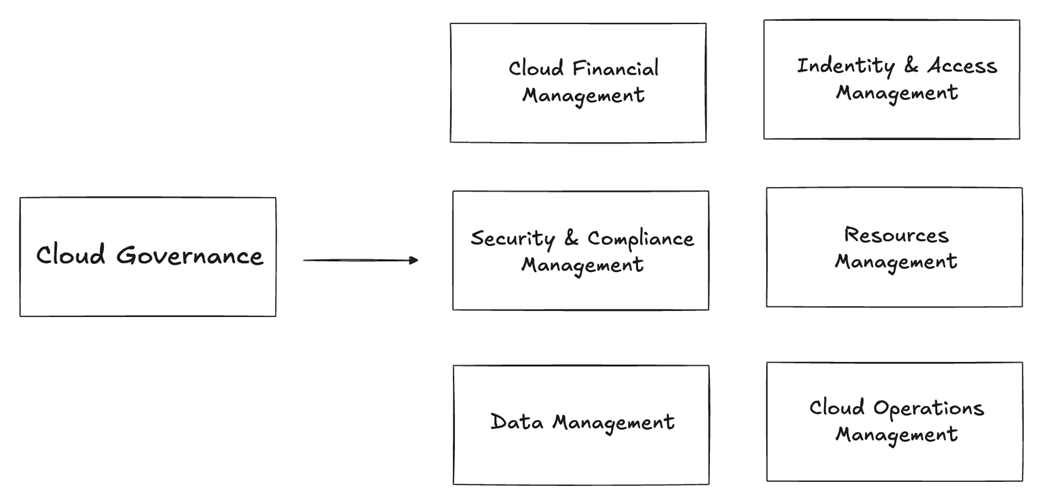
Key components include: Cloud Financial Management (budgeting, forecasting, allocation); Security and Compliance; Data Management; Identity and Access Management; Resource Management (templates and guardrails); and Cloud Operations (monitoring and observability). Together they enable cost allocation, prevent sprawl, improve visibility, and embed accountability.Why use a multi-account strategy and how does AWS Control Tower help?
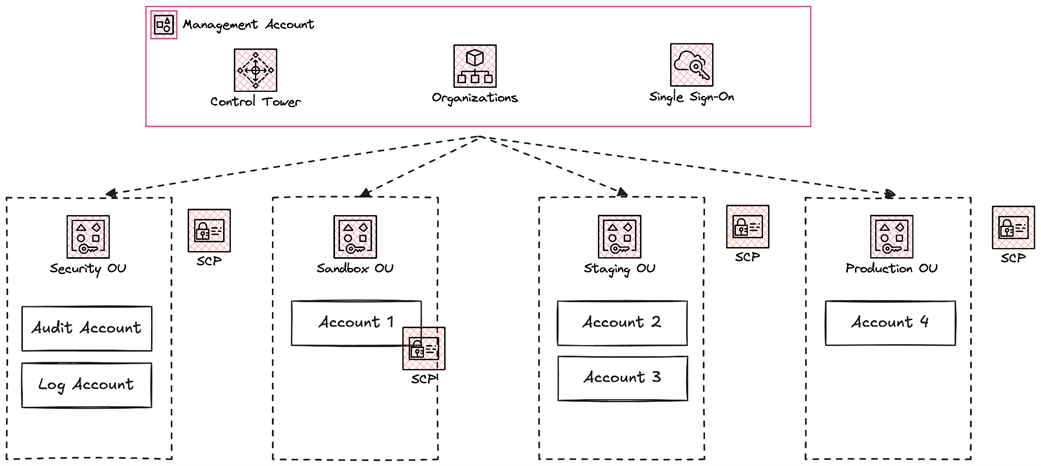
A multi-account setup isolates teams/workloads, improves security, and makes costs traceable by account or business unit. AWS Control Tower automates a well-architected landing zone with guardrails, applies Service Control Policies (SCPs), standardizes IAM, and provisions centralized Log and Audit accounts for visibility and compliance.Which AWS services can I combine to implement governance without Control Tower?
You can assemble governance with native tools: AWS Organizations (account hierarchy), SCPs and IAM (policy enforcement), AWS Config and Security Hub (compliance checks), CloudTrail and CloudWatch (auditing/monitoring), AWS Budgets, Cost Explorer, and the Cost and Usage Report (cost visibility), plus Lambda and EventBridge for automated enforcement.What is a Cloud Center of Excellence (CCoE) and who belongs in it?
A CCoE is a cross-functional team that leads cloud strategy, sets standards, and enables compliant, cost-aware delivery. Typical roles: FinOps/Cloud Finance lead (cost insights and optimization), Platform Engineer (scalable, cost-effective patterns), GRC specialist (controls and compliance), and Product/App representatives (bridging governance with delivery). It often evolves from a central team into a hub-and-spoke model.How do we measure governance and FinOps success?
Track KPIs such as: spend vs budget by team; utilization (CPU/memory) and optimization savings; percentage of governed workloads (tagged, monitored, reviewed); tag coverage and compliance scores; forecast accuracy and anomaly detection coverage; and deployment velocity to ensure guardrails don’t slow delivery.How can we scale governance without slowing developers?
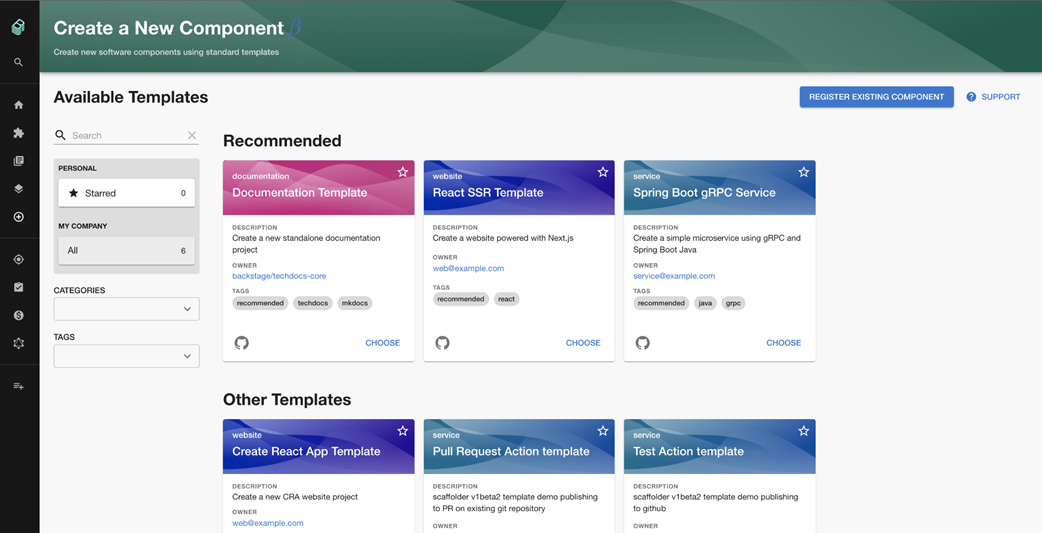
Shift from gatekeeping to enablement. Provide self-service golden templates and platforms (e.g., Backstage or a custom portal) that embed tags, TTLs, logging, monitoring, and cost estimation. Use policy-as-code and CI/CD checks, and surface real-time cost and compliance data in developer workflows.How is cost accountability operationalized (ownership, showback/chargeback, RACI)?
Assign clear owners to accounts/projects and enforce tagging to attribute spend. Start with showback to build trust, then progress to chargeback. Define a RACI for major activities (e.g., anomaly response, commitment purchases) so it’s clear who is responsible, accountable, consulted, and informed.What does the governance maturity journey look like?
Crawl: reactive practices, patchy tagging, limited guardrails, basic visibility. Walk: consistent standards, shared FinOps rituals, initial automation, broader adoption. Run: policy-as-code and real-time alerts, pervasive dashboards, cost built into design and pipelines, unit economics tied to business goals. Progress by prioritizing highest-value controls and iterating.How do we bootstrap cloud governance in a FinOps-enabled organization?
Follow a pragmatic path: 1) Audit to find top risks/waste; 2) Form a small CCoE and secure executive sponsorship; 3) Deliver quick wins (minimal tag set, idle cleanup); 4) Document baseline guardrails; 5) Leverage native governance tools (Organizations, SCPs); 6) Add dashboards and reports for visibility; 7) Educate and appoint FinOps champions; 8) Iterate based on feedback and results; 9) Build a living roadmap (e.g., CI/CD cost checks, anomaly automation, Control Tower).