1 What is performance engineering?
Performance engineering is presented as the discipline of making fast, reliable behavior the default outcome across web, backend, mobile, and desktop systems. Rather than rescuing projects with late optimizations, it treats speed and stability as first-class requirements that guide architecture, code, user flows, budgets, testing, and production observability from day one. The chapter highlights the tangible payoffs—higher conversion and retention, stronger trust, lower infrastructure waste, and less firefighting—and stresses judgment: the goal is not premature optimization, but knowing when performance materially affects users and the business.
The text contrasts this proactive stance with a common performance decay cycle in which teams ship features, small regressions accumulate unnoticed, users feel slowness, and hurried hotfixes briefly mask issues before the pattern repeats. Over time, systems become slower, more fragile, and less predictable. Because performance is also a business metric, the chapter shows how even modest delays influence user behavior and adoption: mobile users abandon sluggish flows, backend latency compounds across services and deters platform use, and desktop or native app responsiveness drives reviews and retention—effects that are amplified on lower-spec devices and in chained architectures.
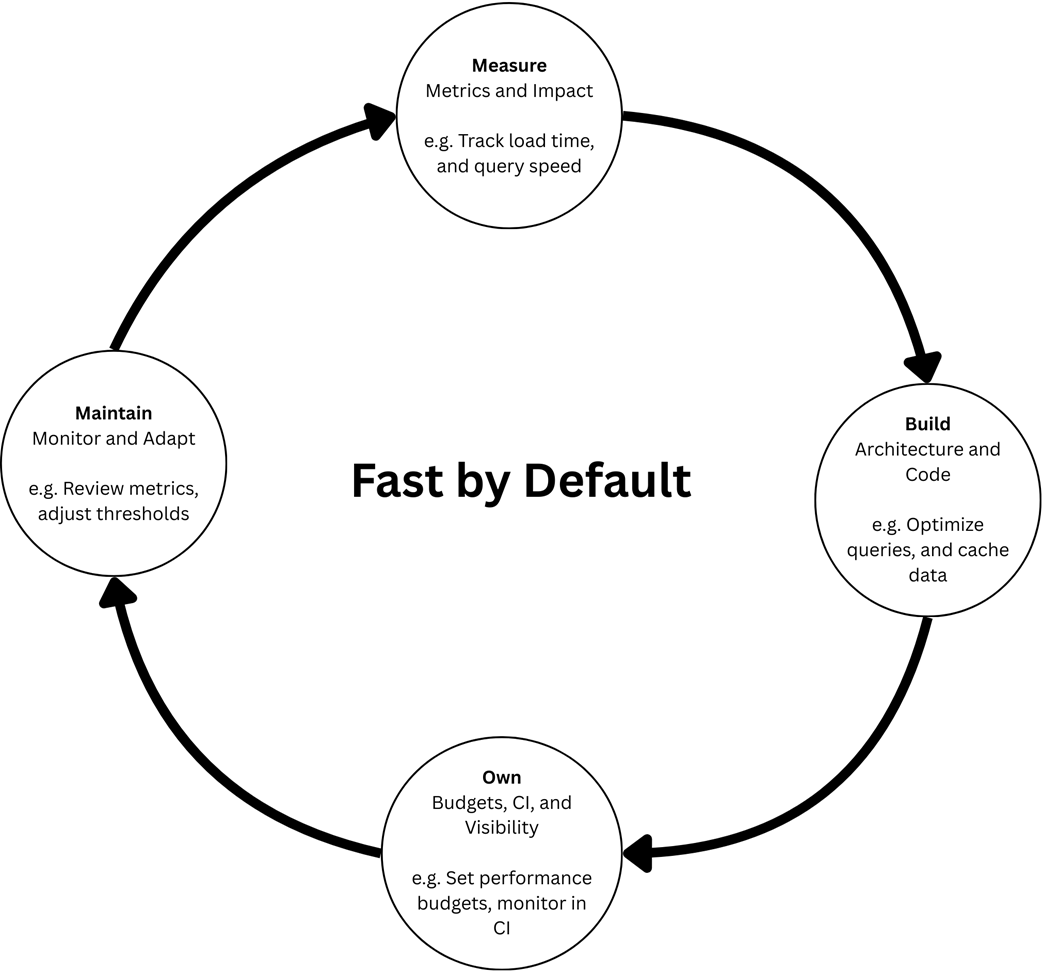
To break the cycle, the chapter introduces the Fast by Default model, an end-to-end system that connects familiar tools and habits so applications stay fast as they grow. It frames every interaction through four System Paths—User, Execution, Data, Result—to pinpoint where delays originate, and it codifies four continuous practices—Measure, Build, Own, Maintain—to make performance measurable, designed-in, visible in everyday workflows, and sustained over time. The remainder of the book applies this model through real scenarios, enabling engineers, leads, and architects to set user-centered goals, design for speed, integrate checks into CI and reviews, diagnose bottlenecks effectively, and keep performance healthy as products evolve.
The performance decay cycle. Teams ship updates to production as usual. At some point, users complain about performance, the team panics and scrambles into action, rushes out a hotfix, then returns to shipping features. The arrows show how each stage leads inevitably to the next: the hotfix buys time but does not prevent future regressions, so the cycle repeats.

The System Paths. Every user-facing interaction follows these four stages: the user performs an action, data is fetched or updated, the system processes and renders the data, and a result appears. Performance problems can originate at any stage.

The Fast by Default practices. Teams keep systems fast through four continuous practices: measure metrics and impact, build speed into architecture and code, own performance through budgets and CI visibility, and maintain by monitoring and adapting over time. Each practice strengthens the next, and the cycle repeats as the system evolves.
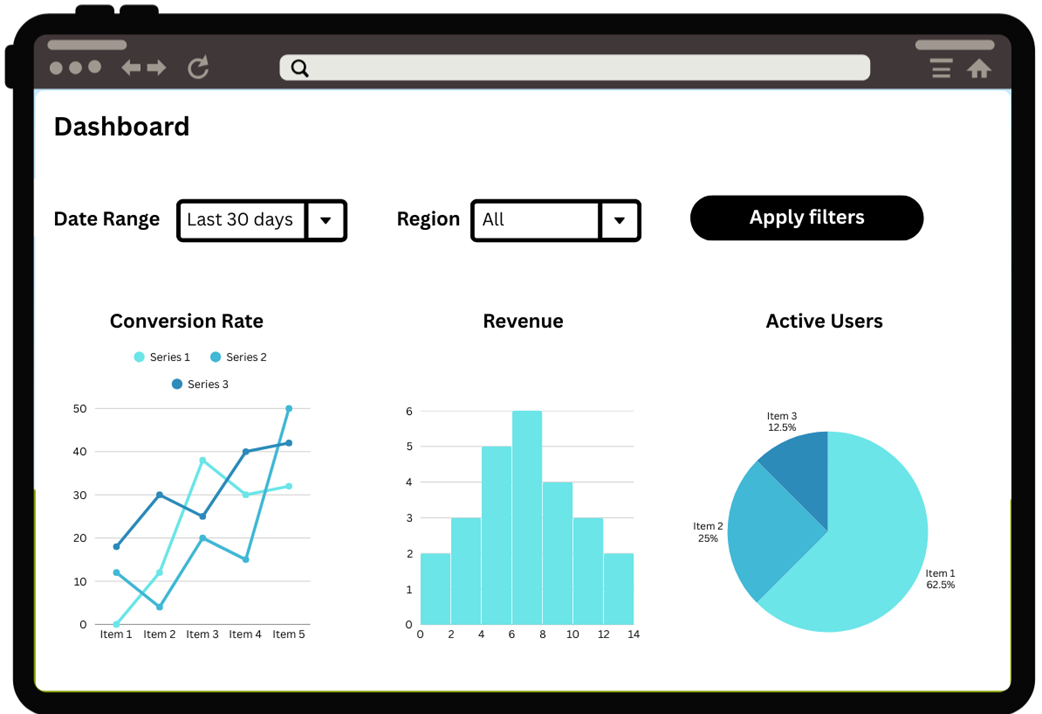
An example dashboard application. Filter controls at the top trigger data fetches and re-renders across three chart panels. Clicking "Apply filters" touches every System Path: the user acts, data is fetched, charts re-render, and results appear.
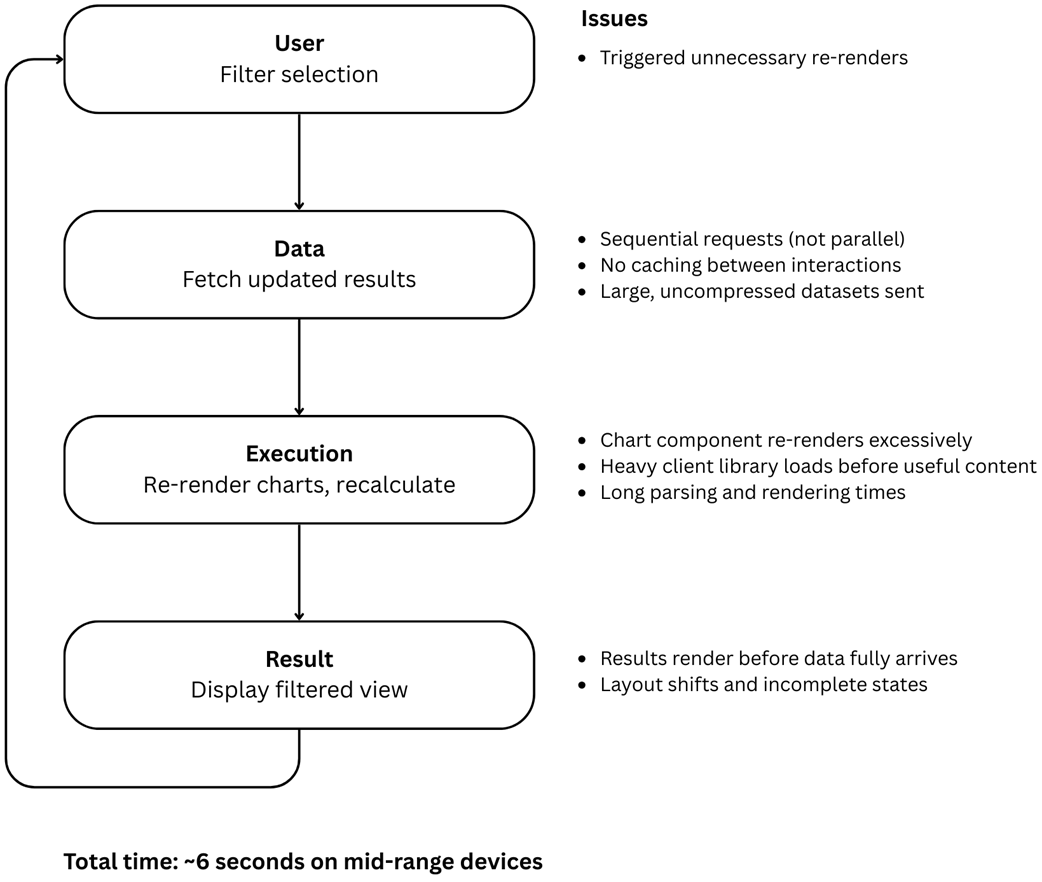
The slow dashboard’s System Paths. Each stage has problems that add to the total delay: the User stage triggers unnecessary re-renders, the Data stage makes sequential requests without caching, the Execution stage re-renders excessively with heavy libraries, and the Result stage shows incomplete states before data arrives.
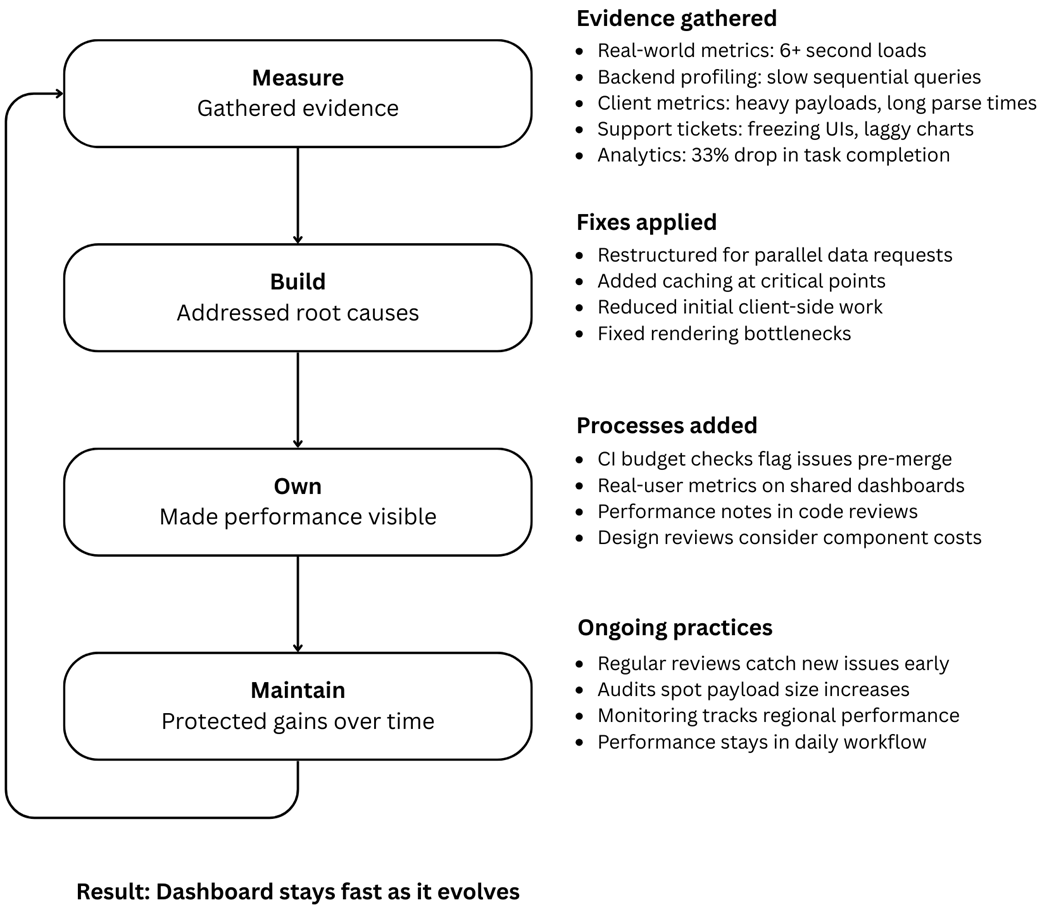
Applying Fast by Default practices to fix the dashboard. The team measures to gather evidence, builds fixes that address root causes, owns performance by making it visible in CI and code reviews, and maintains gains through regular reviews and monitoring. The cycle keeps the dashboard fast as it evolves.
Summary
- Performance engineering designs software so that fast behavior is the natural outcome, not an afterthought.
- Most teams fall into a reactive performance decay cycle: ship, wait for complaints, panic, patch, repeat. The Fast by Default model provides a repeatable alternative that keeps systems healthy.
- The System Paths describe where time is spent during any interaction: the user performs an action, data is fetched or updated, the system processes and renders, and a result appears. Performance problems can originate at any stage.
- The Fast by Default model helps teams recover and sustain speed through four practices: measure impact and set goals, build efficient architecture and code, own performance through budgets and CI visibility, and maintain gains through monitoring and regular review.
- The System Paths show where to look for problems. The four practices show how to fix and prevent them.
- Small delays compound in real-world conditions and quietly damage engagement, trust, and revenue.
- Performance is a business metric. It affects conversions, churn, customer confidence, and internal momentum.
- Treating speed as a shared responsibility creates systems that stay fast as they evolve.
FAQ
What is performance engineering?
It is a way of designing, building, and operating software so fast, reliable behavior is the default. Rather than a single tool or phase, it spans architecture choices, coding, user-flow design, budgets, testing, and production monitoring across web, backend, mobile, and desktop systems.How is performance engineering different from “make it faster later” work?
Traditional efforts treat speed as a late rescue mission after users complain. Performance engineering treats speed as a first-class requirement from day one, guiding decisions and adding checks that prevent regressions before they reach production.What is the performance decay cycle and why is it harmful?
Teams ship features, users feel slowness, the team scrambles a hotfix, and then returns to features—until it happens again. Small regressions pile up, trust erodes, and the system becomes slower and more fragile because issues aren’t caught early.What is the Fast by Default model?
It’s a systematic approach that connects metrics, budgets, profiling, and monitoring into an end-to-end practice. It has two parts: System Paths (User, Execution, Data, Result) that describe how work flows, and four practices (Measure, Build, Own, Maintain) that keep that flow fast over time.What are the System Paths and how do they apply across platforms?
The paths are User → Execution → Data → Result. Every interaction follows this sequence—on the web (UI events, JS/rendering, network/data, visual update), in backends (request, compute, storage, response/event), in mobile (touch/UI thread, workers, fetch/local store, frame update), and on desktop (input, CPU/GPU/file work, disk/cloud sync, updated view). Bottlenecks can appear at any stage.What are the four Fast by Default practices?
- Measure: Use real-user metrics, traces, logs, profiling, and business signals to find true impact.- Build: Shape architecture and code to remove unnecessary work, parallelize, cache, and render predictably.
- Own: Make performance visible with budgets in CI, dashboards, and review practices to catch regressions early.
- Maintain: Monitor production, adjust budgets and design as systems and usage evolve.
Why does performance matter to the business?
Speed influences money, time, and trust. Faster experiences convert and retain better; slow ones drive users away—often without feedback. Backend latency affects adoption and cascades through user flows. On desktop and native apps, responsiveness strongly affects reviews and retention.When is full performance engineering not necessary?
For disposable prototypes or small internal tools with minimal usage, the full discipline may be overkill. The goal is not premature optimization, but recognizing real, user- and business-impacting problems and addressing them systematically.How can a team start implementing Fast by Default?
- Set user-centered performance goals and lightweight budgets.- Measure real-world performance (field metrics, traces) to find root causes.
- Integrate checks into CI and surface dashboards to the whole team.
- Consider performance in design/code reviews and schedule regular reviews to prevent decay.

 Performance Engineering in Practice ebook for free
