In real-world deployments, OAuth 2.0 is best understood as a flexible framework rather than a single rigid protocol. The chapter moves beyond earlier idealized examples to show how OAuth adapts to varied applications, deployment constraints, and security postures. It highlights the importance of front- and back-channel communication choices, the availability of multiple grant types for different scenarios, and the need to handle secrets responsibly across configuration time and runtime. The overarching message is to select the right flow for the job while preserving a strong security profile and a good user experience.
The chapter surveys the main grant types and when to use them. The implicit grant optimizes for in-browser JavaScript apps by returning tokens via the URI fragment, trading away client authentication and refresh tokens for simplicity and short-lived sessions. The client credentials grant serves machine-to-machine access over the back channel, issuing tokens based on the client’s authenticated identity and requested scopes (typically without refresh tokens). The resource owner password grant, though standardized, is discouraged: it exposes user credentials to clients and reduces flexibility, but can act as a transitional bridge away from password replay toward tokens and refresh tokens. Assertion grants (such as those using SAML or JWT) let a client present a third-party-issued, cryptographically protected statement to obtain tokens, fitting well in enterprise trust arrangements. Practical guidance caps this section with decision rules for choosing the appropriate grant per context.
Client deployments are grouped into web applications, in-browser (SPA) applications, and native applications, each with distinct channel capabilities and security trade-offs. Web apps can blend front- and back-channel calls and typically favor authorization code, client credentials, or assertion grants; implicit is generally a poor fit. Browser apps excel at front-channel redirects but face same-origin limits on back-channel calls, making implicit practical if paired with short-lived tokens and resource server CORS support. Native apps invoke the system browser and receive callbacks via localhost, push, or custom URI schemes; they should use authorization code with enhancements like PKCE rather than implicit. Finally, secret handling differentiates configuration-time from runtime secrets and classifies clients as public (cannot keep a secret) or confidential (can keep a secret), with PKCE and dynamic client registration offering modern mitigations for public and dynamic environments.
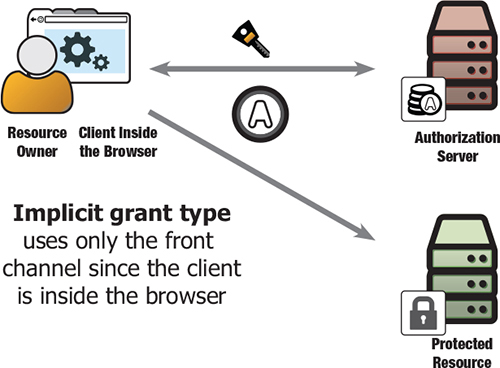
The implicit grant type
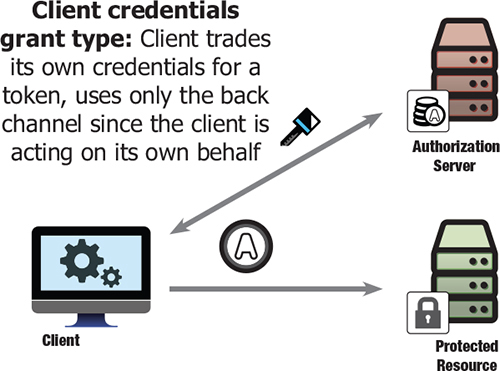
The client credentials grant type
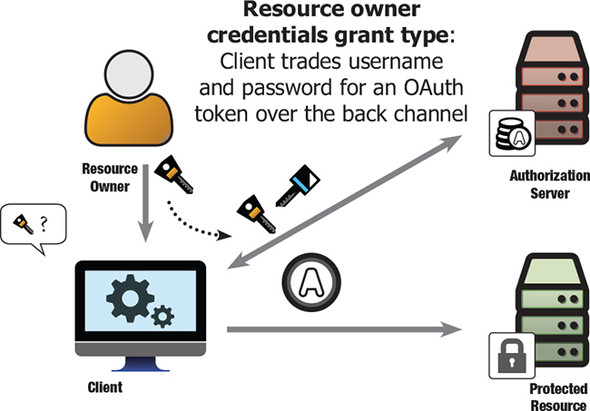
The resource owner credentials grant type
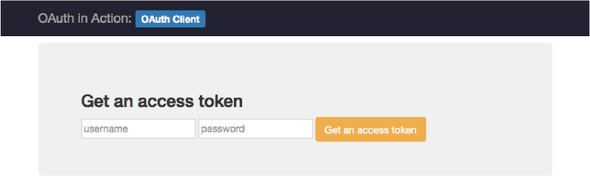
The client prompting the user for their username and password
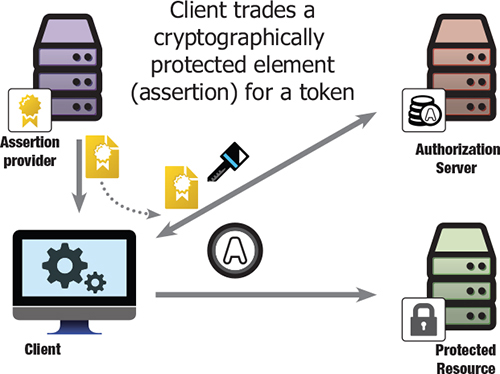
The assertion grant type family
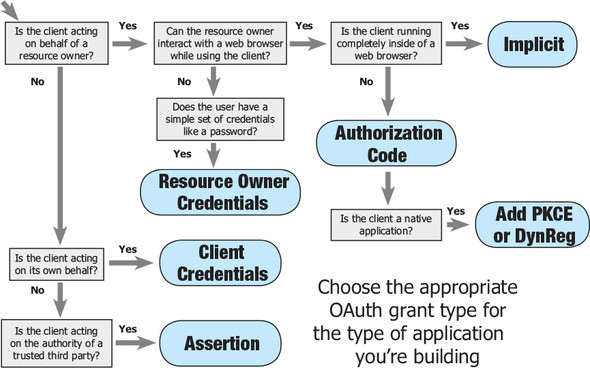
Choosing the right grant type
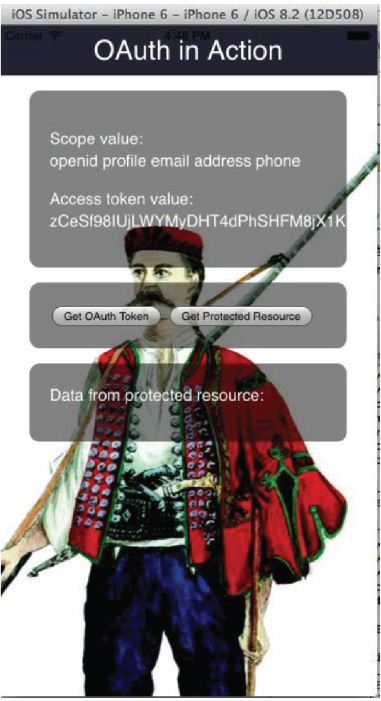
A native mobile OAuth client application
FAQ
What does “authorization grant type” mean in OAuth 2.0, and why are there several?
It’s the specific flow a client uses to obtain an access token from the authorization server. OAuth 2.0 treats itself as a framework, allowing multiple grant types to fit different deployment realities (web apps, browser-only apps, native apps, server-to-server, and third-party assertions) while sharing core concepts like tokens, scopes, and endpoints.When should I use the implicit grant, and what are its limitations?
Use it for in-browser (JavaScript) applications that run entirely inside the browser and can’t keep a client secret. It uses only the front channel and returns the access token directly in the URI fragment withresponse_type=token. Key limitations: the client can’t authenticate, tokens are exposed to the browser environment, and refresh tokens aren’t issued. Treat it with caution and keep scopes and token lifetimes tight.What is the client credentials grant, and when is it appropriate?
This back-channel flow lets a client act on its own behalf (no end user involved) to obtain a token from the token endpoint withgrant_type=client_credentials. It’s ideal for server-to-server use cases (e.g., batch processing, service daemons). The client authenticates to the token endpoint, may ask for scopes, and typically won’t receive a refresh token since it can request a new one anytime.What is the resource owner password credentials (ROPC) grant, and why is it discouraged?
ROPC lets a client collect a user’s username/password and exchange them at the token endpoint withgrant_type=password. It’s strongly discouraged because it exposes the user’s credentials to the client, limits auth methods to replayable passwords, increases attack surface, and trains users to share passwords with apps. Use it only as a short-term bridge for legacy scenarios; prefer redirect-based flows (e.g., authorization code) instead.What are assertion grant types (SAML/JWT), and how do they work?
Assertion grants are back-channel flows where the client presents a cryptographically protected third-party “assertion” (e.g., SAML or JWT) to the token endpoint. The authorization server validates the assertion and issues a token whose rights are driven by the assertion’s contents and issuer policies. They’re common in enterprise integrations where a trusted authority vouches for the client or user.How do I choose the right OAuth 2.0 grant type for my app?
- Acting for a user and can use a browser redirect? Use a redirect-based flow: browser-only apps use implicit; other app types prefer authorization code.- Acting on your own (no user)? Use client credentials.
- Relying on a third-party authority? Use an assertion grant (SAML/JWT).
- Can’t redirect and only have passwords? As a last resort, use ROPC—and plan to migrate.
How do web, browser (SPA), and native apps differ in OAuth usage?
- Web apps (server-rendered): can use both front and back channels; best with authorization code; can also use client credentials or assertions.- Browser apps (JavaScript/SPAs): front channel is easy; back channel is constrained by same-origin/CORS; suited to implicit; protected resources must enable CORS.
- Native apps: can call back-channel easily; front channel requires launching the system browser and handling redirects (e.g., custom URI schemes); prefer authorization code over implicit.
How do native apps handle browser redirects and callbacks?
Native apps typically use one of: a local loopback (localhost) server, a custom URI scheme (e.g.,com.app:/) registered with the OS, or a remote redirect plus push/notification. They launch the system browser for authorization and receive the callback at the registered URI, then exchange the code at the token endpoint.What’s the difference between public and confidential clients, and why does it matter?
- Public clients can’t keep configuration-time secrets (e.g., SPAs, many native apps). They have a client ID but no secret and rely on measures like redirect URI binding and, for code flow, PKCE to protect exchanges.- Confidential clients can keep secrets (e.g., web apps on a server). They authenticate to the token endpoint with a client secret. This distinction informs which flows and protections are appropriate.

 OAuth 2 in Action ebook for free
