Overview

1 The Architect's Compass: It's All About Tradeoffs

This chapter reframes software architecture as the day-to-day discipline of making deliberate tradeoffs under real constraints. It argues that every developer is already making architectural decisions and should move beyond the “ivory tower” myth by thinking like a guide on a mountain rather than a solitary dictator. Central to this is the Three A’s: Architectural Awareness (seeing the bigger picture and asking the right questions), Architectural Alignment (turning that awareness into everyday, intentional coding choices), and Architectural Accountability (owning cross-system decisions as experience grows). Architecture is defined as the shape of a system—and the reasons behind that shape—expressed through choices and their consequences.

The chapter introduces a practical, repeatable five-step Architectural Thinking Process for turning vague requests into defensible plans: identify the Spark (what), conduct the Inquiry (why, using techniques like the “5 Whys”), make a Sketch (how at a high level, enforcing Separation of Concerns), lay out Options (with explicit tradeoffs), and record the Decision (the “receipt” with rationale and accepted consequences). It shows how real-world choices often sit between shipping quickly and building for future flexibility, how technical debt can be a deliberate tool when acknowledged and managed, and why over-engineering is a common trap. Along the way, it stresses language-agnostic principles, working effectively in legacy systems, and using modern tools—AI included—safely and thoughtfully by grounding them in sound architectural understanding.

A vivid case study illustrates how misaligned priorities can sink products: optimizing for perfect consistency at the expense of availability and performance led users to abandon a once-dominant social network. The lesson is that great architecture aligns technical choices to business realities, surfaces tradeoffs early, and documents the “why” behind decisions. By practicing clarity—listening deeply, probing requirements, guarding boundaries, and making explicit, defensible tradeoffs—developers steadily earn trust, progress from Awareness to Alignment, and ultimately to Accountability, shaping systems that can be built, maintained, and evolved with confidence.

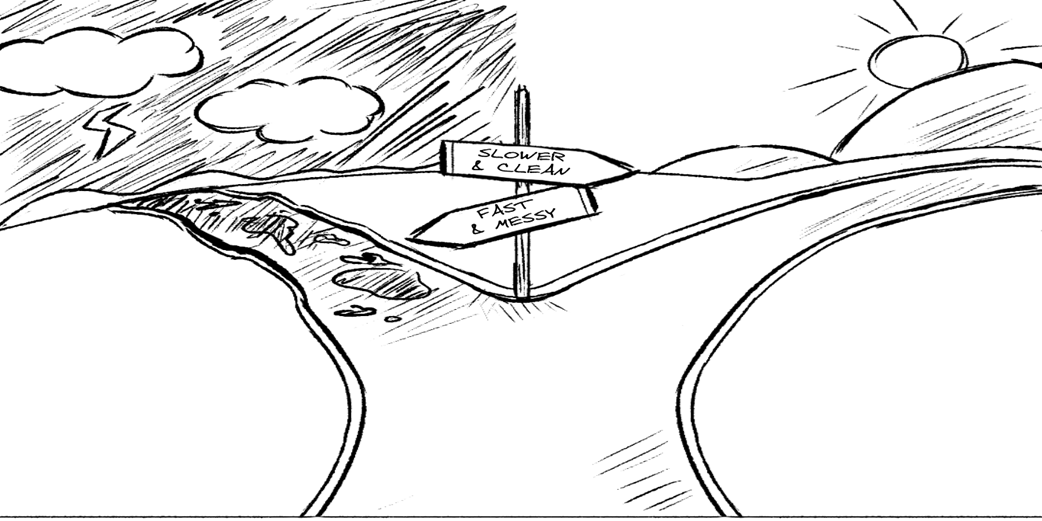
An architect constantly faces a choice between the fast, messy path (Option A) and the slower, cleaner path (Option B). Making a deliberate, defensible decision is a core architectural skill.
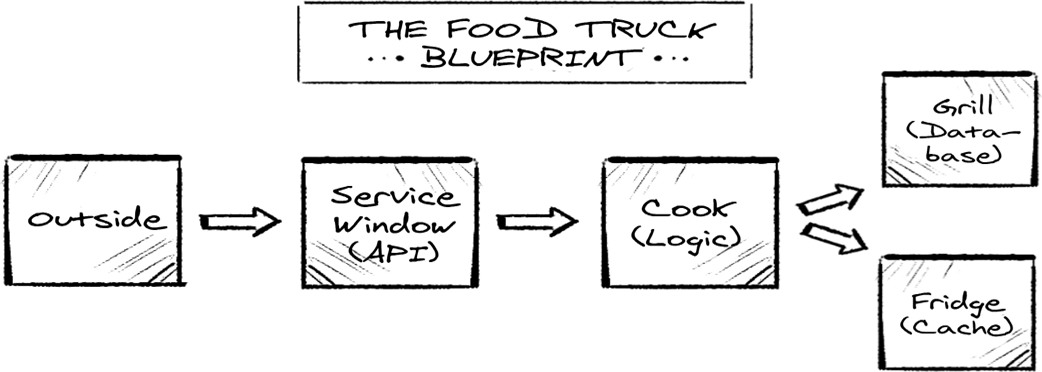
A software system, like a food truck, has a distinct structure. The API is the service window, the business logic is the cook, and dependencies like the database and cache are the grill and fridge.
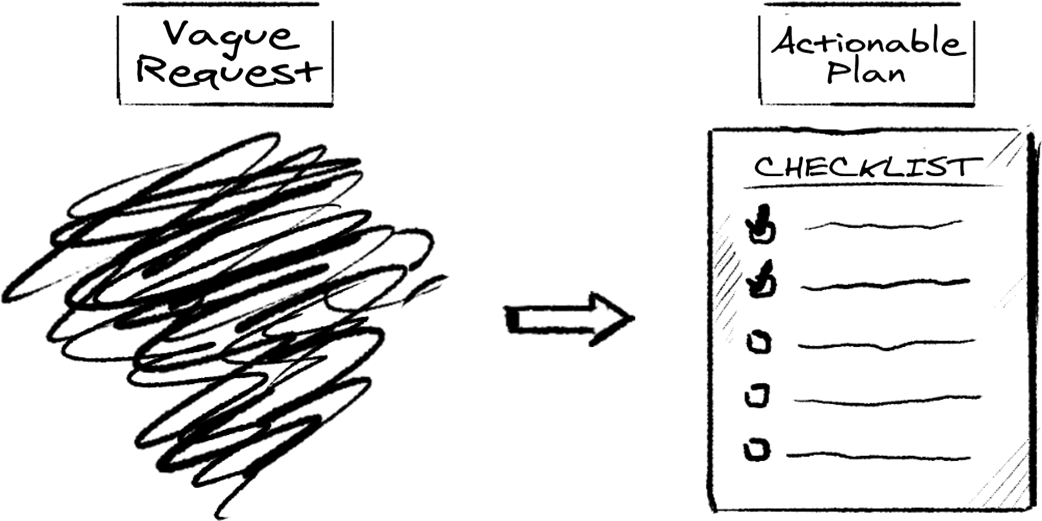
The role of a Clarity Engineer is to turn a vague, messy request (like "Make it faster!") into a clear, actionable plan.
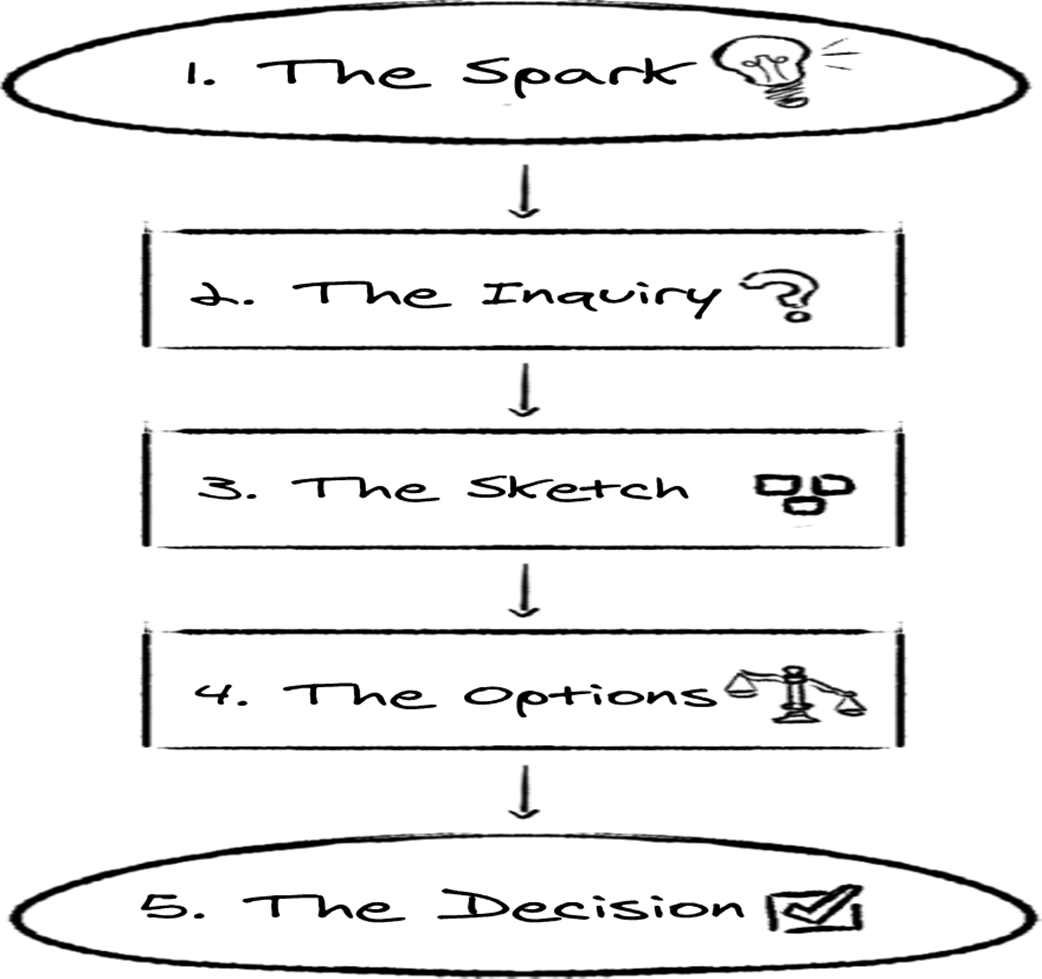
This five-step Architectural Thinking Process shows the architect's journey from a vague request to a defensible plan. It starts with the initial spark (#1), moves to inquiry to find the "Why" (#2), leads to a simple sketch (#3), explores tradeoffs between options (#4), and ends with a documented, defensible decision (#5).
Sketching things out on a whiteboard or piece of paper helps you visualize things more clearly.
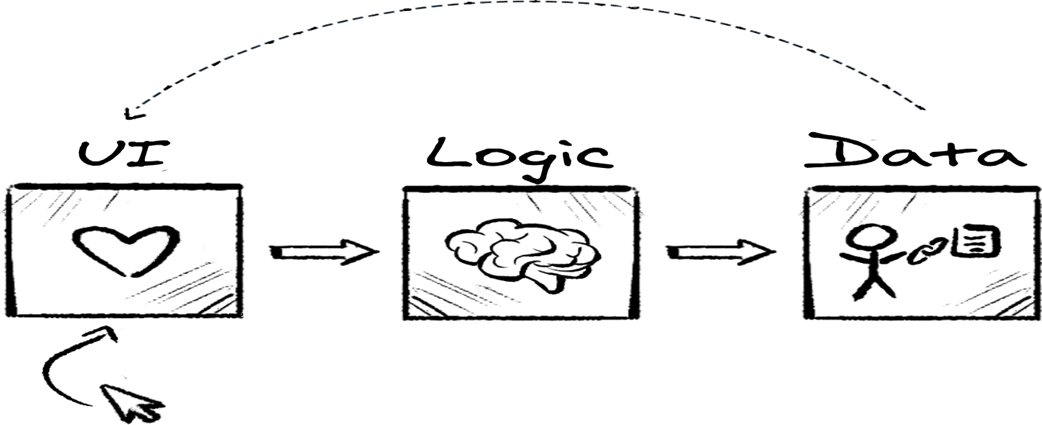
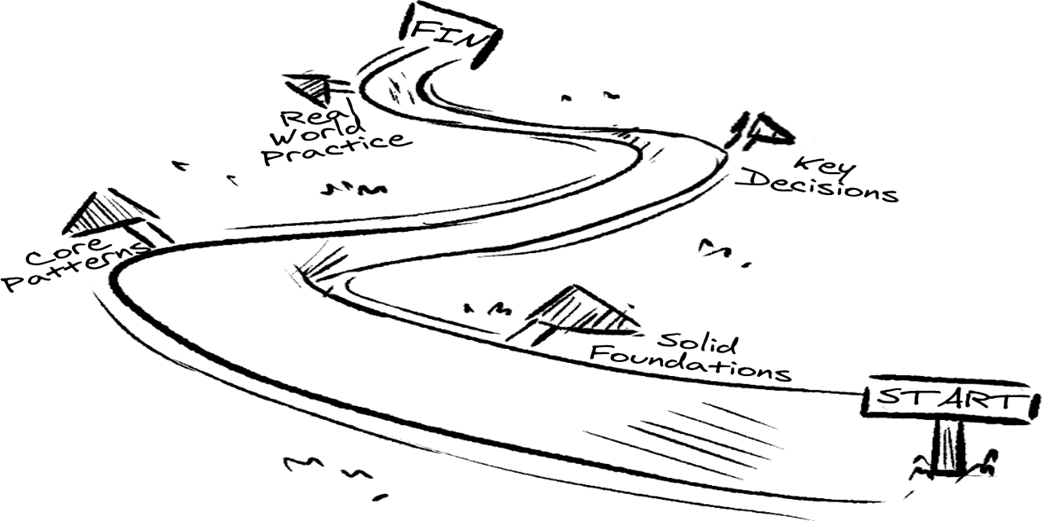
This book will equip you with a range of skills, from foundational concepts like making tradeoffs to practical applications like deploying to the cloud and communicating your designs.
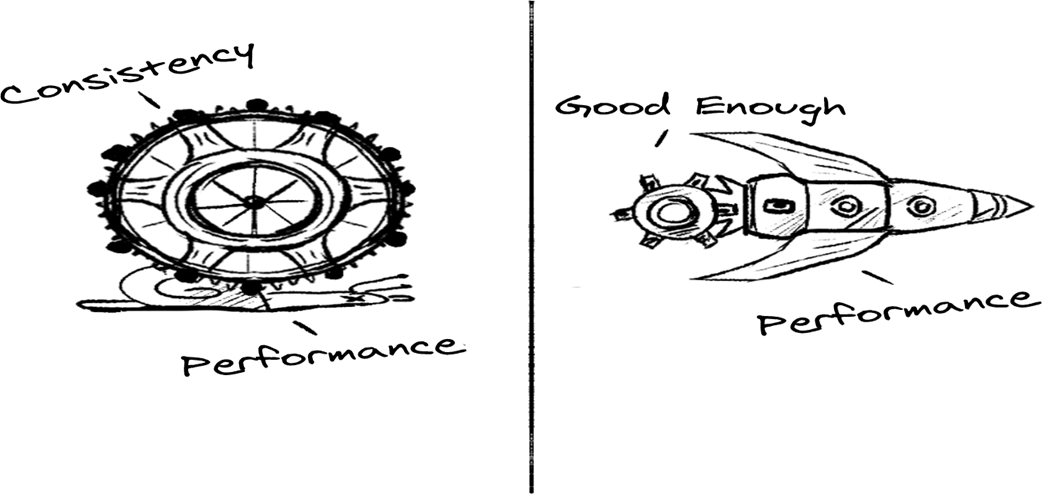
Friendster's choice to prioritize perfect Consistency resulted in a slow, unusable site, while competitors that prioritized Performance and Availability won over frustrated users.
Recap

  • The "Three A's of Architecture" are: Awareness, Alignment, and Accountability.
  • Even if you do not yet have Architectural Accountability, you should always have Architectural Awareness and put that into practice through Architectural Alignment.
  • Architecture is the set of meaningful choices and the reasons for them, not just diagrams.
  • Every significant decision involves a tradeoff, often between short-term speed (shipping now) and long-term quality (ease of change).
  • Becoming a "Clarity Engineer" by asking "Why?" and discovering unstated requirements is the first step to becoming a great architect.
  • The Architectural Thinking Process provides a simple, repeatable 5-step approach (Spark Inquiry Sketch Options   Decision) to turn vague ideas into a complete 'receipt for a decision' that documents not just the final choice, but also the rationale behind it and the consequences that follow.
  • There is no "perfect" architecture; the goal is to pick your pain on purpose by making deliberate choices.
  • Optimizing for the wrong quality (like Friendster's choice of perfect Consistency over Availability) can lead to failure, even if the engineering is brilliant.
  • Good architecture considers not just the system's structure, but also its behavior under stress and its ability to evolve over time.

FAQ

What are the “Three A’s of Architecture,” and how do they differ?Architectural Awareness is understanding why decisions were made and recognizing when your code makes architectural choices. Architectural Alignment is taking that awareness and deliberately coding in ways that support the system’s goals. Architectural Accountability is owning and approving system-wide decisions and their consequences—typically a senior responsibility.
So what is software architecture, really?It’s the shape of your system and the reasons behind that shape—the significant choices that affect how the system is built, tested, deployed, and evolved. It’s less about diagrams and more about deliberate decisions and their consequences over time.
How do I choose between a quick, messy solution and a cleaner, slower one?Weigh business needs, deadlines, and maintainability. Make the tradeoffs explicit: Time to Ship vs. Future Flexibility vs. Cost. Pick the option that best aligns with current priorities, and document why.
What is technical debt, and when is it acceptable to take it on?Technical debt is the future cost of today’s shortcuts. It can be acceptable to incur it deliberately when speed matters, provided you acknowledge the risk, monitor the impact, and set a plan to address it later. Unmanaged or hidden debt is the real danger.
What does it mean to make a “defensible decision”?A defensible decision is one you can explain clearly: what you chose, why you chose it given constraints, and what tradeoffs you accepted. It isn’t about perfection—it’s about having a transparent, reasoned “why” behind your “what.”
What is a “Clarity Engineer,” and how do I become one?A Clarity Engineer translates vague requests into precise, actionable plans by asking focused questions (often the “5 Whys”). They listen deeply, uncover real constraints and priorities, and then shape solutions that intentionally pick today’s pain on purpose.
What is the Five-Step Architectural Thinking Process?1) The Spark (What): Understand the request at a high level. 2) The Inquiry (Why): Ask questions to find the true driver and constraints. 3) The Sketch (How): Make a simple separation-of-concerns design. 4) The Options (Tradeoff): Identify alternatives and make tradeoffs explicit. 5) The Decision (Receipt): Choose, explain why, and document consequences.
Why is Separation of Concerns so important?It reduces complexity by giving each part of the system a single, clear responsibility—and just as importantly, boundaries for what it should not do. This prevents tangling UI, business logic, and data access, making systems easier to change and reason about.
How should I document architectural choices without heavy process?Create a short “decision receipt” that states: what you chose, why (linked to the business “why”), and the accepted consequences. This lightweight record makes the choice transparent, easier to revisit, and faster to explain later.
What lesson does Friendster teach about tradeoffs?Optimizing for perfect consistency at the expense of performance and availability led to unbearable latency and user loss. Priorities must align with business outcomes; fast, reliable user experience often matters more than perfectly up-to-the-second data in distributed systems.

pro $24.99 per month

  • access to all Manning books, MEAPs, liveVideos, liveProjects, and audiobooks!
  • choose one free eBook per month to keep
  • exclusive 50% discount on all purchases
  • renews monthly, pause or cancel renewal anytime

lite $19.99 per month

  • access to all Manning books, including MEAPs!

team

5, 10 or 20 seats+ for your team - learn more


choose your plan

team

monthly
annual
$49.99
$499.99
only $41.67 per month
  • five seats for your team
  • access to all Manning books, MEAPs, liveVideos, liveProjects, and audiobooks!
  • choose another free product every time you renew
  • choose twelve free products per year
  • exclusive 50% discount on all purchases
  • renews monthly, pause or cancel renewal anytime
  • renews annually, pause or cancel renewal anytime
  • Grokking Software Architecture ebook for free

choose your plan

team

monthly
annual
$49.99
$499.99
only $41.67 per month
  • five seats for your team
  • access to all Manning books, MEAPs, liveVideos, liveProjects, and audiobooks!
  • choose another free product every time you renew
  • choose twelve free products per year
  • exclusive 50% discount on all purchases
  • renews monthly, pause or cancel renewal anytime
  • renews annually, pause or cancel renewal anytime
  • Grokking Software Architecture ebook for free