7 Disaster Recovery Plan
Disaster recovery is the set of actions an organization takes to restore critical technology, data, and services after an outage caused by equipment failure, human error, cyber incidents, or natural disasters. The goal is to return systems to a last known reliable state so the business can resume essential operations with as little interruption as possible.
A disaster recovery plan is the documented guide for carrying out that response. It includes recovery procedures, assigned roles, and supporting materials such as executive summaries, department plans, technical guides, and checklists. The plan must be updated as systems, staff, and threats change, and it sits alongside broader business continuity efforts by focusing specifically on IT, communications, and data restoration.
The chapter also explains how organizations protect data and prepare recovery infrastructure. Backup methods such as full, differential, incremental, and snapshot-based backups help recover lost or corrupted information, while recovery sites range from cold sites to hot and mirrored sites depending on cost and speed needs. Because a plan is only useful if it works in practice, regular testing through tabletop exercises, simulations, parallel tests, and full-scale drills is essential for finding weaknesses, training staff, and maintaining readiness.
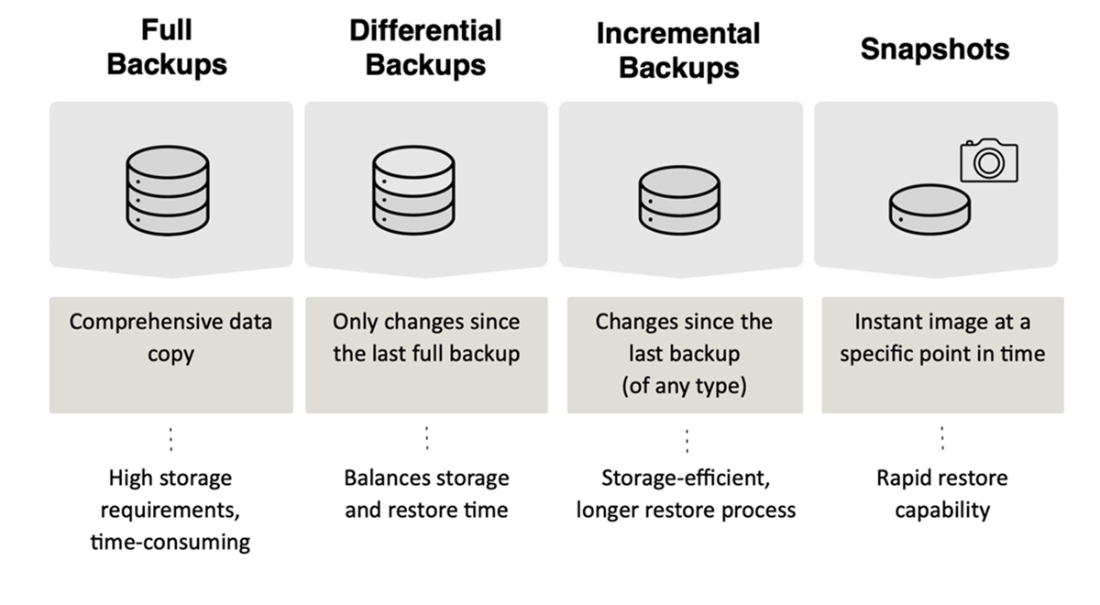
Summary of data recovery strategies with main use case and characteristics
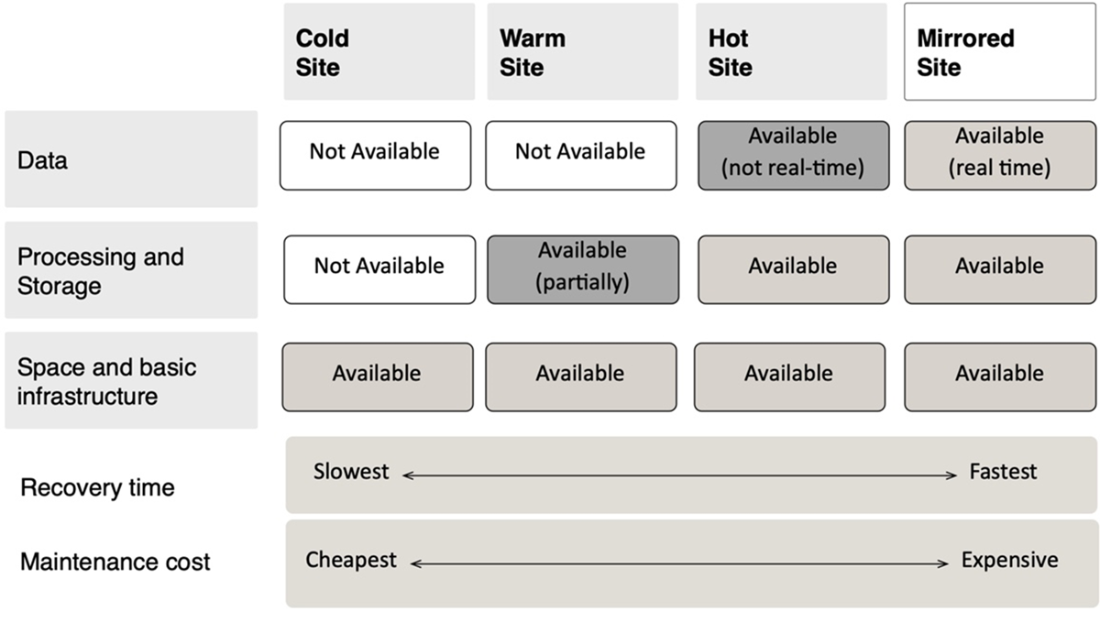
Comparison of different types of data recovery sites
Answers to Review Questions
- The correct answer is A. A Disaster Recovery Plan (DRP) is a plan for processing and restoring operations in the event of a significant hardware or software failure, or of the destruction of the organization's facilities. The primary goal of a DRP is to restore the business to the last-known reliable state of operations.
- The correct answer is B. A Business Continuity Plan (BCP) is about maintaining critical business functions, while a Disaster Recovery Plan (DRP) is about restoring IT and communications to full operation.
- The correct answer is B. Establishing clear roles and responsibilities for personnel during disaster recovery efforts is a critical component of a Disaster Recovery Plan because it ensures that each team member knows exactly what their responsibilities are in the event of a disaster, which helps streamline the recovery process and minimize downtime.
- The correct answer is C. A hot site is a location that is fully equipped to immediately resume operations in the event of a disaster. A hot site typically includes all the necessary hardware, software, telecommunications, and data backups to restore critical business functions.
- The correct answer is A. A tabletop exercise is a disaster recovery test that involves a discussion-based session in which team members meet in an informal setting to discuss their roles during an emergency and various simulated emergency scenarios. This type of test has the least impact on regular information system operations because it does not involve actual disruption or use of resources.
FAQ
What is the primary purpose of a Disaster Recovery Plan (DRP)?
The primary purpose of a DRP is to provide documented procedures and responsibilities for quickly restoring critical IT systems, data, and operations after a disruptive event.
How is disaster recovery different from business continuity?
Business continuity focuses on keeping essential business functions running during and after a disaster, while disaster recovery focuses specifically on restoring technology systems, communications, and data.
What documents are typically included in a Disaster Recovery Plan?
Common supporting documents include an executive summary, department-specific plans, technical guides, and checklists to help different groups carry out recovery tasks correctly.
What does the term “last known reliable state” mean?
It refers to a system, device, or data state that has been confirmed to be free of errors or corruption and can be used as a trusted recovery point.
What are the main data backup methods used in disaster recovery?
The main backup methods are full backups, differential backups, incremental backups, and snapshots. Each method offers different trade-offs between storage use, speed, and recovery time.
Why is the time between backups important?
The shorter the time between backups, the less data is at risk of being lost if a disaster happens before the next backup is made.
What is the difference between a cold site, warm site, hot site, and mirrored site?
A cold site has basic infrastructure but little or no equipment, a warm site has partial infrastructure, a hot site is fully equipped and ready within hours, and a mirrored site is fully operational and identical to the primary site.
Why should organizations test their Disaster Recovery Plan regularly?
Regular testing helps identify weaknesses, outdated information, and procedural gaps, while also preparing staff to perform their assigned recovery roles effectively.
What are the main types of disaster recovery testing?
Main testing methods include walkthroughs or tabletop exercises, simulation tests, parallel tests, and full-scale exercises. These range from discussion-based reviews to highly realistic recovery drills.
Why must a Disaster Recovery Plan be updated over time?
A DRP is a living document and must be updated as systems, staff, business processes, technologies, and threats change so that it remains accurate and effective.

 Fundamentals of Cybersecurity ebook for free
