16 Security Policy Best Practices
Security policies provide the foundation for organizing and protecting an enterprise’s information, systems, people, and physical assets. They set mandatory expectations, reduce uncertainty in decision-making, support compliance, and establish accountability by making clear what behavior is required and what happens when rules are broken. The chapter emphasizes that policies define intent at a high level, while standards and procedures explain how those requirements are put into practice.
Well-designed policies share several core elements: visible senior management support, a clear purpose and scope, plain language, defined terms, and formal processes for exceptions, enforcement, and review. These features make policies understandable, workable, and adaptable as threats, technologies, regulations, and business needs change. The text also highlights the importance of consistent enforcement and regular maintenance so policies remain current and credible rather than becoming outdated documents that employees ignore.
The chapter then surveys several common policy types that work together as a security framework. Data handling policies govern how information is classified, stored, transmitted, retained, and destroyed; password policies strengthen authentication and encourage better credential management; acceptable use policies define proper use of organizational technology and address shadow IT and unauthorized AI tools; BYOD policies control personal device use through safeguards like encryption, MDM, and selective wipe; change management policies ensure modifications are tested and controlled; and privacy policies guide the responsible handling of personal information and support privacy rights. Together, these policies translate security and privacy goals into practical organizational rules.
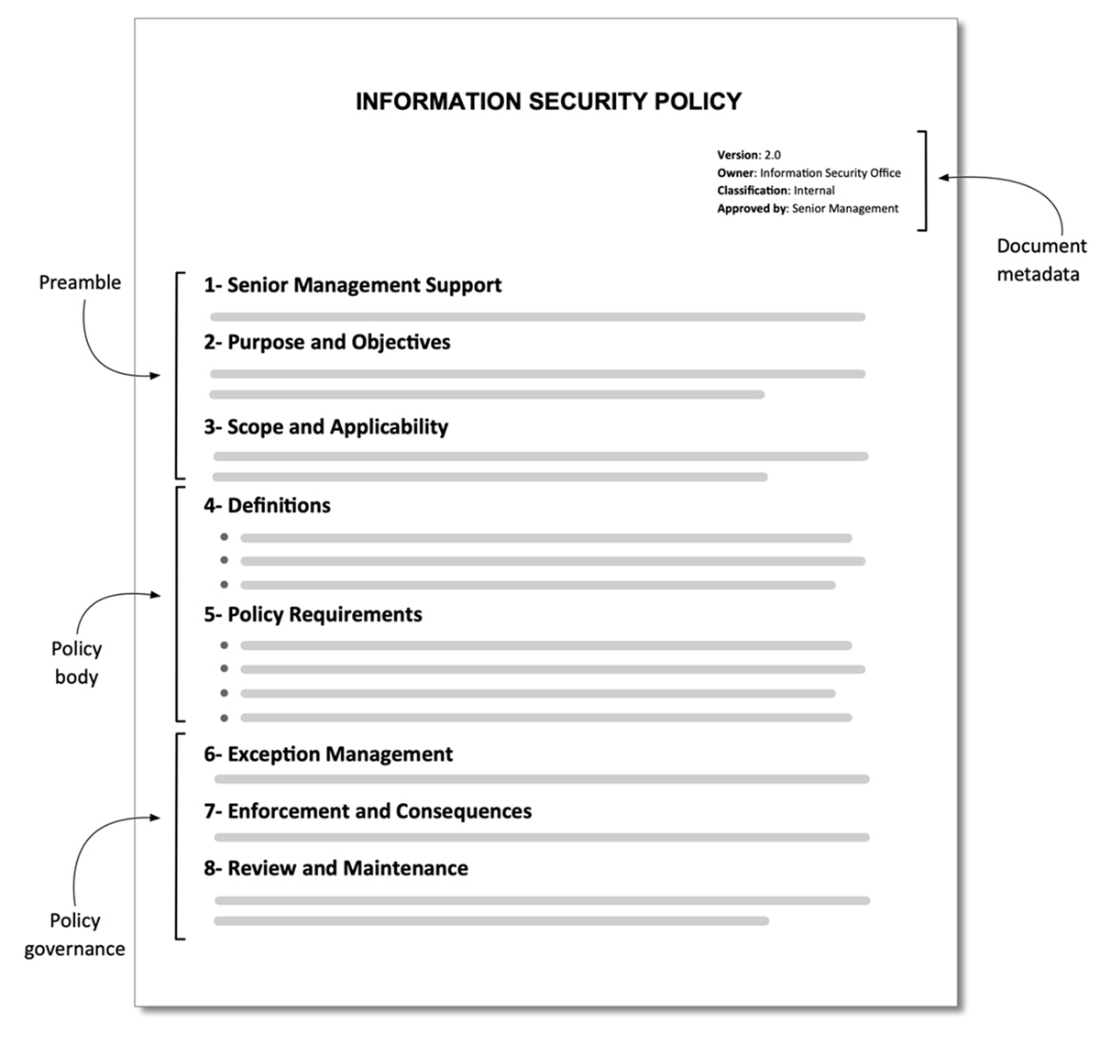
Example structure of an information security policy document
Answers to Review Questions
- The correct answer is A. Policy. Policies reflect management's intent and establish mandatory rules to enforce access control, ensuring confidentiality and integrity across the enterprise. They serve as the authoritative basis for control decisions.
- The correct answer is A. An Acceptable Use Policy (AUP) is a set of rules that informs users of the company’s expectations when they use its computer systems and networks.
- The correct answer is D. A Bring Your Own Device (BYOD) policy governs the use of personally owned devices for work activities. The policy specifies which devices are permitted and defines the necessary security controls and usage requirements to protect organizational data when accessed from personal equipment.
- The correct answer is B. A password policy helps ensure that users follow the best password creation and management practices, reducing the risk of unauthorized access due to weak or compromised passwords.
- The correct answer is A. A Privacy Policy outlines the data security mechanisms which ensure that customer data is protected; namely, how Personally Identifiable Information (PII) is collected, stored and processed.

 Fundamentals of Cybersecurity ebook for free
