System hardening is about making technology harder to exploit by reducing unnecessary exposure and aligning systems with a secure state. Because operating systems, applications, and network devices are often built for convenience and compatibility, they may ship with extra services, open ports, weak default settings, and excessive permissions. Those defaults expand the attack surface, so hardening focuses on removing or restricting anything that is not needed while preserving required functionality.
Organizations harden systems through a mix of policy and technical controls. This includes disabling unnecessary services, uninstalling unused software, closing unused ports, removing default accounts, enforcing strong authentication, limiting permissions through least privilege, and auditing configurations for compliance. Security baselines provide a standardized reference for secure configuration, helping teams apply consistent settings across systems and use established guidance such as industry benchmarks and checklists.
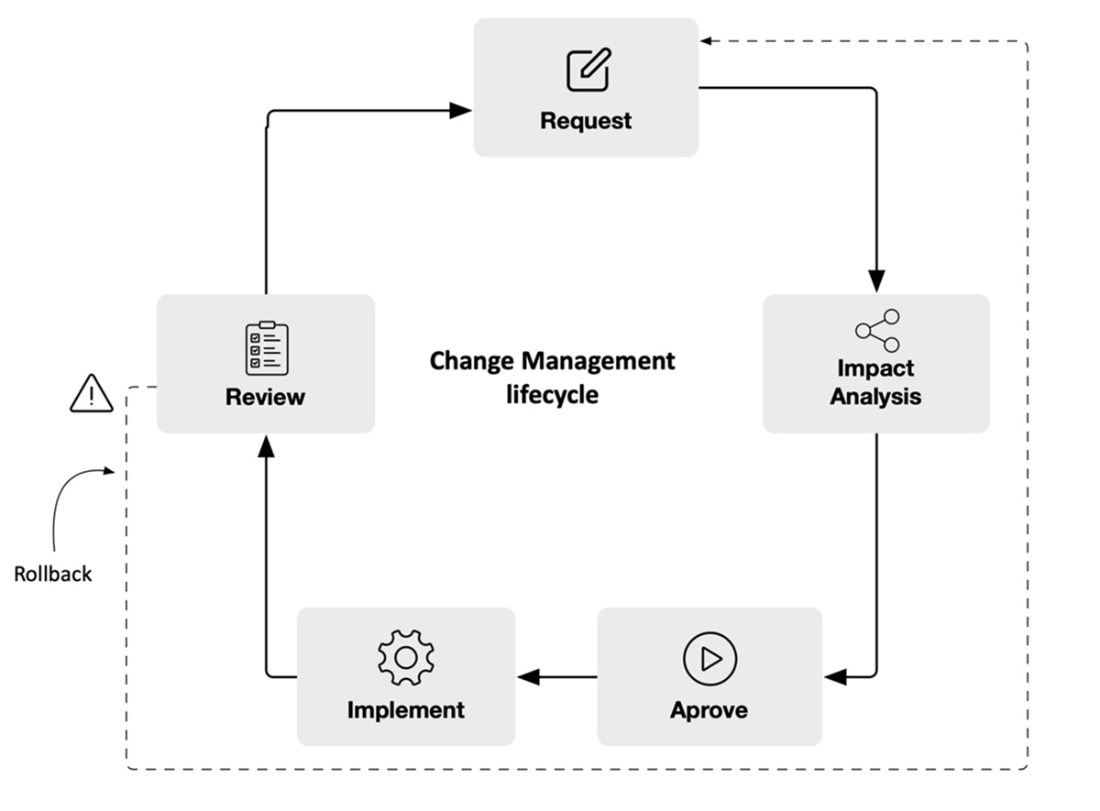
Keeping systems secure is an ongoing process rather than a one-time task. Patches, hotfixes, and broader updates address vulnerabilities and improve systems, but they must be prioritized and managed carefully to avoid disruption, especially in complex or legacy environments. Change management provides the structure for reviewing, testing, approving, implementing, and reviewing modifications so that systems remain stable, resilient, and aligned with their hardened security baseline over time.
Illustration of Change Management Components
Answer to Review Questions
The correct answer is B. Patches sometimes disrupt a system's configurations and stability. One of the main challenges for security professionals is to ensure that patches are deployed as quickly as possible, while simultaneously ensuring the stability of running systems. To prevent flawed patches from negatively affecting running systems, it is good practice to test patches in a designated qualification environment before applying them to production systems
The correct answer is C. The primary objective of security baselines is to establish a standard for security configurations Security baselines provide a framework to manage security configurations of systems and applications by establishing clear standards.
The correct answer is D. A service pack is a cumulative package of all the updates, fixes, and patches released for a software product. It is a collection of unrelated patches released together to provide an efficient way of updating a software product.
The correct answer is A. The Request for Change is a formal process that involves identifying the nature of the desired change and is the first activity in the Change Management Component.
The correct answer is A. In the context of the change management process, the primary objective of a rollback is to restore the system to its last state before the change was made. By rolling back the change, the system can be returned to its previous state, which may help to resolve issues and restore regular operation.
FAQ
What is system hardening?System hardening is the process of securing a system by reducing vulnerabilities through secure configuration, thereby minimizing the attack surface and making the system more resistant to attack.Why is system hardening important?System hardening is important because it reduces opportunities for attackers to exploit weak services, misconfigurations, default credentials, and other unnecessary exposures. A poorly secured system can also be used as a foothold to compromise an entire environment.What are common methods used to harden a system?Common hardening methods include removing unnecessary software and services, closing unused network ports, replacing default credentials, restricting permissions, enforcing least privilege, applying secure authentication mechanisms, and monitoring system activity.What is a security baseline?A security baseline is a documented set of minimum security requirements and approved configuration settings that serves as the foundation for system hardening and secure operation.How do security baselines differ from system hardening?A security baseline defines what a secure system should look like by specifying required settings and controls, while system hardening is the process of applying those requirements to a real system.Why is patching a key part of system hardening?Patching is critical because it corrects known vulnerabilities, bugs, and defects. Applying patches promptly reduces the time attackers have to exploit publicly known weaknesses and helps restore systems to a known secure state.What is the difference between a patch, a hotfix, and an update?A patch is a small targeted fix for a specific vulnerability or defect. A hotfix is an emergency patch released outside the normal cycle for an urgent issue. An update is broader and may include patches, new features, performance improvements, or compatibility changes.What is virtual patching?Virtual patching uses compensating security controls, such as an intrusion prevention system, to reduce the risk of exploiting a vulnerability without modifying the vulnerable system itself.Why is change management necessary for system hardening?Change management is necessary because even well-hardened systems can drift from their secure state over time. A controlled process helps ensure changes are assessed, tested, approved, implemented, and reviewed without weakening security or disrupting operations.What are the main steps in the change management lifecycle?The main steps are Request for Change (RFC), impact analysis, review and approval, testing, implementation, and review. A rollback plan is also important in case the change must be reversed.
pro $24.99 per month
access to all Manning books, MEAPs, liveVideos, liveProjects, and audiobooks!

 Fundamentals of Cybersecurity ebook for free
