13 Data Centers and Cloud Infrastructure
The chapter explains that modern digital services ultimately depend on physical data centers, whether an organization keeps systems on-site or uses cloud infrastructure. It contrasts the older model of buying, hosting, and maintaining all technology internally with the cloud approach, where computing power and storage are rented on demand from third-party providers. This shift changes the balance of cost, flexibility, and control, and it also changes how cybersecurity responsibilities are divided.
A major focus is data center reliability and protection. Because data centers must support continuous operations, they rely on redundancy in power, networking, and physical facilities, along with strong environmental controls such as cooling, fire suppression, and monitoring for heat, water, and other hazards. The chapter also explains how virtualization and containerization allow one physical server to support many isolated workloads more efficiently, while still introducing security concerns such as hypervisor compromise and VM escape.
The chapter also lays out cloud computing concepts in detail, including the shared responsibility model, service models, and deployment models. It distinguishes between IaaS, PaaS, and SaaS, and between public, private, community, and hybrid clouds, emphasizing how each affects control, access, and security obligations. Finally, it covers outsourced support through MSPs and MSSPs, as well as the role of SLAs, MOUs, and MOAs in defining expectations, accountability, and continuity when organizations rely on external providers.
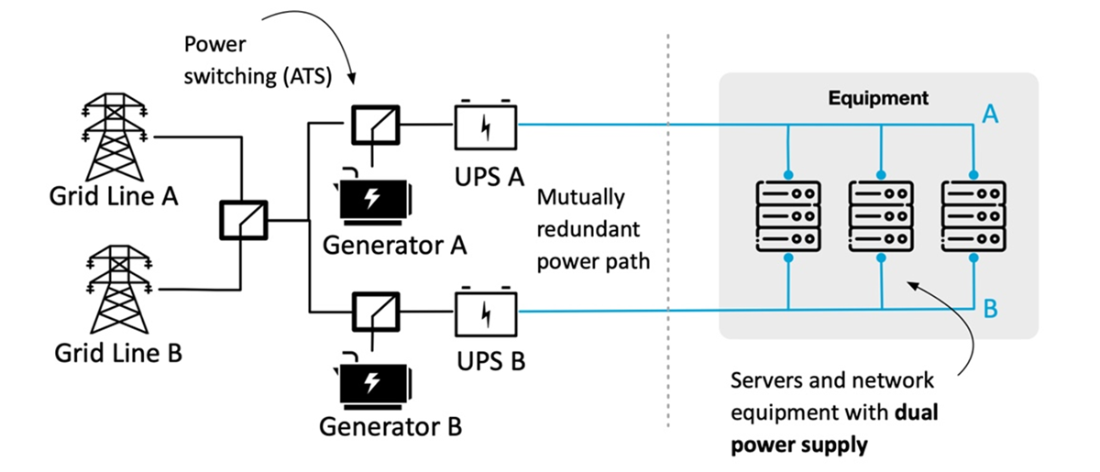
Fully redundant power supply setup for a data center with diverse utility pathways, fuel-diverse backup generators and UPS buffering
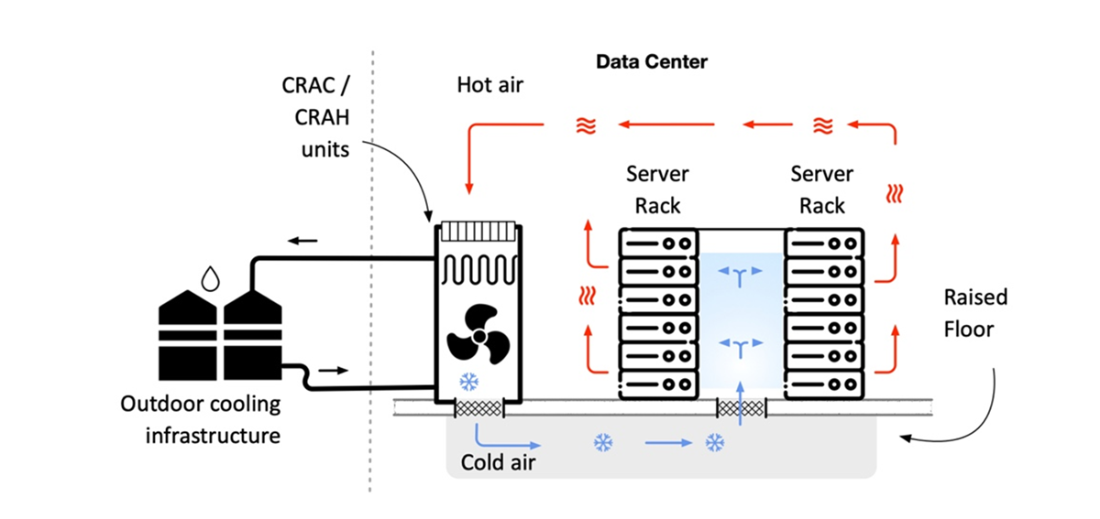
Energy efficient CRAC airflow in a raised-floor Data Center
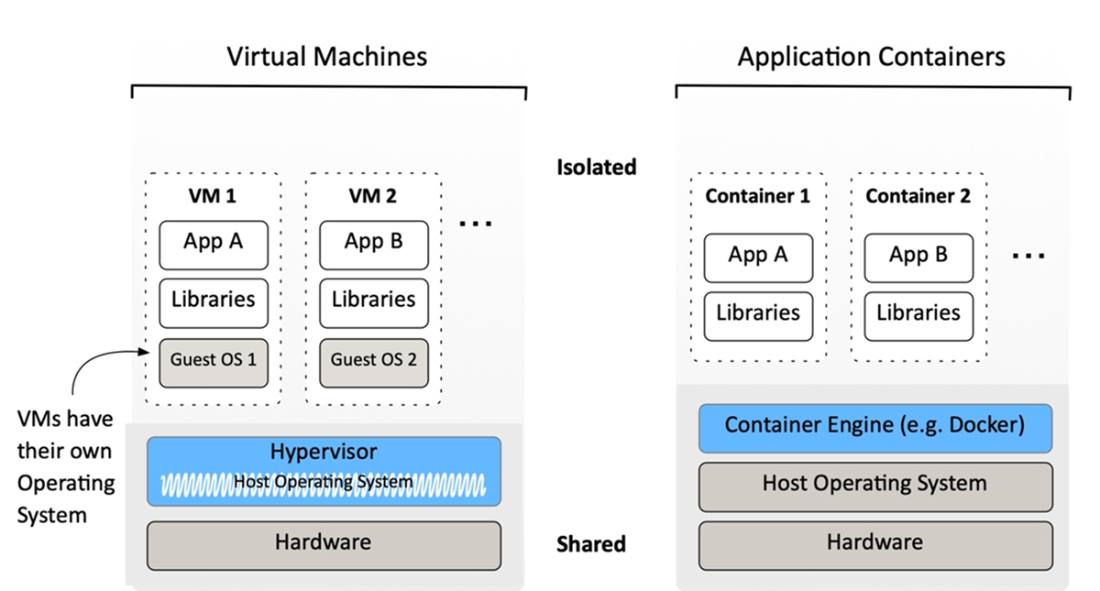
Virtual machines and containerization virtualization strategies side-by-side
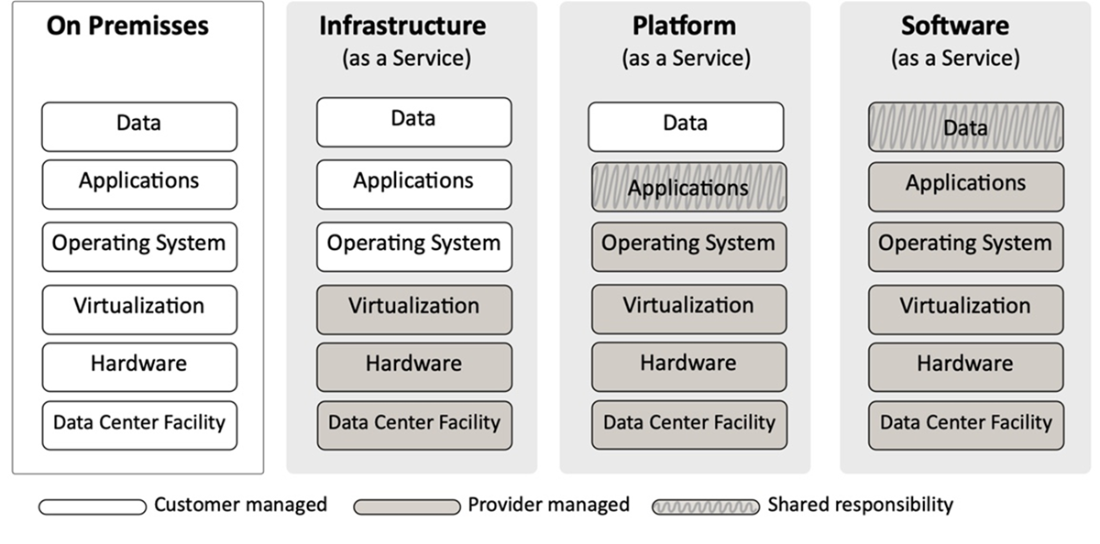
Comparison of responsibilities of users and vendors for the distinct service models
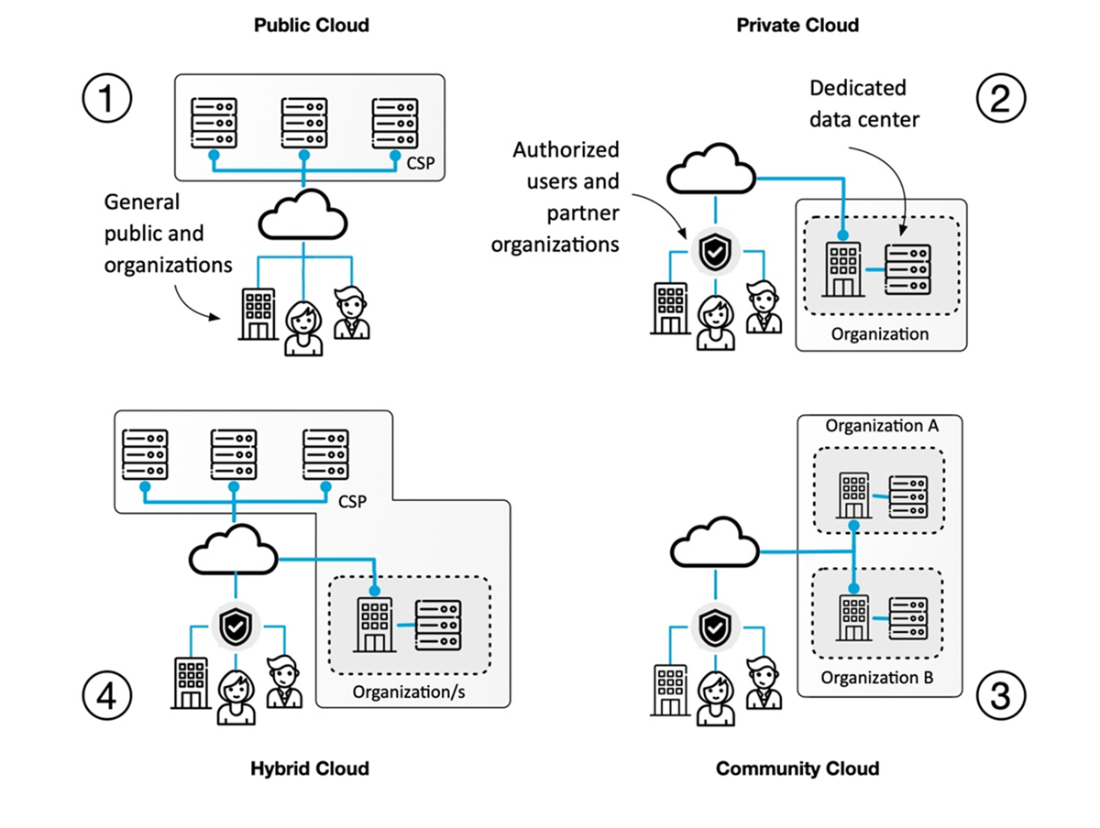
Comparison the distinct cloud deployment models
Answers to Review Questions
- The correct answer is C. Installing redundant power supplies would be the best option to maintain network functionality during a power outage.
- The correct answer is A. Containerization allows multiple applications to run on a single operating system kernel while remaining logically isolated from one another. By sharing the host system’s OS, containers eliminate the need for a full operating system per instance. Containers are lighter and faster to start than virtual machines, and they make a more optimal use of available hardware resources.
- The correct answer is B. Gas-based fire suppression systems are better for electronics but can be toxic to humans.
- The correct answer is C. IaaS is a cloud services model that delivers virtualized computing resources over the Internet. Customers have significant control over these resources, including the ability to install and manage their own operating systems, applications, and middleware.
- The correct answer is A. A hybrid cloud deployment model combines public and private cloud storage. For example: an organization might use private cloud storage for sensitive or proprietary data that needs to be kept confidential, while at the same time using public cloud storage for less sensitive data or workloads, which are more suited to a shared infrastructure.

 Fundamentals of Cybersecurity ebook for free
