11 Networking Fundamentals
Computer networks connect devices of all sizes, from small home setups to the global Internet, so they can share data, resources, and services. The chapter emphasizes that networks are built from endpoints, network devices, and communication links, and that they rely on addressing and standardized protocols to move information reliably. It also highlights why networking knowledge matters for cybersecurity: the same connectivity that enables collaboration can also expose systems to interception, unauthorized access, traffic manipulation, and disruption.
The text explains how data travels across a network using a web request as an example, showing the roles of switches, routers, firewalls, proxies, DNS, and servers in directing and controlling traffic. It then introduces core network components such as NICs, hubs, repeaters, switches, routers, wireless access points, proxy servers, and firewalls, describing how each contributes to communication and security. The chapter also compares network types like LANs, MANs, and WANs, and discusses wired versus wireless networking, including the security implications of each.
Finally, the chapter covers addressing, networking models, ports, and segmentation as foundational concepts for secure communication. MAC addresses identify hardware locally, while IP addresses and DNS support routing across networks; DHCP automates address assignment, and IPv4, IPv6, and special-purpose addresses are explained in security context. The OSI and TCP/IP models show how data is encapsulated and handled across layers, logical ports distinguish services on the same device, and segmentation methods such as VLANs, subnetting, DMZs, micro-segmentation, and VPNs help isolate traffic, reduce attack spread, and protect data in transit.
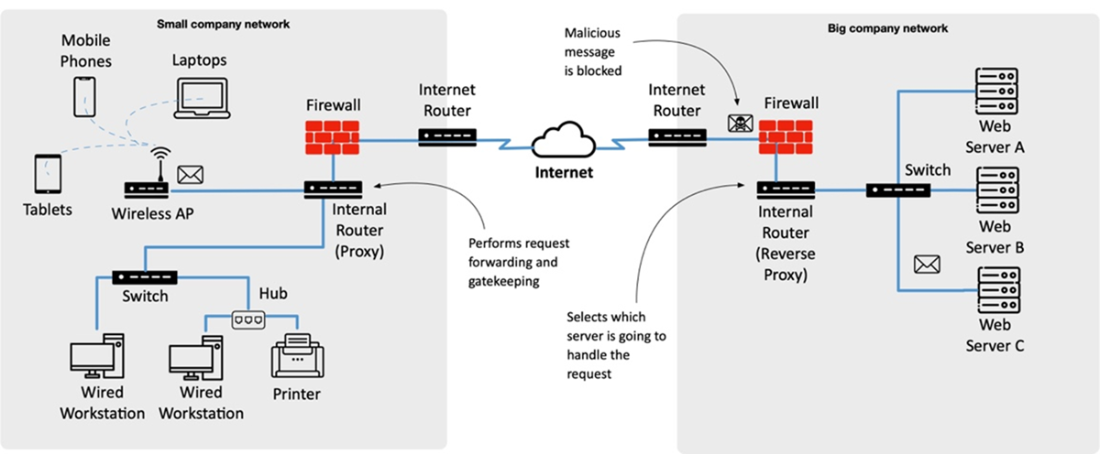
Illustration of a request from the network of a small company traveling through the internet to the server located in the “Big company”.
The main components of networks
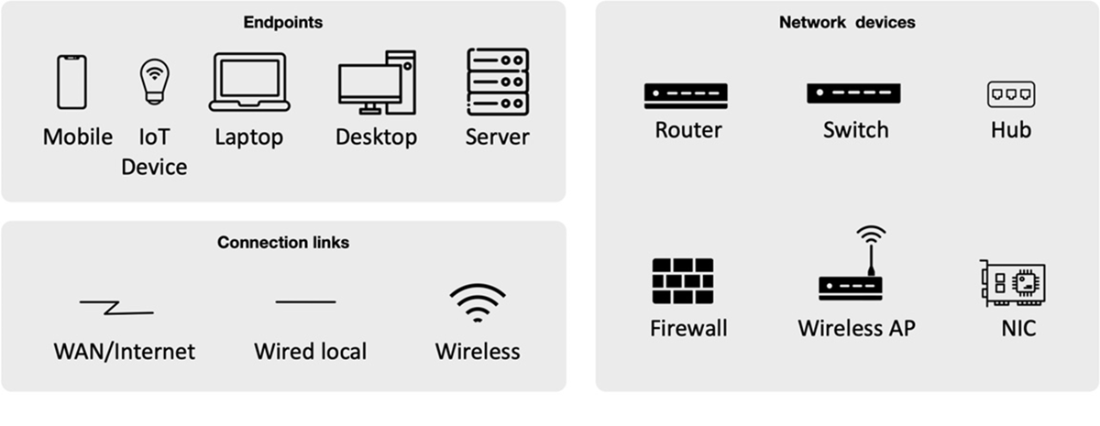
Illustration of LANs, and MANs interconnect by a WAN
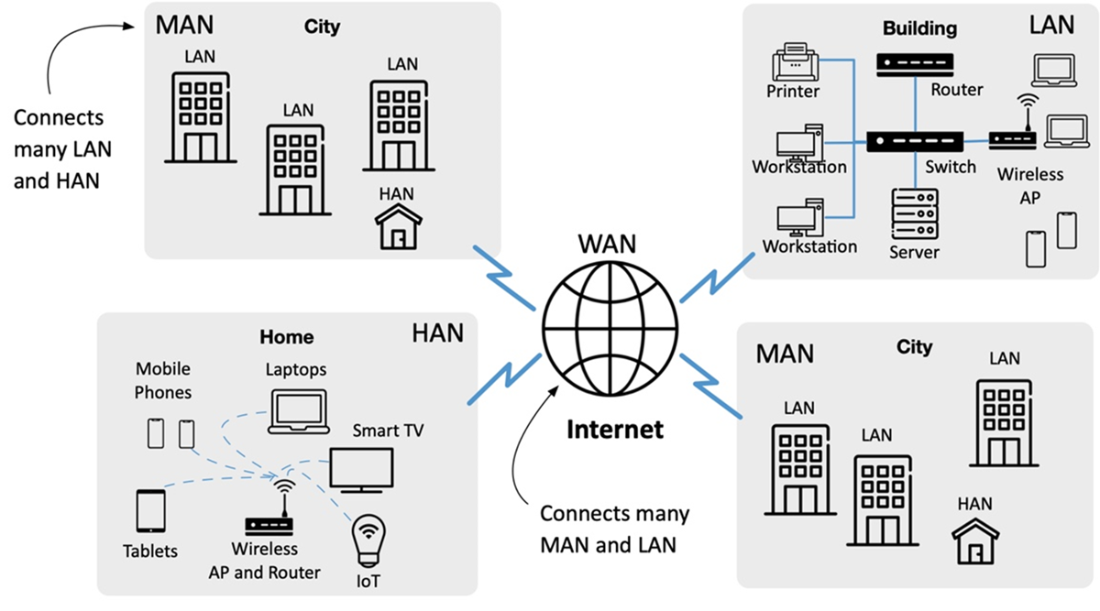
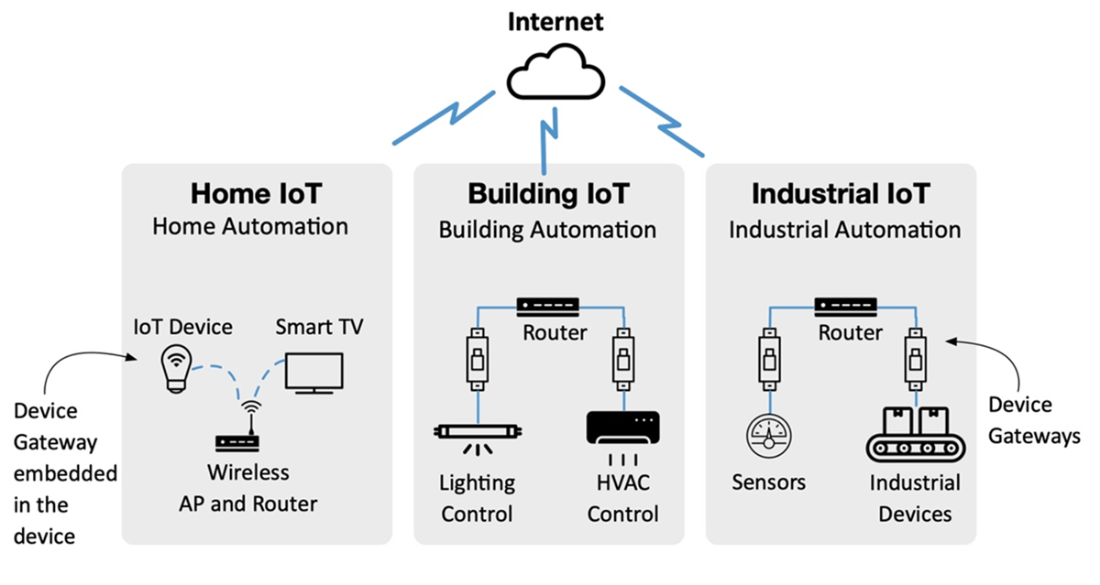
Illustration of the main types of IoT setups connected to the Internet
Structure of a 48-bit MAC address with 24-bit Organizationally Unique Identifier (OUI) prefix plus 24-bit vendor-assigned device identifier
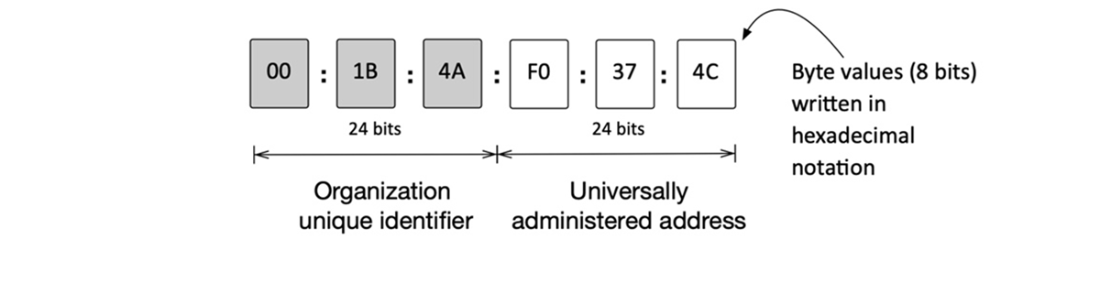
Illustration IPv4 address as 32 bits grouped as four bytes in dotted decimal notation
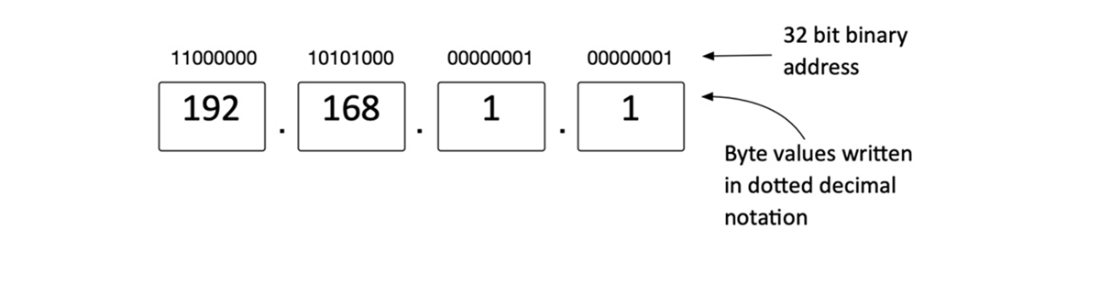
Illustration of Network Address Translation (NAT)
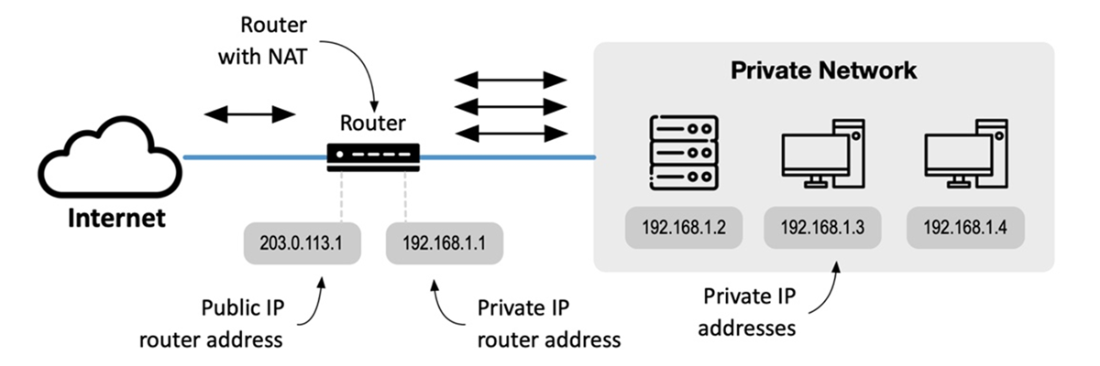
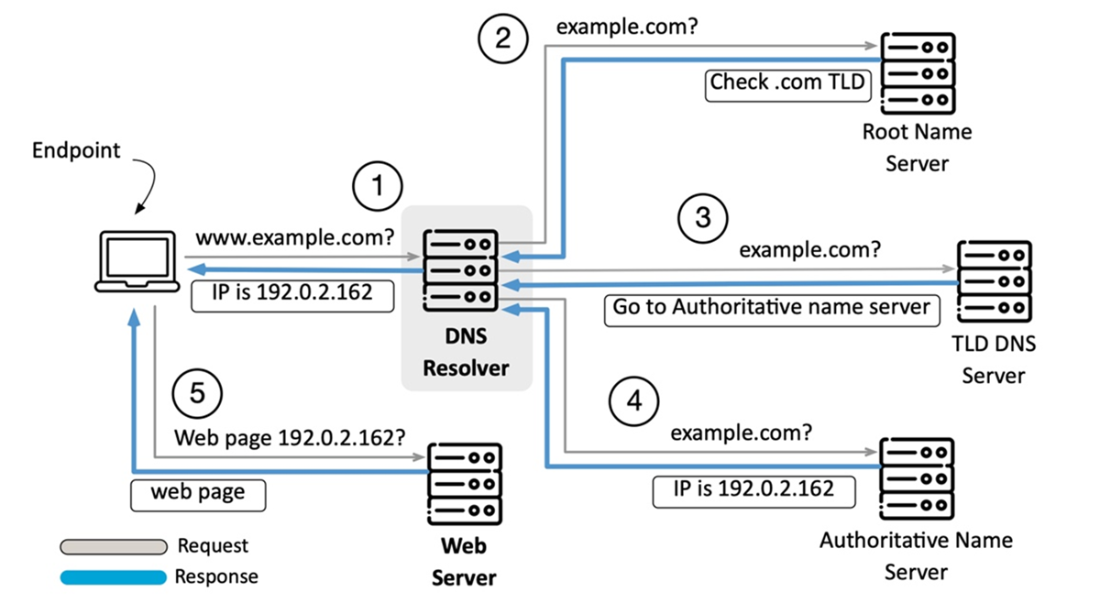
Illustration of a sequence DNS queries to translate a domain name to an IP address
A side-by-side illustration of the layers of the OSI and TCP/IP network stack models
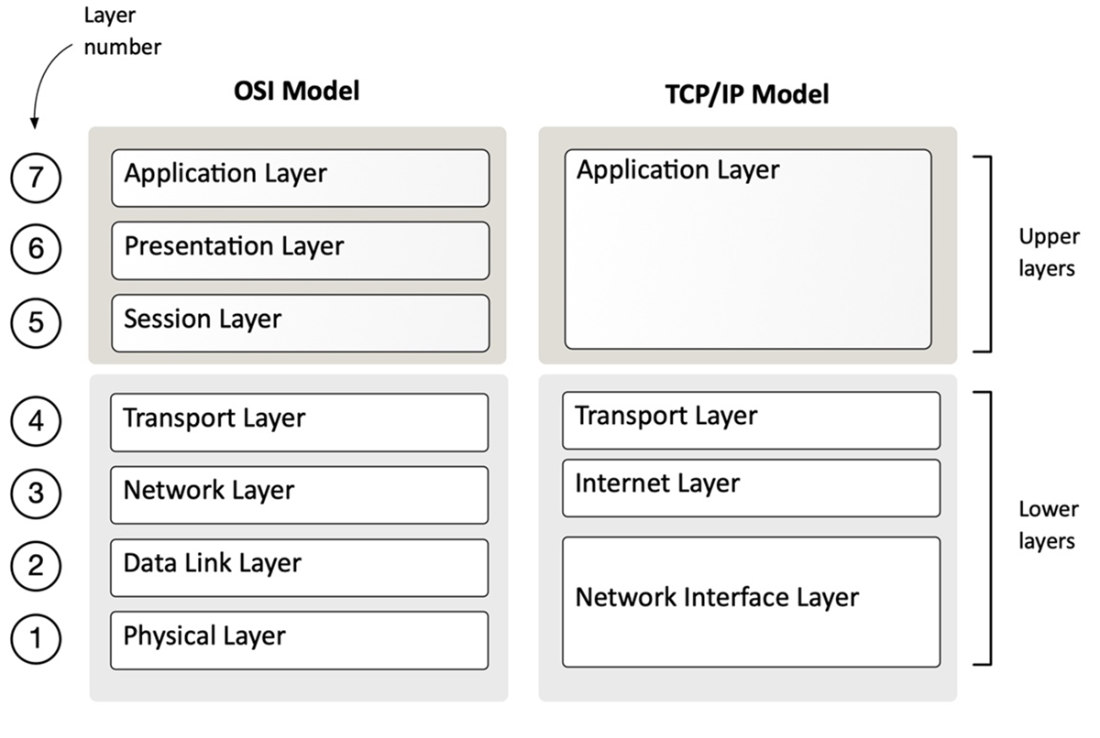
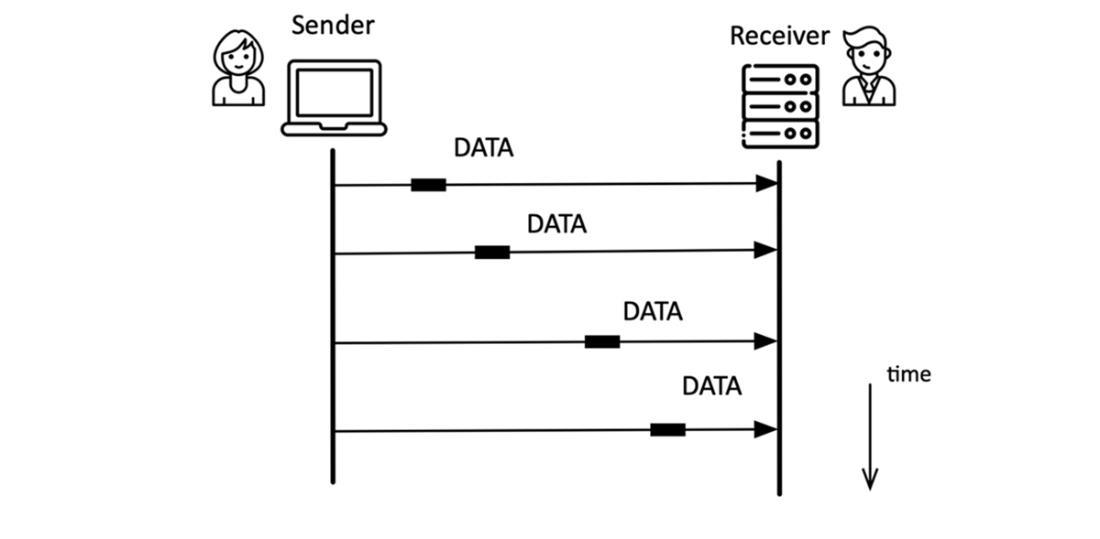
Illustration of the connectionless functioning of the UDP protocol
The TCP connection lifecycle including 3-way handshake, bidirectional data with ACKs, and the FIN/ACK termination.
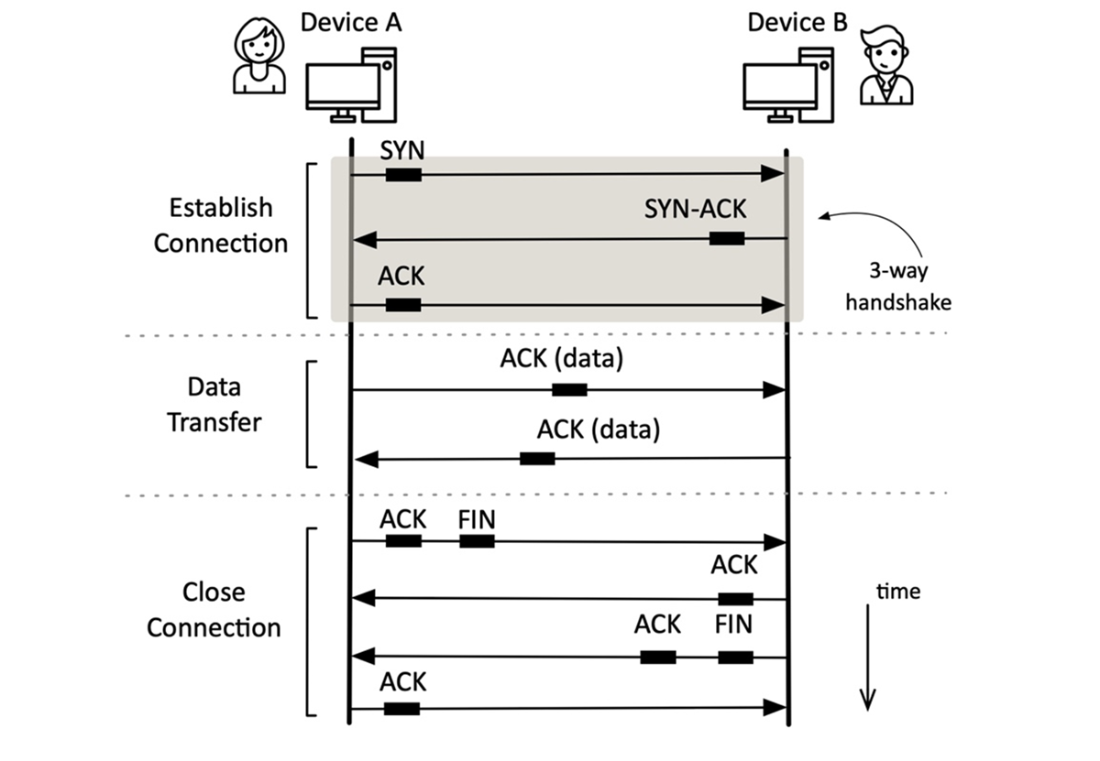
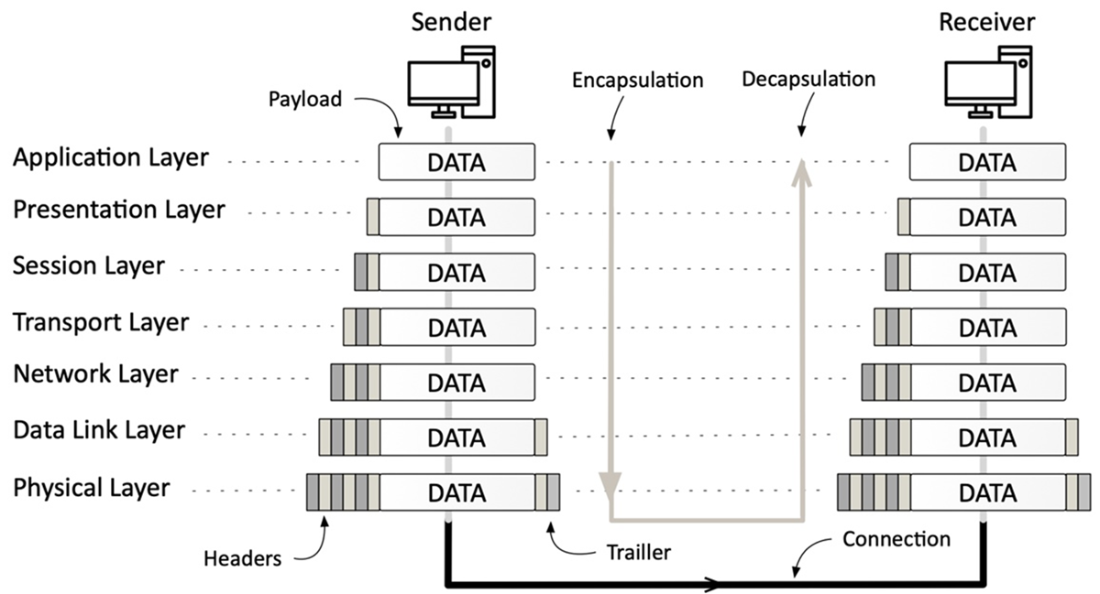
Illustration of encapsulation and decapsulation across OSI layers during data transmission
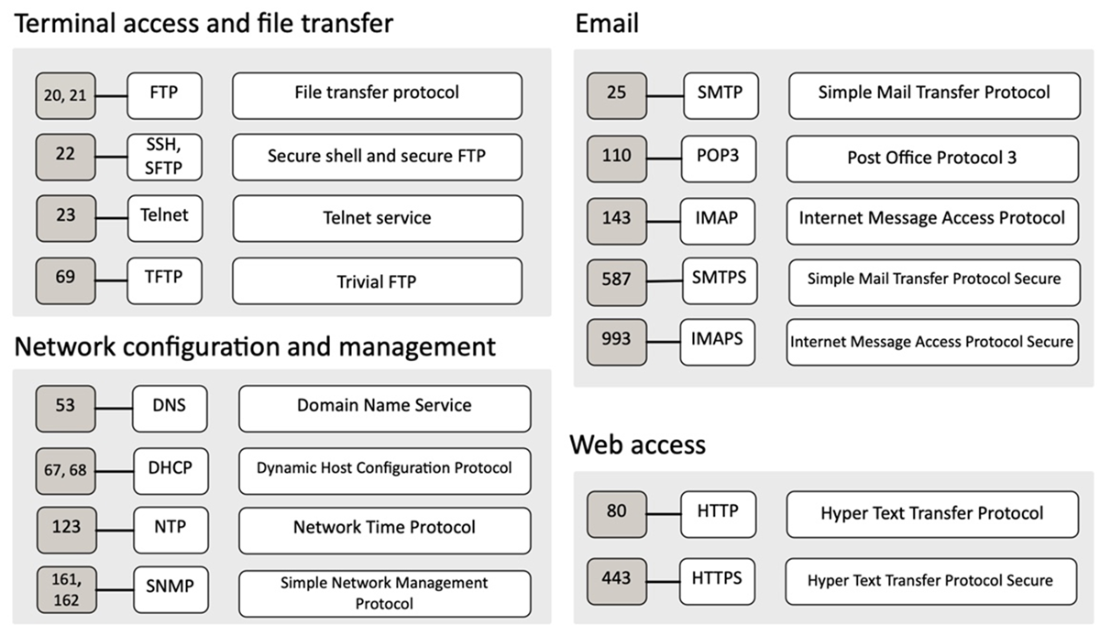
Ports of well-known TCP/IP application protocols grouped by functionality
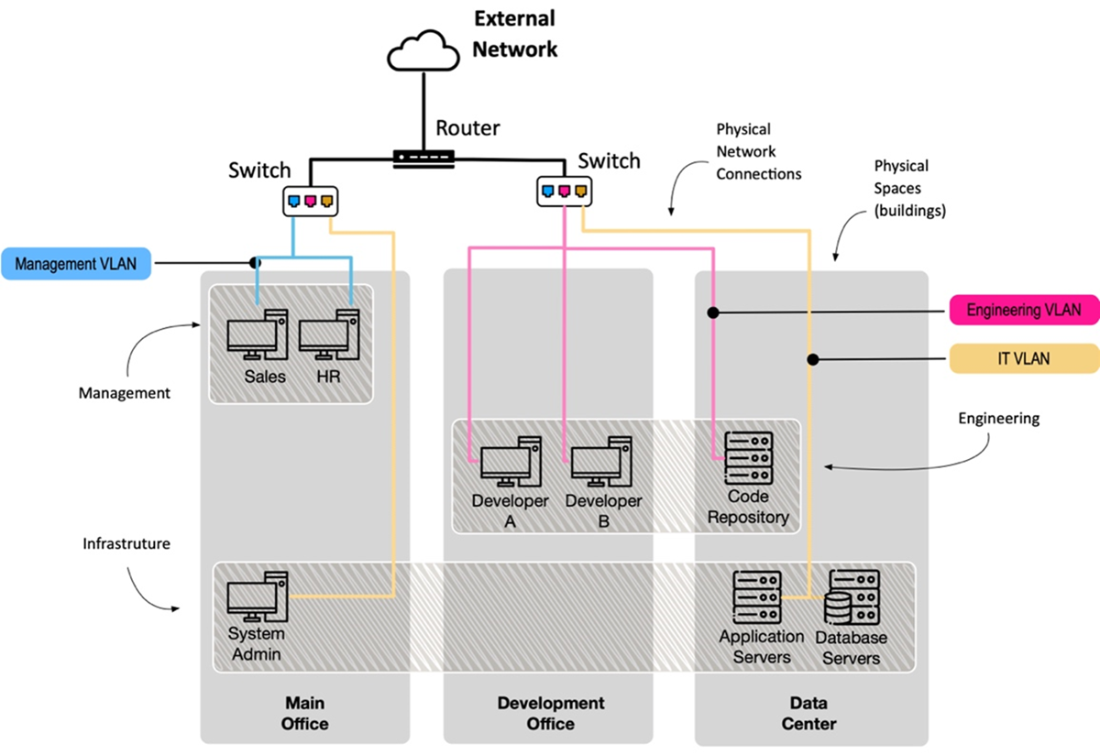
Network topology diagram showing segmented VLANs spanning distinct physical spaces
Network topology diagram showing a buffer zone, known as a demilitarized zone (DMZ)
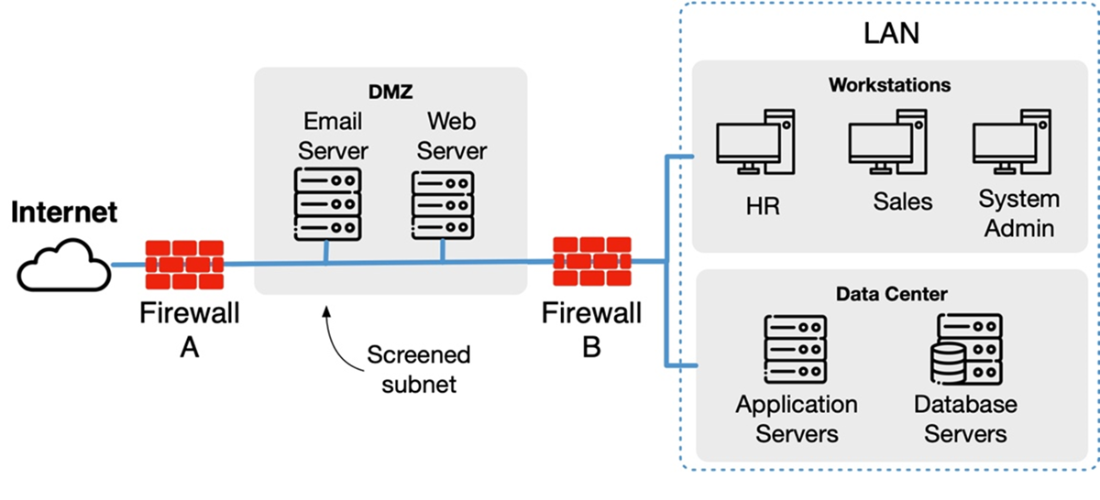
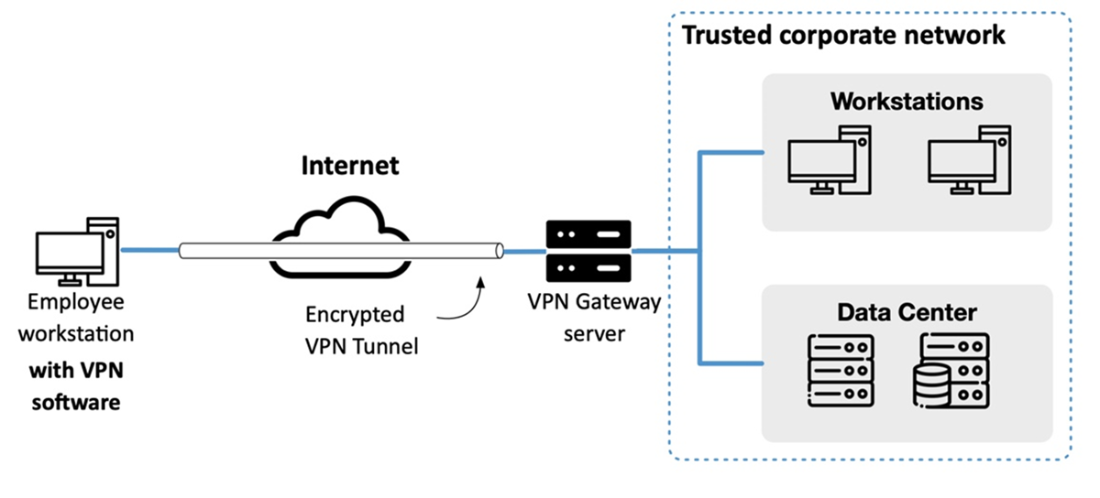
Illustration of a VPN remote access connection
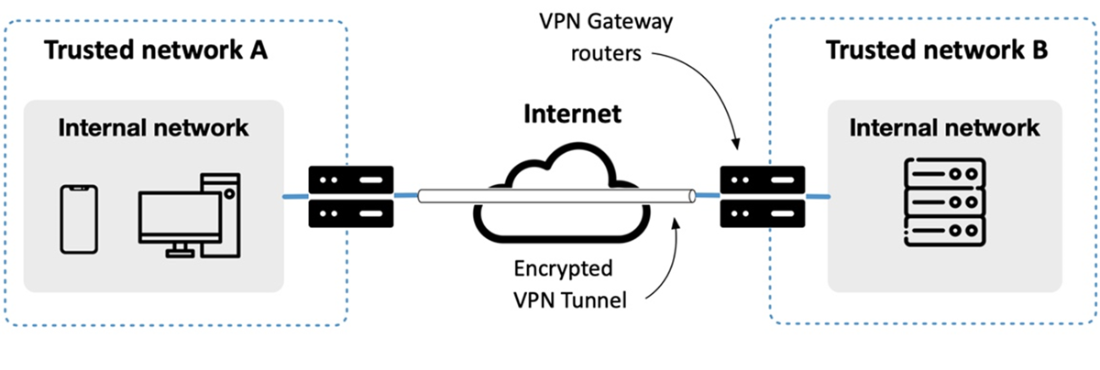
Site-to-Site VPN network using an encrypted tunnel to connect two trusted networks
Answers to Review Questions
- The correct answer is C. The role of a hub in a network is to connect multiple devices. It serves as a common connection point for devices on a network, receiving incoming data packets and forwarding them to all other connected devices. For example, in a small office network, a hub might be used to connect all the computers so that they can communicate and share resources.
- The correct answer is A. A router is a networking device whose primary objective is to determine the most efficient path for traffic to flow across a network. Routers connect two or more networks and forward data packets between them according to their destination address
- The correct answer is A. A local area network (LAN) typically covers a single floor or building. Long-distance connections between geographically-distant networks form something called a wide area network (WAN).
- The correct answer is A. All network devices have a 48-bit Media Access Control (MAC) address, represented as six groups of 8 bits values in hexadecimal. An example of a MAC address would be 00-51-02-1F-58-F6. An IPv4 address is a 32-bit address represented as a sequence of four 8-bit integers, an example of which would be 10.23.19.49.
- The correct answer is D. A MAC address belongs to the Data Link layer of the OSI model. The Data Link layer is responsible for providing error-free transfer of data between nodes on the same local network, and it is where network interface cards (NICs) and MAC addresses are defined. The MAC address is a unique identifier assigned to a network interface card, and it is used for communication within the local network.
- The correct answer is D. The Open Systems Interconnection (OSI) model has seven layers: Physical, Data Link, Network, Transport, Session, Presentation, and Application. Each layer performs a specific function in the process of communicating over a network.
- The correct answer is A. TCP uses a three-way handshake to establish a reliable connection by exchanging three packets with the SYN, SYN/ACK and ACK flags. Although SYN, ACK and FIN are valid TCP packet flags, the sequence SYN → ACK → FIN is not the TCP handshake. Both the sequences Discover → Offer → Request and Offer → Request → ACK are used in DHCP (but are still incomplete, since DHCP is a four-way handshake).
- The correct answer is D. The TCP/IP model, which is the foundation of the Internet Protocol suite, does not include a layer called "physical." Instead, the TCP/IP model has four layers: Application layer (Determines the protocols for the Transport layer); [2] Transport layer (Allows for data to move among devices); [3] Internet layer (Creates and inserts packets); [4] Network Interface Layer (Governs how data will move through the network)
- The correct answer is C. SMTP, or Simple Mail Transfer Protocol, uses port 25 to transfer e-mail messages over networks. This port allows email to be sent (unencrypted) from a client to a server or between servers.
- The correct answer is C. Port 443 is used for Hypertext Transfer Protocol Secure (HTTPS) communications, which ensures that data transmitted between a Web browser and a server is encrypted and secure. This encryption is typically achieved through the use of SSL/TLS protocols.

 Fundamentals of Cybersecurity ebook for free
