10 Logical Access Controls
Logical access controls are the software-based safeguards that decide who can use digital resources and what they can do with them. They complement physical and administrative controls by protecting systems, applications, networks, and data even when a device is physically accessible. The chapter explains that effective access control depends on identifying users and other entities, authenticating them, authorizing their actions, and keeping them accountable through continuous oversight.
The chapter then compares the main models used to manage permissions at scale. Discretionary access control gives owners flexibility to share resources, but it can create inconsistency and accidental exposure. Mandatory access control uses centrally enforced labels and clearances to protect highly sensitive environments, while role-based access control assigns permissions by job function to make administration simpler and more consistent. It also notes that modern systems often extend these ideas with attribute- and policy-driven approaches for finer-grained decisions.
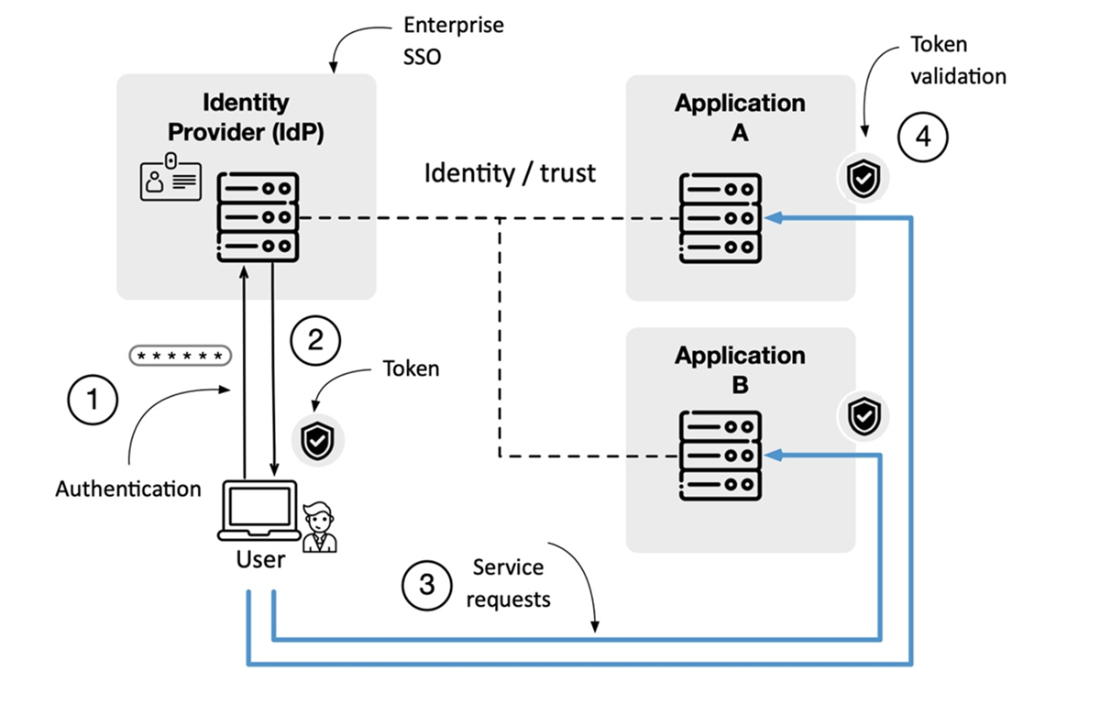
Beyond permission models, the chapter emphasizes identity management and monitoring as essential parts of security. Directory services, identity providers, single sign-on, and federated identity systems help organizations create centralized, trusted ways to manage accounts and access across multiple systems and even across organizations. The chapter closes by stressing the importance of logging, log centralization, SIEM analysis, and privileged access monitoring to detect suspicious behavior, support audits, and reduce the risks of privilege creep, account misuse, and insider threats.
Summary of access control models arranged by decision authority
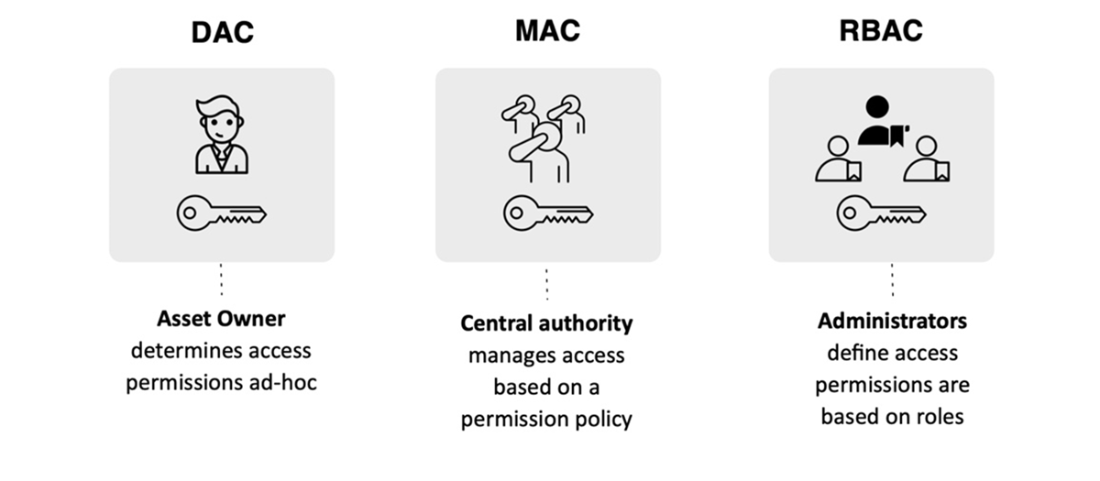
Illustration of single sign-on (SSO) from a central Identity Provider
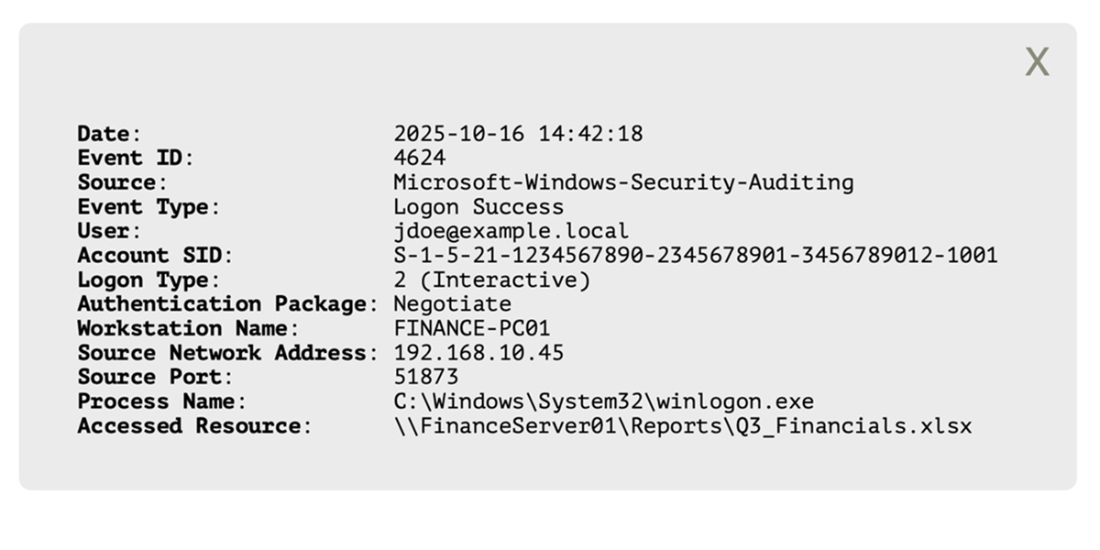
Example of a Windows access control log record
Answers to Review Questions
- The correct answer is C. An Access Control List (ACL) is a list of rules that specifies which users or systems are granted or denied access (i.e., have permission to access) to a particular object or system resource
- The correct answer is A. The Bell and LaPadula (BLP) access control model arranges subjects and objects into security levels and defines access specifications, whereby subjects can only access objects at certain levels based on their security level. Since subjects cannot change access specifications, this model is a form of mandatory access control (MAC).
- The correct answer is A. As a principle, users can perform Read, Write and Execute actions with every Access Control policy. However, in discretionary access control policies, the permissions associated with each object (files or system resources) are set by the object's owner.
- The correct answer is B. With DAC, or Discretionary Access Control, the creator or owner of the object (such as a file or data resource) has the authority to decide who can access it and what privileges they have.
- The correct answer is A. Access to privileged or sensitive information. Insider threats often involve the misuse of legitimate access, such as when a user accesses data outside the scope of their role or deviates from the principle of least privilege or need-to-know. Monitoring access to privileged or sensitive data helps detect privilege misuse, which is a common trait of insider activity.

 Fundamentals of Cybersecurity ebook for free
