Modern marketers face urgent pressure from privacy regulations, exploding channel options, rising personalization expectations, and AI-driven decisioning. This chapter clarifies the landscape and offers a practical framework to choose a first-party data solution that maps your organization’s strengths to real use cases. It explains the core building blocks—collect, manage, and activate—and recommends centering your stack on a marketing data lakehouse paired with an activation layer, emphasizing clear definitions of customer data platforms, composable architectures, and activation so teams can avoid common pitfalls.
The chapter’s primary recommendation is a composable CDP that activates data in place from your lakehouse, blending the best of “build” (custom data models, extensibility, unified analytics and data science) and “buy” (speed, reliability, observability, and destination maintenance). This approach brings agility (reduced vendor lock-in), cloud-grade scalability and security, fast incorporation of new AI capabilities, and favorable total cost of ownership by avoiding redundant hosted copies of data. It also outlines when other options fit better: marketing clouds and engagement platforms for simpler, hosted, channel-led needs; monolithic CDPs for end-to-end hosted profiles and stronger real-time web/mobile use cases; and in-house builds for either very simple requirements or highly bespoke constraints.
To evaluate options, the chapter proposes a concise rubric: time to value and required engineering support; marketer self-serve execution speed; audience portability and depth of destination integrations; data trust and reliability via a single source of truth; AI readiness for predictive and generative use; security and compliance posture without oversharing sensitive data; standardized measurement with experimentation that ties back to your lakehouse; cost now and at scale with clear ROI (revenue uplift and cost/media savings); pragmatic real-time coverage; transparent, controllable identity resolution; and overall stack agility and ease of offboarding. The guidance closes with practical advice: align stakeholders early, prioritize the few high-impact use cases you’ll run most often, and favor open, extensible architectures that grow with your team and technology choices.
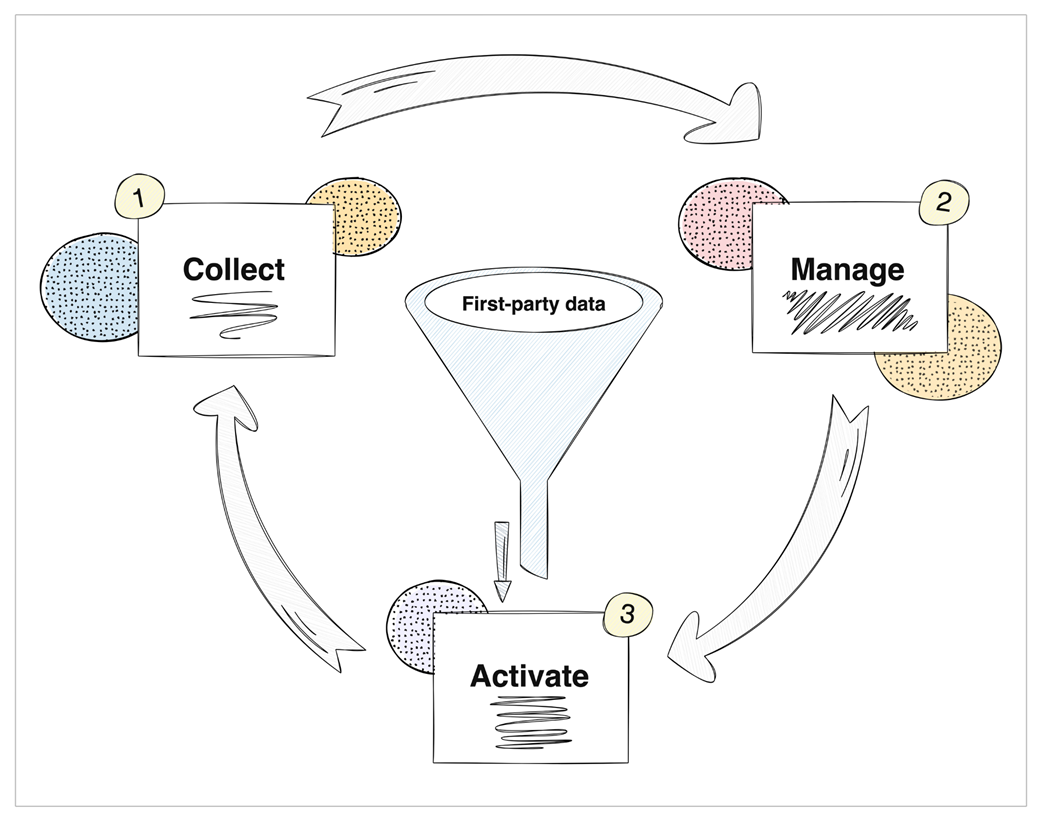
Components of modern martech solutions for first-party data: Collect, manage, activate
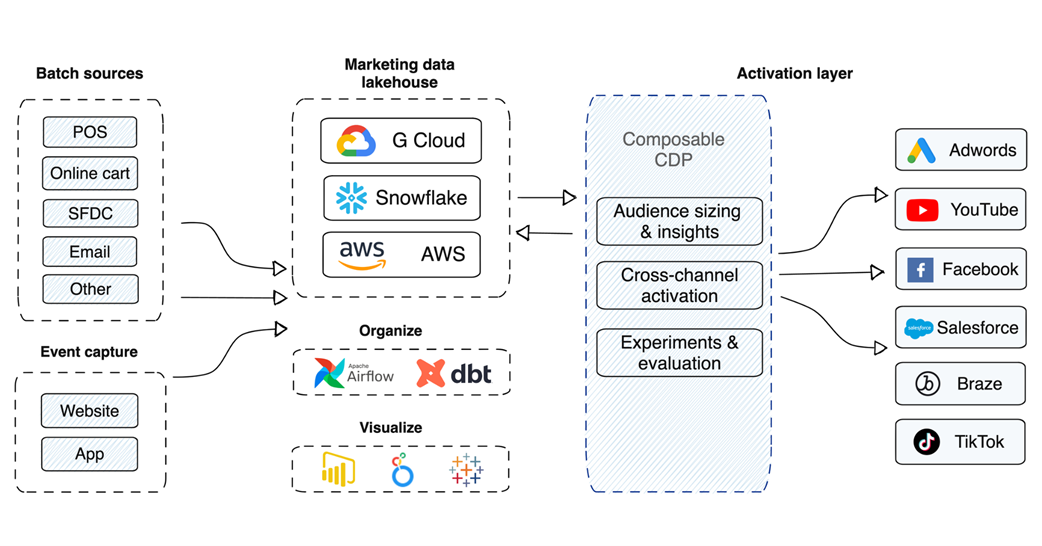
Architecture diagram for a marketing stack
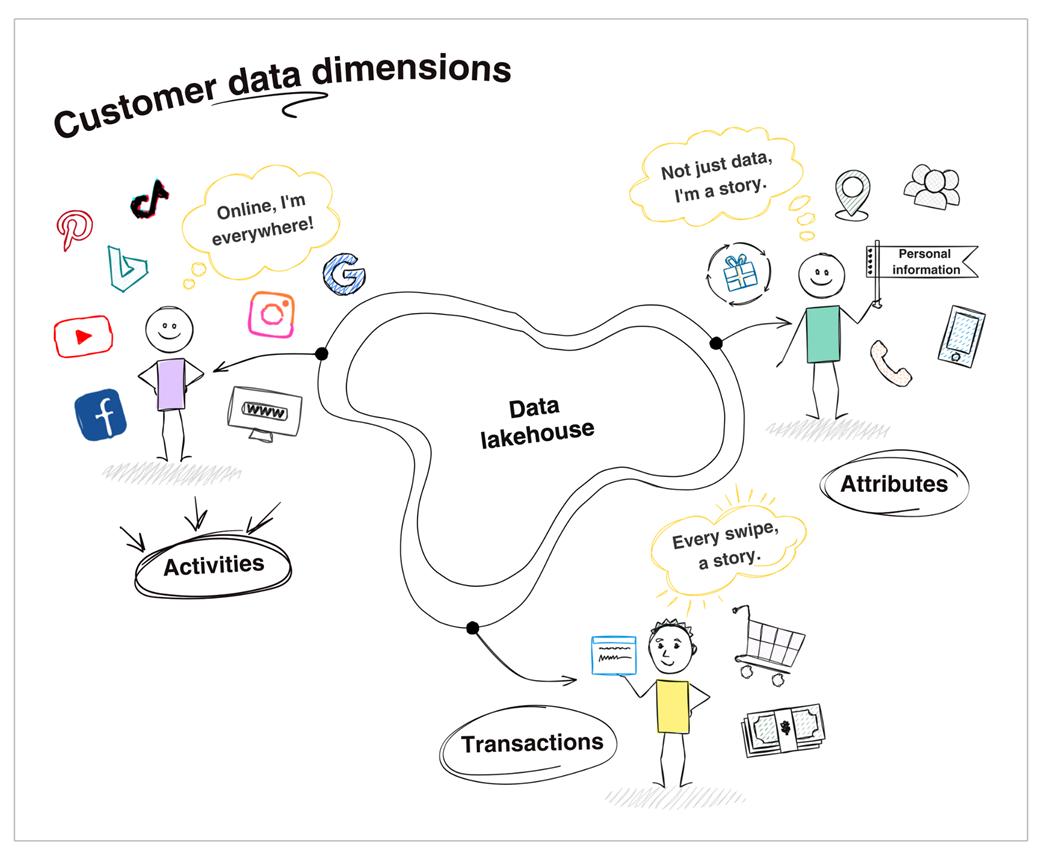
Customer data model: Attributes, transactions, activities
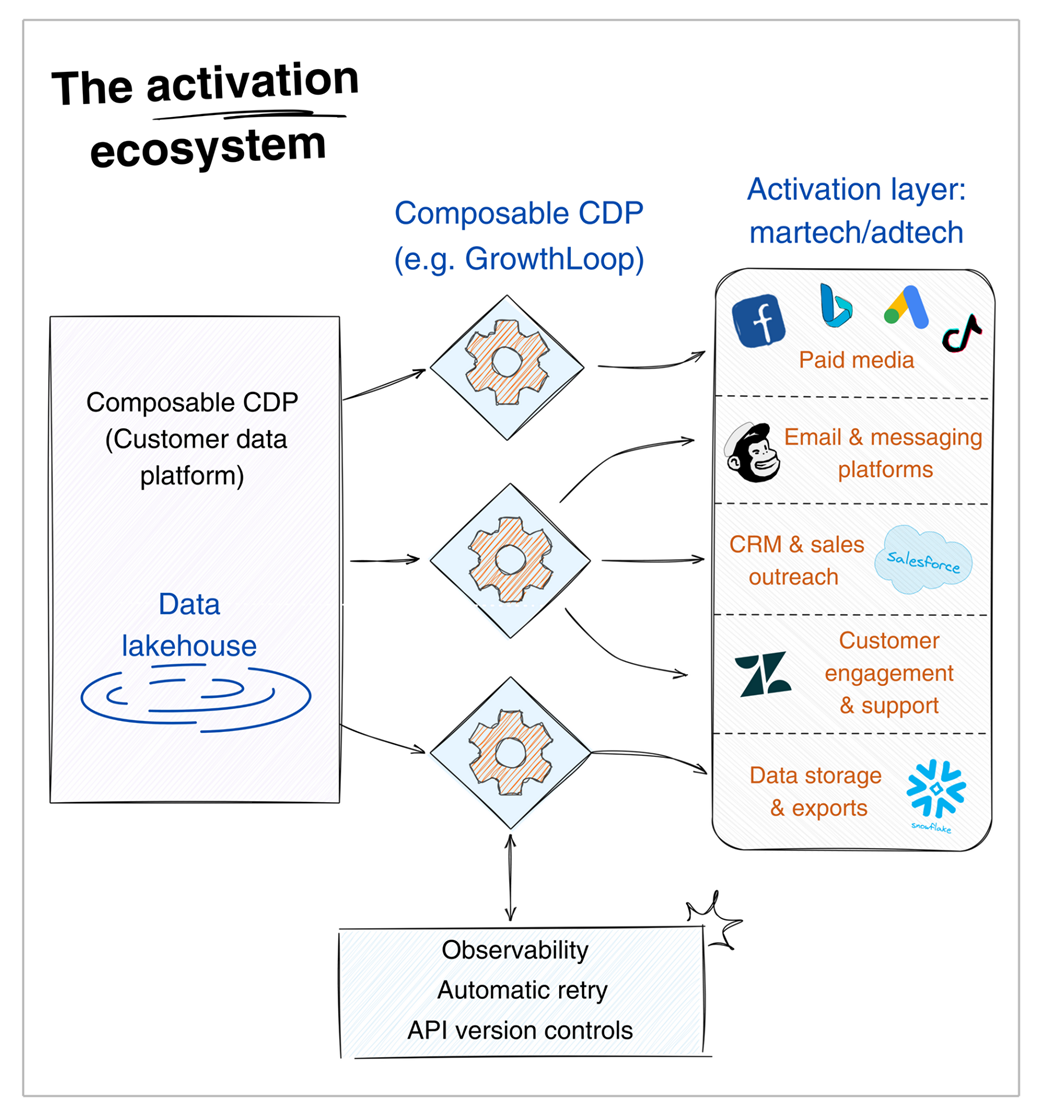
Composable CDP dynamics for seamless first-party data activation
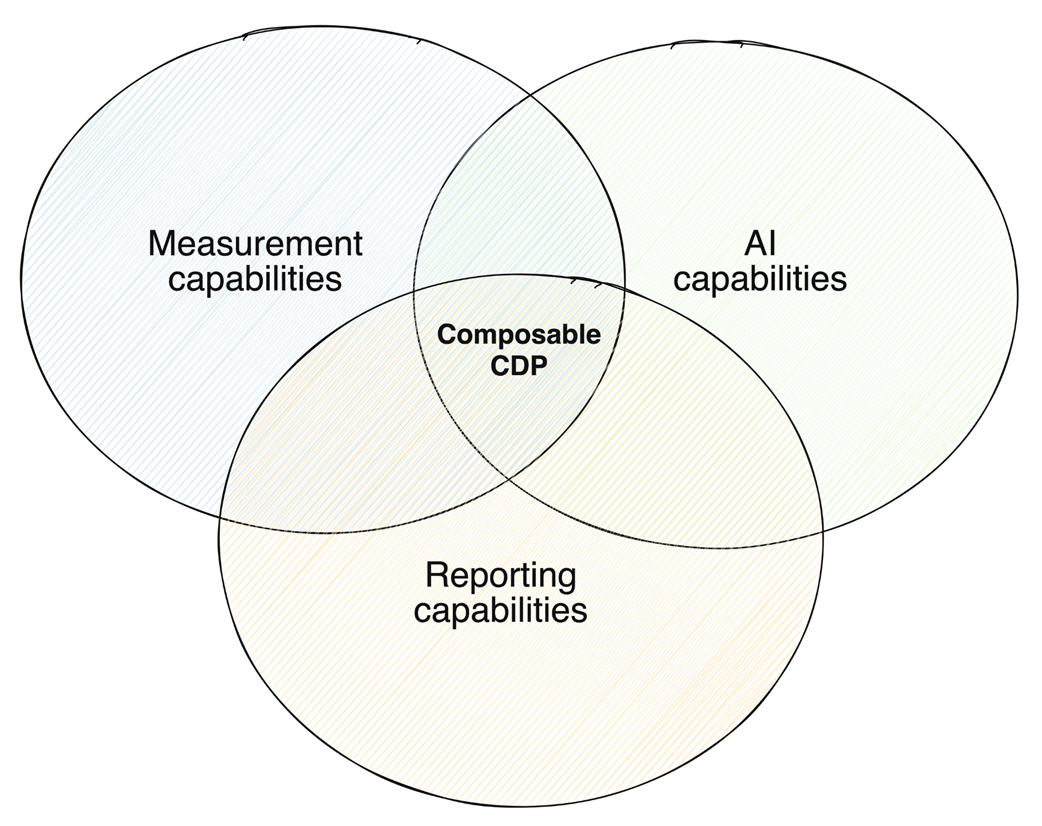
Composable CDP capabilities
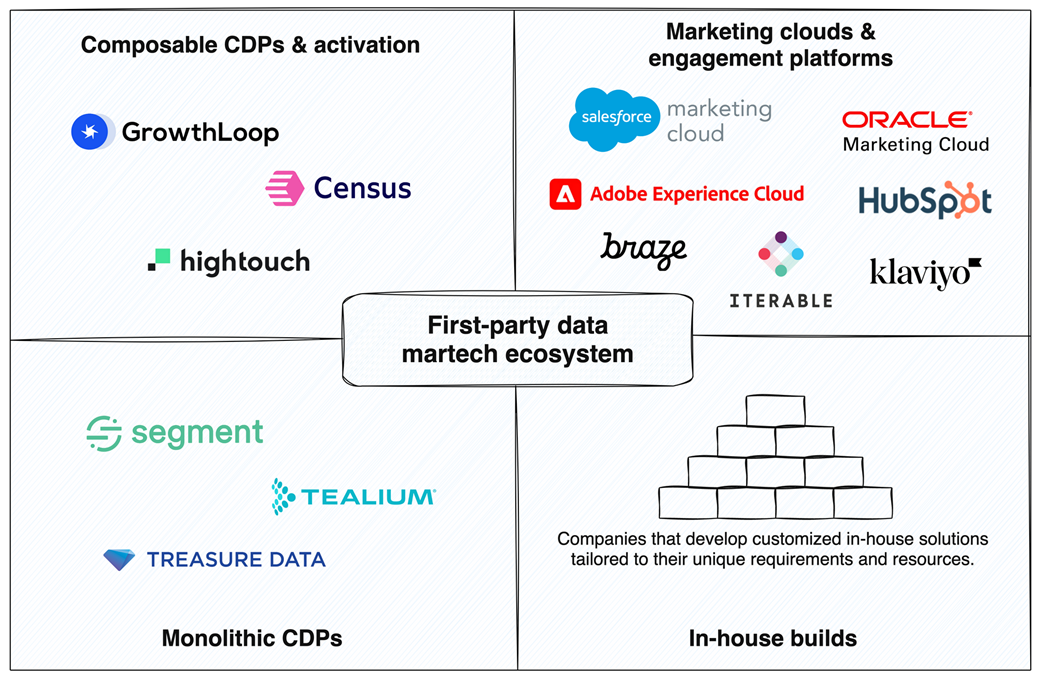
Martech ecosystem: Key players in first-party data solutions
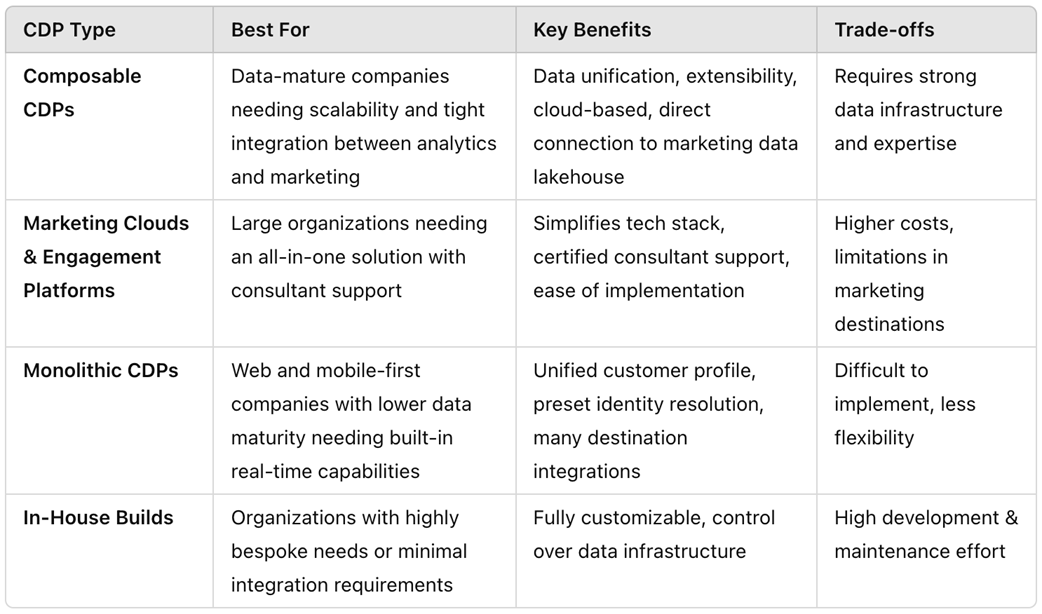
Martech ecosystem comparison: Benefits and trade-offs
Summary
The combination of new marketing channels, increasing privacy regulations, and rising consumer expectations for smart personalization creates considerable complexity.
The good news is that there is a large, diverse, and highly dynamic set of marketing technologies, including new composable solutions, that can be applied to this challenge.
Composable customer data platforms are an excellent option for companies that desire the data unification, extensibility, and cloud innovation provided by a solution directly connected to their marketing data lakehouse. They may want a tighter integration between their analytics and their marketing teams. This best supports more data-mature companies that want a solution that will scale.
Marketing clouds and engagement platforms may be a good option for larger organizations that do not need to customize or host their own first-party data independent of their marketing technology platform. They are also a good solution for organizations that struggle to manage a large portfolio of marketing technologies and prefer an all-in-one solution with certified consultants to support implementation. These organizations are willing to accept limitations in marketing destinations and greater costs for simplicity’s sake.
Monolithic customer data platforms that host a unified customer profile may be a good option for web and mobile-first companies with lower data maturity who prefer built-in real-time capabilities or a preset identity resolution feature. Although monolithic CDPs may be more difficult to implement, they offer many destination integrations out of the box.
In-house builds may be a good option for organizations with very bespoke needs. They were the primary option for large, data-mature enterprise companies before the availability of composable CDPs. They are also a good solution for organizations at the opposite extreme—those that only need to integrate a single marketing destination and feel they can develop and maintain that integration themselves.
As a team, your mission is to find the first-party data solution that best connects your organization’s most valuable use cases while leveraging its strengths (e.g., marketing analytics, or mobile app engagement). We reviewed several scenarios to help guide your decision-making.
FAQ
What are the core components of a first-party data solution?Most modern stacks share three parts: (1) Collect – securely ingest event and batch data from sites, apps, and systems; (2) Manage – unify data into a customer profile, including identity resolution and modeling; (3) Activate – sync audiences and personalization to marketing and sales destinations across channels.What is a composable CDP, and how is it different from a monolithic CDP?A composable CDP activates directly from your warehouse/lakehouse without hosting your first-party data. A monolithic CDP collects and hosts a unified profile inside its own platform and then pushes to destinations. Composable = use your data layer, faster alignment with analytics/DS, less lock-in, lower data hosting costs; Monolithic = more end-to-end hosting and SDKs, stronger real-time in some cases, but longer implementations and more platform lock-in.Why should I consider a composable CDP first?It blends “build and buy”: customization for complex data models, extensibility via audience snapshots in your lakehouse, tight unification with analytics/data science, agility to change downstream tools without rework, cloud-scale performance/security, rapid access to new cloud innovations (including generative AI), and typically lower total cost than hosted suites.How does a composable CDP work end-to-end?Data flows into your lakehouse via (a) real-time event collection and (b) batch ingest from core systems. You model a unified profile across attributes, transactions, and activities. The CDP queries this in place, lets marketers build audiences/experiments, and activates to destinations with observability, automatic retries, and API version control. Most updates run on minute-level cadences; millisecond “edge” use cases are typically handled in product/web layers using saved segment memberships.When are other solution categories a better fit?- Marketing clouds/engagement platforms: simpler channel needs, desire for a single vendor with embedded delivery (e.g., email), and strong services ecosystem, despite higher cost and fewer destination integrations. - Monolithic CDPs: mobile/web-first teams without a mature data lakehouse that need turnkey event capture and many out-of-the-box destinations, plus some real-time triggers. - In-house builds: either very simple (one channel) or highly bespoke/regulatory needs where no vendor fits, understanding ongoing maintenance costs are significant.How do I assess time to value and ongoing execution speed?Map choices to your strengths. If you already have a lakehouse and analytics team, composable CDPs can launch in weeks. Hosted suites/CDPs often require months to load/transform into their profile. For day-2 speed, ensure marketers can self-serve audience building, calculated fields, and experiments without constant engineering. Demand demos/pilots on your use cases and include less-technical marketers in evaluations.How do I compare costs and build a strong ROI case?Model small/medium/large usage scenarios and how pricing scales (records, syncs, destinations). Composable is often cheaper because data stays in your cloud; hosted platforms charge to store/compute on your data. Target 2–3x ROI using: (a) revenue lifts (e.g., churn winback, CLV gains), (b) labor savings from automation, (c) media savings (e.g., timely suppressions). Budget-neutral swaps are possible when composable lets you retire or downsize other tools.What should I look for in cross-channel activation and audience portability?Define once, use everywhere. Check breadth (all channels you need) and depth (each platform’s specific methods, e.g., Customer Match, Enhanced Conversions). Verify observability, retries, and API versioning. Ask vendors how fast they add new destinations and ensure an “escape hatch” (e.g., S3/GCS) for custom endpoints.How do we ensure data trust, security, and compliance?Favor a single source of truth accessible to analytics and marketing to avoid silos and discrepancies. Require monitoring/alerts for stale or inconsistent data. On security, look for SOC 2/ISO 27001, least-privilege designs, and (with composable) keeping PII in your own cloud while sharing only audience membership and needed fields downstream. Confirm privacy controls and industry-specific obligations (e.g., HIPAA, fair lending), including BAAs where required.How should we evaluate identity resolution?Decide where it lives and how transparent it is. Many teams prefer building/controlling identity logic in the lakehouse (deterministic steps, clear merge rules) and using a composable CDP to activate. If using vendor-provided resolution, assess false positive/negative risks, anonymous-to-known strategies, third-party enrichment options, and the ability to audit/override assumptions for regulated use cases.
pro $24.99 per month
access to all Manning books, MEAPs, liveVideos, liveProjects, and audiobooks!

 First-Party Data Activation ebook for free
