1 The shift: Code is free now. Understanding isn't.
AI has made producing code dramatically easier, but that convenience hides a growing problem: developers can now ship features faster than they can truly understand them. The chapter argues that this creates “comprehension debt,” a deeper and more dangerous issue than technical debt because the code may work even while no one can explain why. In a world where AI can generate vast amounts of software, the scarce and valuable skill is no longer typing code quickly, but building a reliable mental model of how a system fits together.
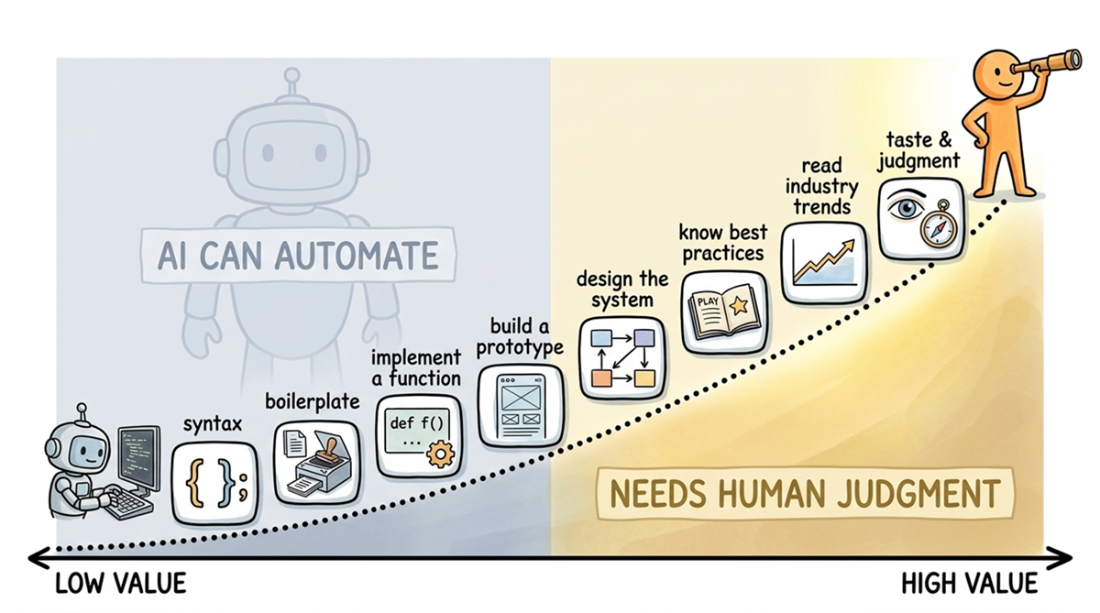
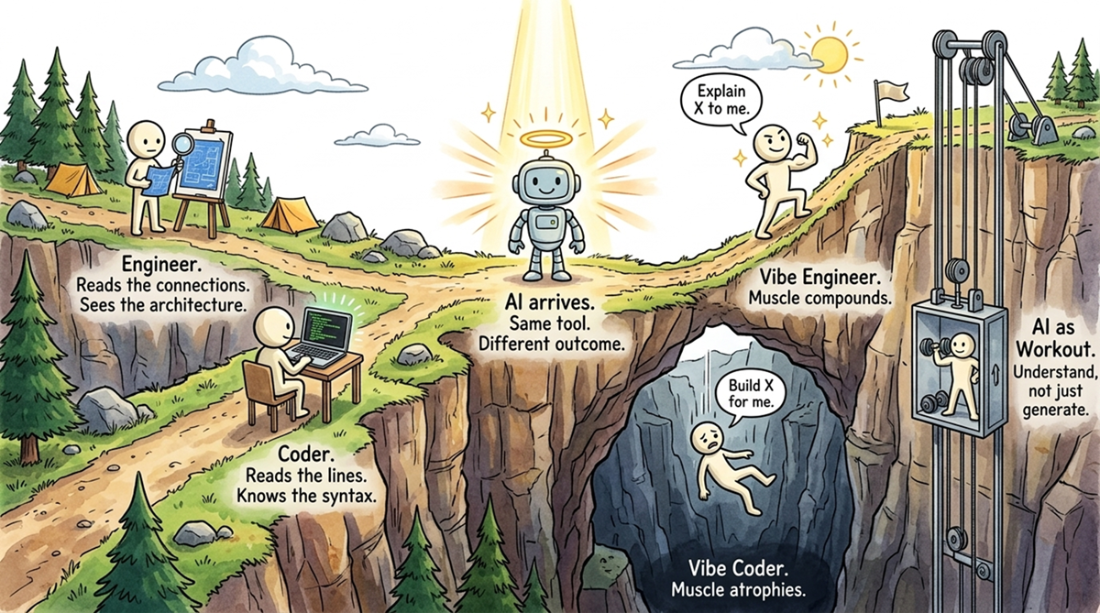
The core reframing is from “coder mode” to “engineer mode.” Coder mode asks AI to build things and produces working output with little understanding, while engineer mode asks AI to explain systems, trace flows, and surface trade-offs so the human can think architecturally. The chapter emphasizes that the commodity 90% of development work is increasingly automated, but the remaining 10%—judgment, design, connections between components, and understanding of constraints—has become more important than ever. That skill does not appear passively; it must be trained intentionally, or it will atrophy.
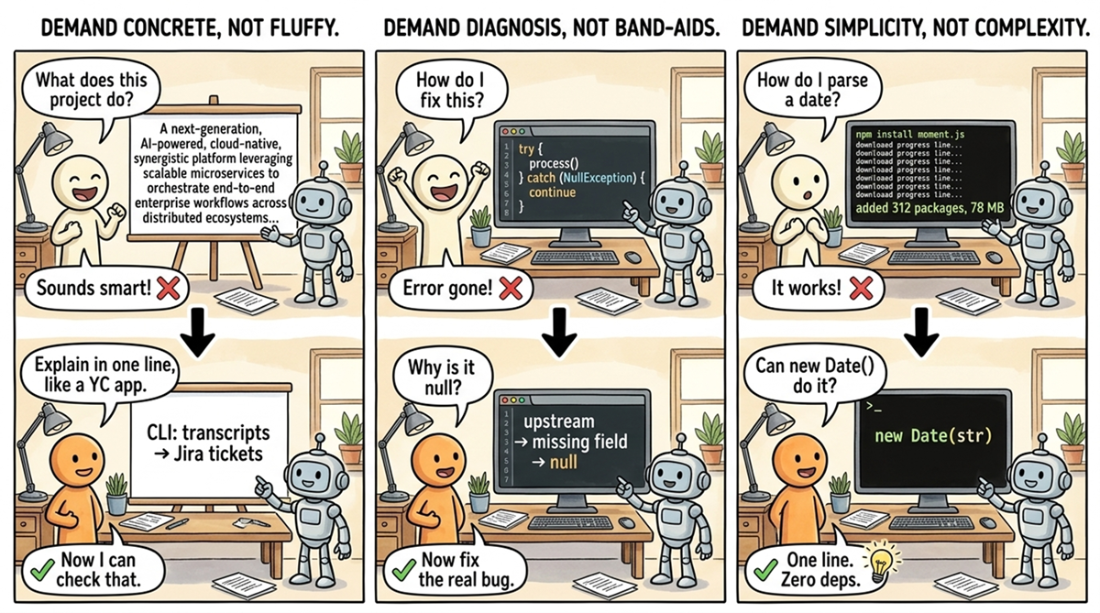
To strengthen that architectural muscle, the chapter recommends using AI as a tool for interrogation rather than outsourcing. Instead of vague prompts, you should ask for verifiable answers: a one-sentence summary, a sequence diagram, or an alternative design with trade-offs. AI’s flaws are treated as productive resistance, because every wrong assumption, overcomplication, or hallucination is a chance to practice judgment by checking claims against the real code. The broader message is that AI should amplify understanding, not replace it, and the goal of the book is to help readers reverse-engineer unfamiliar codebases layer by layer until they can make changes with confidence.
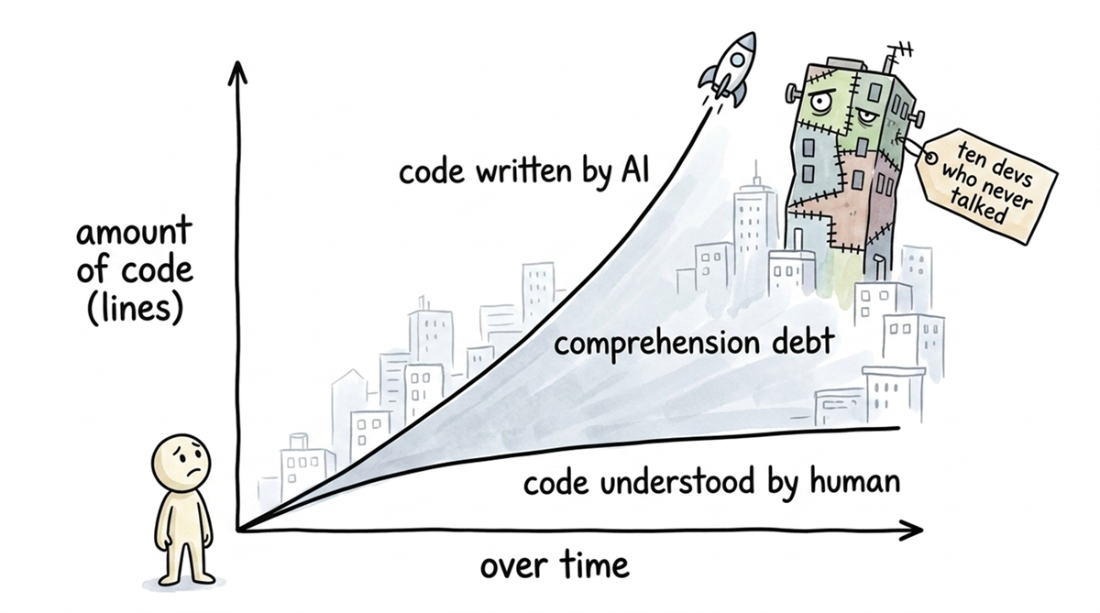
AI writes code far faster than any team can absorb it: the line for code written rockets upward while code understood by humans stays nearly flat. The widening wedge between them is comprehension debt, and the lopsided structure it leaves behind is the "haunted codebase" that runs for reasons no one remembers.
AI automates the cheap, repeatable end of the work, but the value climbs toward the skills it can't supply. The commodity 90% collapses toward zero value, while the architectural 10% becomes worth far more.
Three panels, each showing a coder accepting fluff and an engineer issuing a command that forces a checkable answer: a one-sentence YC-style summary, a Mermaid diagram, and an alternative-with-trade-off.
A developer stands at a fork. One path descends to "coder mode," where they say, "build X for me," outsource understanding, and find the ground crumbling. The other path climbs to "engineer mode," where they say, "explain X to me," and build a mental model with each step. The same person, using the same AI, gets two different outcomes depending on which mode they choose.
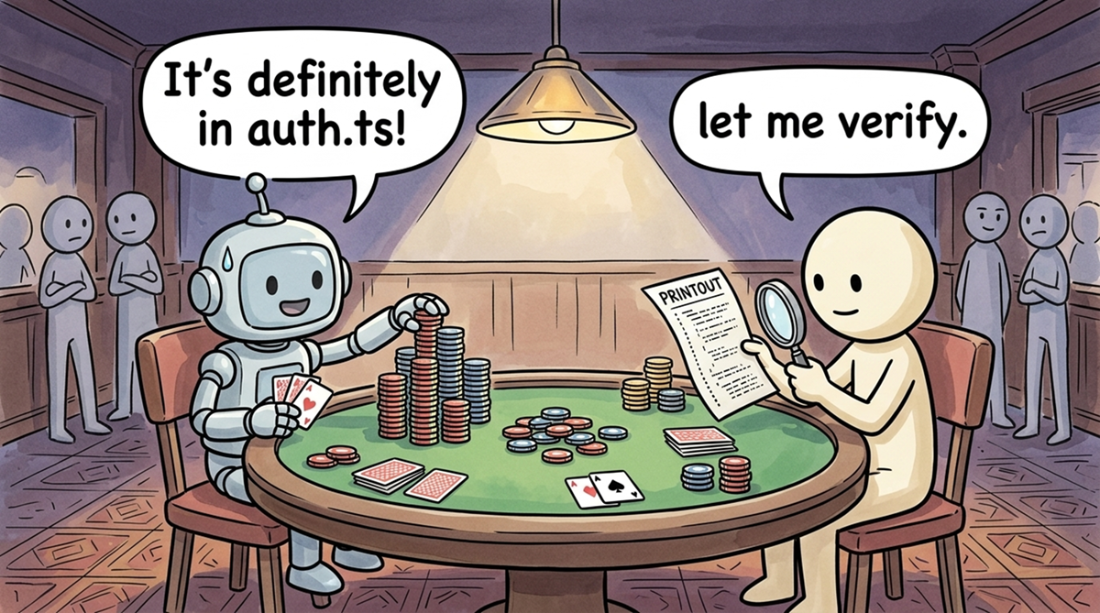
You don't catch a confident wrong answer by trusting the AI less; you catch it by checking the claim against the actual code. The AI shoves its chips in on "it's definitely in auth.ts"; the engineer doesn't fold or call on a feeling, but turns over the real evidence first.
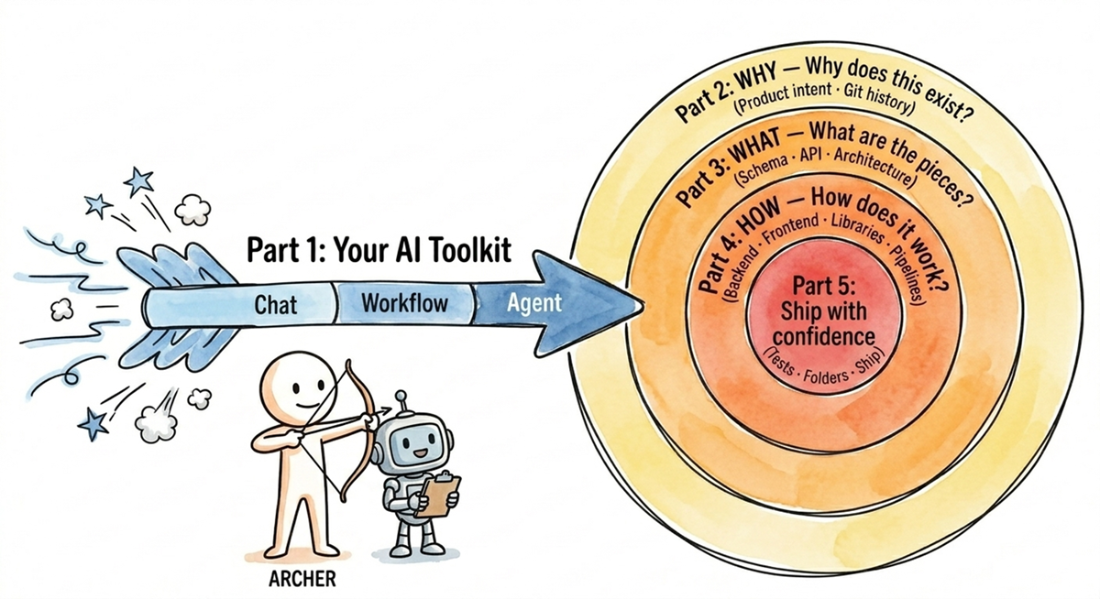
The book's progression: master your AI toolkit (chat, workflow, agent, and the skill file) in Part 1, then drill from why a system exists (Part 2), to what its pieces are (Part 3), to how they work under the hood (Part 4), to making changes and shipping with confidence (Part 5).
Summary
- AI has made writing code dramatically faster, but not understanding it. You now generate more code than you can grasp, and this widening gap is comprehension debt.
- Comprehension debt is dangerous because it's invisible. Unlike technical debt (a known mess you chose to defer), comprehension debt exists in working code that no one fully understands. It hides architectural flaws and unspoken assumptions that grep will never find.
- "Coder" and "engineer" describe two modes of working, not two different people. Coder mode gets a file to run; engineer mode understands the connections between files. The difference is what you gain from the work: a mental model or just merged code. AI has made the commodity skill (coding) almost free, while making the architectural skill (engineering) far more valuable.
- You build architectural thinking through deliberate practice with AI because it's no longer a byproduct of manual coding. Vibe coding ("build X for me") deepens comprehension debt, while using AI to understand ("explain X to me") is the workout that pays it back down.
- AI's flaws offer the best training. Catching confident nonsense, verifying claims, and challenging assumptions are core engineering tasks. You can start today by asking three questions: "Explain it in one sentence," "Draw a diagram," and "Give me an alternative approach, with its trade-offs."
- This book is your training plan. We'll descend layer by layer, from schema and API through the frontend down to the tests, so you can understand any codebase and ship meaningful changes in hours, not months.

 Crack Any Codebase with AI ebook for free
