Overview

1 What’s a bug bash?

Modern teams rarely have unlimited time or dedicated testers to exercise every path through their products, which is why this chapter introduces the bug bash: a focused, time‑boxed, cross‑functional testing event held before key milestones. By inviting people from across the company—not just engineers or testers—to explore real user journeys, teams quickly surface defects, integration gaps, usability snags, and flawed assumptions that traditional testing may miss. A bug bash complements, rather than replaces, other testing methods, turning limited internal resources into a broad set of perspectives that raise confidence in quality while keeping the experience engaging and fun.

The chapter details why bug bashes work so well: diverse roles and lived experiences reveal blind spots, transform “edge” cases into actionable insights, and produce higher‑quality, timely reports from colleagues who understand the domain. Direct benefits include discovering unexpected bugs early, gathering improvement ideas, protecting product reputation, and enabling more predictable, efficient delivery by batching issues before release. Indirect gains are equally powerful: participants build product knowledge and testing skills, strengthen trust in what’s shipping, and feel greater ownership and accountability—effects that improve collaboration, morale, and long‑term quality culture.

To run an effective bug bash, the chapter outlines a clear “anatomy”: define a mission and scope tied to a milestone, set a firm time boundary, prepare environments and guidance (scenarios, instructions, communication channels, and tracking), recruit a diverse set of players, and appoint a facilitator. Optional pairing and light gamification can boost engagement. Afterward, teams triage, prioritize, and fix issues, share results with participants, and capture lessons to improve processes and tests. Success also depends on securing leadership buy‑in, assembling allies, and allocating time to plan, run, and recover. Common triggers include upcoming releases, compliance or accessibility initiatives, product health checks, onboarding and knowledge sharing, trust building, and team bonding—altogether making quality a shared responsibility across the organization.

Different roles bring different perspectives to the event that help discover various bugs
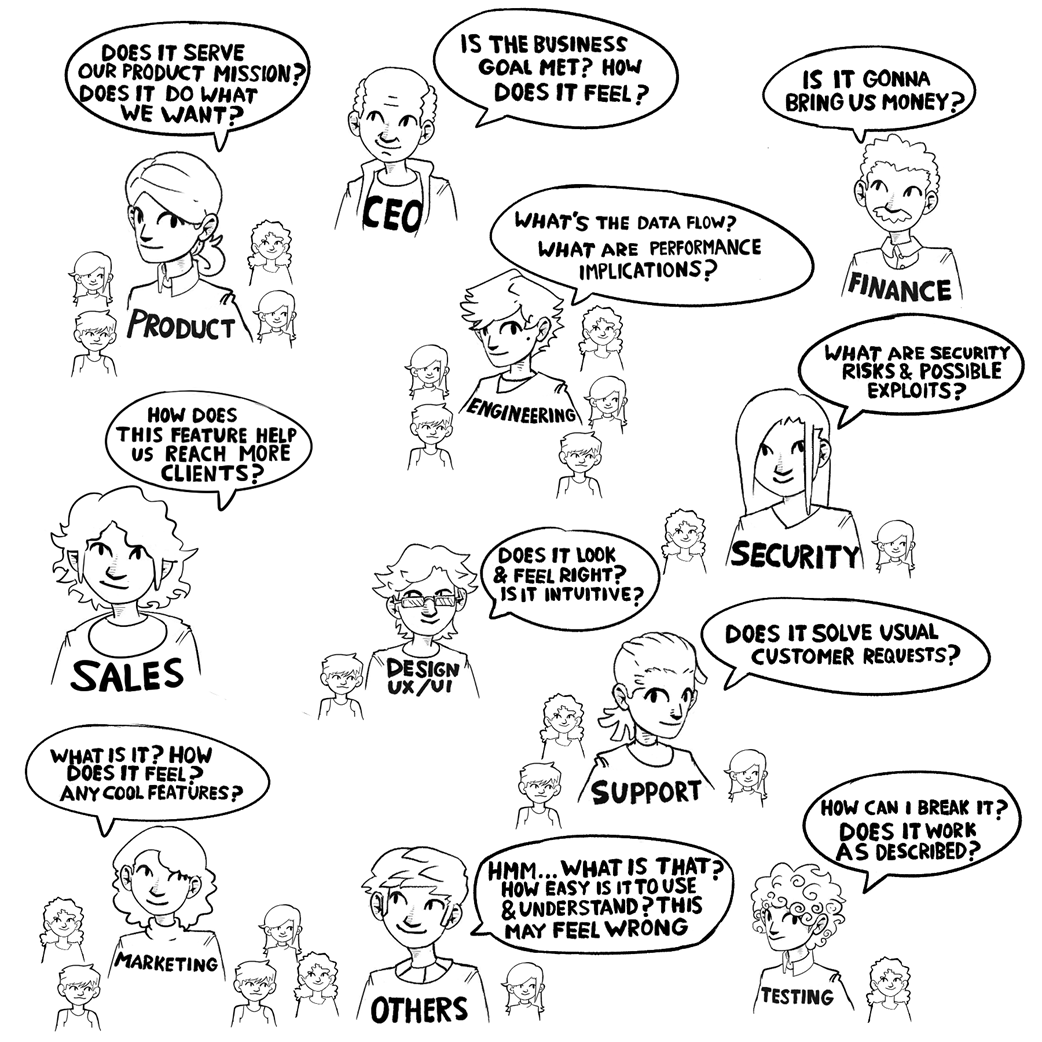
In a bug bash, we bring more than our roles: we bring who we are as people, and each of us has a unique combination. Various factors, such as age, cultural background, or even hobbies, affect how we test and which bugs we notice.

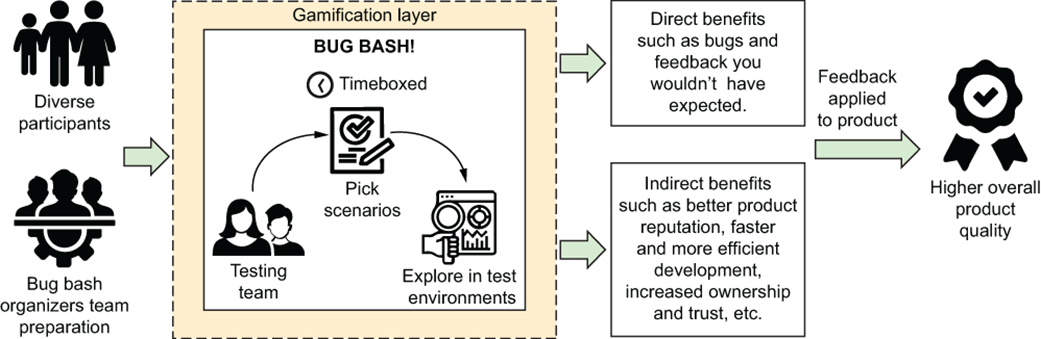
The anatomy of a bug bash. On the left, you see what comes into the bug bash; in the middle, the event itself and its aspects; and on the right, the event's outcomes. All this leads to a better quality product.
Summary

  • A bug bash is a timeboxed, whole-company testing event.
  • Participants come from across the company's professional areas.
  • One of the primary goals of a bug bash is to gather numerous bugs and insights for improvement, based on the diverse perspectives of participants, who vary by role and background.
  • Bug bashes have both direct benefits (such as bugs and feedback, better product reputation, and faster, more efficient development) and indirect benefits (increased sense of ownership and trust, and boosted team morale).
  • When organizing a bug bash, you’ll need to establish a mission for your bug bash, get support from your company, and allow time to execute it well.

FAQ

What is a bug bash?A bug bash is a time-boxed, collaborative testing event held before an important milestone (often a release). People from across the company—not just testers—actively use the product from different perspectives to uncover bugs, surface improvement ideas, build confidence in quality, and have fun.
Why run a bug bash if we already have QA and automation?Even well-tested systems have gaps. A bug bash complements, not replaces, other testing by exposing issues automation and role-based testing often miss—especially around real user workflows, integrations, usability, and accessibility. Doing it internally first means external users later focus on truly critical feedback, improving trust and feedback quality.
Who should participate in a bug bash?Anyone who cares about the product: engineers, testers, designers, security specialists, product managers, sales, support, leadership, and more. Diversity matters—different roles, backgrounds, abilities, languages, habits, and domain knowledge reveal different bugs and insights, often at higher quality because participants know the product and organization.
When should we run a bug bash?Typically before milestones such as product releases. It’s also effective for focused initiatives (for example, meeting accessibility or data requirements), revisiting the product’s current state, onboarding and knowledge sharing, increasing internal confidence, or team bonding. It can be one-off or periodic.
Do we fix bugs during the bug bash or only find them?Fixing on the spot can happen, but because the event is time-boxed, the primary focus is usually discovery and reporting. Teams then prioritize and “bash the bugs” afterward in a more controlled, efficient way.
What kinds of issues does a bug bash typically surface?Unexpected defects, confusing or unintuitive flows, integration and workflow breaks, accessibility problems, localization and data-format issues, and “edge cases” that turn out to be common for real users. It also challenges hidden assumptions between teams before they reach customers.
What are the direct, measurable benefits?Rapid discovery of unexpected bugs and actionable feedback before release; improved product reputation (fewer customer-found issues); faster, more predictable delivery by batching bug discovery and reducing context switching; earlier visibility into cross-team and integration problems.
What are the indirect, long-term benefits?Greater ownership and voice across the organization; increased trust and confidence in the product; better internal alignment and shared understanding of success; opportunities to teach testing skills; stronger relationships, morale, and a sense of belonging through collaborative exploration.
What are the essential components of a successful bug bash?A clear mission and scope; a defined time boundary; thoughtful preparation and logistics; the right setting (on-site or online) and test environments; an engaged facilitator; diverse participants; clear instructions and a shared working document; guided scenarios/tasks; a results-tracking process; and optional extras like pairing and gamification.
What do we need to prepare beforehand, and how do we follow up afterward?Before: set the mission, secure leadership buy-in and allies, choose participants, plan logistics (venue or tooling, timelines), prepare scenarios, communication channels, and a bug-tracking system, and allow time for prep. After: review and prioritize findings, fix issues, share a summary with participants, capture learnings, and strengthen processes and automation so problems don’t recur.

pro $24.99 per month

  • access to all Manning books, MEAPs, liveVideos, liveProjects, and audiobooks!
  • choose one free eBook per month to keep
  • exclusive 50% discount on all purchases
  • renews monthly, pause or cancel renewal anytime

lite $19.99 per month

  • access to all Manning books, including MEAPs!

team

5, 10 or 20 seats+ for your team - learn more


choose your plan

team

monthly
annual
$49.99
$499.99
only $41.67 per month
  • five seats for your team
  • access to all Manning books, MEAPs, liveVideos, liveProjects, and audiobooks!
  • choose another free product every time you renew
  • choose twelve free products per year
  • exclusive 50% discount on all purchases
  • renews monthly, pause or cancel renewal anytime
  • renews annually, pause or cancel renewal anytime
  • Bug Bash ebook for free
choose your plan

team

monthly
annual
$49.99
$499.99
only $41.67 per month
  • five seats for your team
  • access to all Manning books, MEAPs, liveVideos, liveProjects, and audiobooks!
  • choose another free product every time you renew
  • choose twelve free products per year
  • exclusive 50% discount on all purchases
  • renews monthly, pause or cancel renewal anytime
  • renews annually, pause or cancel renewal anytime
  • Bug Bash ebook for free