1 Real-world Decision Making with Reinforcement Learning
Businesses make decisions under uncertainty every day, and their success depends on how well they balance what they can control with the unpredictable forces around them. The chapter frames this challenge by separating external factors, such as market trends and competitor actions, from internal factors, such as pricing, staffing, and scheduling. It also distinguishes between descriptive, predictive, explanatory, and optimization questions, showing that business optimization is mainly concerned with answering “What should we do?” for controllable, measurable, and often recurring operational problems.
To ground that idea, the chapter reviews common business optimization settings such as inventory replenishment, vehicle routing, production scheduling, workforce planning, rebalancing logistics, and dynamic pricing. It explains the basic structure shared by these problems: inputs, decision variables, objectives, constraints, and outputs. The chapter then surveys classical methods including operations research, stochastic simulation, system dynamics, and game theory, emphasizing that each is useful in different contexts but also has limitations when the business environment is noisy, changing, or only partially known.
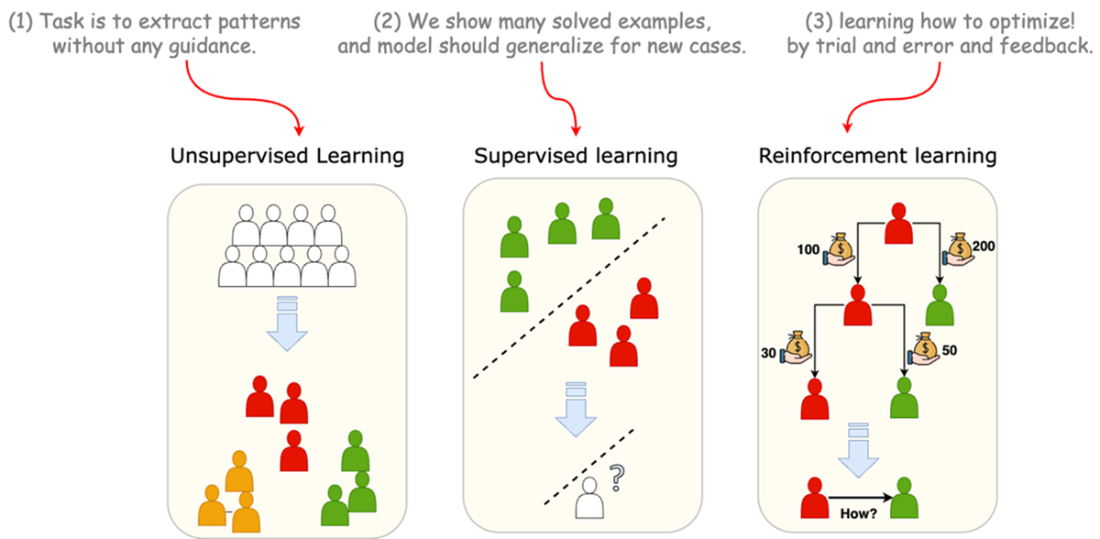
Reinforcement learning is introduced as a way to improve decisions by learning through interaction, trial and error, and feedback over time. Unlike supervised learning, which predicts outputs from labeled examples, reinforcement learning learns policies that choose actions to maximize long-term reward in sequential decision-making problems. The chapter argues that this makes it especially valuable for dynamic business optimization, while also acknowledging its drawbacks, such as data hunger, training instability, computational cost, and limited interpretability. Rather than replacing classical approaches, reinforcement learning is presented as a complementary tool that extends them with adaptability and learning capability.
Reinforcement learning in the context of machine learning.
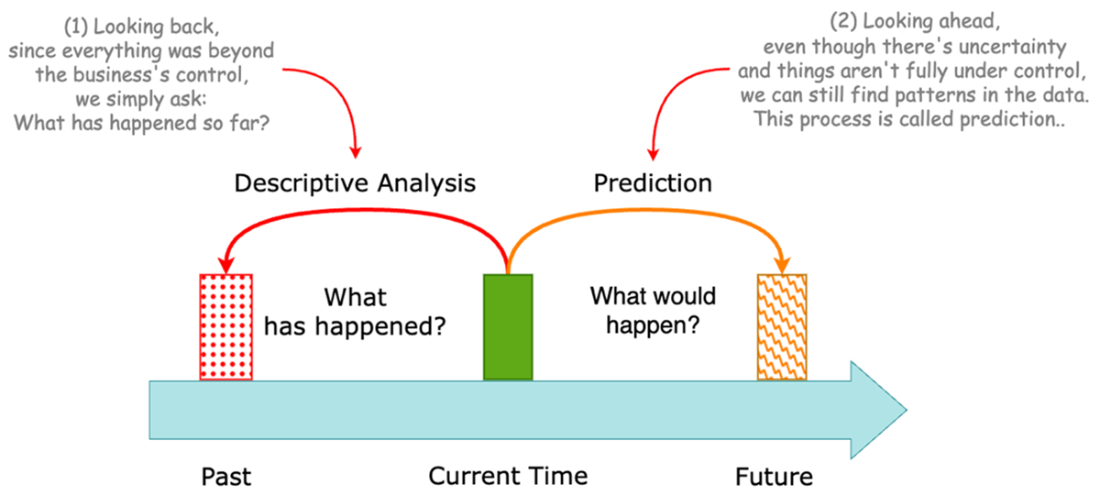
two types of questions and analytical approaches for analyzing external factors.
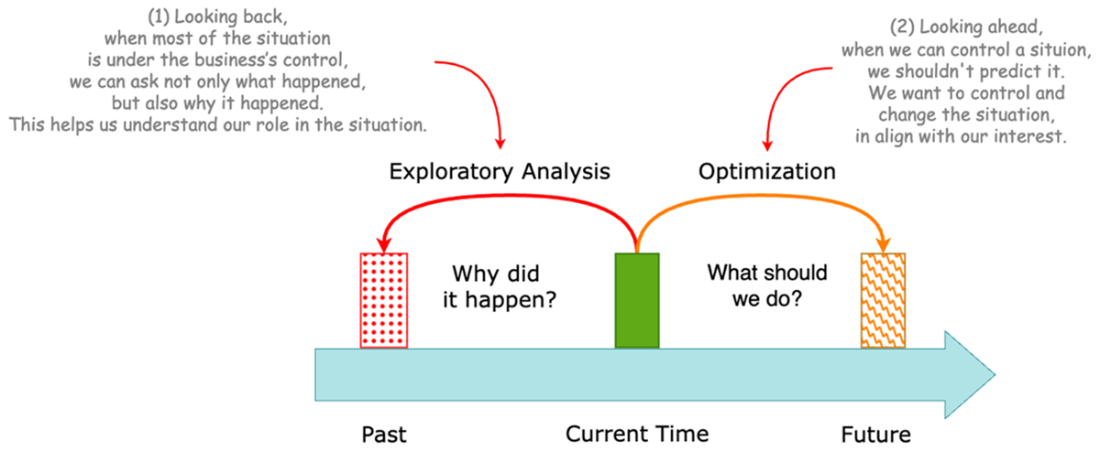
two types of questions and analytical approaches for analyzing internal factors.
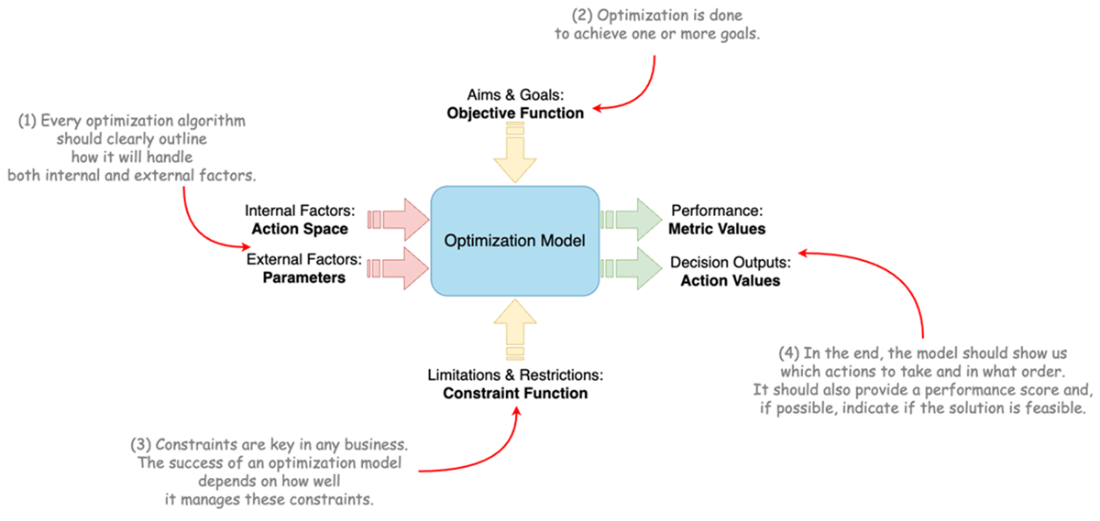
Framework for business optimization models.
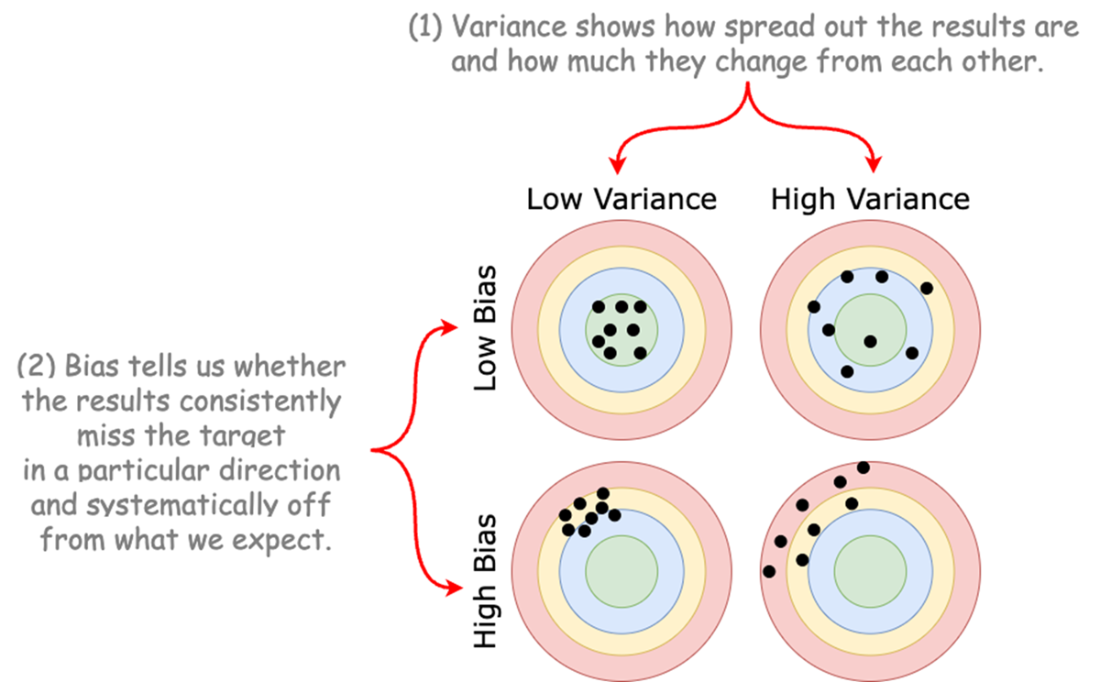
Variance and bias trade off in business optimization models.
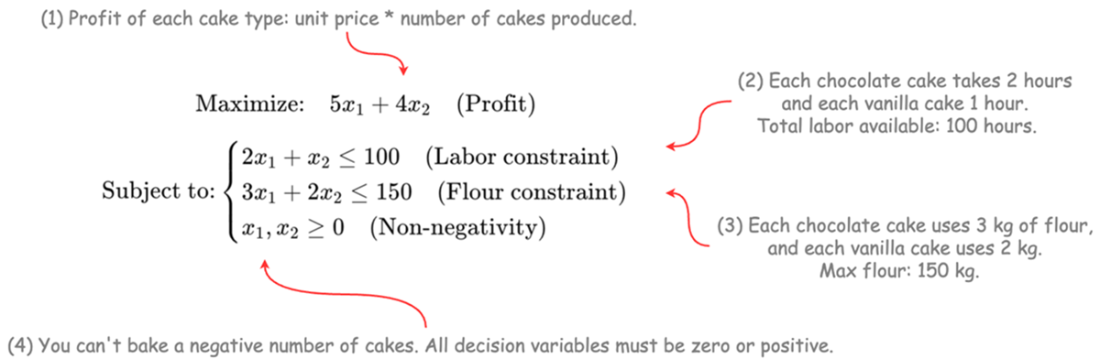
Linear programming formulation of bakery shop problem.
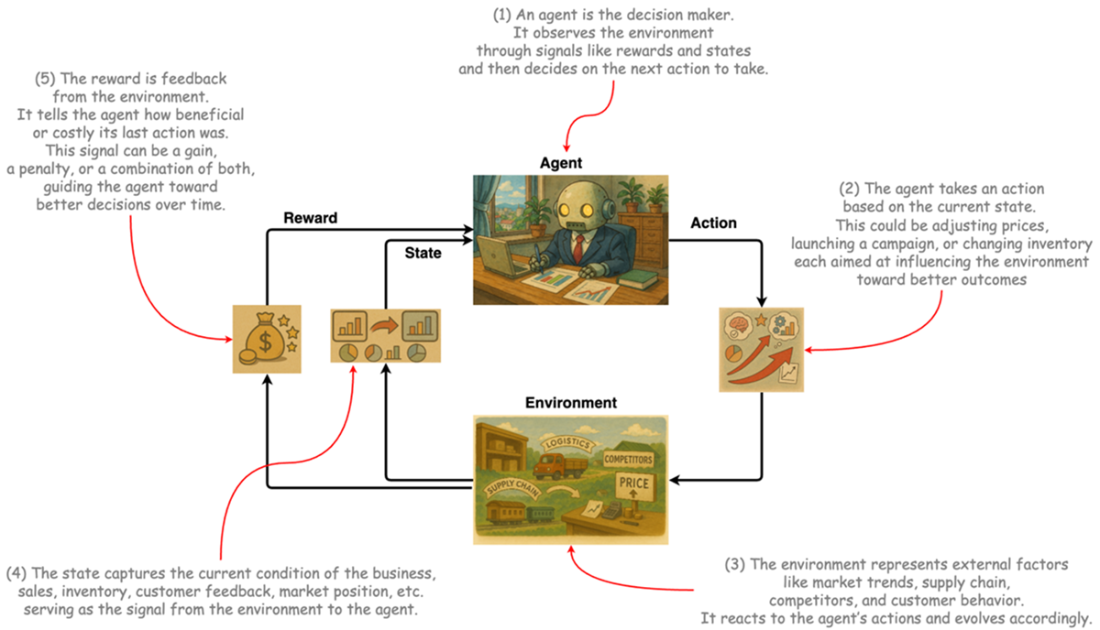
Overview of reinforcement learning framework.
Summary
- Businesses must make smart decisions under uncertainty with limited resources.
- Understanding external (uncontrollable) and internal (controllable) factors is key to effective analysis.
- Business analysis types include descriptive, predictive, explanatory, and optimization.
- Optimization focuses on shaping internal factors to improve future outcomes.
- Decisions in business problems vary by level (strategic/tactical/operational), frequency, scale, and measurability.
- Optimization models include inputs (parameters and decisions), objectives, constraints, objective outputs, and decision values.
- Major challenge in optimization is bias-variance trade-offs in the operational process
- Classical models like operations research, simulation, and system dynamics are powerful but often rigid and static.
- Reinforcement learning extends classical models by enabling adaptive, sequential decision-making.
- Reinforcement learning learns through trial-and-error, using feedback to improve policies over time.
- A comparison shows reinforcement learning excels in adaptability, real-time learning, and dynamic environments.
- Reinforcement learning downsides include training cost, data needs, and explainability—but it's improving rapidly.
- Reinforcement learning is not a replacement but a powerful extension and complement of classical optimization models.

 Applied Reinforcement Learning ebook for free