1 The frontend interview
Modern frontend interviews have evolved beyond checking a resume or quizzing basic theory. Employers now expect strong command of HTML, CSS, JavaScript, and TypeScript; hands-on expertise with a leading framework—especially React; and the ability to design, build, and explain responsive, accessible interfaces. Reflecting the growing complexity of web apps, interviews increasingly assess system design, performance, scalability, and cross-domain collaboration, alongside behavioral skills and an awareness of AI-driven development. This chapter sets expectations, introduces a depth-probing “funneling” approach to questioning, and outlines how to prepare effectively.
The typical process moves through four stages: initial screening, a technical screening, a full interview loop, and a final decision. Coding evaluations have shifted from algorithm-heavy exercises toward practical, project-style tasks (often in React) that reveal architecture thinking, testing strategy, handling of edge and failure cases, and accessibility. For many roles—including junior ones—a system design round now examines cache strategies, API contracts, data workflows, rendering performance, and scalability, while behavioral interviews gauge teamwork, communication, and adaptability. These expectations mirror industry shifts toward domain-based teams, micro-frontends, CI/CD, and shared ownership of the SDLC, where frontend engineers integrate closely with backend, DevOps, and product partners.
To excel, candidates should pair breadth with depth using the funneling technique: start with a concise overview, then drill into specifics, structuring answers, clarifying expectations, and managing time. The chapter emphasizes mastering React fundamentals and ecosystem knowledge, shows how developers from Angular or Vue can transition efficiently, and provides hands-on practice through realistic exercises (such as progressively enhancing a star rating component) that stress interactivity, robustness, and accessibility. It also highlights how to discuss and leverage AI tools productively and how to navigate common interview platforms, adapting even to imperfect environments. Jane’s experience underscores the stakes: technical skill must be matched by clear articulation, cross-domain design awareness, and openness to new tools to succeed in today’s frontend interviews.
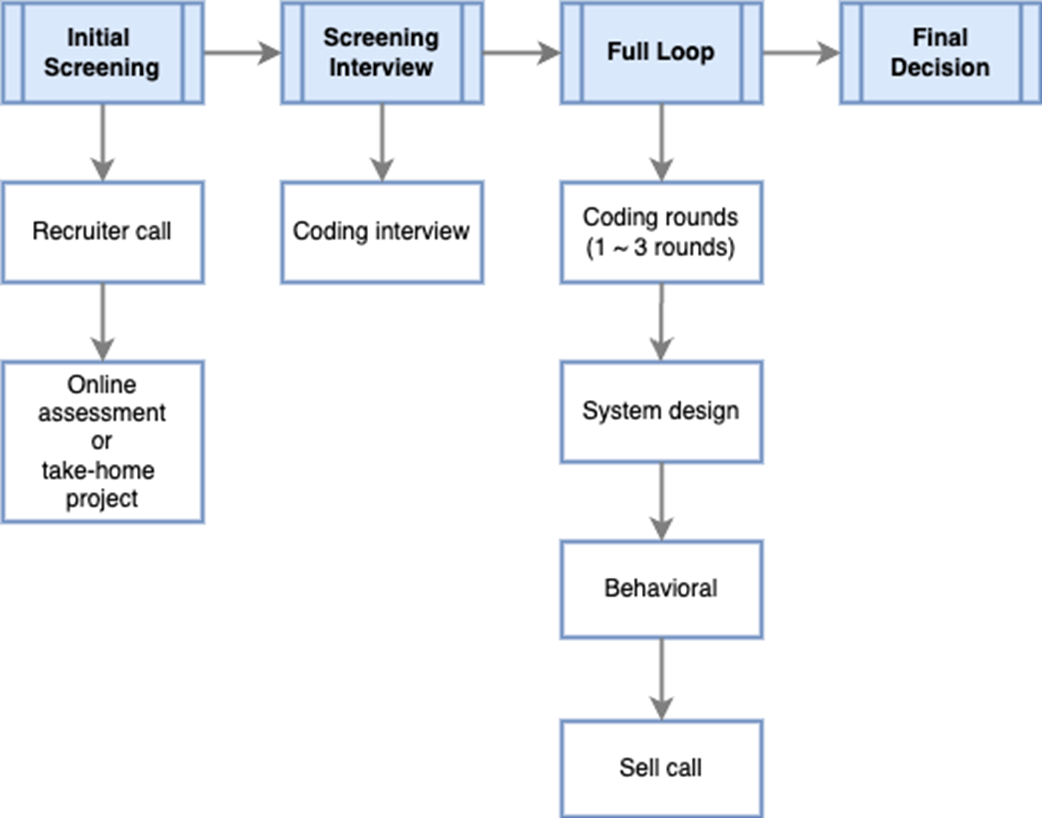
Overview of a typical frontend interview process.
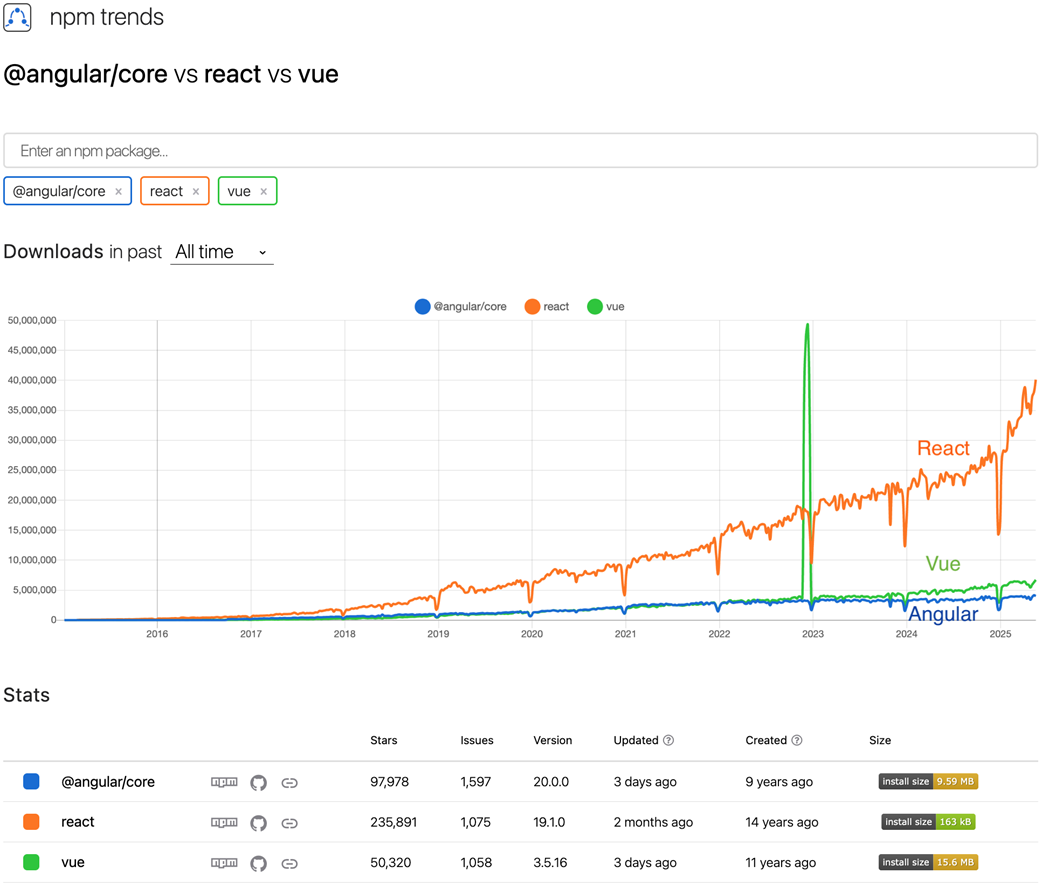
Weekly npm downloads of React, Vue, and Angular as of May 18, 2025: React – 40.1 million, Vue – 6.7 million, and Angular – 4.0 million.
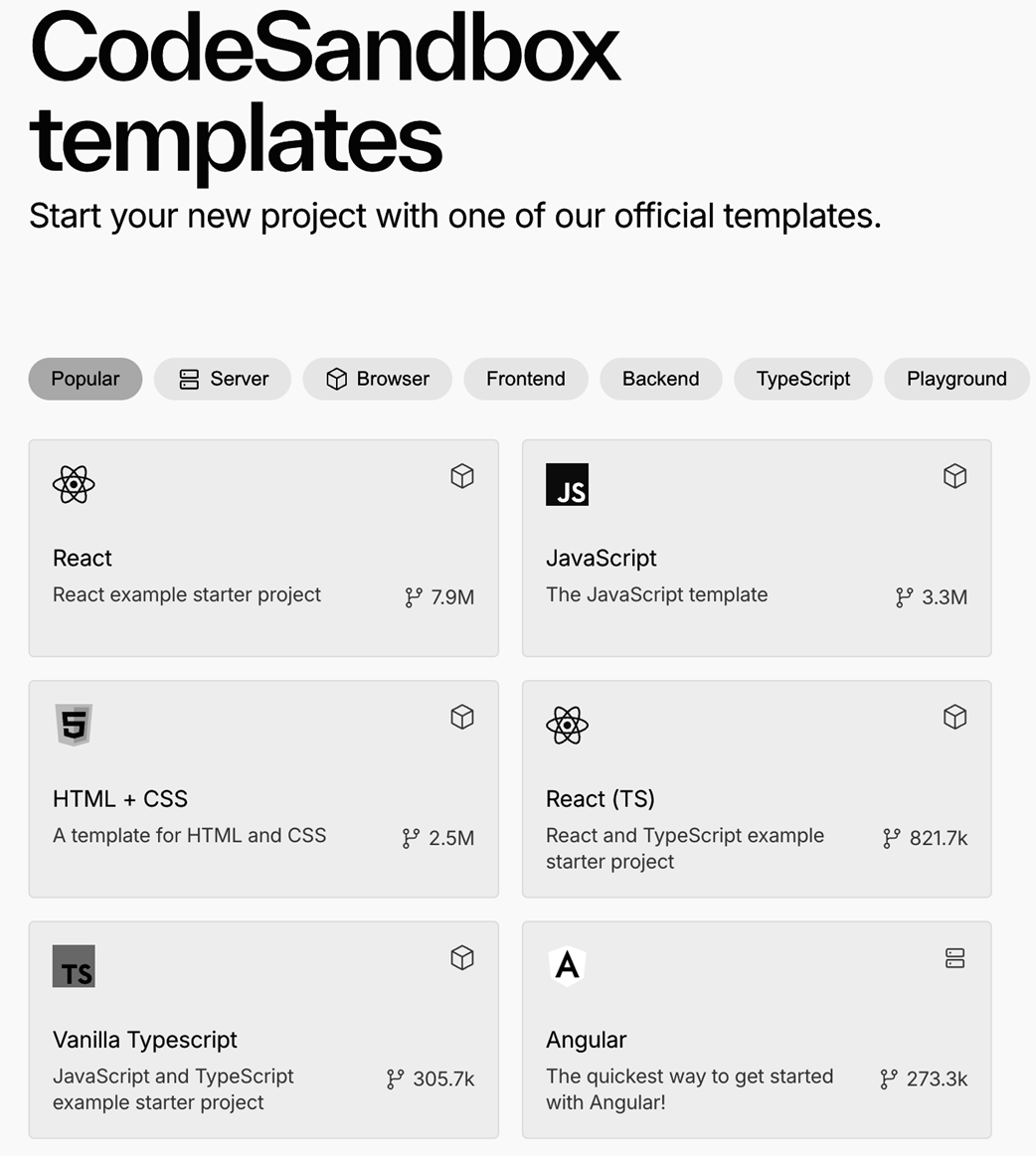
CodeSandbox templates for web development
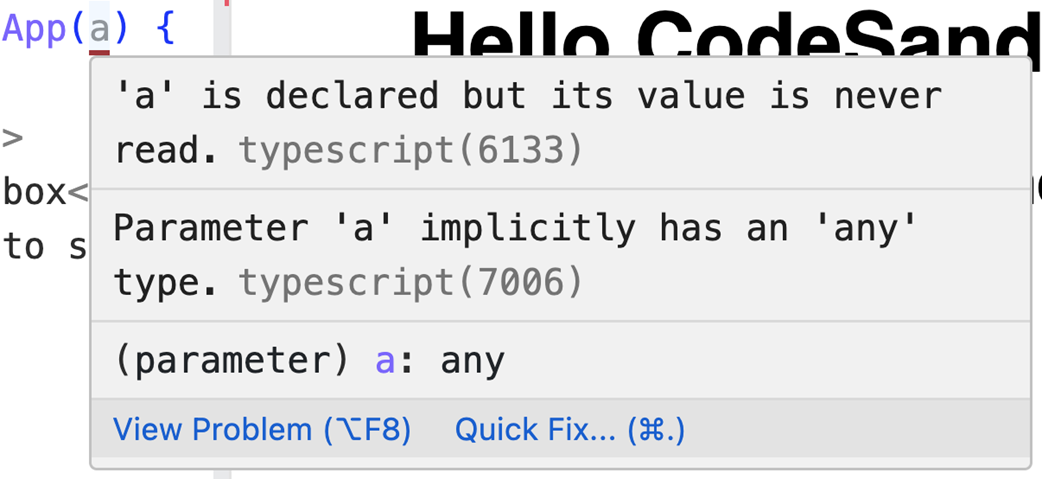
Create React App with TypeScript, displaying a warning for undefined type.
Summary
- A typical frontend interview process includes four stages: initial screening, screening interview, full loop, and final decision.
- The funneling approach begins with broad, open-ended questions and narrows to more specific topics.
- Frontend interviews typically cover core web technologies (HTML, CSS, JavaScript/TypeScript), expert knowledge of frameworks like React, system design, behavioral assessments, and increasingly, AI-related topics.
- React, Angular, and Vue are the leading web frameworks for building user interfaces, with React being the most popular and widely adopted.
- Transitioning from Angular or Vue to React can be straightforward with effective strategies and a focus on shared concepts, such as component architecture and state management.
- Platforms like CodeSandbox are frequently used as coding test environments, offering up-to-date React tooling.
FAQ
What are the main stages of a modern frontend interview?
Most processes follow four stages: (1) Initial screening (recruiter call, work authorization, compensation alignment), (2) Screening interview (live coding and basic technical fit), (3) Full interview loop (project-based coding, pair programming, system design, and behavioral rounds), and (4) Final decision (holistic review and offer choice).
Why do frontend interviews now include system design topics?
Web apps are more complex, and teams often use domain-based ownership, micro-frontends, and CI/CD. Frontend engineers co-own the SDLC and must reason about scalability, performance, data flow, and backend integration—so interviews assess that cross-domain thinking.
Which fundamentals should I master before interviewing?
Be strong in HTML, CSS, and JavaScript/TypeScript. On top of that, gain hands-on expertise with React (state, hooks, component design, rendering) and be able to build responsive, accessible UIs and explain the underlying principles clearly.
What is the funneling approach and how should I handle it?
Interviewers start broad and progressively drill deeper. Handle it by: starting with a concise overview, asking if they want high-level or deep detail, actively listening for cues, structuring answers (e.g., RADIO or STAR), managing time, and practicing clarity and concision.
How has the coding assessment focus shifted for frontend roles?
Many companies have moved from algorithm-heavy challenges toward project-based, React-focused exercises done in a collaborative setting. This reveals real-world skills—component design, state management, UX/accessibility, testing, error handling, and communication.
What do interviewers evaluate in a React coding exercise?
- Correctness and completeness
- State management, hooks usage, and component architecture
- UX and interaction handling, including edge cases and errors
- Accessibility (e.g., ARIA), responsiveness, and performance
- Code organization, reusability, and testing approach
- Ability to explain trade-offs and thought process
What follow-ups might extend a basic star-rating task?
- Toggle a selected rating on/off
- Support half-star selection
- Add animated fill transitions
- Make it fully accessible with appropriate ARIA attributes
Which cross-domain topics should I be ready to discuss in system design rounds?
- REST API design and data contracts
- Caching strategies and data processing flows
- Template/content loading and rendering strategy
- Scalable component hierarchies and render performance
- Efficient handling of large datasets in the browser
How are AI tools relevant to frontend interviews?
Be ready to explain how tools like GitHub Copilot, OpenAI’s o1, Gemini Code Assist, Cursor, or Windsurf fit into your workflow (e.g., scaffolding, refactors, debugging) and to discuss risks (quality, security, licensing, overreliance). Practicing with them helps you speak credibly.
Which coding platforms are common and how should I prepare?
Expect CodeSandbox, StackBlitz, CoderPad, HackerRank, CodeSignal, or GitHub Codespaces. Practice on the specified platform beforehand. Note that Create React App is deprecated; Vite is common. JavaScript is typically fine in TypeScript setups—just address any typing warnings.

 Acing the Frontend Interview ebook for free
