
books by Ruben Castillo Sánchez
Machines that Think
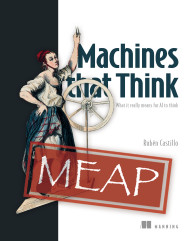
AI tools like ChatGPT, Claude Code, and OpenClaw produce impressive results that can be shockingly human-like. But are they really thinking? Machines That Think: What it really means for AI to think tackles this complex and interesting question head on, exploring the practical considerations for how “thinking” systems can be used effectively and presenting a clear framework for interpreting AI behavior. In it, author Rubén Castillo Sánchez takes a realistic look at what happens to business and daily life when we thoroughly integrate AI agents and software that speaks and interacts just like we do.
This engaging book begins by establishing a solid conceptual understanding of how large language models actually work, how they manage to sound so human, and what “thinking” really means for a machine. You’ll explore the big ideas behind machine consciousness, including Alan Turing’s famous “Turing Test” that measures a machine's ability to exhibit intelligent behavior indistinguishable from a human and research into LLM “hallucinations,” with just the right balance between technical detail and AI theory.
As you dig deeper into topics like reasoning models, agents, and reinforcement learning, you’ll learn how thinking happens under the hood, so you can make the correct decisions about when to trust and when to question. By the end, you'll know how to implement AI in your workplace in ways that play to AI's strengths while guarding against its weaknesses, including the hallucinations, context limitations, and alignment issues that catch us off guard. Along the way, you’ll see how human activities shape these powerful thinking machines—and how they might change the way humans think, as well.
