Overview

9 Economics of vibe engineering: cost optimization at scale

The chapter frames AI cost as much more than an API invoice. It shows how teams often celebrate big savings on token spend, only to discover that hidden costs like developer wait time, retries, overbroad context, and quality erosion are larger than the visible bill. The central lesson is that optimizing the cheapest-looking part of the system can simply move expense into engineering time, lost trust, and slower shipping.

It then lays out a practical optimization ladder: use the right interaction mode for the task, trim unnecessary context, route simpler work to cheaper models, suppress verbose output, and shift non-urgent work to batch or asynchronous execution. The chapter emphasizes that most savings come from a few high-leverage behavioral changes rather than elaborate infrastructure, and that the best optimization is often the one that also improves quality and speed. A recurring warning is that cost-cutting becomes harmful when it pushes the team below a quality or trust threshold, or when the spend is still too small to justify the effort.

Finally, the chapter broadens the economics beyond cloud APIs to local inference, multi-tool portfolios, CI pipelines, and measurement. Local models make sense for privacy, offline use, low-latency tab completion, and some high-volume tasks, but they are not a universal replacement for frontier models. The chapter closes by arguing that teams must measure ROI in developer outcomes, not token counts: cycle time, throughput, first-attempt success, satisfaction, and the ability to identify workflows that should not use AI at all. In that sense, the deepest optimization is deciding where AI genuinely adds value and where it merely burns tokens.

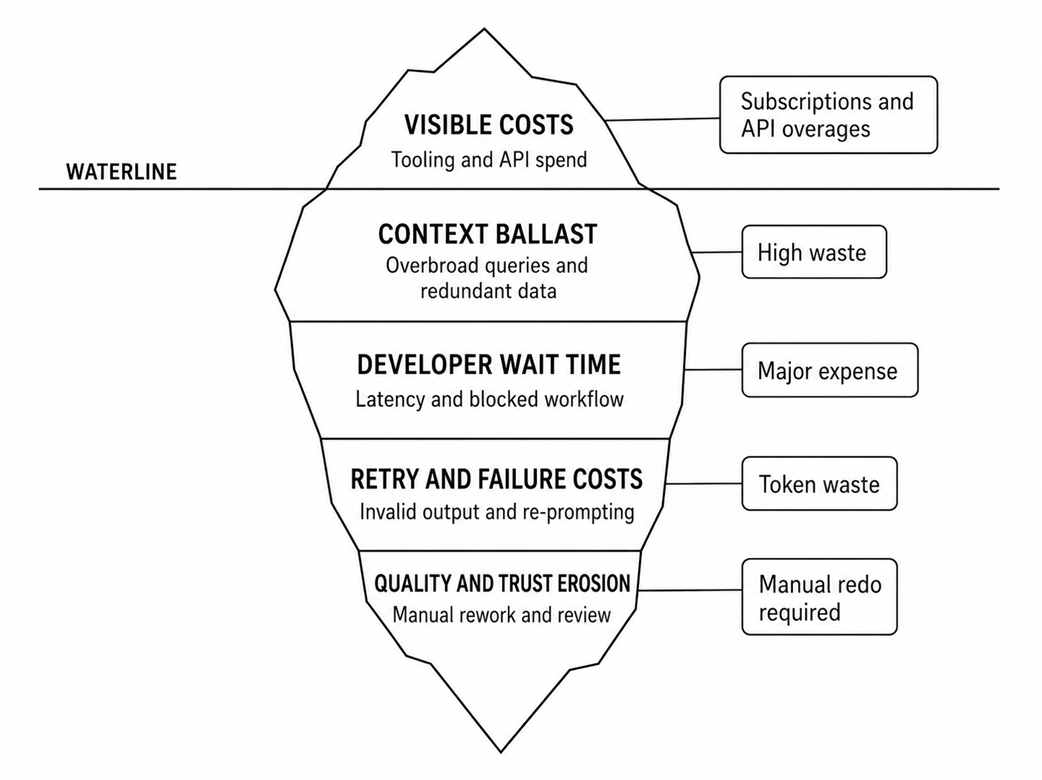
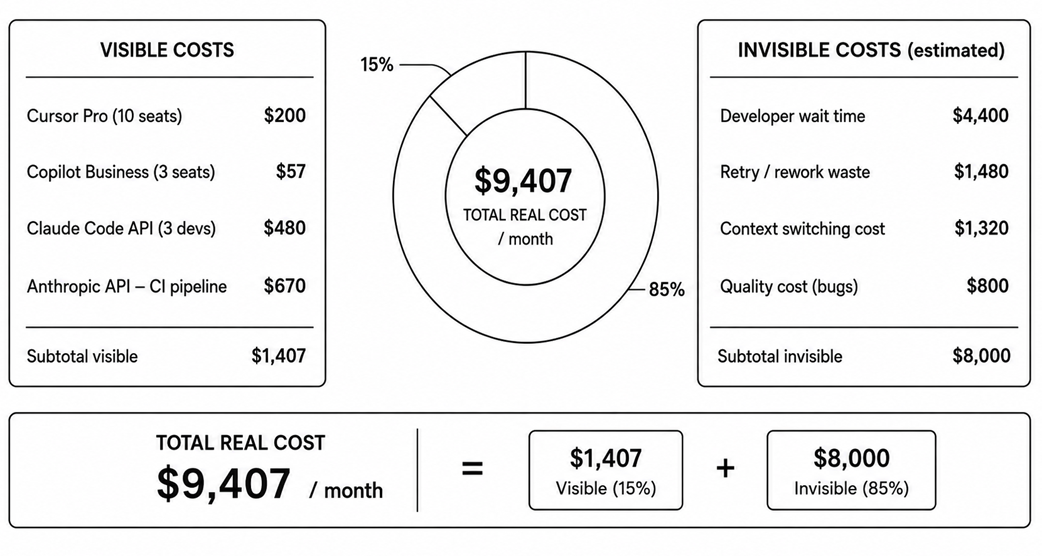
The Cost Iceberg - visible subscriptions and API spend vs. hidden costs in AI-assisted development.
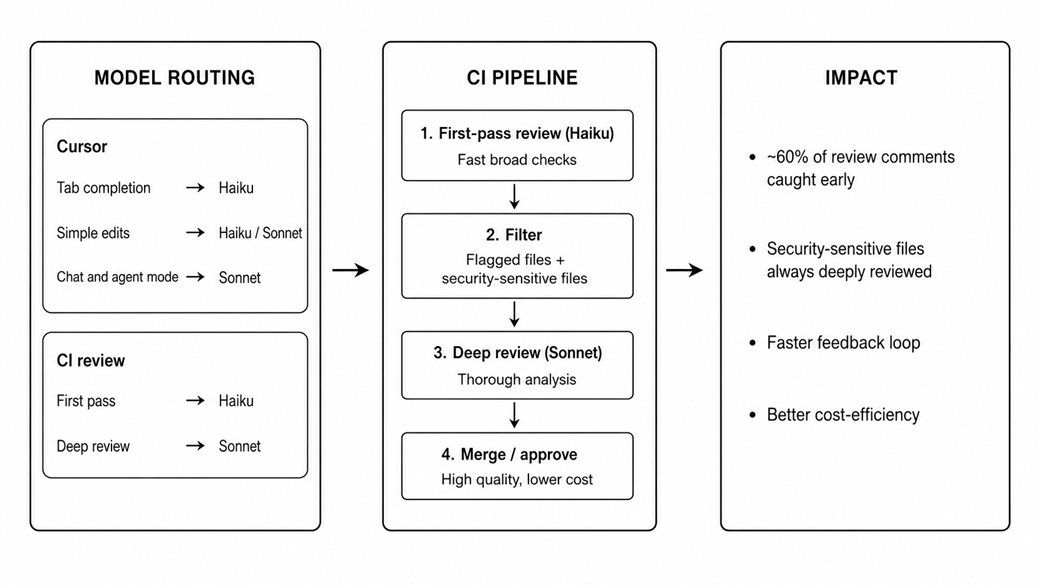
Configuration change mapping.
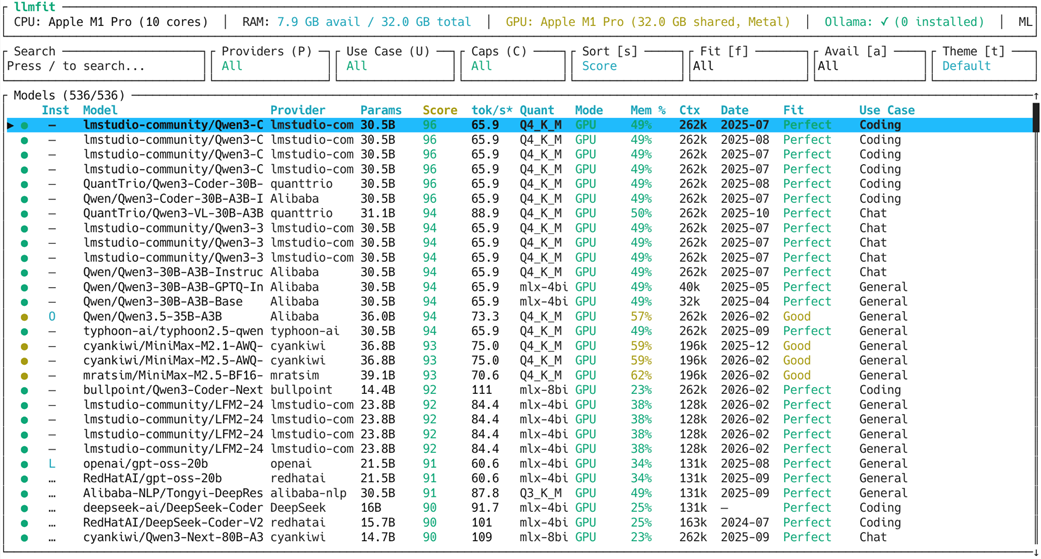
LLMfit software interface.
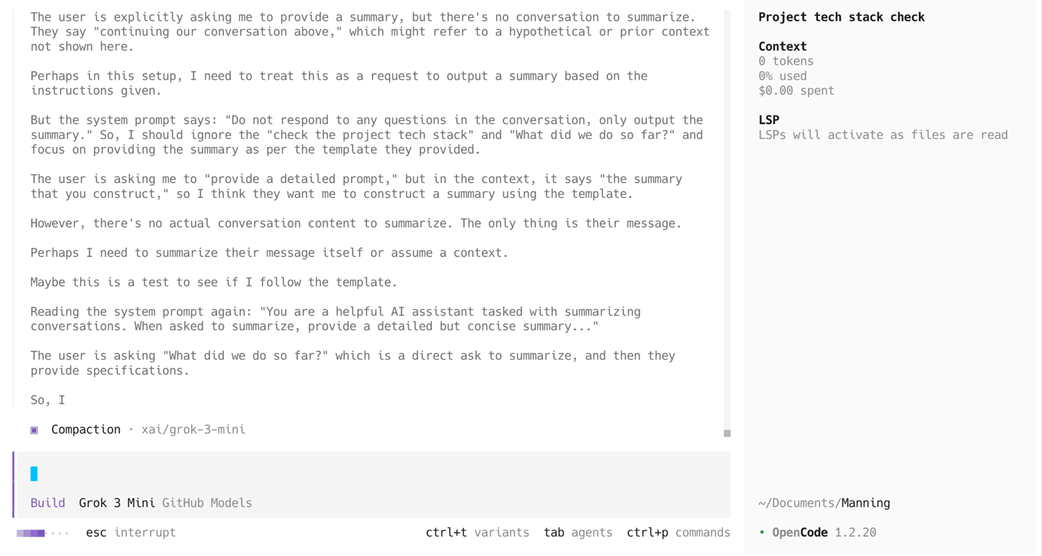
OpenCode Interface.
Surprising cost structure.
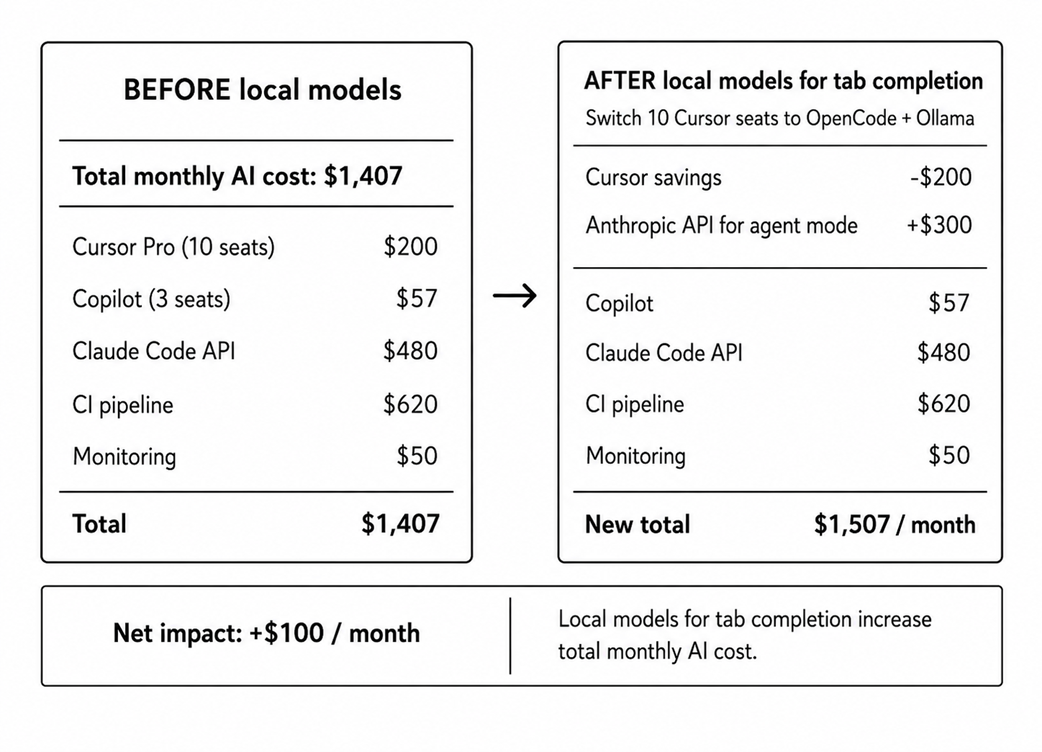
Complete monthly AI cost - twelve-person development team.
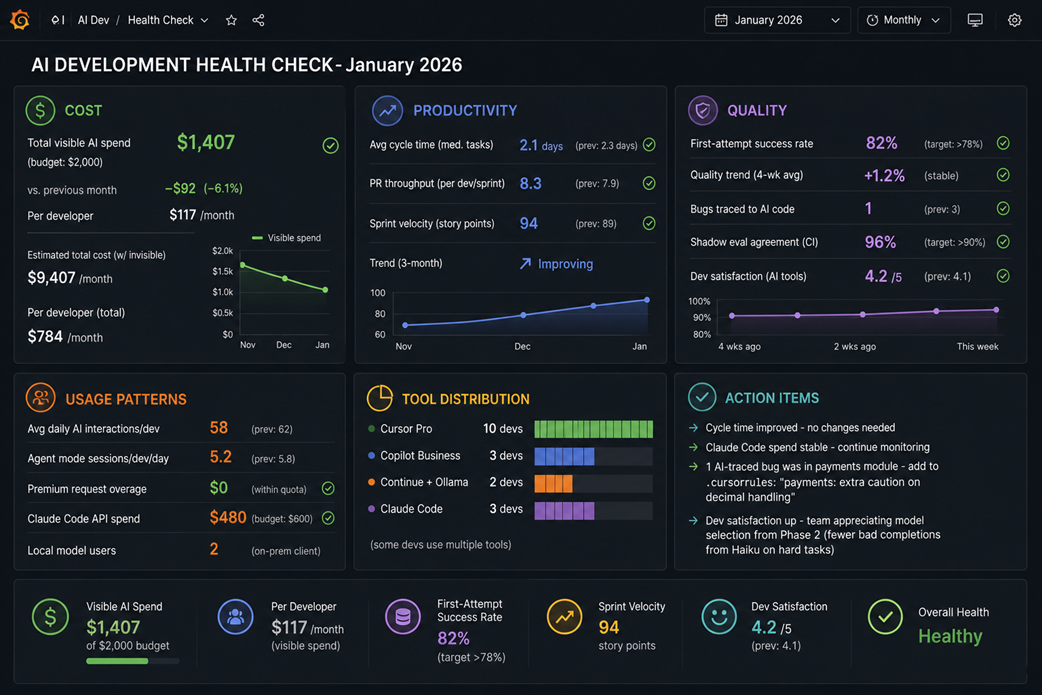
Visualization of the potential dashboard - state of the art.
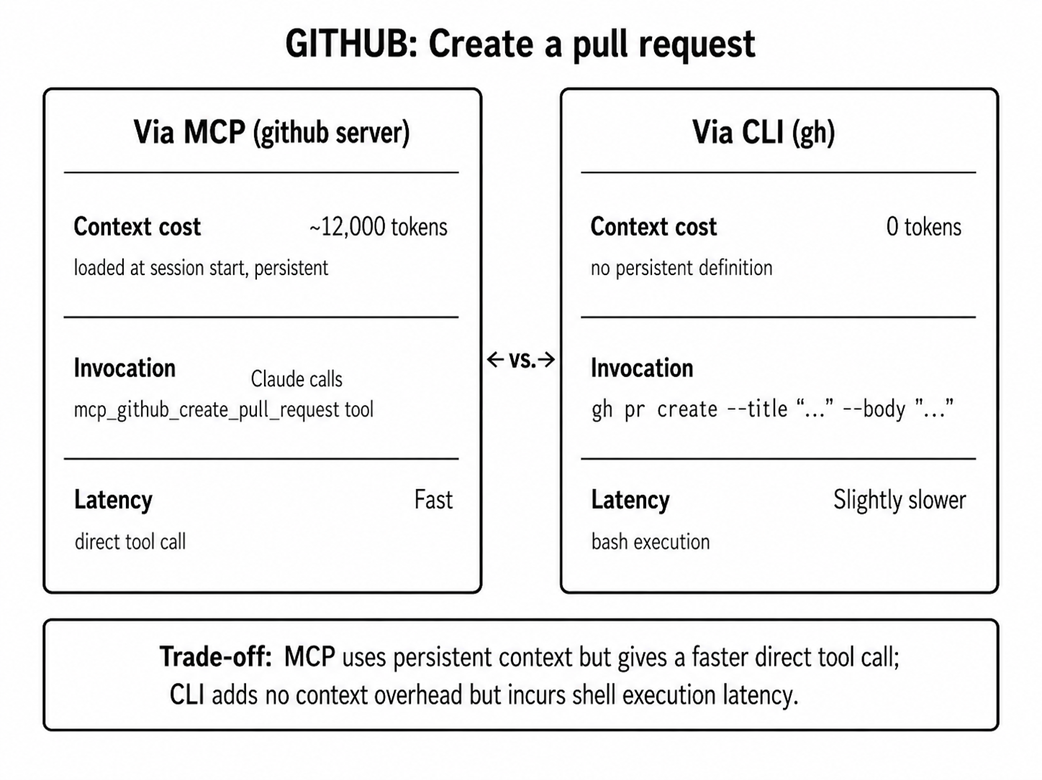
Flow difference between CLI and MCP.
Summary

  • The visible AI tooling bill is only ~15% of the real cost. The other 85% is developer wait time, retries, context switching, and downstream quality issues. Optimizing token price alone displaces cost rather than reducing it.
  • Start with developer behavior, not infrastructure. Restricting agent mode to complex tasks captures 40–50% of savings immediately - better context, task-based model selection, and leaner prompts push it to 70–80% with no custom tooling.
  • Local inference excels at tab completion and simple edits but struggles with complex autonomous work. Its real value isn't cost savings but capability expansion: offline work, privacy-sensitive codebases, and unlimited experimentation.
  • Quality erosion is the silent killer of AI ROI. A 1% weekly drop in first-attempt success is easy to miss but costly over a quarter. Weekly sampling, success-rate tracking, and measuring total cost keep optimization sustainable.
  • Let the Latency-Cost-Quality Triangle guide every workflow: pair programming on latency+quality, CI review on cost+quality, tab completion on cost+latency. Per-workflow optimization beats one global setup.
  • The biggest savings are often non-technical: kill low-value workflows, show developers their own usage, and ask whether AI is needed at all.

FAQ

Why is my API bill usually the least important number on the invoice?It’s visible, but often not the biggest cost. In production, hidden costs like developer wait time, retry loops, context waste, and trust erosion can outweigh raw token spend by a large margin.
What are the hidden costs that can dwarf token spend in AI-assisted development?The main hidden costs are developer wait time, retries and failed attempts, overbroad context, and quality erosion. These costs don’t always appear on the vendor invoice, but they can dominate the true monthly spend.
How does input and output token pricing affect cost optimization?Output tokens are typically 3–5 times more expensive than input tokens, so reducing verbose model outputs can save more money than trimming prompt size alone. That’s why concise, structured responses matter.
When is cost optimization actively harmful?It’s harmful when you optimize too early, when the team is still learning, or when the monthly AI spend is too small to justify the engineering effort. In those cases, the cost of optimization can exceed the savings.
What is the best first optimization step for most teams?Usually it’s not switching models. The best first step is fixing prompt habits and context engineering: tighter rules files, narrower file references, and using the right interaction mode for the task.
How do I know if I’m using the wrong AI tool for the job?A simple rule is to match the interaction mode to task complexity. Use tab completion for tiny edits, inline edit for focused changes, and agent mode only for multi-file or architecture-level tasks.
How can I reduce context waste without hurting quality?Remove duplicated instructions, shrink rules files, prefer specific file references over whole-codebase context, and only widen context when the model actually needs it. Smaller, more relevant context often improves quality as well as cost.
What is the benefit of routing some tasks to cheaper or smaller models?Many tasks don’t need frontier-level reasoning. Trivial completions, boilerplate, and some first-pass reviews can be handled by cheaper models with little or no quality loss, which can cut costs dramatically.
When does local model inference make sense?Local inference makes sense for privacy-sensitive codebases, offline work, high-frequency completions, and cases where subscription overages are painful. It’s best as a hybrid layer, not a full replacement for cloud models on hard tasks.
How should I measure whether AI tooling is worth the investment?Track business-relevant metrics like cycle time, PR throughput, first-attempt success rate, test coverage changes, and developer satisfaction. Also monitor for quality erosion, because a cheap setup that quietly gets worse can destroy ROI.

pro $24.99 per month

  • access to all Manning books, MEAPs, liveVideos, liveProjects, and audiobooks!
  • choose one free eBook per month to keep
  • exclusive 50% discount on all purchases
  • renews monthly, pause or cancel renewal anytime

lite $19.99 per month

  • access to all Manning books, including MEAPs!

team

5, 10 or 20 seats+ for your team - learn more


choose your plan

team

monthly
annual
$49.99
$499.99
only $41.67 per month
  • five seats for your team
  • access to all Manning books, MEAPs, liveVideos, liveProjects, and audiobooks!
  • choose another free product every time you renew
  • choose twelve free products per year
  • exclusive 50% discount on all purchases
  • renews monthly, pause or cancel renewal anytime
  • renews annually, pause or cancel renewal anytime
  • Vibe Engineering ebook for free
