5 From autocomplete to agent fleets: the road to Continuous AI
The chapter traces AI-assisted development as a progression from simple autocomplete to more capable agents, showing that each step expands AI’s role in the software lifecycle but also changes the kind of human work required. It begins with browser-based prompting and inline suggestions, where AI is useful but context-blind, then moves into IDE agents that can inspect files, edit code, and follow plans. The central lesson is that more autonomy does not automatically mean better results; it simply shifts responsibility from typing to supervising, from writing code to judging code, and from trusting the model to managing its limits.
As agents gain access to projects, terminals, and CI pipelines, the chapter emphasizes the tradeoff between capability and oversight. Approval prompts, while meant to protect users, can become overwhelming and lead to rubber-stamp behavior, creating approval fatigue. To reduce this, teams adopt structured workflows such as modes, policies, handoff artifacts, and shared instruction files like AGENTS.md so that agents behave consistently across developers and tools. The chapter also stresses that AI-generated output needs guardrails such as deterministic checks, observability, audit trails, and sandboxing, because once agents start making edits and running commands, silent failures and dangerous mistakes become much harder to catch.
The final arc is toward orchestration: multiple specialized agents working in parallel on different parts of a task, coordinated through artifacts and dashboards rather than one developer’s attention. This can greatly increase throughput for well-understood workflows like refactoring, testing, documentation, and PR review, but it also introduces new risks in coordination, drift, and trust. The chapter argues that the future is not a single magical agent, but an AI-powered delivery system where humans define standards, set boundaries, and oversee the factory rather than micromanaging each step. In that sense, Continuous AI is less about replacing developers than moving software work into a more automated, more visible, and more governable production model.
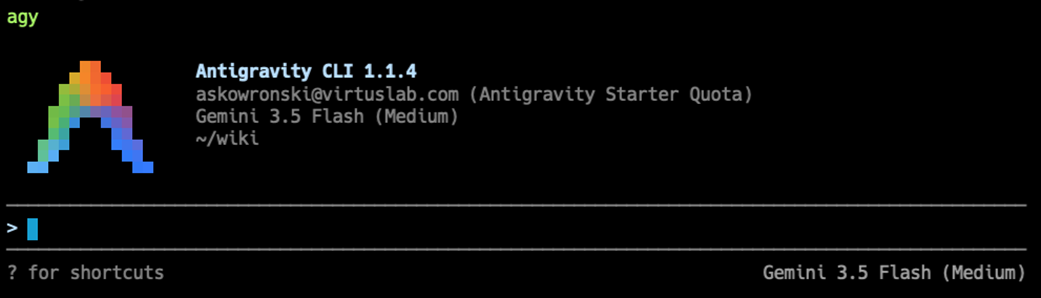
Example of Antigravity CLI interface
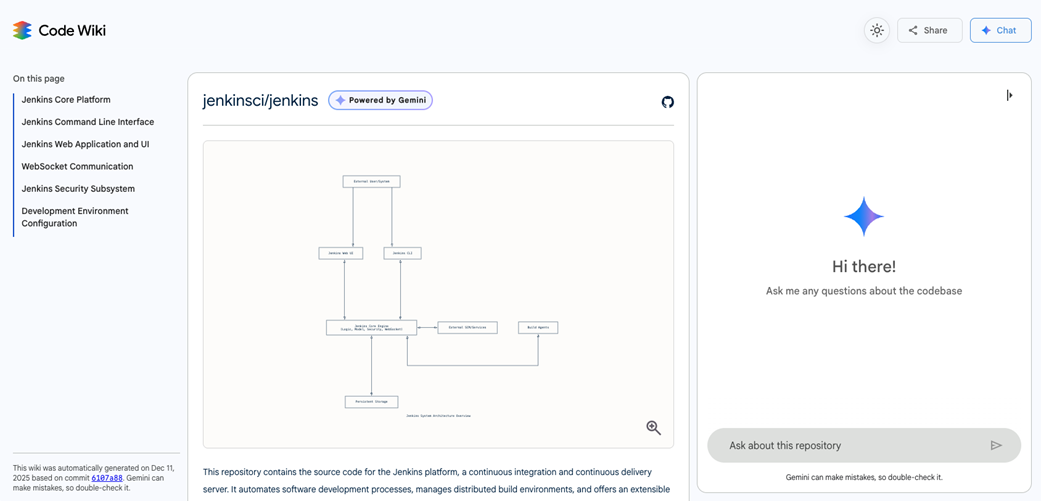
CodeWiki auto generated documentation for Jenkins CI.
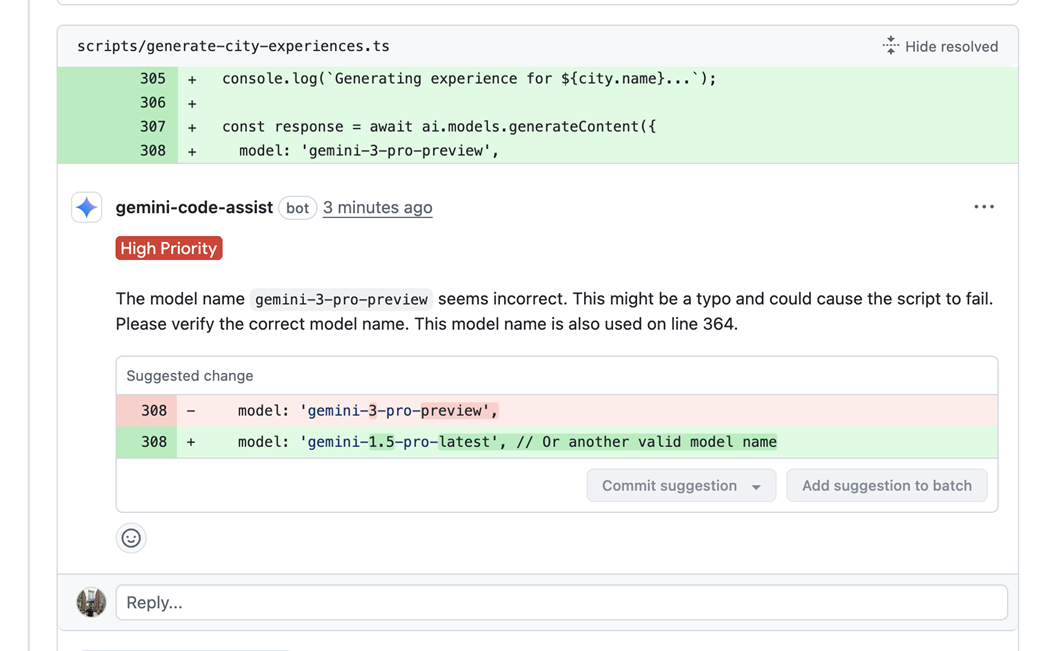
Gemini Code Assist reviewing a pull request, before Google folded the product into Antigravity
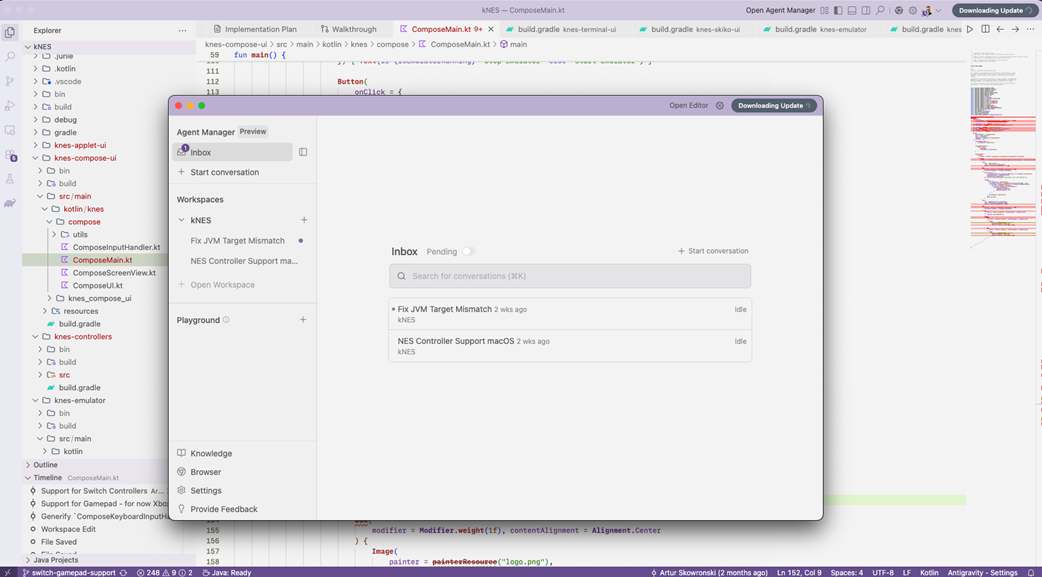
Example of Antigravity Agent Manager interface with the focus on Agent Manager.
Summary
- Inline autocomplete is fast, but it still lacks enough project awareness to understand architecture as well as a more capable agent can.
- As agents gain more visibility into the codebase, they also require more human supervision to keep that power under control.
- Too many approval dialogs create approval fatigue, and that turns oversight into a rubber stamp instead of real control.
- Headless agents scale beyond the IDE, but they can fail quietly unless teams build proper observability around them.
- Security automation cuts both ways, because agents can introduce risky dependencies, but automated checks can also help catch them.
- Team standards like AGENTS.md improve consistency, but they also introduce governance and maintenance overhead.
- Small teams often do not need that much process, while large or regulated organizations usually benefit from it.
- Orchestration can reduce waiting time through parallel work, but it also makes debugging, rollback, and coordination much harder.
- Sandboxing adds friction, but it is worth it because it limits the blast radius when agents make mistakes.
- There are no shortcuts, each stage of agentic development needs the controls and foundations of the previous one.

 Vibe Engineering ebook for free
