5 Learning the language of time with Chronos
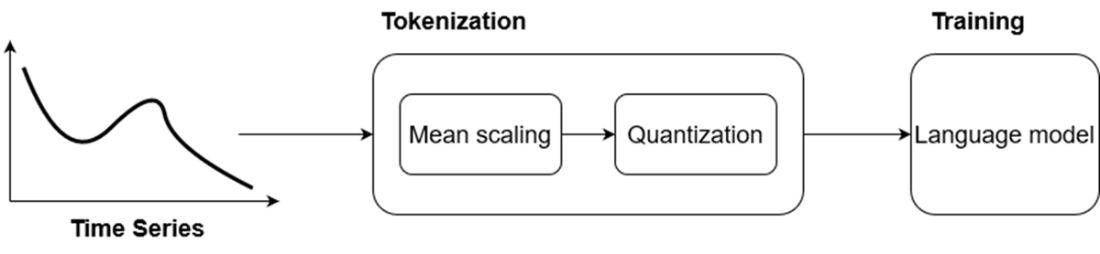
Chronos is presented as a framework that adapts pretrained language models—principally the T5 family—to probabilistic time series forecasting by “learning the language of time.” It does so by tokenizing numeric sequences through mean scaling and uniform quantization, clipping scaled values to a fixed range and mapping them into a finite vocabulary (4094 bins), which enables sequence-to-sequence training without altering the language-model architecture. This turns regression into classification with cross-entropy as the objective. To address limited training data, the authors augment with TSMixup (convex combinations of real series) and KernelSynth (compositions of canonical kernels). Public Chronos models span multiple sizes, were trained on hundreds of thousands of univariate series across varied frequencies, and assume an input length of 512 and a forecasting horizon of 64 steps—factors that favor series without strong trends and shorter horizons. Model choice is a trade-off between performance and available hardware.
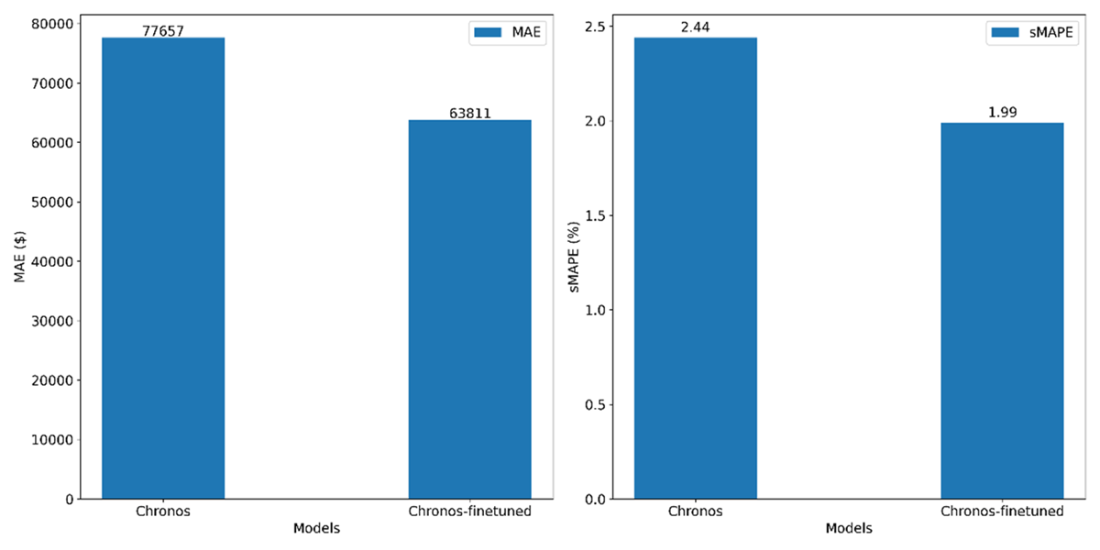
Practically, Chronos is easy to try via a Python package and a simple pipeline that consumes tensors, produces samples for probabilistic forecasts, and supports custom cross-validation logic. In zero-shot use on weekly retail sales, it delivered reasonable intervals but initially trailed alternatives. Fine-tuning—run efficiently on a GPU with Arrow-formatted data and a concise YAML configuration—significantly improved accuracy, reducing MAE and sMAPE and ultimately surpassing other foundation models under the same evaluation setup. The chapter emphasizes selecting model size to match compute constraints, respecting the 64-step horizon used during pretraining, and recognizing that performance improves meaningfully with targeted fine-tuning.
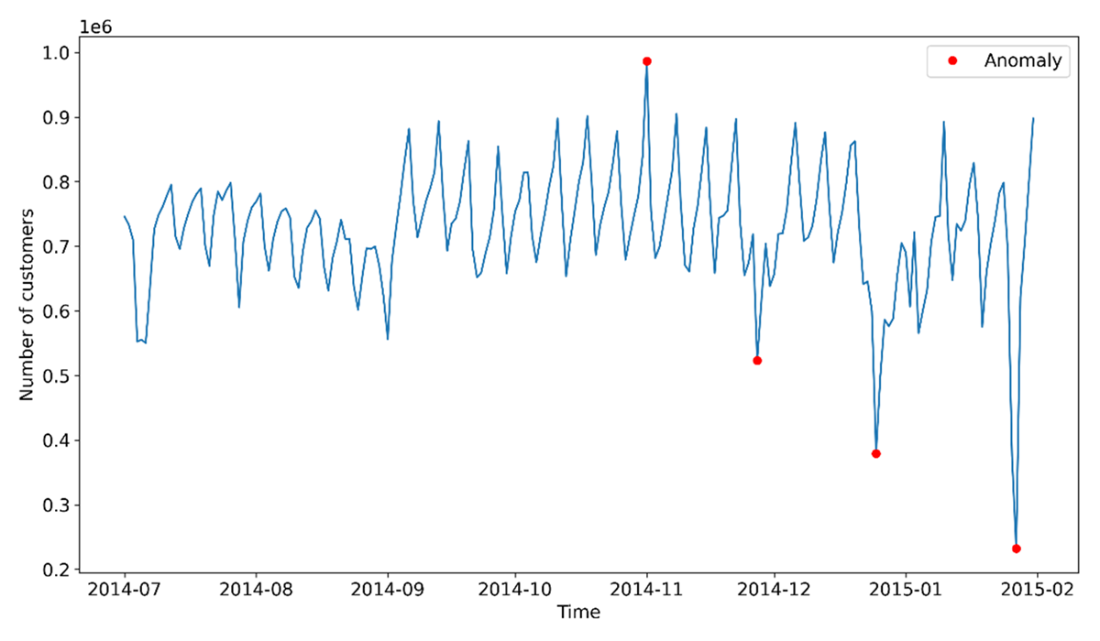
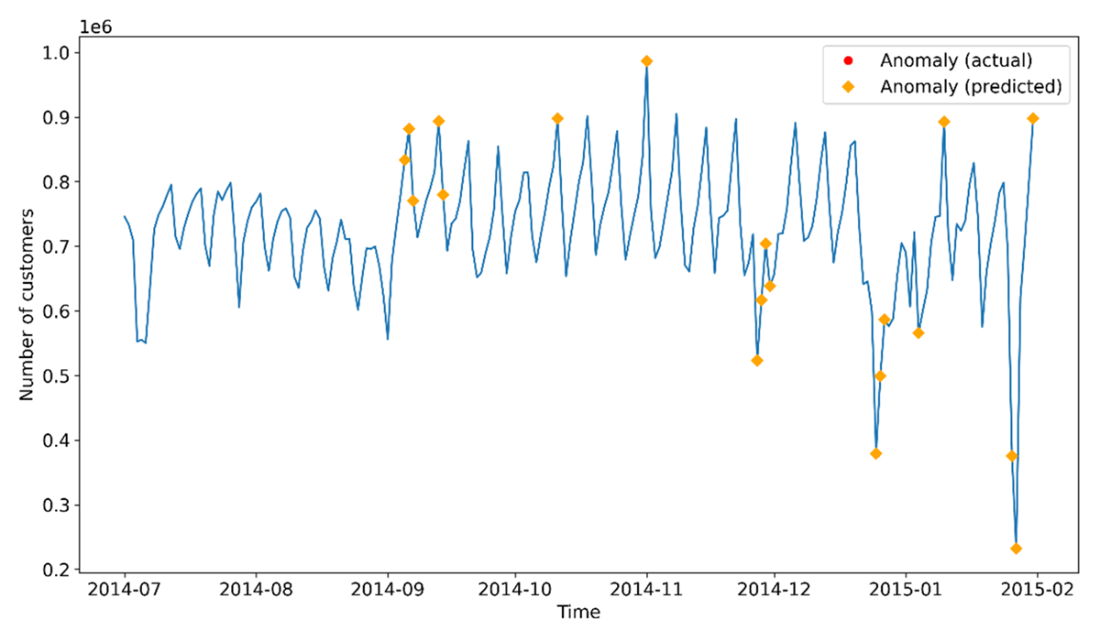
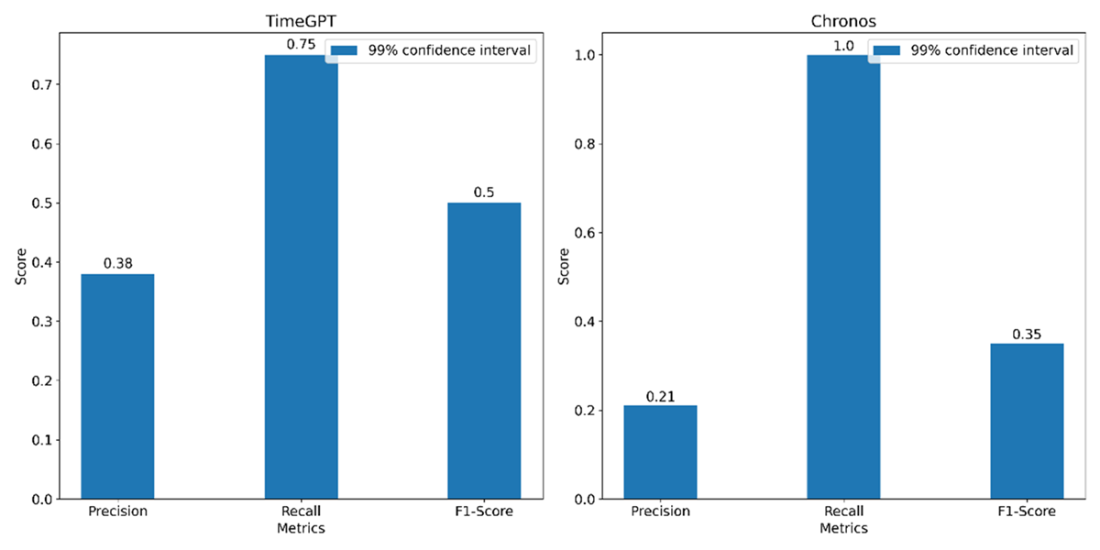
While not a native feature, anomaly detection is enabled by leveraging Chronos’s predictive intervals: points falling outside a high-confidence band (e.g., 99%) are flagged as anomalies. Applied to New York City taxi demand, Chronos caught all labeled anomalies but produced many false positives, yielding lower precision and F1 than a comparator despite perfect recall. Overall, Chronos stands out as an open-source, installable, and production-friendly framework for probabilistic forecasting and interval-based anomaly detection, albeit with some manual setup, no exogenous-features support at the time of writing, and sensitivity to hardware and horizon length. It is best suited for shorter horizons and series without strong upward drift, where fine-tuning can deliver strong gains.
Simplified visual of how T5 performs various NLP tasks. Here, the model performs translation since this is specified in the input sequence on the left.

Overview of the Chronos framework that adapts a language model for time series forecasting. The time series is first tokenized, which involves mean scaling and quantization. The output can then be used to train the language model.
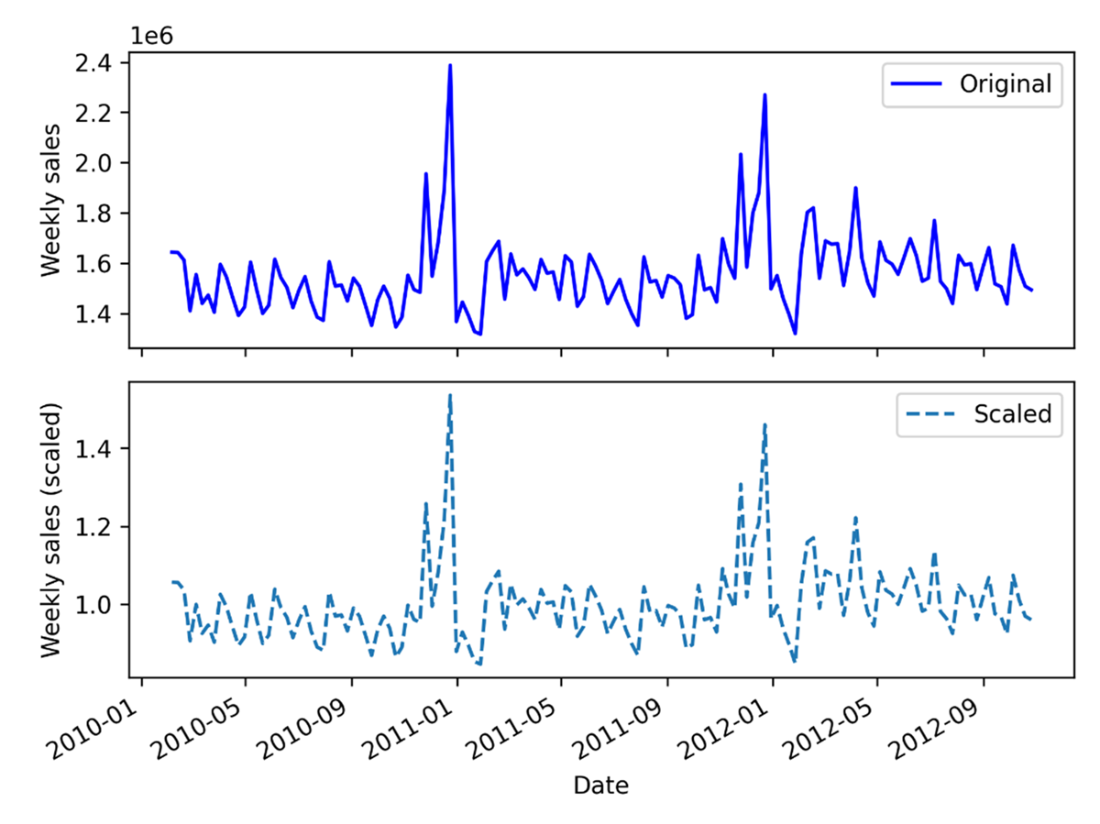
Example of mean scaling. At the top, the data is in its original scale, and at the bottom, the data was mean scaled. Notice that the general pattern stays the same. The difference lies in the range of values.
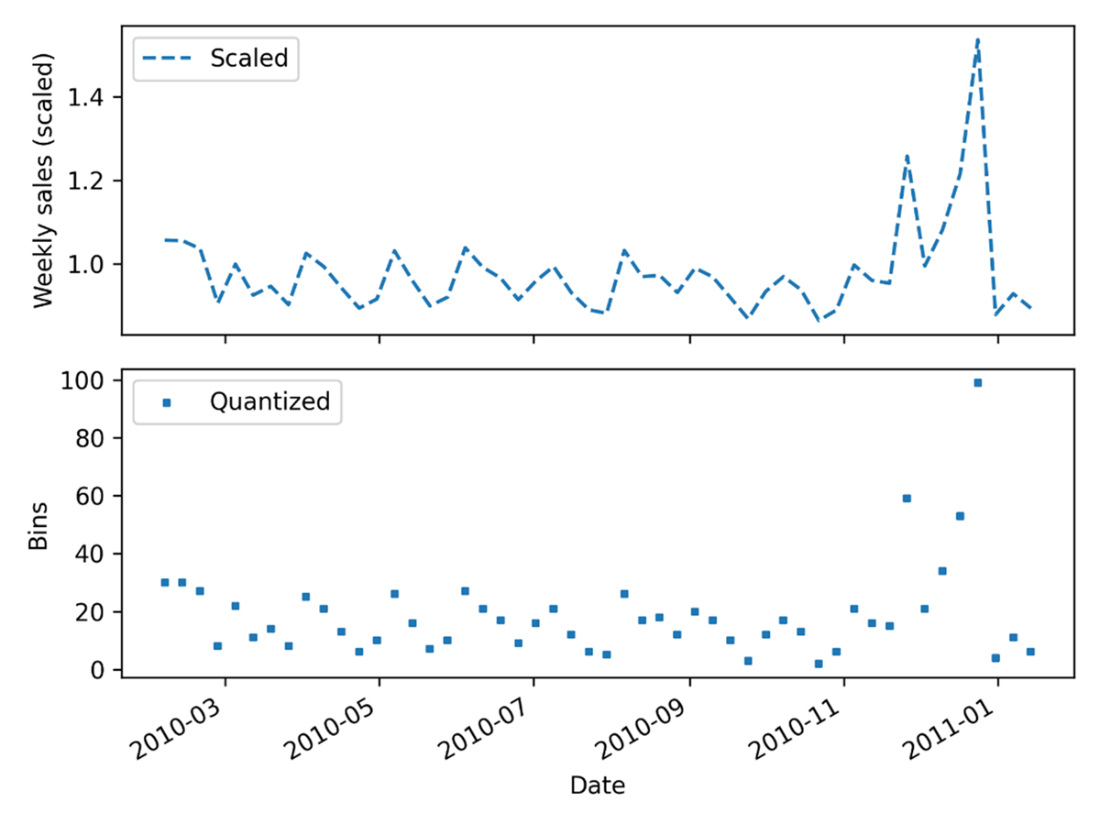
Showing the result of quantization using 100 bins. Here, only the first 50 weeks of data are shown. Notice that the first two points of the quantized data are equal. However, this is not the case in the top figure. This is normal, since quantization is an approximation.
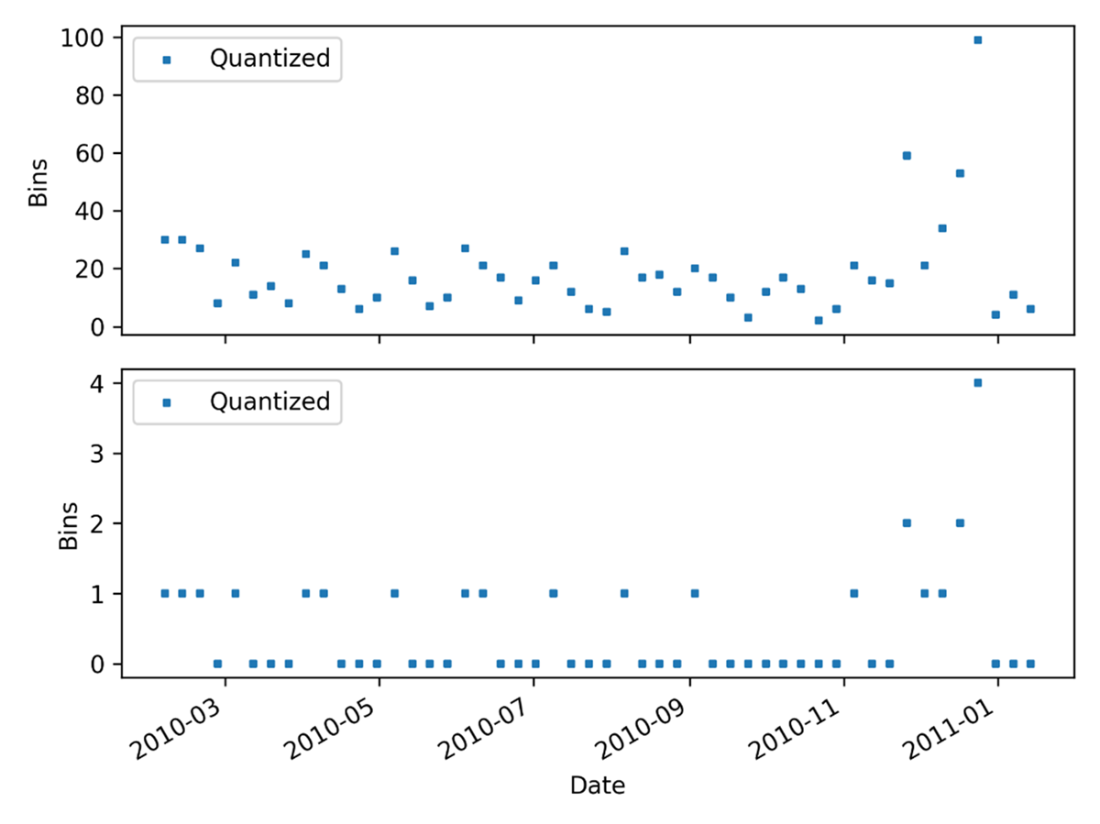
Impact of the number of bins on the resulting tokens. On top, we have a vocabulary of 100 possible bins, and at the bottom, we use only five bins. Of course, with five bins, we lose too much precision.
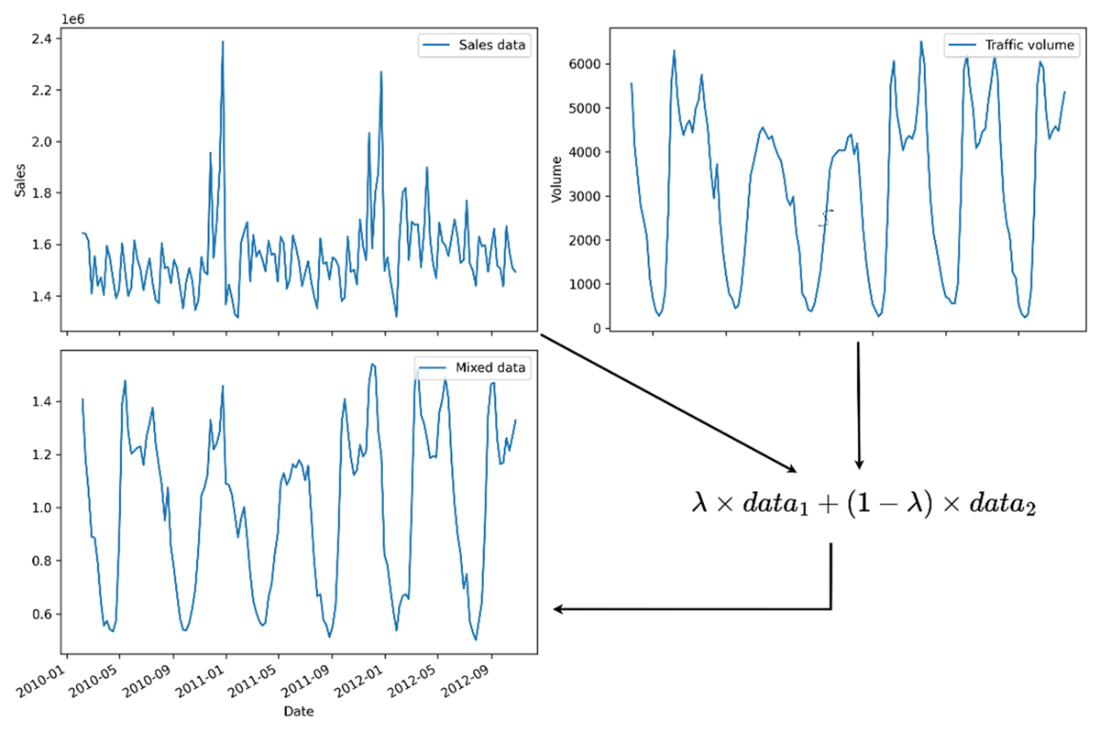
Illustrating TSMixup. On the top left, we have our weekly sales data. On the top right, we have daily traffic volume data. Both series are scaled and combined to generate a new series, shown on the bottom left.
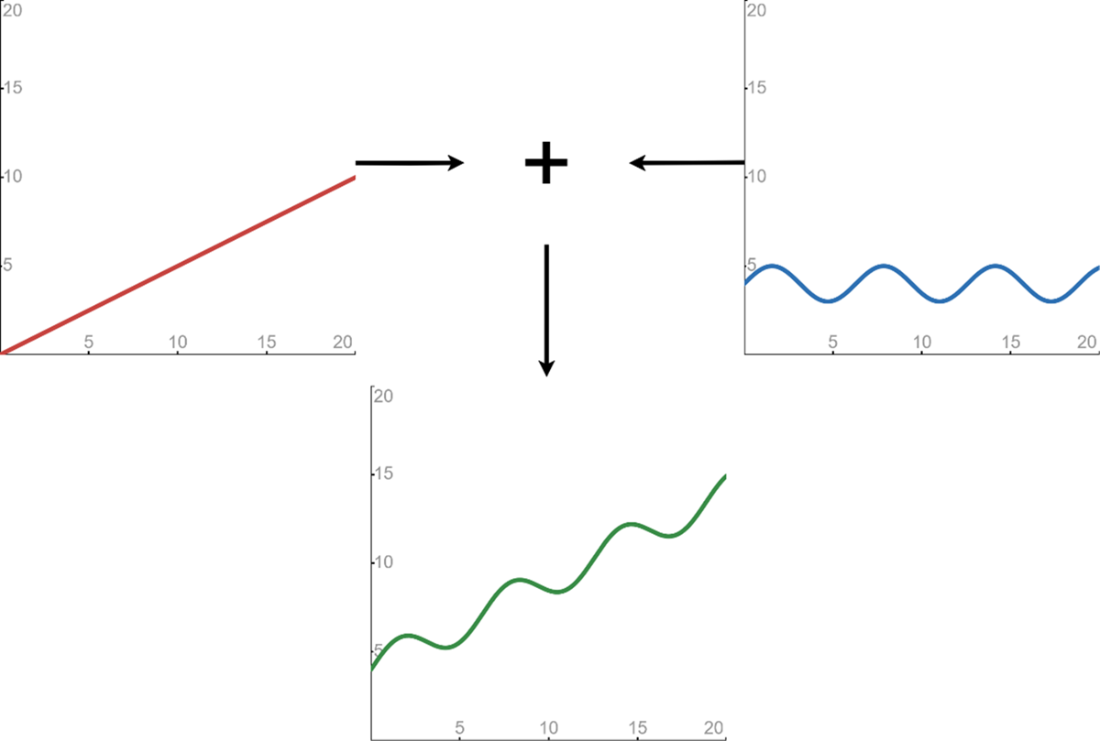
Illustrating KernelSynth. At the top left, we have a linear kernel, and at the top right, we have a sinusoidal kernel. Both are combined using an addition, which results in the synthetic series shown at the bottom.
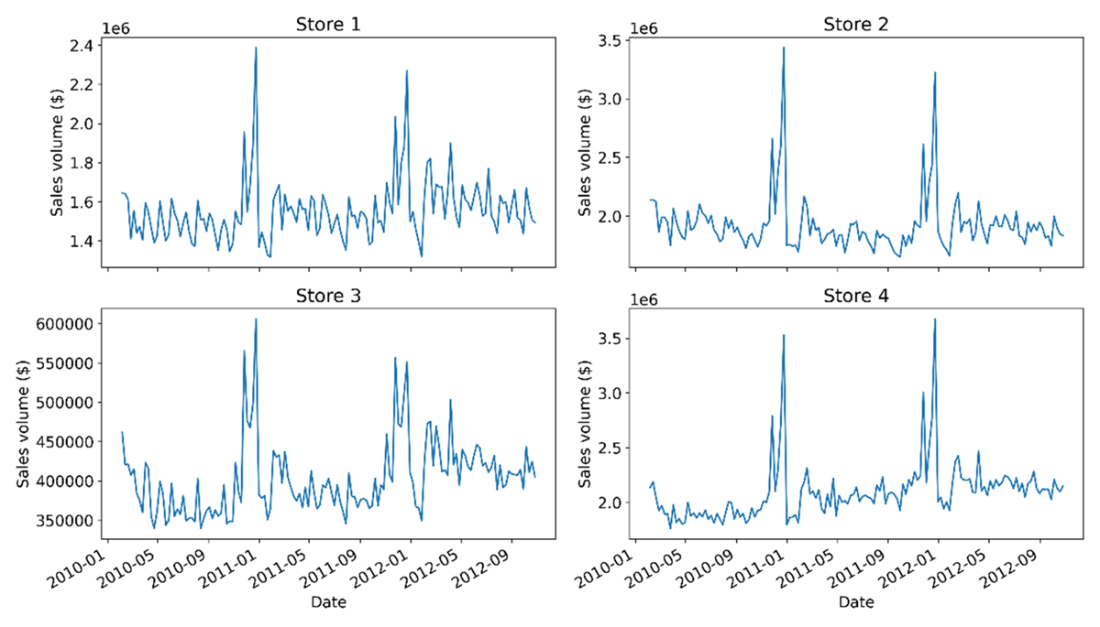
Weekly sales of four different Walmart stores.
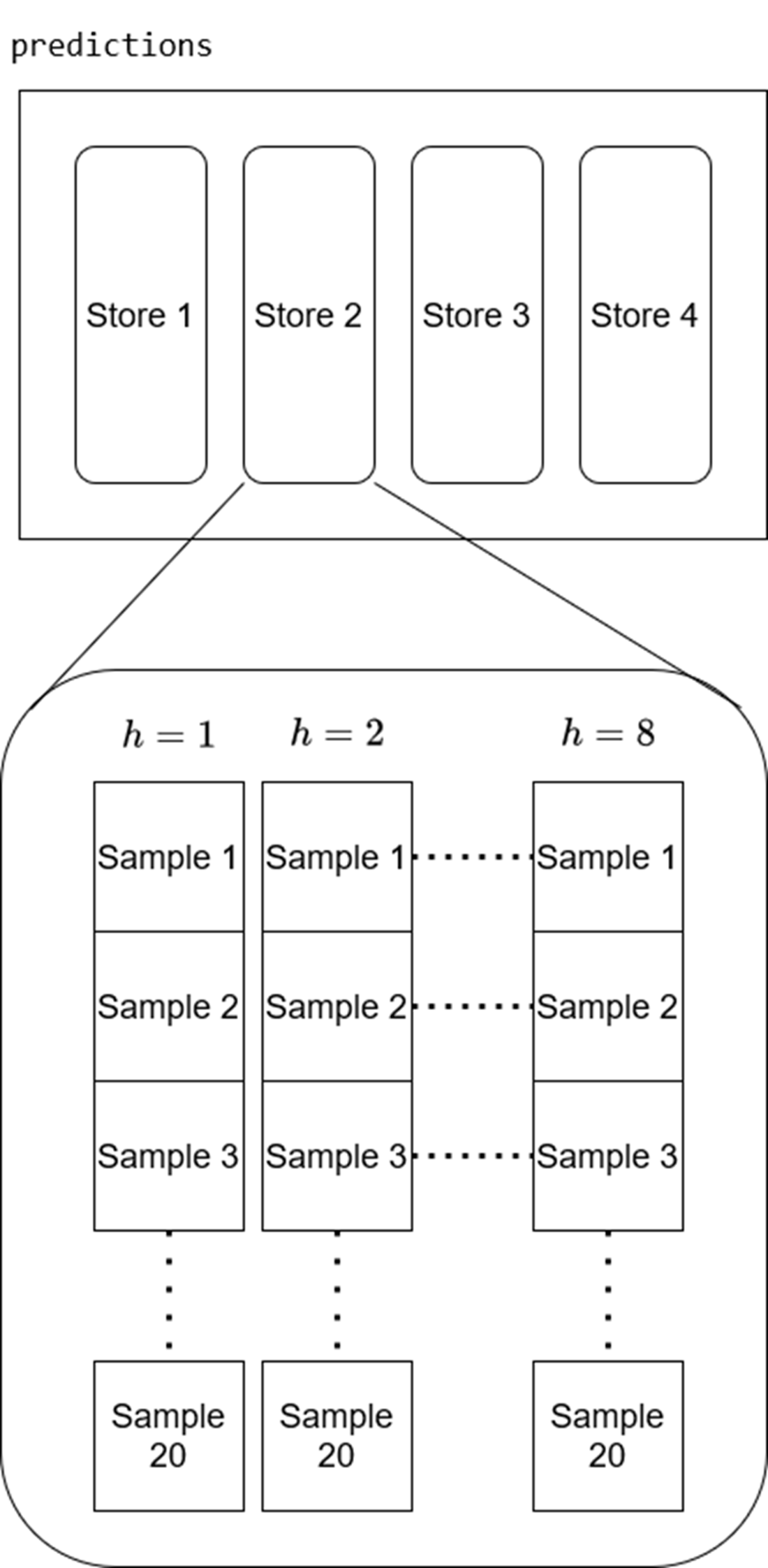
Illustrates the content of the predictions variable. It is an array that contains the predictions for each store, where each is itself an array with 20 samples for each step in the forecast horizon.
Plotting the predictions from Chronos. The shaded area represents a 90% prediction interval.
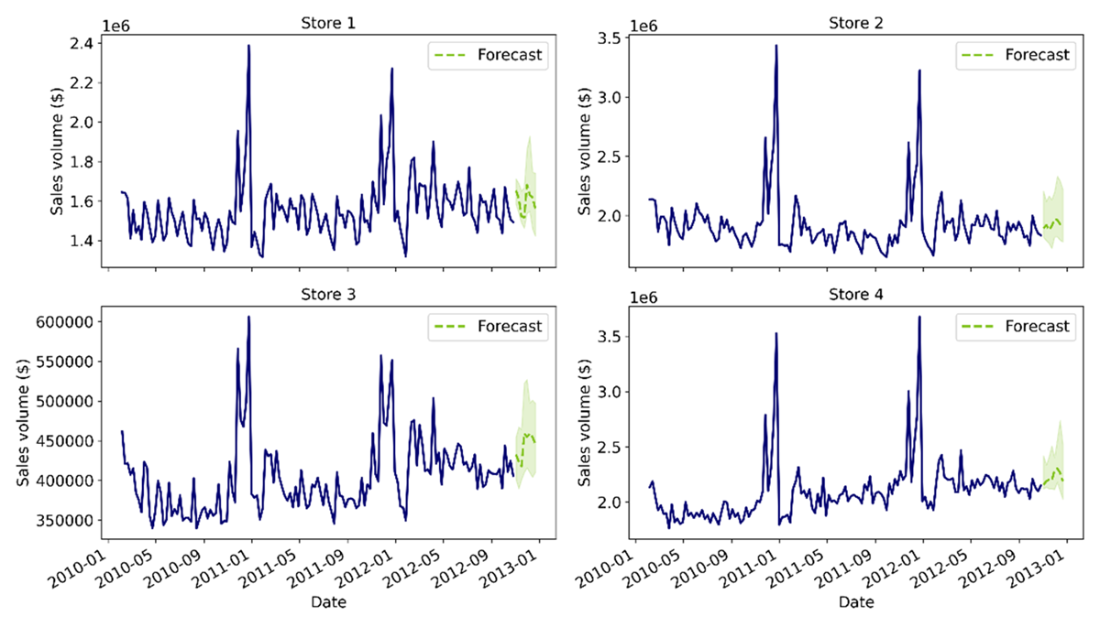
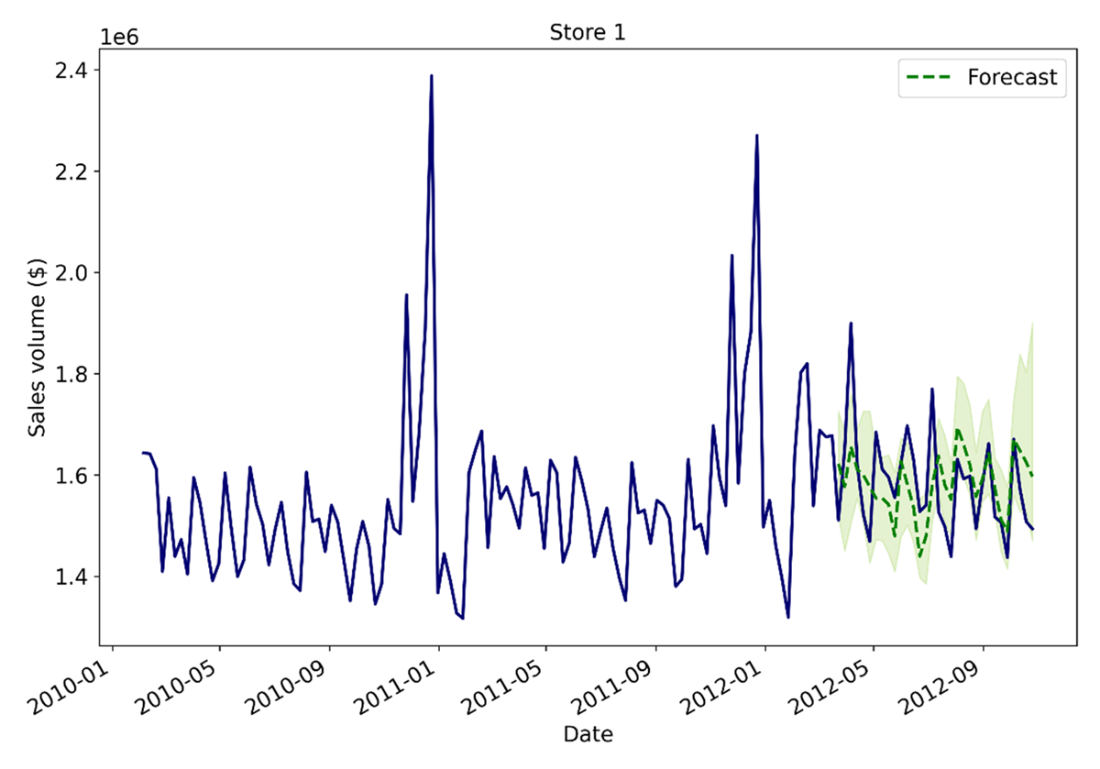
Predictions obtained from running cross-validation with Chronos. We notice some overlap between the predictions and the actual values, which is a good sign. The shaded area represents the 90% prediction interval.
Comparing the MAE and sMAPE before and after fine-tuning Chronos. Lower is better.
Anomalies labeled in the daily number of customers of the New York city taxi service. The four dots indicated the labelled anomalies.
Detected anomalies by Chronos. Notice that all labeled anomalies were correctly detected, but other normal points were mislabeled as anomalies.
Comparing the performance of anomaly detection between TimeGPT and Chronos. Higher is better.
Summary
- Chronos is a framework to train existing language models for time series forecasting. It simply tokenizes the time series data using mean scaling and uniform binning to feed it to a language model.
- There are existing pretrained models based on the T5 architecture.
- Forecasting beyond 64 timesteps may degrade the quality of the forecasts. Also, Chronos does not support exogenous features.
- Selecting the right pretrained model depends on the available hardware. If a GPU is available for inference, and you have the necessary memory space, then opting for the largest model will lead to the best results.
References
FAQ
What is Chronos and how is it different from a single model?
Chronos is a framework that adapts existing language models (e.g., T5) for probabilistic time series forecasting by turning numeric sequences into a finite token vocabulary. Researchers also released several pretrained T5-based forecasting models commonly referred to as “Chronos.” These models are easy to use via a Python package and tend to work best on series without strong trends.How does Chronos adapt language models to time series?
Chronos tokenizes time series in two steps: mean scaling (divide each value by the mean absolute value to normalize scale) and quantization (clip scaled values to [-15, 15] and map them into 4094 uniformly spaced bins). This creates a finite “language of time” so a text model can learn to predict future tokens. Training uses the language-model objective (cross-entropy) to predict token sequences; numeric forecasts are recovered by dequantizing and unscaling at the end.What are the main limitations of Chronos I should keep in mind?
- Strong trends: Quantization with fixed bins can cause forecasts to plateau because the model can’t produce tokens beyond the maximum bin.- Horizon: Pretrained models were trained with a 64-step horizon; much longer horizons can degrade performance.
- Features/frequencies: At the time of writing, exogenous features aren’t supported; quarterly frequency wasn’t seen in pretraining.
- Hardware: Speed and accuracy depend on your compute; larger models need more memory/GPU.

 Time Series Forecasting Using Foundation Models ebook for free
