3 Mapping the AI solution space
This chapter offers a practical map for navigating the crowded AI solution space so teams avoid hype-driven choices and costly missteps. It frames AI products along three interlocking components—data, intelligence, and user experience—and shows how a narrow focus on generative AI can obscure simpler, cheaper, and more private options (e.g., using a small predictive model instead of a large foundation model for sentiment analysis). The chapter equips product builders with shared terminology and a structured way to explore options, communicate with stakeholders, assess required skills and resources, and manage trade-offs across cost, accuracy, privacy, and feasibility.
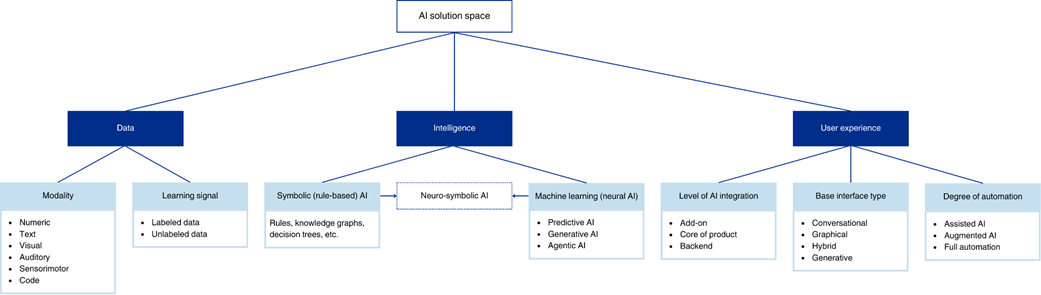
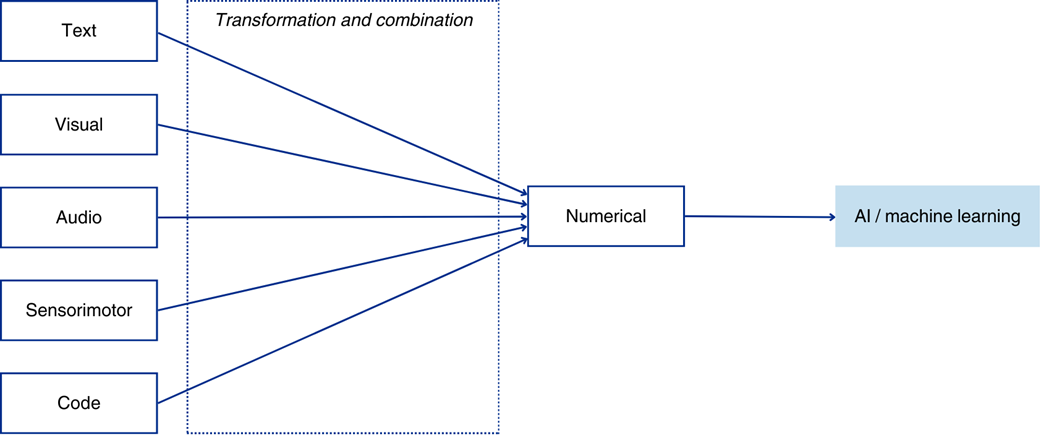
On the data front, it highlights key modalities—text, visuals, audio, sensorimotor signals, and code—and emphasizes that all ultimately become numerical representations tailored to their tasks. It underscores the growing power of multimodal AI and clarifies the strategic implications of unlabeled versus labeled data: unsupervised methods can explore structure but are uncertain for end users, while supervised learning demands high-quality labels and thoughtful annotation strategies (including synthetic and programmatically created signals, as in next-token prediction for large language models). Choices about modality, representation, and labeling shape the feasible model classes and the downstream user experience.
For intelligence, the chapter contrasts rule-based systems—fast, explainable, and useful for MVPs and bootstrapping training data—with machine learning across three paradigms: predictive (analysis, classification, regression within well-bounded problems), generative (creating text, images, code, and designs; boosting creativity and efficiency), and agentic (tool-using systems that recommend or act, often with guardrails and human oversight). It then turns to user experience, comparing conversational, graphical, hybrid, and emerging generative interfaces, and outlines degrees of automation from assisted to augmented to autonomous. The core guidance: align interface and automation levels with your context and risk tolerance, and design a human-AI partnership that leverages AI’s scale and consistency alongside human intuition, ethics, and contextual judgment.
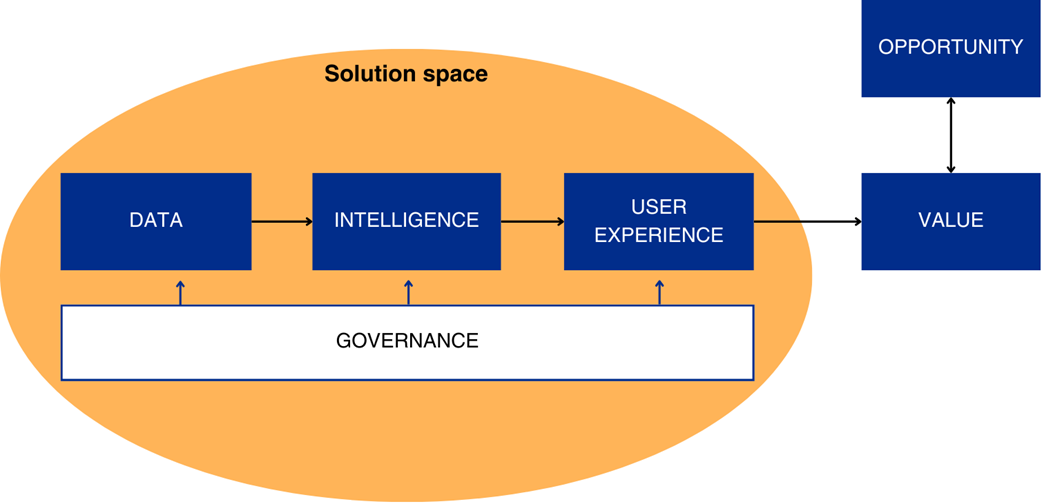
This chapter provides a map for the “solution space” in the mental model of an AI system
Categorization of the AI solution space
Relations between AI modalities
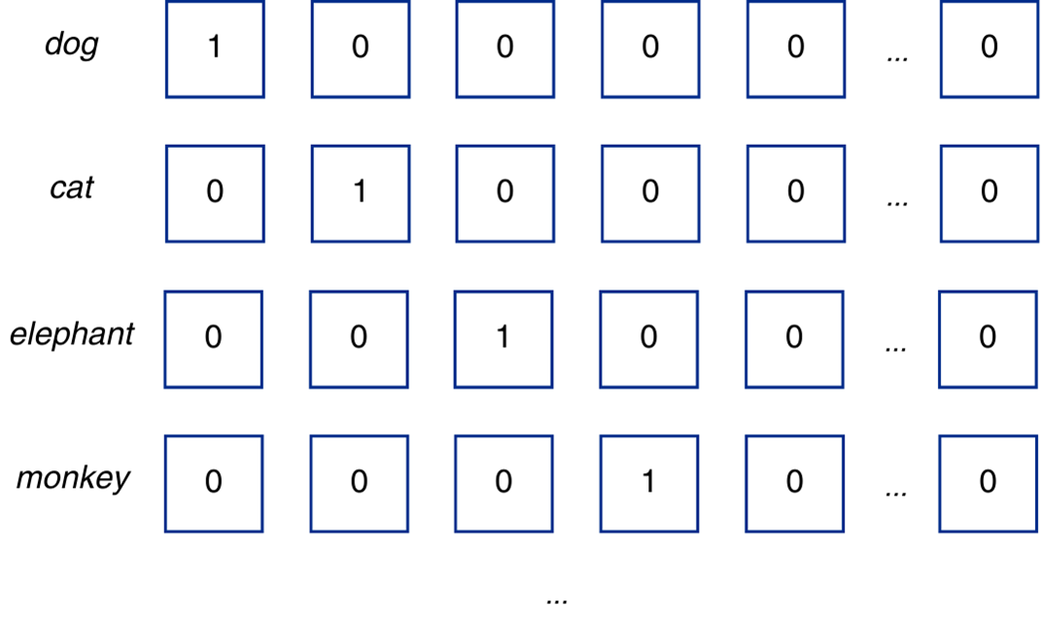
The one-hot encoding provides a simple numerical (algebraic) representation of words.
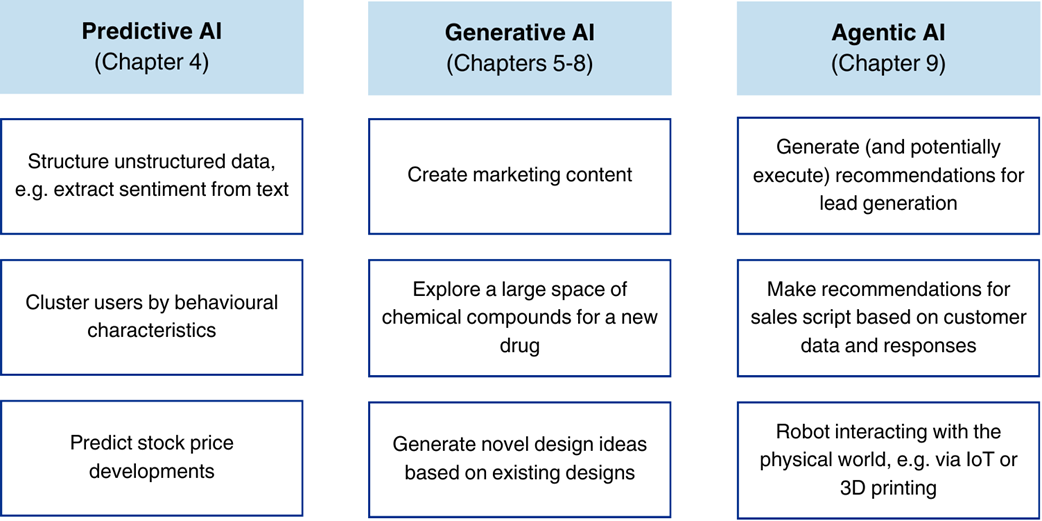
Examples of learning problems
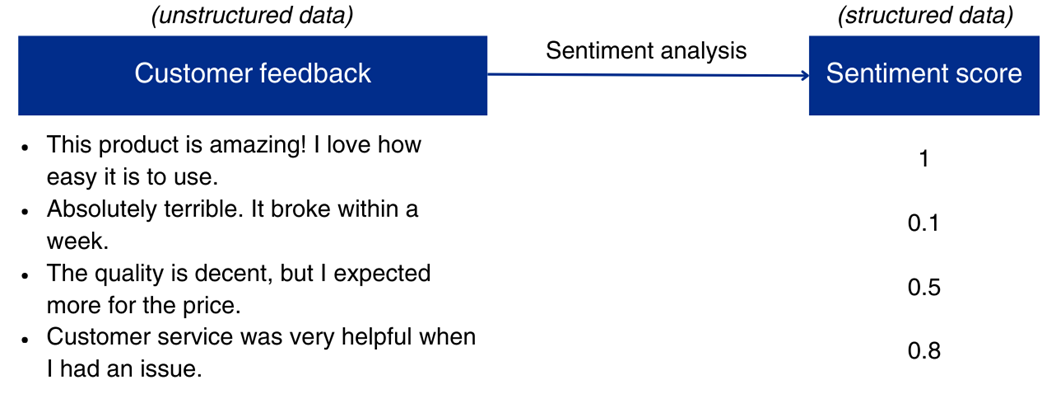
Structuring data with sentiment analysis
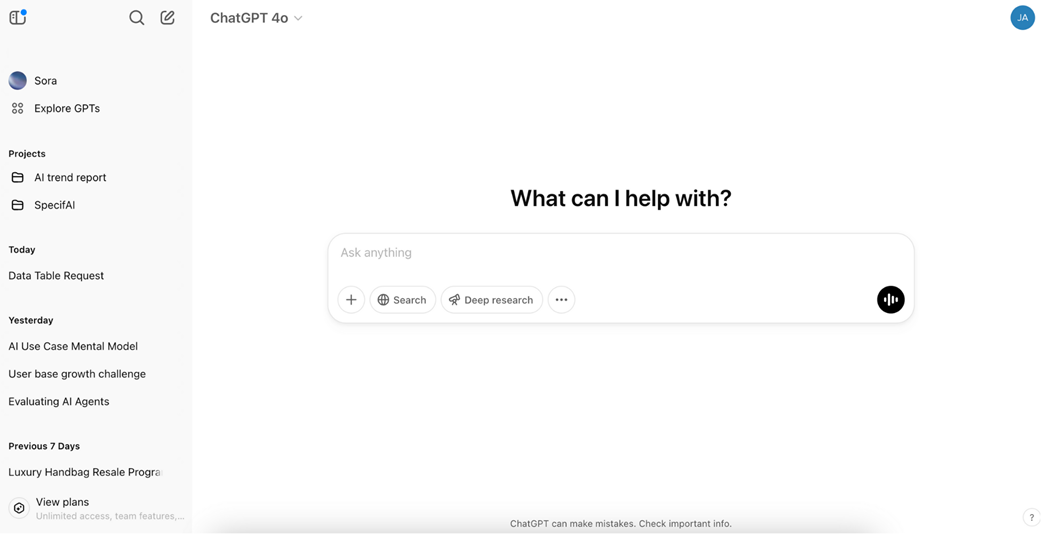
ChatGPT is the prototype of the modern conversational interface; a big part of the screen’s real estate is reserved for prompts and text responses.
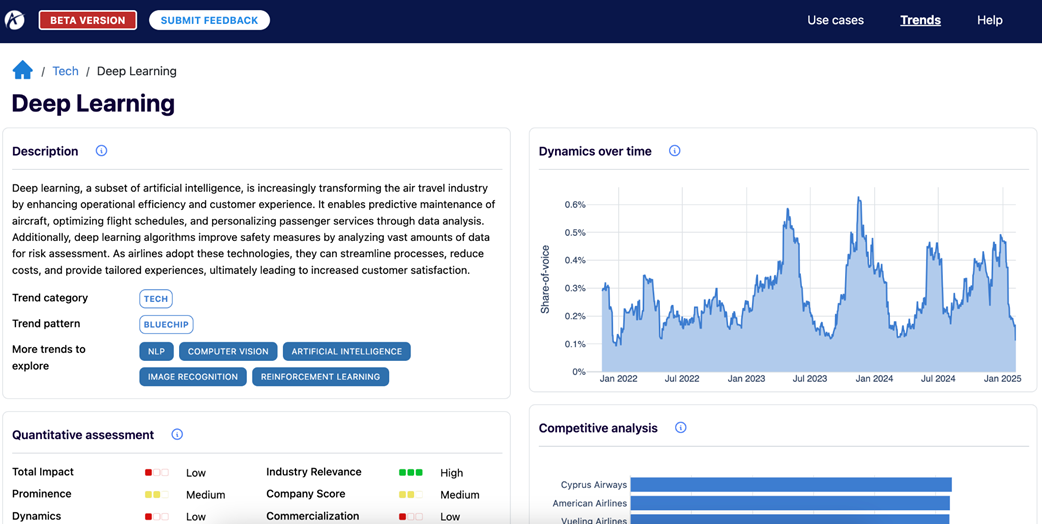
Anacode’s Innovation Monitor has a traditional graphical interface, which provides confidence and grounding to B2B users.
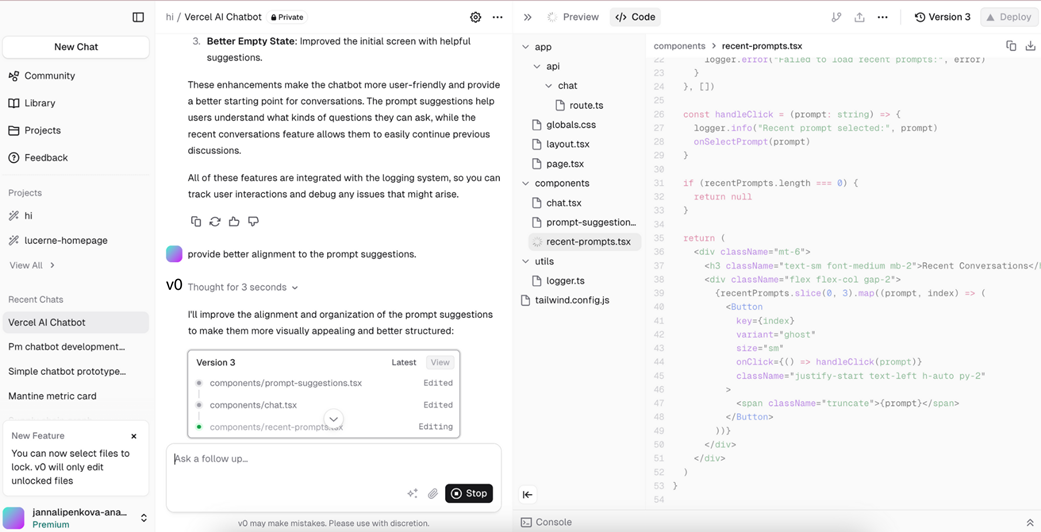
Vercel, a tool for code generation, has a hybrid interface. The user converses with the AI on the code, but common actions such as Preview, Deploy, and Console can be accessed via familiar graphical elements.
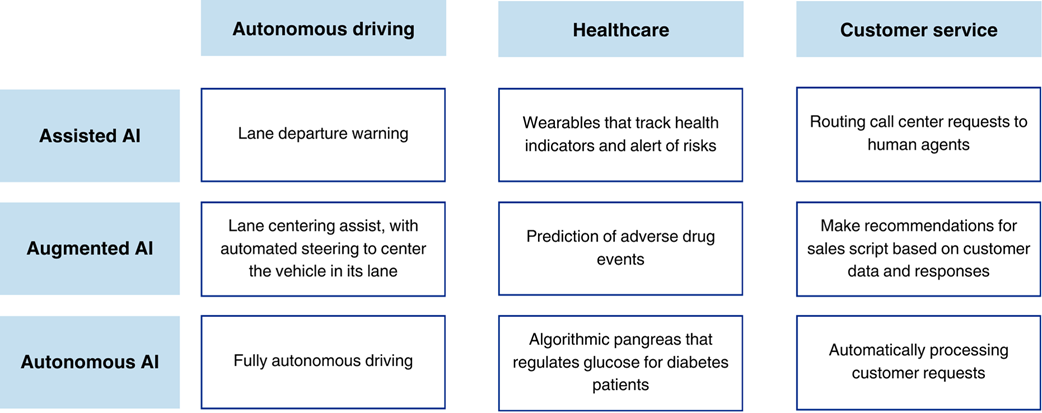
AI applications with different degrees of automation
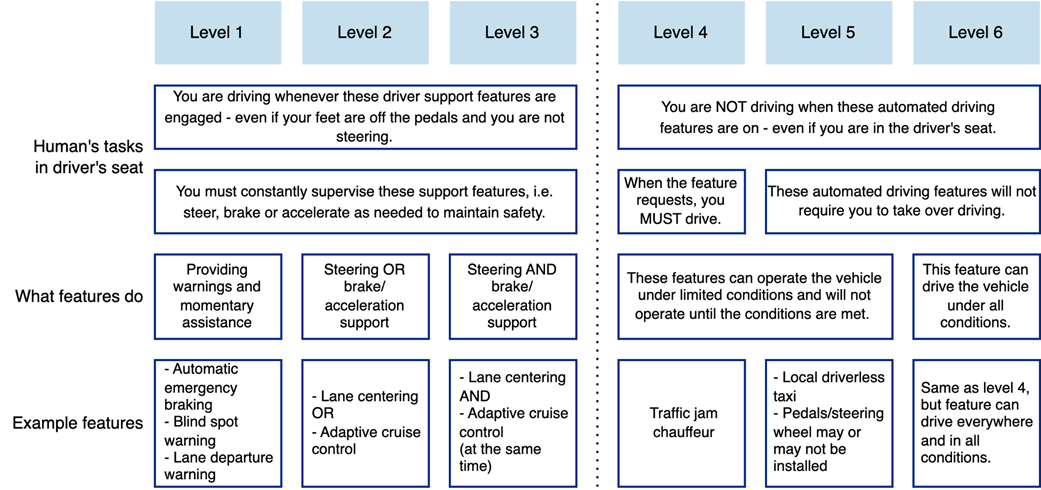
Automation degrees in autonomous driving by SAE International (source: SAE Lebels of Driving Automation https://www.sae.org/blog/sae-j3016-update)
Summary
- It is easy to get lost in the solution space of AI. New models and tools are emerging daily, making navigating the space and discovering the most appropriate solutions challenging.
- The solution space encompasses three components in our mental model of AI systems: data, intelligence, and user experience.
- Different data modalities (text, visual, auditory, etc.) require applying specific AI techniques.
- Data can be labeled or unlabeled. Labeled data provides clear learning signals for supervised learning, while unlabeled data is used in unsupervised learning.
- There are three main types of AI systems - predictive (analytical), generative, and agentic. Each is suited for different learning problems.
- Predictive AI is focused on analyzing data to make predictions and solve clearly defined problems, often requiring labeled data for effective functioning.
- Generative AI creates new content based on learned patterns from training data, offering applications in various fields, including healthcare and product design.
- Agentic AI automates multi-step workflows and can use various tools, including generative and predictive models.
- The two main types of AI user interfaces are conversational and graphical. Often, they are combined into a hybrid interface.
- When designing an AI interface, balancing automation and control and optimizing the labor distribution between human and AI for a given task is important.
FAQ
What does “mapping the AI solution space” mean?
It’s a structured way to explore options across three components of an AI system—data, intelligence, and user experience—so you can identify viable approaches, compare trade-offs, and align choices with user needs, constraints, and team capabilities.Why does data modality matter, and what modalities should I consider?
Different modalities require different techniques and skills. Common ones are text (NLP), visual (computer vision), audio (speech/sound), sensorimotor (IoT/robotics), and code. Regardless of source, models consume numbers, so you’ll transform raw data into numerical representations (e.g., embeddings). Multimodal setups combine modalities for richer context.What’s the difference between labeled and unlabeled data, and how does it affect model choice?
Labeled data pairs inputs with target outputs and enables supervised learning (e.g., classification). Unlabeled data supports unsupervised methods (e.g., clustering) with less certain outcomes. Most products need labeled data (which can be costly); you can mitigate with efficient annotation workflows or synthetic data. Note: LLMs also learn from labels—often the “next token” derived automatically from text.When should I use rule-based (symbolic) AI versus machine learning?
Use rules for simple, well-defined problems, quick MVPs, explainability, and to bootstrap data collection aligned to user needs. Switch to ML as complexity, variability, and edge cases grow—rules won’t scale to messy real-world coverage. Many robust systems are neuro-symbolic, combining both.How do predictive, generative, and agentic AI differ—and when do I use each?
- Predictive (analytical): makes bounded predictions/labels, great for classification, regression, anomaly detection, personalization at scale.- Generative: creates content (text, images, code), explores options, accelerates design and expert workflows, and can generate synthetic data.
- Agentic: takes actions via tools/devices to close the “insight–action” gap; requires integrations, guardrails, and oversight.
What are the main types of AI user interfaces?
- Conversational: flexible exploration via natural language; watch for prompting friction and hallucinations.- Graphical: stable, predictable UI patterns that build trust (especially B2B).
- Hybrid: blends conversation for open-ended tasks with buttons/menus for precision and flow control.
- Generative interfaces: emerging pattern that personalizes both content and layout step by step.
How should I decide on the degree of automation (assisted, augmented, autonomous)?
- Assisted: AI supports human decisions; safest default for most workflows.- Augmented: AI suggests and participates in decisions; human remains accountable.
- Autonomous: AI acts with minimal intervention; reserve for high-confidence, well-bounded tasks with safeguards. Start with assisted/augmented and graduate to autonomy as performance, monitoring, and risk controls mature.
What common pitfalls occur when selecting AI models and tools?
- Overfitting the solution to hype (e.g., using an LLM where a small classifier suffices).- Ignoring cost, latency, privacy/regulatory constraints.
- Underestimating data labeling needs and modality-specific expertise.
- Weak stakeholder communication due to unclear terminology and trade-offs.

 The Art of AI Product Development ebook for free
