6 The fine print
This chapter surveys the messy, often controversial fine print of today’s AI boom and urges a clear-eyed, critical stance. It moves beyond capabilities to examine how AI is built, marketed, governed, powered, and philosophically framed. The goal is to help readers interpret announcements and build or use AI with awareness of its legal uncertainties, economic realities, environmental footprint, and unresolved scientific questions.
A central theme is copyright: modern models are trained on vast scraped datasets, prompting lawsuits and debate over two issues—verbatim regurgitation from overfitting and whether training on copyrighted material without permission qualifies as fair use. The chapter anticipates wider opt-out mechanisms and notes ongoing ambiguity about copyright protection for AI-generated outputs. On regulation, it summarizes the EU’s AI Act: outright bans on certain manipulative uses, stringent duties for high-risk systems (including human oversight and documentation), transparency obligations for AI interactions and deepfakes, and rules for foundation models such as disclosure of training data practices and energy use, plus additional guardrails for very large models. The Act also effectively permits data mining from scraped sources provided opt-outs are honored.
Economically, the chapter contrasts booming revenues with persistent losses driven by training and serving costs, observes weak moats as methods diffuse and open-source rivals improve, and warns that thin “wrapper” apps lack defensibility. Grand productivity claims remain unproven at scale due to adoption frictions and “last-mile” quality gaps. The industry’s hype problem appears in hidden human-in-the-loop systems and inflated narratives about “emergent” abilities or “reasoning” models that largely systematize chain-of-thought and reinforcement learning techniques. Resource use is material yet inconsistently measured; training and inference consume significant electricity and water, with emissions tied to local energy mix even as efficiency improves. Finally, analogies between AI and brains are tentative given incomplete neuroscience, and debates about machine consciousness remain speculative—so healthy skepticism is warranted across technical, legal, economic, and philosophical claims.
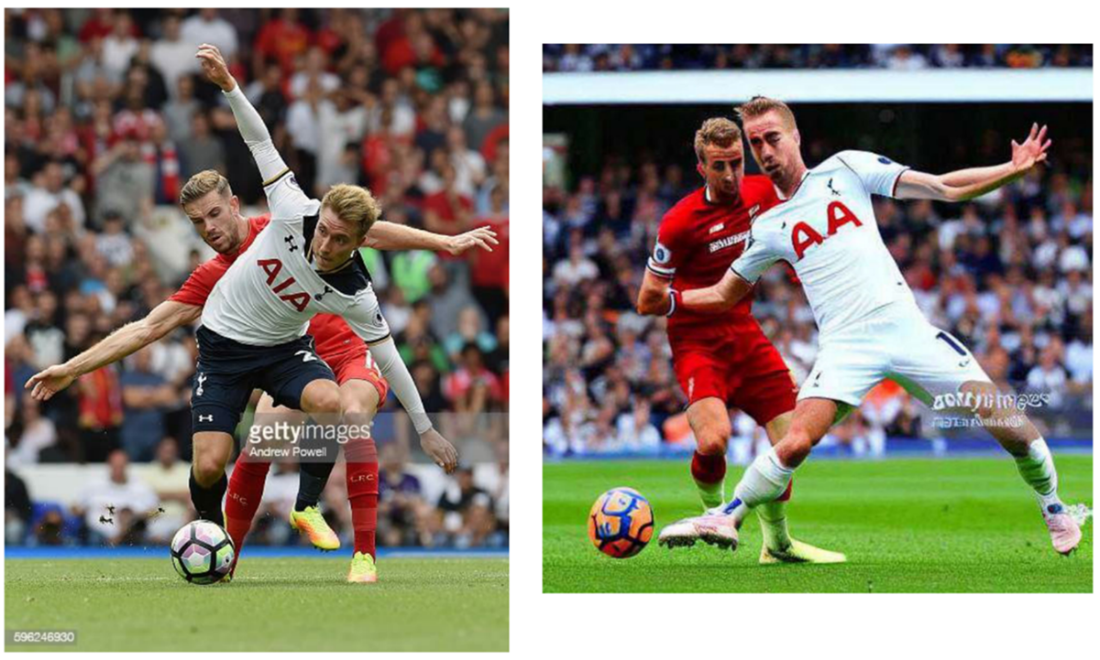
Left: Image sold on Getty Image’s website. Right: Image generated by a Stable Diffusion model. Note the watermark in the image. These images are reproduced from Getty Images (US), Inc. v. Stability AI, Inc., 1:23-cv-00135, (D. Del.).
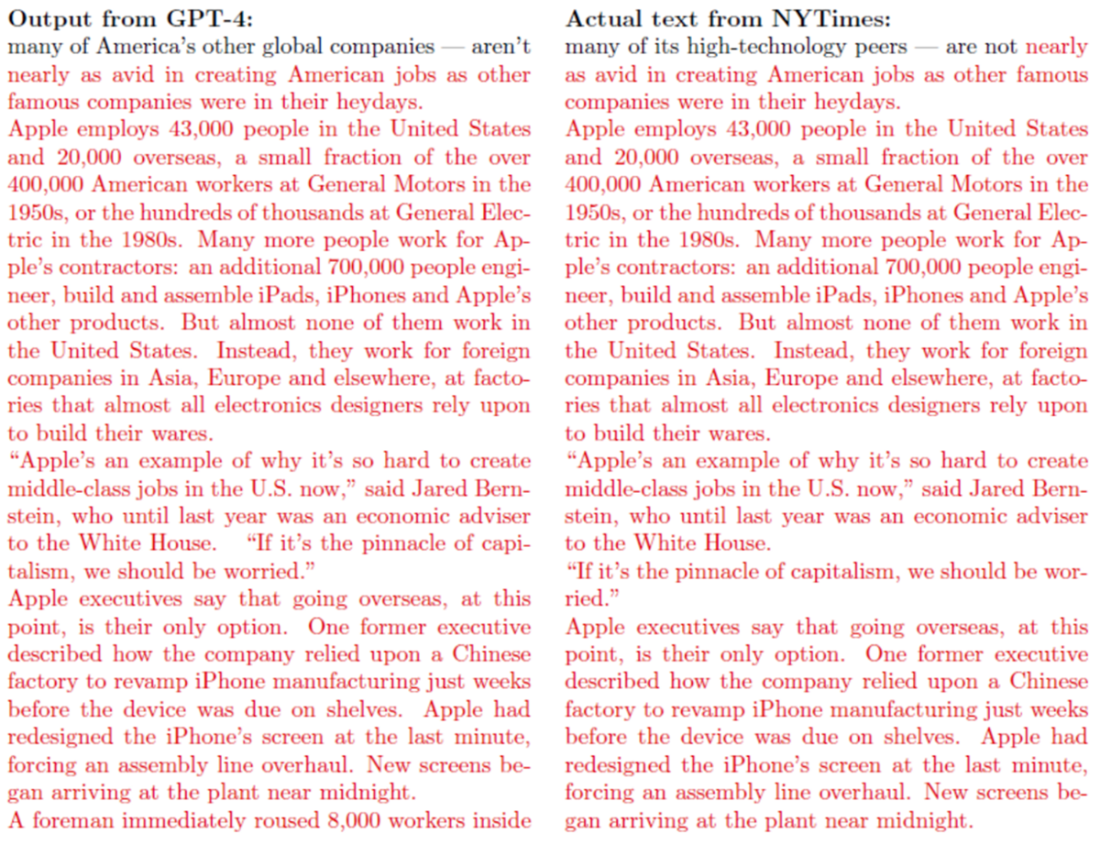
Example of GPT-4 output (almost) verbatim text as published by the New York Times. Figure reproduced from The New York Times Company v. Microsoft Corporation, 1:23-cv-11195, (S.D.N.Y.).
Summary
- The copyright debate hinges on the interpretation of fair use. AI providers argue that they scrape data so that their models can learn general patterns, so they don’t intend to reproduce the original data, so it’s a fair use of that data. Data owners argue that AI providers use this data to build competing products and “steal” their customers, so this isn’t fair use.
- The economic case for AI is not that clear. AI providers are still largely unprofitable and face fierce competition. Smaller companies which create thin “AI wrappers” also face fierce competition and may struggle to make ends meet. Productivity gains in the wider economy due to AI have not yet been observed.
- The AI field has a tendency to exaggerate or even deceive. Many products which allegedly used AI have been revealed to rely on remote human operators to do the job manually. Big AI announcements are often incorrect (like Google saying a model learned a language that wasn’t in its training data) or spruced up (like OpenAI saying its model “thinks” and “reasons”).
- The amount of electricity consumption (and other resources like water) to train and run AI models has received a lot of criticism, with some people arguing it will have detrimental environmental effects. Studies and reports about AI resource consumption are still scarce and preliminary, but we can see that it’s a negligible amount that we can just ignore.
- Comparisons between AI models and the structure of the brain are highly speculative. We don’t quite understand how brains work yet, so comparisons tend to be forced. The same goes for AI and consciousness—it’s still an ongoing debate without clear-cut answers.
Available at: https://doi.org/10.1038/nature14539

 The AI Pocket Book ebook for free
