This closing discussion reinforces a central theme of the book: good design can yield strong security as a byproduct, but you still must think about security explicitly. Security should be owned by the whole team—much like how development and operations converged—so that secure-by-design choices are complemented by concrete practices. There are no guarantees of 100% safety, yet combining solid design with a few disciplined habits significantly lowers risk and makes security a natural part of everyday work.
In practice, the chapter urges teams to institutionalize code security reviews, using context-appropriate checklists and perspectives from both insiders and outsiders to uncover flaws and spread knowledge. Keep vigilant watch over your tech stack with automated dependency scanning, aggregated visibility at scale, and a predefined process to prioritize and assign remediation work. Run penetration tests regularly to challenge both technical controls and domain rules, treat findings as learning opportunities, and only adopt bug bounty programs if you’re prepared to support them operationally. Finally, raise baseline security literacy across the team and continually learn from the broader community, channeling insights into design patterns and coding conventions that prevent classes of bugs by construction.
The authors also stress readiness for the inevitable: build a security incident mechanism that separates urgent incident handling from subsequent problem resolution. Involve developers directly during incidents to contain the attack, limit damage, and capture forensics, then address root causes in both product and process and prioritize those fixes alongside other work. Aim for antifragility by turning lessons into lasting safeguards—checklists, pipeline checks, and team-wide practices—so systems, teams, and processes come back stronger after adversity. This cycle of response, analysis, and systemic improvement keeps security living and evolving within the development process.
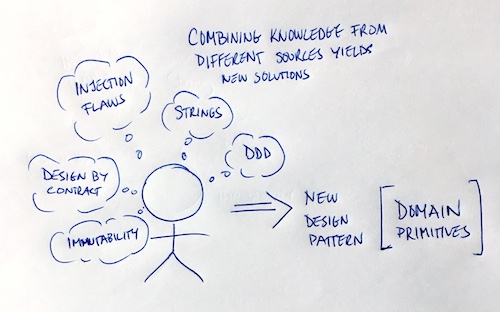
Figure 14.1. Combining knowledge from different sources yields new solutions.
Summary
- You should use code security reviews as a recurring part of your secure software development process.
- As your technology stack grows, it becomes important to invest in tooling that provides quick access to information about security vulnerabilities across the entire stack.
- It can be beneficial to proactively set up a strategy for dealing with security vulnerabilities as part of your regular development cycle.
- Pen tests can be used to challenge your design and detect microlesions caused by evolving domain models.
- Feedback from a pen test should be used as an opportunity to learn from your mistakes.
- Bug bounty programs can be used to simulate a continuous, never-ending pen test, but bug bounty programs are complex and require a great deal from an organization.
- It’s important to study the field of security.
- Knowledge from different domains can be used to solve security problems.
- Incident handling and problem resolution have different focuses.
- Incident handling needs to involve the whole team.
- The security incident mechanism should focus on learning to become more resistant to attack.
FAQ
What is a code security review and how does it differ from a regular code review?
A code security review is a focused review of code with the explicit goal of uncovering security weaknesses and reinforcing secure design. Like regular reviews, it spreads knowledge and improves quality, but it zooms in on security properties (e.g., input handling, authentication flows, data exposure) and complements other safeguards such as design patterns, tooling, and tests. Conduct these reviews continuously—not just at the end of a project.What should we include in a code security review checklist?
Start with a concise, high‑value list and refine it over time. Examples:- Correct input/output encoding and validation; mitigation of XSS/SQLi
- Use of security‑related HTTP headers
- Strict invariants in domain primitives
- Parameterized database queries
- Protection of secrets (password hashing, key management)
- Appropriate encryption for the data type
- Secrets/certificates/password rotation policies
- Prevention of sensitive data in logs
- Automated security tests in the delivery pipeline
- Security monitoring and an incident response process
Who should participate in a code security review?
Include both team members and selected outsiders. Team members bring deep context; external developers, testers, architects, or product owners add fresh perspectives and different threat intuitions. If mixed sessions become unfocused, split them: one review with the team and one with external reviewers.How can large organizations keep track of vulnerabilities across many applications?
Use automated scanners in each pipeline, then aggregate the findings to create a company‑wide view for reporting and coordination. Invest in tooling that consolidates results across apps (e.g., dependency vulnerability trackers) and make it easy for individual teams to act on app‑level details. Start small, iterate, and scale your aggregation/reporting as you grow.How should we prioritize vulnerability remediation work?
Establish a prioritization and routing process before incidents occur. Define:- How severity, exploitability, and business impact influence priority
- Who owns fixes (team versus central group)
- How security work competes with features in backlogs
Do secure-by-design practices remove the need for penetration testing?
No. Good design reduces risk but doesn’t replace pen tests. Pen tests aren’t about proving “unhackable”; they help challenge your design (including business rules) and reveal exploitable gaps that design and automated checks missed.How often should we run penetration tests, and what should they cover?
Frequency is context‑dependent. Trigger tests when major changes occur (new features, API changes, new integrations) and at intervals that continue to provide value. Scope should cover both technical controls (auth, certs, headers) and domain/business rules that can be abused in legitimate flows.What does it take to run a successful bug bounty program?
Treat it as continuous, crowd‑sourced pen testing and plan for operations:- Clear rules of engagement and disclosure policy
- Enrollment, communication, and feedback to reporters
- Triage, reproducibility documentation, and severity/award guidelines
- Internal capacity to fix and verify
How should our team handle a security incident versus resolving the root cause?
Separate the two:- Incident handling: Stop the bleeding—block attack paths, limit data exposure/value, notify affected parties, and capture forensics.
- Problem resolution: After stabilization, investigate causes (code, libraries, configuration, process gaps), fix product issues, and improve processes (e.g., earlier patching, better monitoring).
How do we build a culture of continuous security learning and become more antifragile?
Make security part of daily work:- Baseline knowledge (e.g., OWASP Top 10) for all team members
- Hands‑on exposure (training, attack simulations, pen test debriefs)
- Turn findings into lasting improvements: checklist updates, pipeline checks, coding standards
- Run blameless postmortems and themed retrospectives after incidents/tests

 Secure by Design ebook for free
