11 Correction, planning, and reasoning
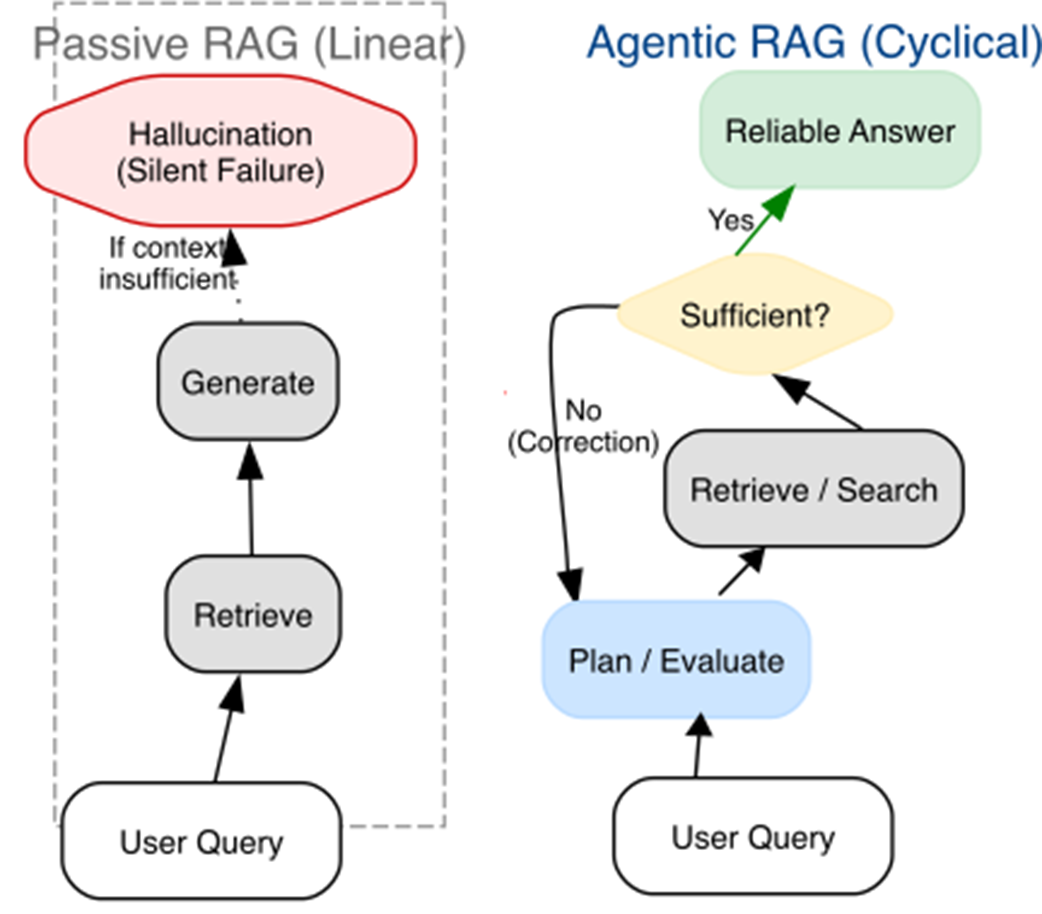
Retrieval quality alone is not enough for real-world RAG systems because the core weakness of many pipelines is structural: they retrieve once, generate once, and never check whether the evidence is current, specific, or complete. In high-stakes settings such as compliance, legal research, or medicine, that single-pass design can turn a plausible match into a confident but wrong answer. The chapter argues that RAG must evolve from a passive pipeline into an agentic loop that can evaluate what it retrieved, decide whether it is sufficient, and try again when it is not.
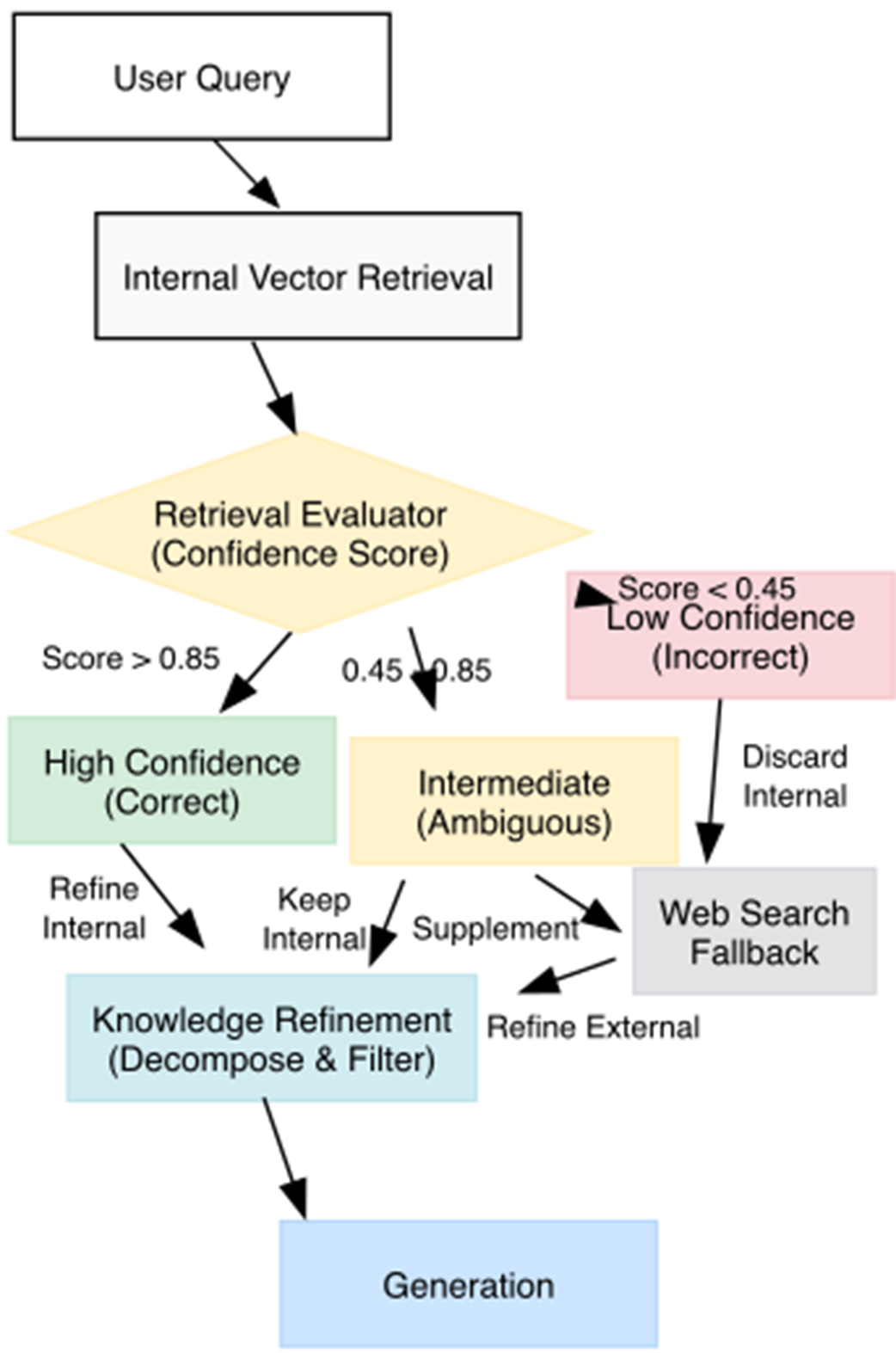
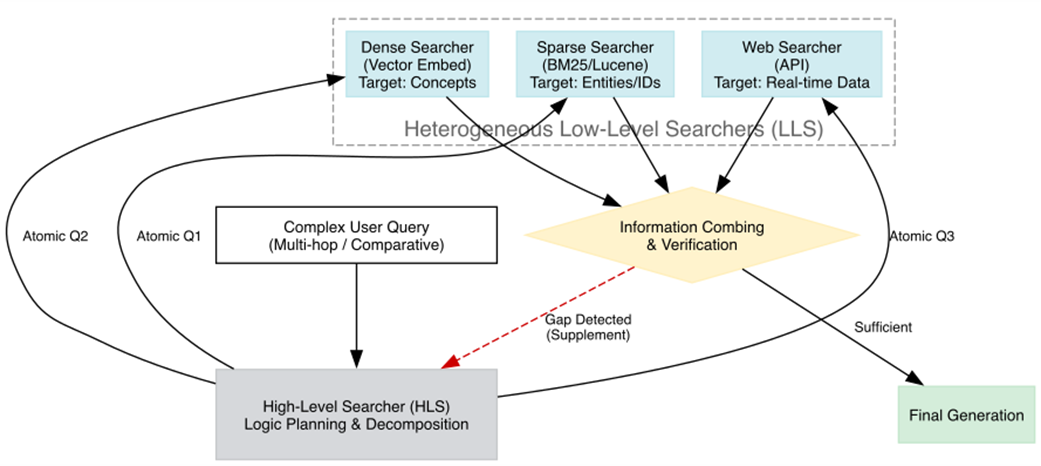
To explain that shift, the chapter contrasts two complementary approaches. CRAG is the corrective approach: it adds a retrieval evaluator that audits the returned documents, filters noisy context, and triggers a fallback web search when the evidence is stale, ambiguous, or irrelevant. LevelRAG is the planning-first approach: it decomposes complex questions into atomic sub-queries, routes them to the most appropriate retrievers, and verifies whether the combined evidence fully answers the original request. CRAG is lightweight and easy to bolt onto existing systems, while LevelRAG requires a broader re-architecture of retrieval control flow.
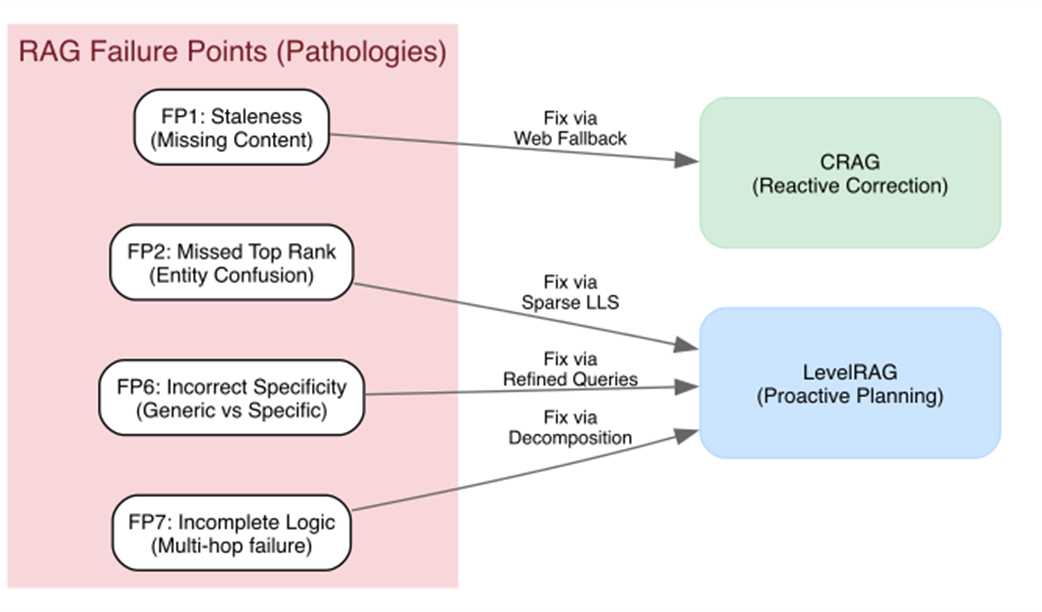
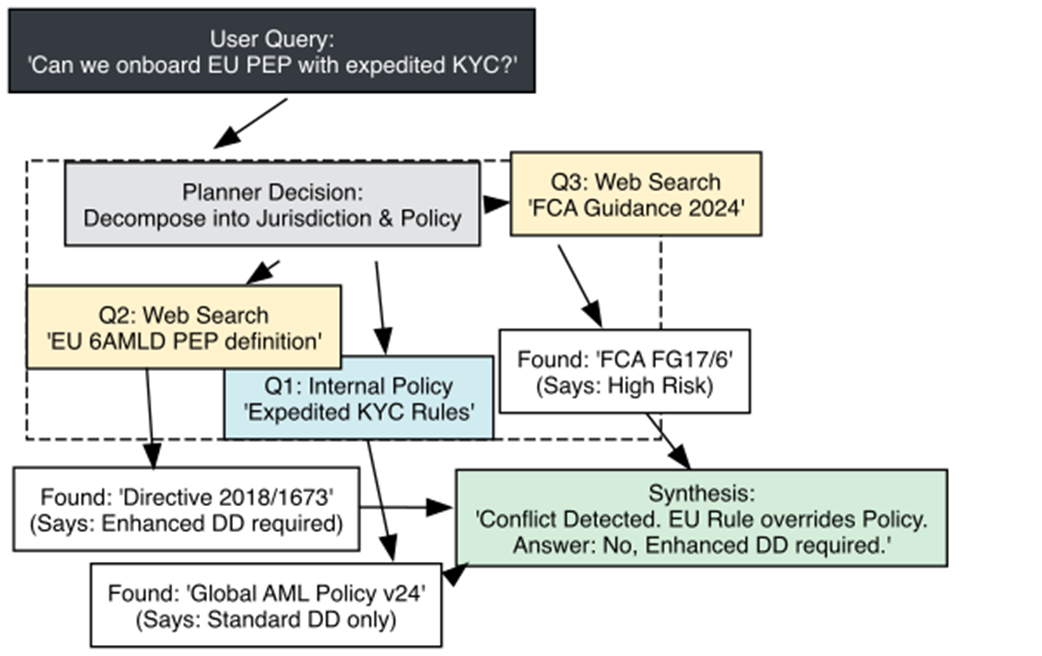
The chapter ties these ideas to concrete failure modes in an enterprise compliance assistant, showing how staleness, long-tail entity confusion, and multi-hop reasoning gaps map to different architectural fixes. CRAG is best when the main problem is outdated or weak evidence that needs correction after retrieval, while LevelRAG is better when the question itself must be planned and decomposed before searching. In practice, the strongest systems combine both: planning to break the problem apart, correction to audit each sub-result, and verification to decide when the evidence is finally sufficient. The broader lesson is that production RAG is becoming less about a single retrieval step and more about controlled, iterative research.
From Passive Pipelines to Agentic Loops: The shift from linear execution to cyclical evaluation.
Strategic Selection: Mapping RAG failure points to architectural solutions.
CRAG Architecture: Using a retrieval evaluator to trigger corrective actions.
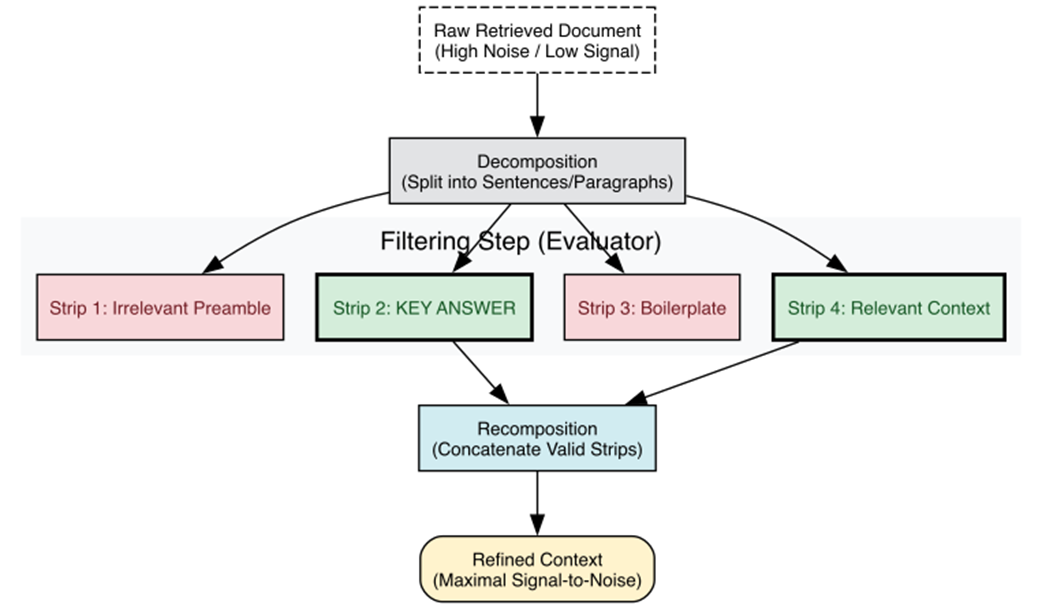
The Decompose-then-Recompose Algorithm: Distilling signal from noise in retrieved documents.
LevelRAG Architecture: Hierarchical planning decoupling logic from retrieval execution.
Solving the Compliance Scenario: How LevelRAG decomposes a complex query into atomic research tasks.
Summary
- Retrieval is a loop, not a step: A vector database is not a magic box that contains all answers, and treating retrieval as something to audit and correct while it runs is what separates these systems from the pipeline in chapter 4.
- CRAG audits what came back before generating: A retrieval evaluator grades the passages, filters the noise, and falls back to web search when the internal corpus is stale or thin.
- LevelRAG plans before it searches: A high-level searcher splits a multi-part question into atomic sub-queries, because a single vector search cannot serve two information needs at once.
- Different needs want different retrievers: Dense vectors hold up on thematic similarity, sparse search wins on exact entity matches, and the router picks per sub-query rather than per system.
- Refusing to answer is a feature: A confidence score low enough to stop is worth more than a fluent answer nobody checked, which is why regulated industries adopted this pattern first.
- The audit step outlived the paper's name: It ships as a reranker or an LLM-as-judge guard in most production stacks, rarely called CRAG.

 Retrieval Augmented Generation, The Foundational Ideas ebook for free
