Early RLHF was often dismissed as “just style transfer,” but the chapter argues that this framing misses why it matters. Style is not a superficial layer added after the fact; it is part of how information is conveyed, interpreted, and valued. In that sense, RLHF can improve the usefulness of a model not only by changing what it says, but by changing how it says it in ways that users actually prefer.
The chapter emphasizes that preference fine-tuning often produces responses that are more structured, more concise or more expansive depending on what users reward, and generally more engaging to read. This can show up as better performance on common chat-oriented benchmarks and as a more enjoyable model personality, even when the underlying factual content is similar. The discussion uses examples from model families like Tulu and Llama to show that the post-RLHF version may deliver the same core answer with more polish, organization, and conversational appeal.
At the same time, the chapter warns that this benefit can be overstated or misused. Some RLHF methods optimize too narrowly for chattiness, verbosity, or benchmark-specific signals, which can inflate scores without improving real-world usefulness and can even harm performance on harder tasks like reasoning, coding, or mathematics. The main takeaway is that RLHF is best understood as a powerful but delicate tool: when applied well, it improves alignment and user experience, but when pushed too far toward superficial preferences, it can create misleading results and fragile models.
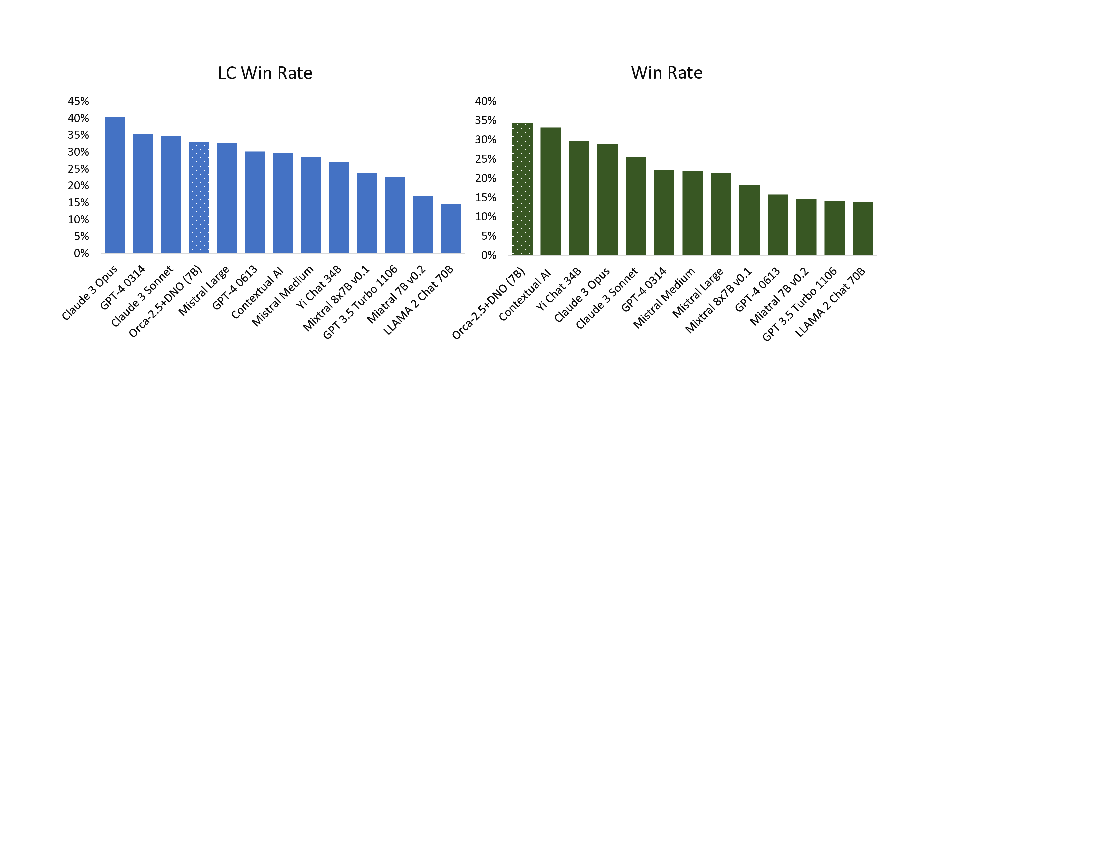
Figure B.1 Results from the paper on Direct Nash Optimization (DNO) highlighting their small model outperforming the likes of GPT-4. Rosset et al. 2024. License CC-BY.
FAQ
Why does the chapter argue that RLHF is not “just style transfer”?The chapter explains that style is not superficial: it is intertwined with meaning, usefulness, and human value. RLHF changes how information is presented in ways that can materially improve user experience and model performance, so it is more than a cosmetic rewrite.How can style improve the value of a model’s answer?Style affects clarity, appeal, and perceived helpfulness. A response that is more concise, structured, or engaging can be easier to use and can better satisfy user expectations, even when the underlying information is similar.Why did early critiques of RLHF focus on “small, unimportant changes”?Because RLHF was often associated with surface-level changes like verbosity, formatting, and tone. Many observers saw these as cosmetic, but the chapter argues that such changes can have real effects on preference, usability, and benchmark outcomes.How does RLHF influence benchmark scores like Arena or AlpacaEval?Well-done RLHF can improve scores by making models more aligned with what evaluators tend to prefer, such as clearer structure, a friendlier tone, or more complete answers. However, the chapter also notes that these gains do not always reflect better real-world capability.What does the chapter mean by “chattiness”?“Chattiness” refers to models producing longer responses, often with extra formatting such as markdown, bullet points, emojis, and more elaborate explanations. It is used as a shorthand for a cluster of stylistic changes commonly produced by RLHF.Why do RLHF-trained models often become more verbose?Because human raters frequently prefer longer answers that feel more thorough, helpful, or trustworthy. RLHF learns from these average preferences, so the model tends to produce more detailed responses even when shorter answers might be better for some users.What is the risk of optimizing a model too strongly for chat-style preferences?Over-optimizing for chat benchmarks can hurt other capabilities, such as mathematics or coding. The chapter warns that some methods improve apparent helpfulness while degrading broader performance or producing misleading evaluation results.Why does the chapter criticize some RLHF papers and model claims?It argues that some papers report impressive narrow-domain benchmark results that do not translate into real-world adoption or general usefulness. In some cases, the reported gains may be misleading or even meaningless outside the test setup.How do length-bias corrections relate to RLHF?Because RLHF can reward longer outputs, evaluation systems like AlpacaEval and WildBench introduced length corrections to reduce gaming. These corrections help prevent models from winning simply by being more verbose rather than more useful.What is the main practical takeaway of this appendix?The key point is that style is part of capability from the user’s perspective. RLHF can improve how usable, enjoyable, and effective a model feels, but it should be evaluated carefully to avoid mistaking superficial chat improvements for genuine overall progress.
pro $24.99 per month
access to all Manning books, MEAPs, liveVideos, liveProjects, and audiobooks!

 Reinforcement Learning from Human Feedback ebook for free
