5 Templates
The chapter explains prompt templates as reusable frameworks for recurring tasks, built by combining structural elements, linguistic choices, and prompt patterns. Their main strength is the use of dynamic input parameters, which let one stable template adapt to many scenarios while keeping the core logic, constraints, and output shape consistent. Because templates are meant for repeated use, they should be stored externally, tested across varied inputs, and evaluated for quality, consistency, and failure behavior before deployment.
One major example shows how a template can turn feature requests into implementation plans in a repeatable way. By fixing the role, instructions, constraints, and output format while inserting changing feature details at runtime, teams can produce clearer and more comparable plans, reduce drift, and improve review quality. The chapter highlights how the output structure, concise wording, and role assignment work together to keep the response practical, scoped, and easy to use in engineering workflows.
A second, more advanced example uses a multistep workflow for risky legacy refactors: first, the model asks targeted questions to uncover hidden dependencies, migration risk, and rollback needs; then it uses those answers to generate a safer plan. This inversion-then-refinement approach shows why complex tasks benefit from multiple prompt patterns rather than a single pass. The chapter ends by emphasizing hands-on practice, encouraging readers to identify reusable prompt parts, separate fixed content from runtime inputs, and compare results for clarity, structure compliance, reusability, and effort.
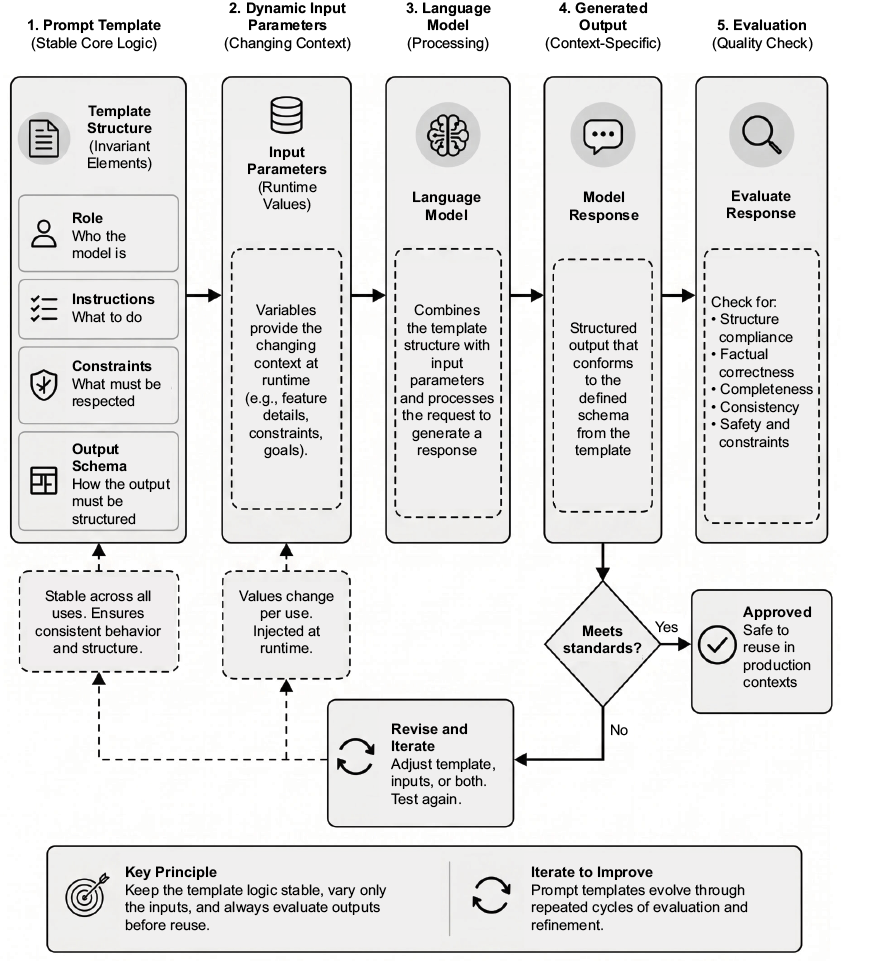
Prompt template runtime flow
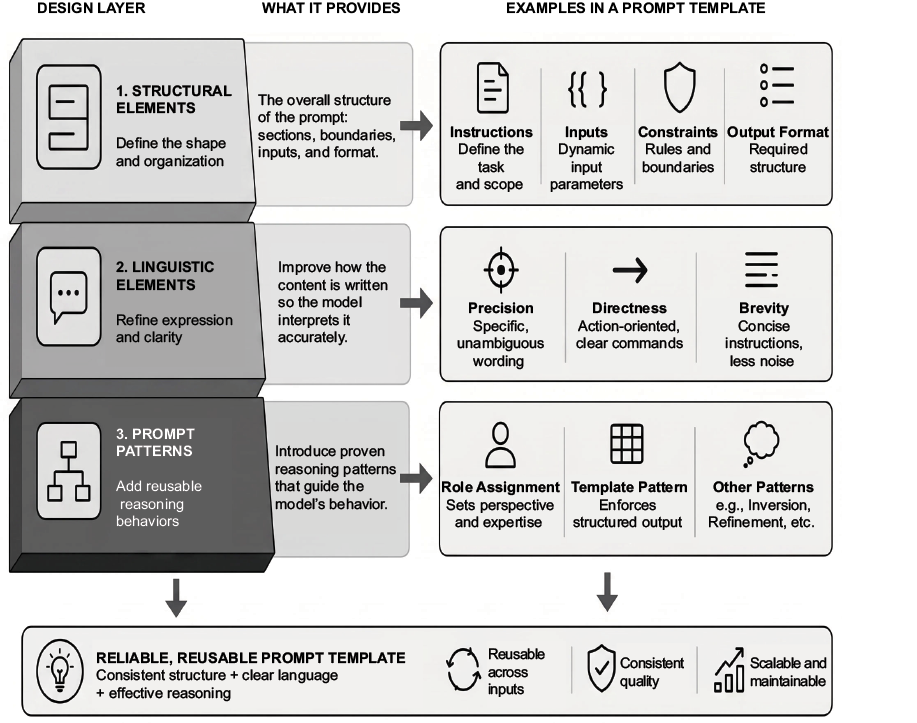
Prompt template design stack linking structural elements, linguistic elements, and prompt patterns
Summary
- Prompt templates solve recurring problems through stable core logic. They keep instructions, constraints, and output structure fixed so results stay consistent across repeated use.
- Dynamic input parameters make prompt templates reusable at runtime: only input context changes, allowing one prompt template to adapt to many cases without rewriting the prompt.
- Effective prompt template design combines structural elements, linguistic elements, and prompt patterns. This integration turns isolated techniques into complete, repeatable workflows.
- Multistep prompt template workflows improve quality for complex tasks. Chains such as inversion plus refinement help surface missing details before producing final outputs.
FAQ
What is a prompt template in Chapter 5?
A prompt template is a reusable prompt framework for one recurring problem. It keeps the core instructions, constraints, and output structure fixed while allowing runtime input parameters to change.How is a prompt template different from a template pattern?
In this chapter, a prompt template means the reusable framework itself. A template pattern refers more narrowly to the pattern that enforces a fixed output structure.Why are dynamic input parameters important in prompt templates?
Dynamic input parameters let one template adapt to different scenarios without rewriting the prompt. They replace placeholders like{{feature_name}} or {{constraints}} while preserving the prompt’s core logic.
 Prompt Engineering in Practice ebook for free
