Data masking is a critical responsibility for DBAs because regulatory frameworks such as GDPR and HIPAA demand strong protection of sensitive data. While SQL Server provides authentication and authorization, risks arise when production data is copied to development, testing, or vendor environments. The chapter emphasizes static data masking—permanently replacing Personally Identifiable Information (PII) with fabricated but meaningful values—rather than dynamic data masking, so that shared datasets remain useful without exposing real identities. It further highlights the value of repeatable, automated masking processes that fit naturally into CI/CD pipelines.
The authors contrast fragile, pattern-based T-SQL updates—easy to reverse and prone to breaking as schemas and data evolve—with a more robust approach: replacing real values with fully fabricated data. dbatools supports random data generation for simple SQL types and leverages a .NET fake-data engine for realistic formats like emails, IPs, names, and phone numbers. To locate sensitive columns, Invoke-DbaDbPiiScan combines hints from column names with pattern recognition over sampled rows, with tunable sampling to balance accuracy and performance. This detection-driven approach accelerates discovery and reduces manual effort, especially when teams lack intimate knowledge of a database’s schema.
The practical workflow centers on creating and reusing a JSON configuration. New-DbaDbMaskingConfig generates a readable file that specifies which tables and columns to mask and how, including options like deterministic masking—ensuring identical source values map to the same masked value—useful for denormalized reporting scenarios or consistent CI/CD test data. Invoke-DbaDbDataMasking applies the configuration to replace PII with realistic, randomized values, and Test-DbaDbDataMaskingConfig validates JSON structure to prevent runtime errors. While not all data types are supported, the toolset provides a repeatable, auditable path to effective anonymization that preserves application and testing utility while substantially reducing breach risk.
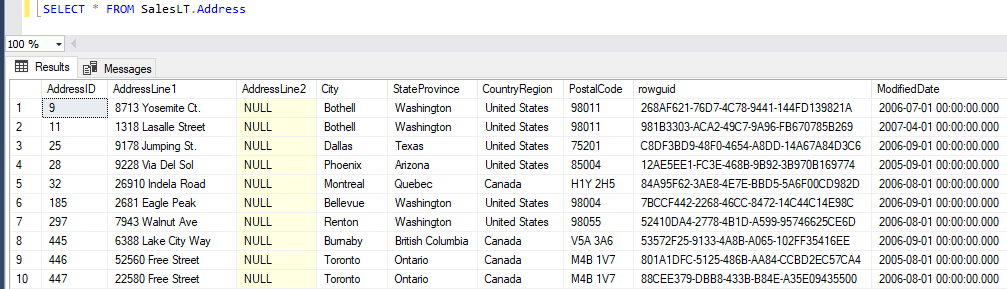
Figure 21.1. Table data before static data masking
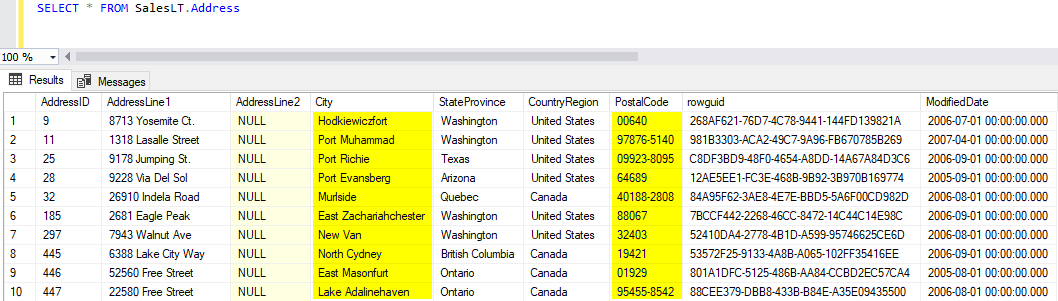
Figure 21.2. Table data after static data masking
Hands-on Lab
Try the following tasks
Check if a specific database table has any column which contains potential PII data.
Generate a data masking configuration file for a selection of tables and columns
Mask the data using the data masking configuration file generated
FAQ
What’s the difference between Static Data Masking and SQL Server’s Dynamic Data Masking, and which one does dbatools use?Static Data Masking permanently replaces sensitive data at rest with fabricated values (anonymization). SQL Server’s Dynamic Data Masking only masks data in transit without changing what’s stored. dbatools implements Static Data Masking (full anonymization), not Dynamic Data Masking.Why should I mask data when sharing or moving databases to dev/test or vendors?Because production copies can bypass normal authentication/authorization controls once they leave the secure environment. Masking helps prevent data leaks and supports compliance with regulations such as GDPR and HIPAA.Why not use simple pattern-based T-SQL updates to scramble data?Pattern-based changes are easy to reverse if the pattern is known, and they often break as data and schemas evolve. Replacing values with randomly generated, meaningful fakes is harder to reverse-engineer and is more maintainable.How do I discover columns that likely contain PII?Use Invoke-DbaDbPiiScan. It looks for PII by combining column-name hints with pattern recognition (regular expressions) over sample data. By default it samples the first 100 rows; tune accuracy and runtime with -SampleCount.How does dbatools generate realistic fake values?For simple SQL types (numbers, dates, text), it generates random values directly. For domain-specific data (emails, names, IPs, phone numbers, etc.), it leverages the Bogus .NET framework through Get-DbaRandomizedValue using -RandomizerType and -RandomizerSubType. Use Get-DbaRandomizedType to see the catalog of available generators.How do I create a masking configuration file and target specific tables/columns?Run New-DbaDbMaskingConfig and, if needed, pass -Table and -Column along with -Path to generate a human-readable JSON file. Note: -Table expects the table name without schema. Not all column/data types are supported (e.g., some user-defined types); check Get-Help New-DbaDbMaskingConfig for current limitations.What do JSON options like MaskingType, SubType, MinValue/MaxValue, KeepNull, and HasUniqueIndex mean?- MaskingType/SubType: choose the generator (for example, Address/City, Internet/Email).
- MinValue/MaxValue: control ranges or lengths for generated values.
- KeepNull: when true, NULL values remain NULL.
- Deterministic: when true, identical inputs map to the same masked value within a run.
- HasUniqueIndex and FilterQuery: help respect uniqueness and optionally limit rows to mask.What is deterministic masking and does it weaken security?Deterministic masking ensures the same source value is replaced with the same fake value (useful for denormalized/reporting scenarios or stable CI/CD test data). dbatools generates values randomly and tracks them in a dictionary per run—there’s no reversible key—so it does not weaken security. Enable it per column by setting Deterministic to true in the JSON.How do I apply the configuration to mask my database?Use Invoke-DbaDbDataMasking with your -SqlInstance, -Database, and -FilePath to the JSON. The command reports the schema/table, columns masked, rows affected, elapsed time, and status.How can I validate my configuration and automate the process?Use Test-DbaDbDataMaskingConfig to catch JSON and structural issues early. Save and reuse the config so masking is repeatable and can be scripted into CI/CD pipelines to consistently protect data in exported or refreshed environments.
pro $24.99 per month
access to all Manning books, MEAPs, liveVideos, liveProjects, and audiobooks!

 Learn dbatools in a Month of Lunches ebook for free
