7 Named entity disambiguation
Named Entity Disambiguation (NED) complements Named Entity Recognition (NER) to turn raw text into actionable, domain-grounded knowledge by linking mentions to canonical entities in a knowledge base. The chapter motivates NED with a healthcare scenario, showing how the same surface form (for example, “Zika”) refers to distinct concepts (virus, disease, congenital syndrome) that must be resolved precisely to support an interactive Intelligent Advisory System (IAS). It introduces a practical NED workflow—candidate selection and ranking (exemplified with ScispaCy on UMLS) followed by ontology integration—demonstrating why domain knowledge graphs (KGs) are essential to provide context, interoperability, and rich semantic connections beyond what general-purpose LLMs can reliably deliver on their own.
Building the KG involves a repeatable process adapted from CRISP-DM: define a graph schema, prepare and ingest documents, disambiguate entities, integrate ontologies, and derive relationships such as co-occurrences. Unstructured regulatory and technical content from European bodies (e.g., ECDC, EDQM) is processed and loaded into a Neo4j model that distinguishes files, pages, mentions, and disambiguated medical entities. These entities are mapped to UMLS and connected to SNOMED and HPO, leveraging hierarchical propagation (e.g., SNOMED IS_A) and semantic typing, then enriched with sentence-level co-occurrence links to bridge unstructured text and structured biomedical vocabularies. The result is an integrated, queryable KG that harmonizes multiple sources and enables analysis at scale in safety- and quality-critical SoHO contexts.
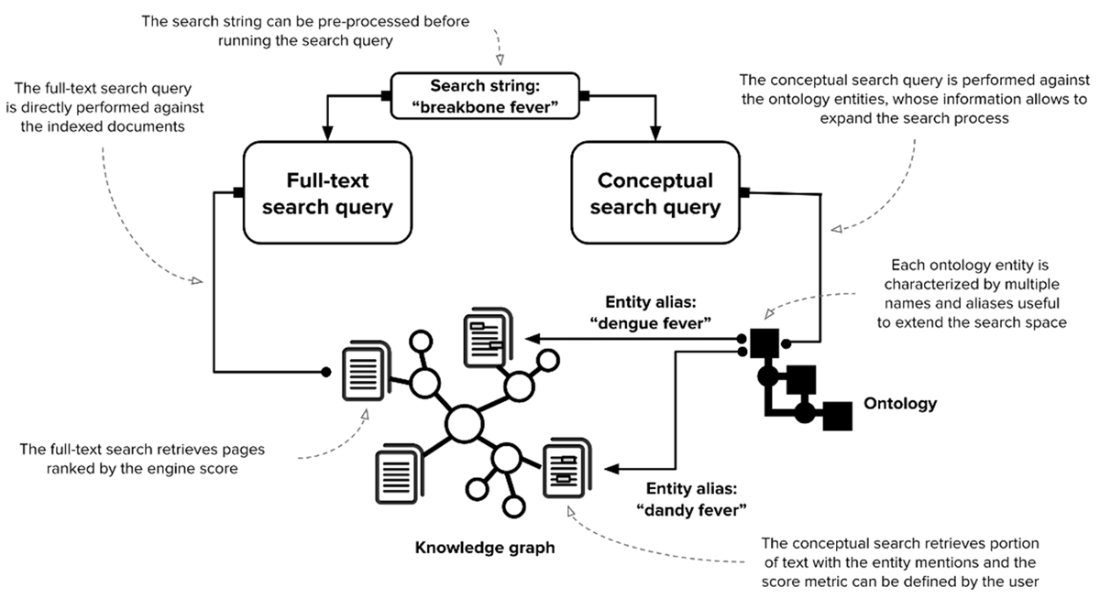
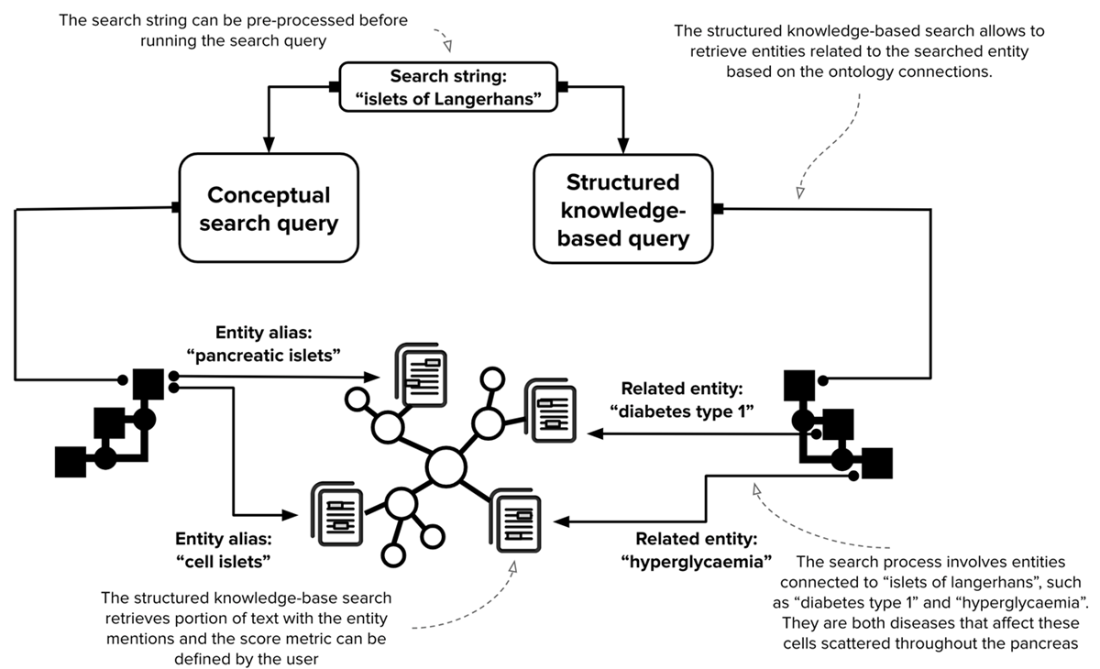
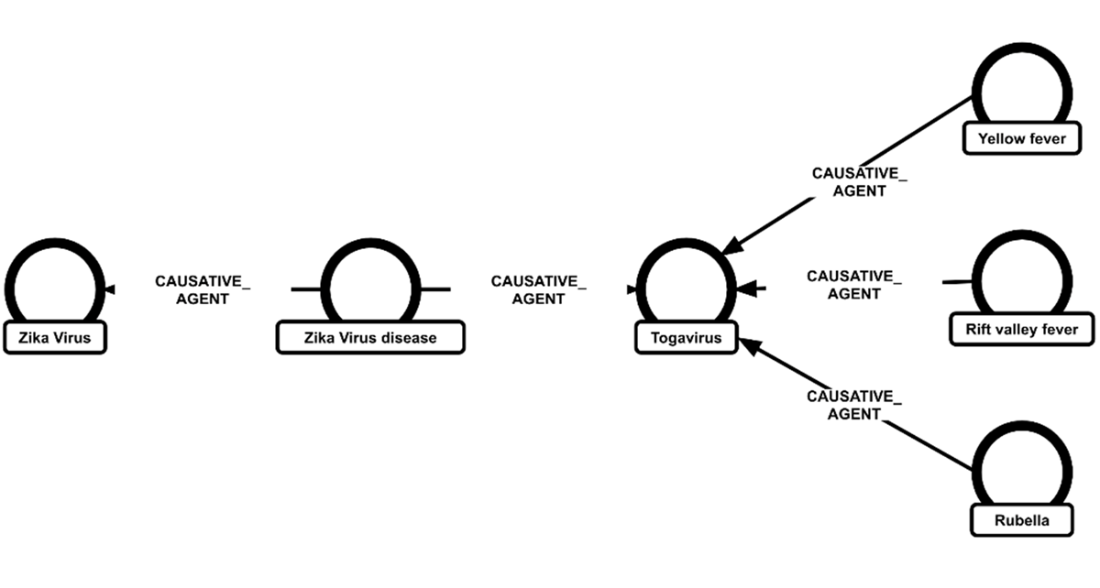
On top of this KG, the chapter delivers four capabilities. Conceptual search reconciles synonyms and resolves ambiguities to return the right passages (e.g., “breakbone fever” and “dengue fever”). Structured knowledge-based search expands queries along ontology relations to surface relevant text tied to connected entities (e.g., diseases affecting islets of Langerhans, or chains of CAUSATIVE_AGENT links). KG-based interpretability and discovery explains why entities co-occur (by revealing ontology paths such as disease–virus causation) and uncovers additional clinically meaningful links. Finally, new knowledge uncovering flags high-evidence co-occurrences that are not yet encoded in ontologies (e.g., Zika and Guillain–Barré), with graph data science used to filter hub-driven, non-informative paths. Together, these features transform dispersed documents into a coherent decision-support fabric for regulators and policy officers.
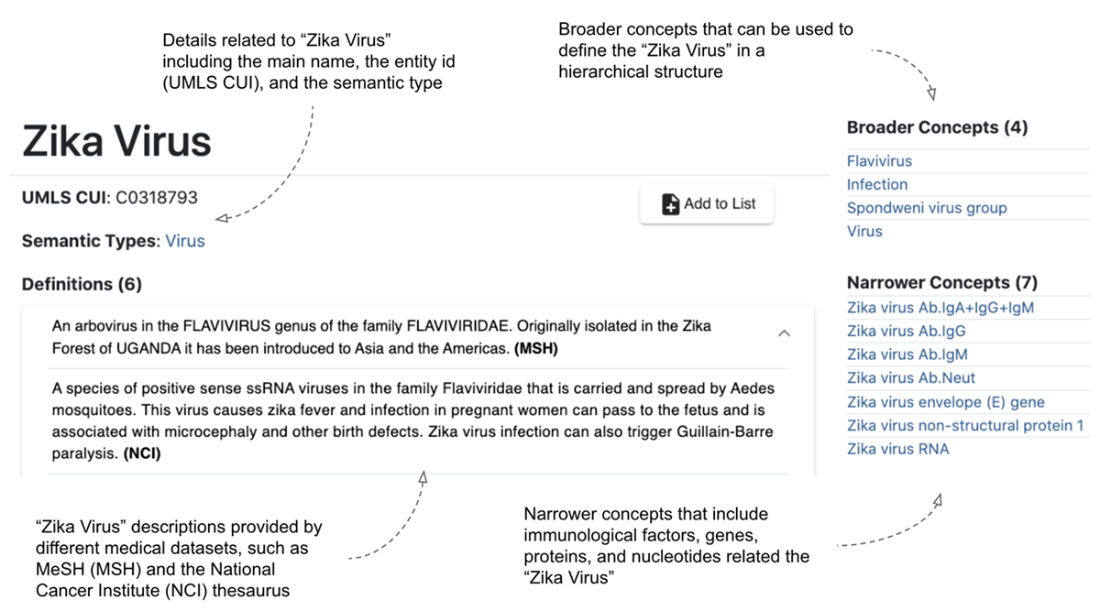
Screenshot from the UMLS website showing information about the “Zika Virus” entity. This information includes the name, the id (CUI), the semantic type, and a set of definitions, broader concepts, and narrower concepts.
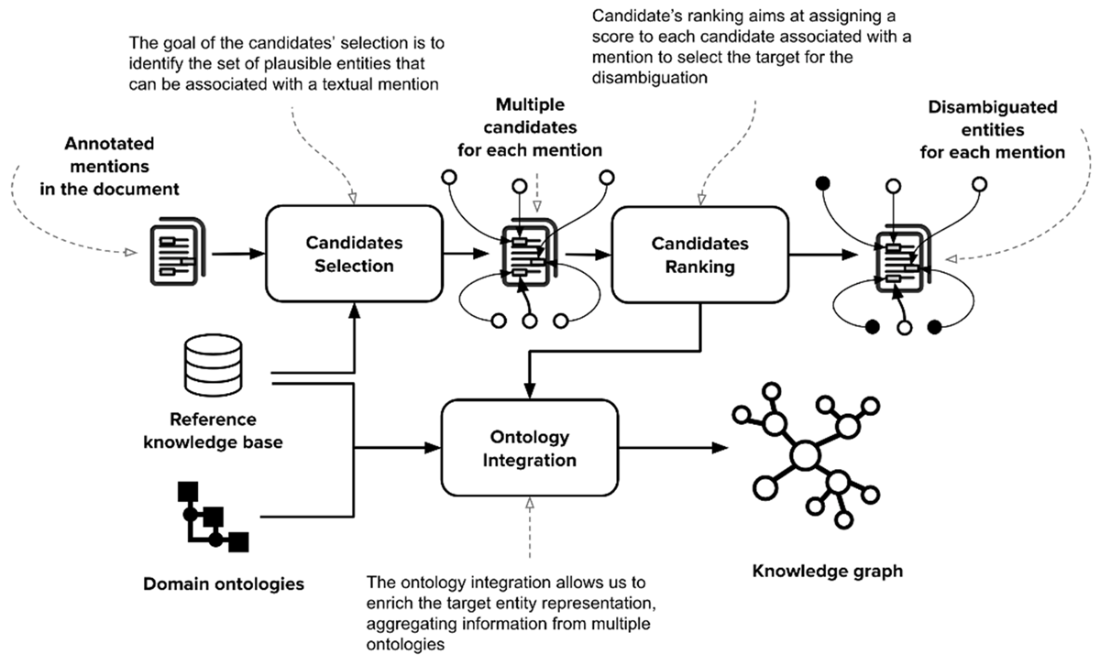
Architecture of the NED system including three main phases: (i) the candidate selection; (ii) the candidate ranking; (iii) the ontology integration.
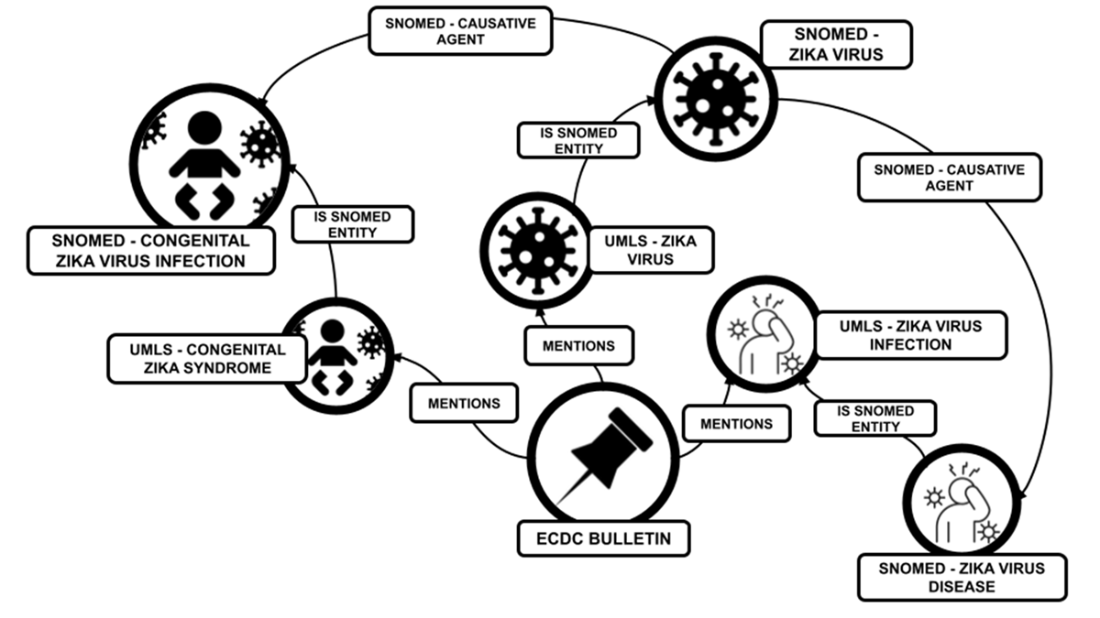
Example of KG built integrating information from the text processed using ScispaCy model, the UMLS, and the SNOMED ontologies.
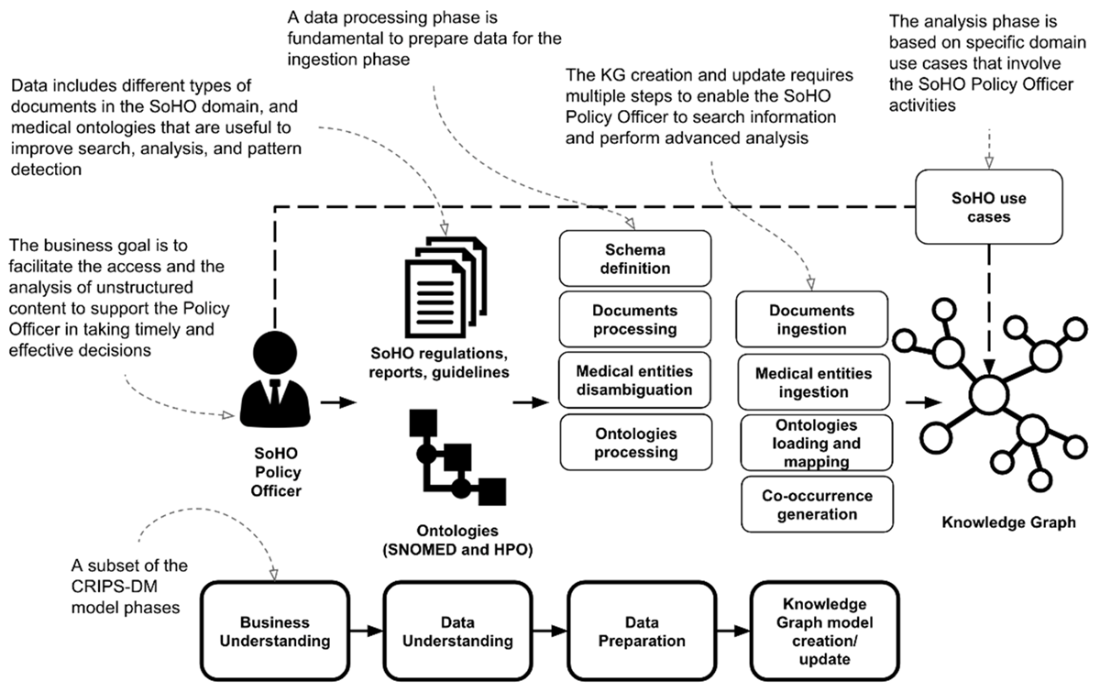
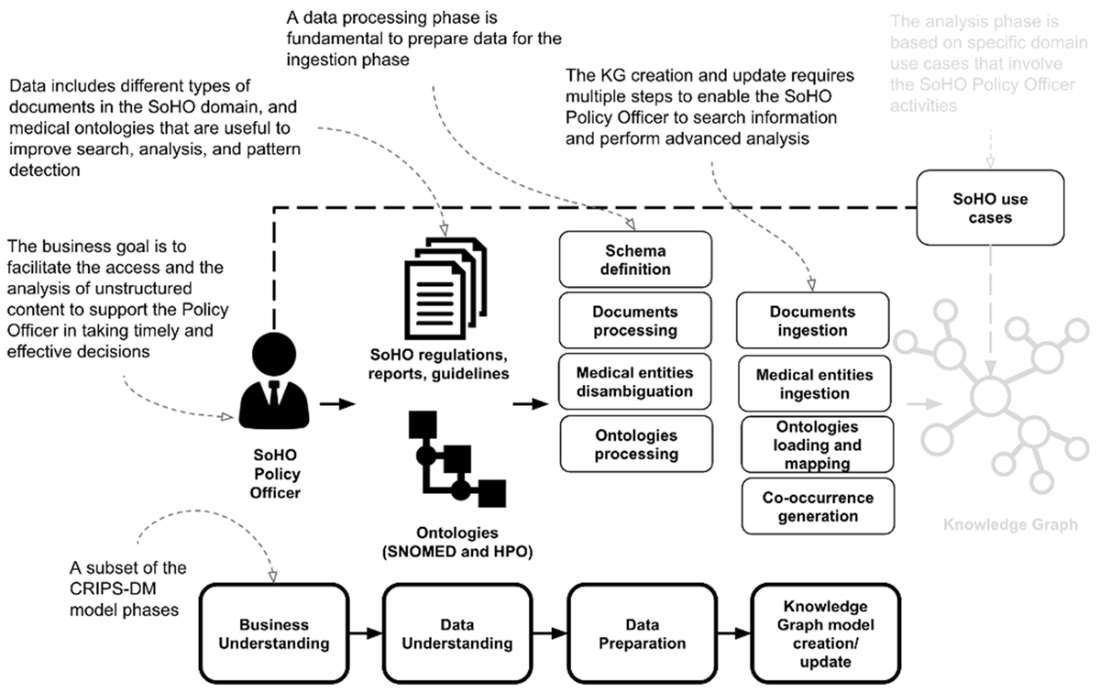
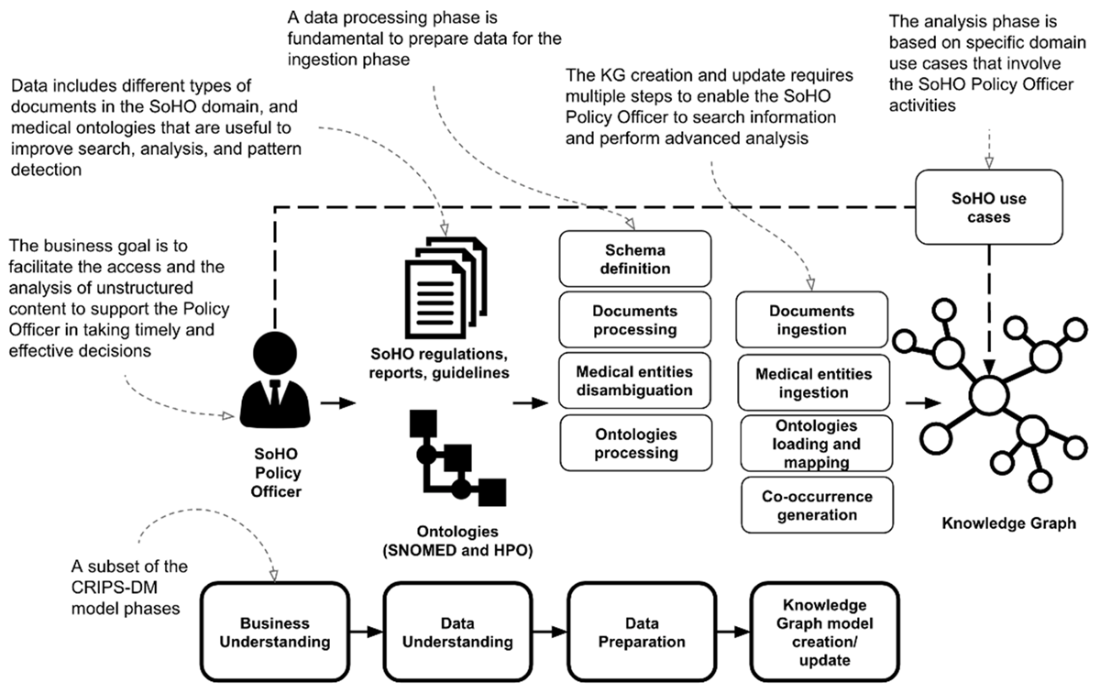
The mental model describing the KG construction process as a specification of the CRIPS-DM model, from understanding the business goal to defining the KG queries that support the SoHO Policy Officer activities. The key steps in this model include the business understanding, the data understanding, the data preparation, and the KG creation and update.
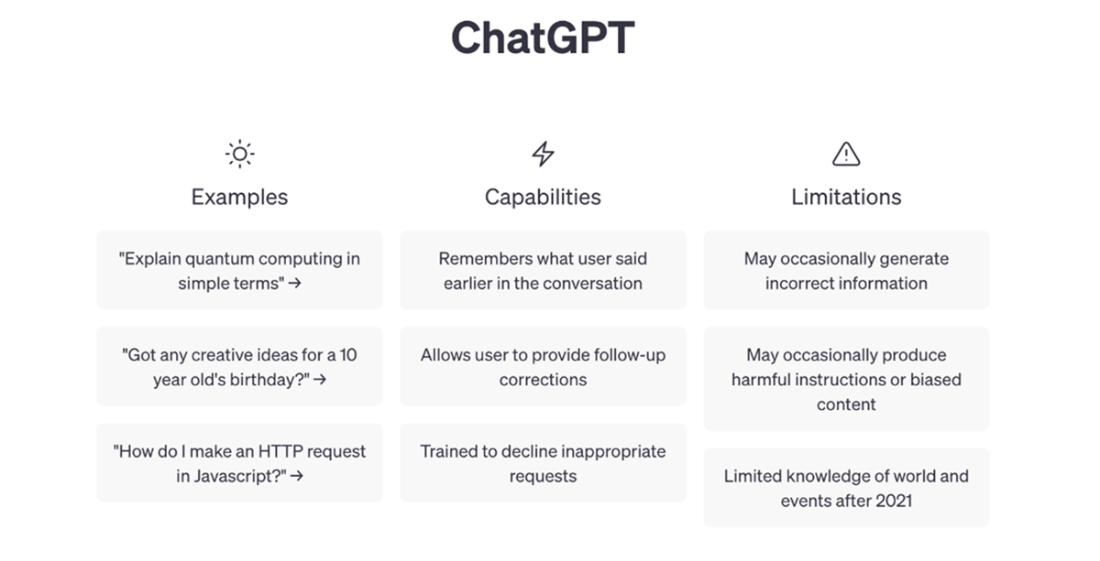
Screenshot that includes the main features of the ChatGPT application.
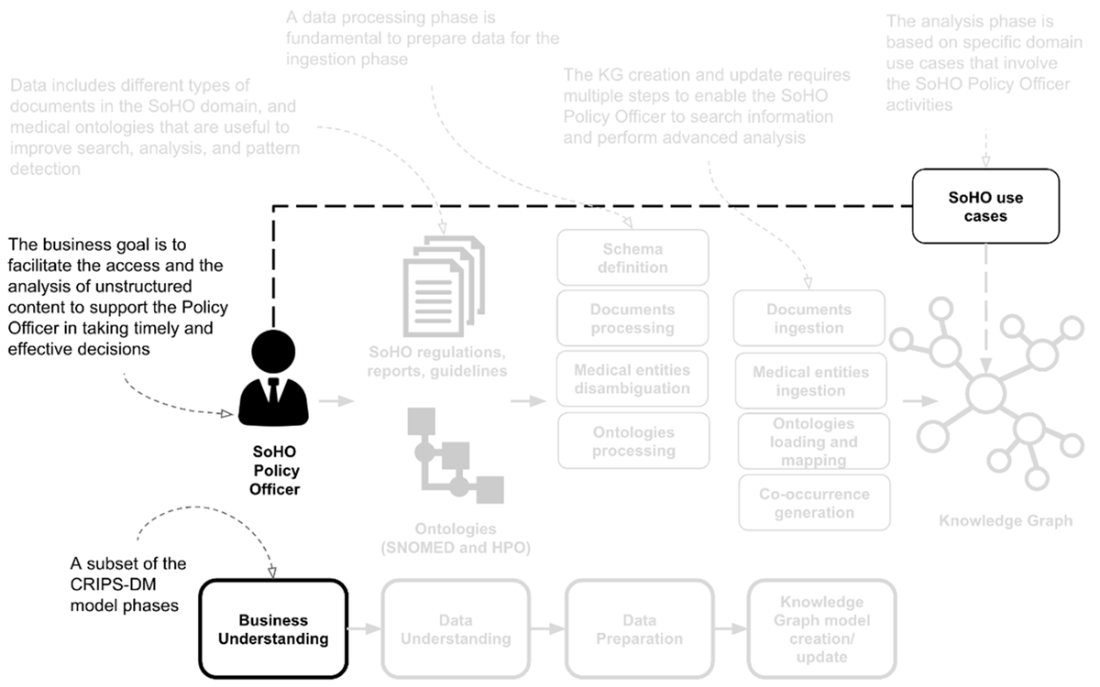
The business understanding (step 1) is crucial to clarify the problems that we want to solve. This phase is not strictly related to the technical aspects, but it is fundamental for the next steps.
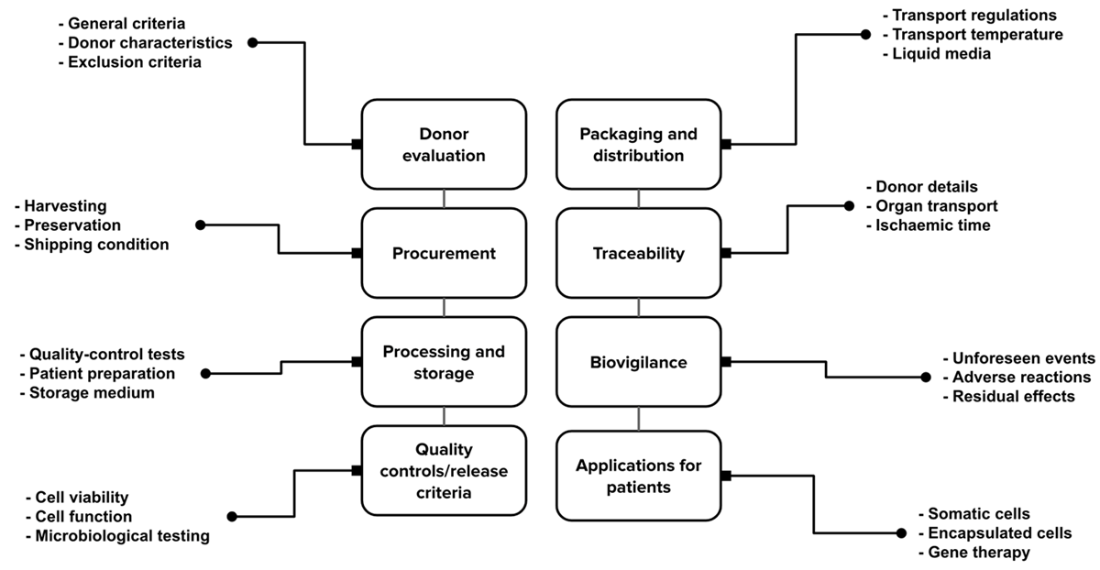
The main steps involved in the SoHO supply chain. The central components of this figure describe the main steps of this chain, from the “Donor evaluation” to the “Application for the patients”. The edge components specify the characteristics of these phases. For the “Donor evaluation”, we should consider “General criteria”, “Donor characteristics”, “Exclusion criteria”. Among the “Applications for patients”, we can mention “Somatic cells”, “Encapsulated cells”, and “Gene therapy”.
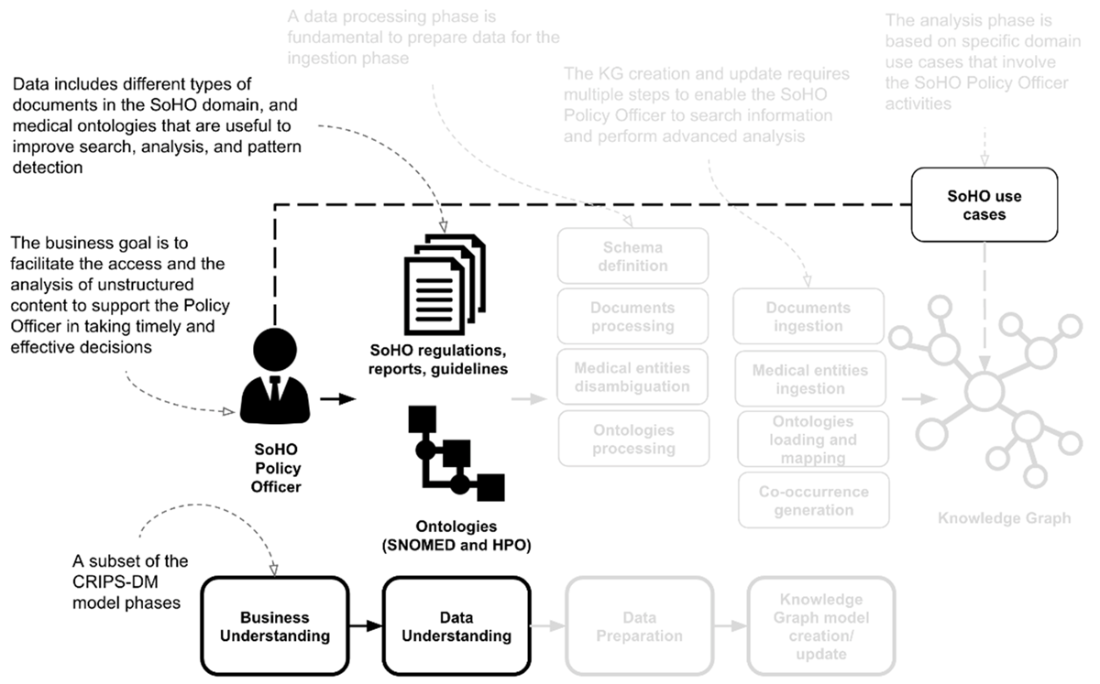
The data understanding (step 2) enables us to comprehend the key characteristics of the available information, which is essential for building the KG. For this specific scenario, the available data include SoHO regulations, reports, and guidelines released by the EC and its agencies, as well as medical ontologies such as SNOMED and HPO.
Data preparation (step 3) and KG creation and update (step 4) are the critical technical steps for constructing the KG. The data preparation step includes processing the available data, while the KG creation and update step takes as input the result of this data process and produces the database for performing the analysis phase.
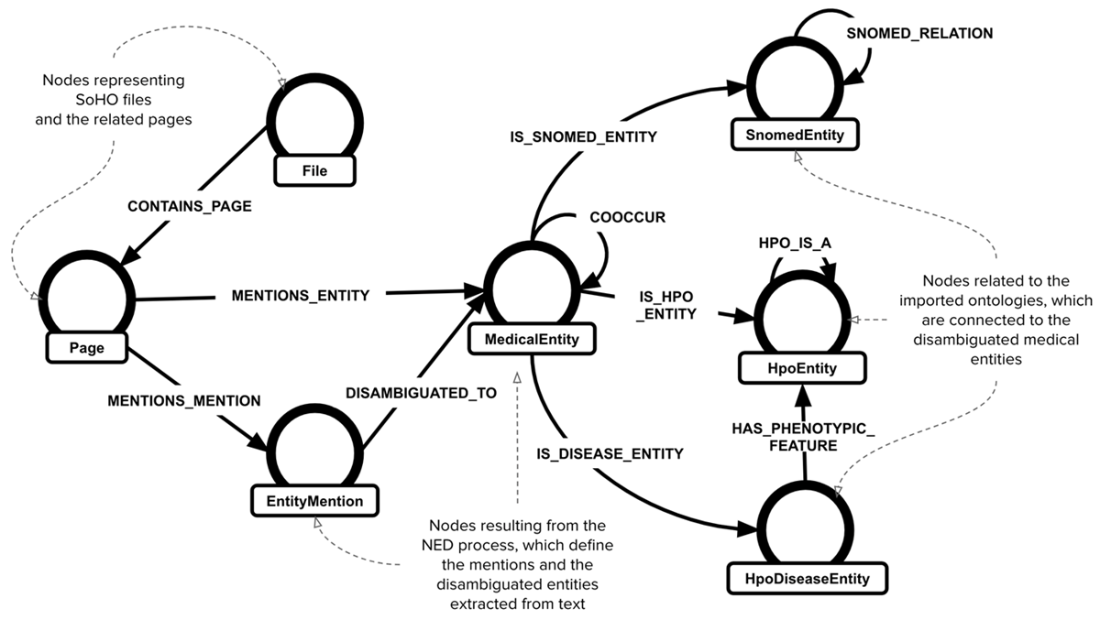
Knowledge Graph schema, including relevant node labels and relationship types, to enable multiple types of analysis.
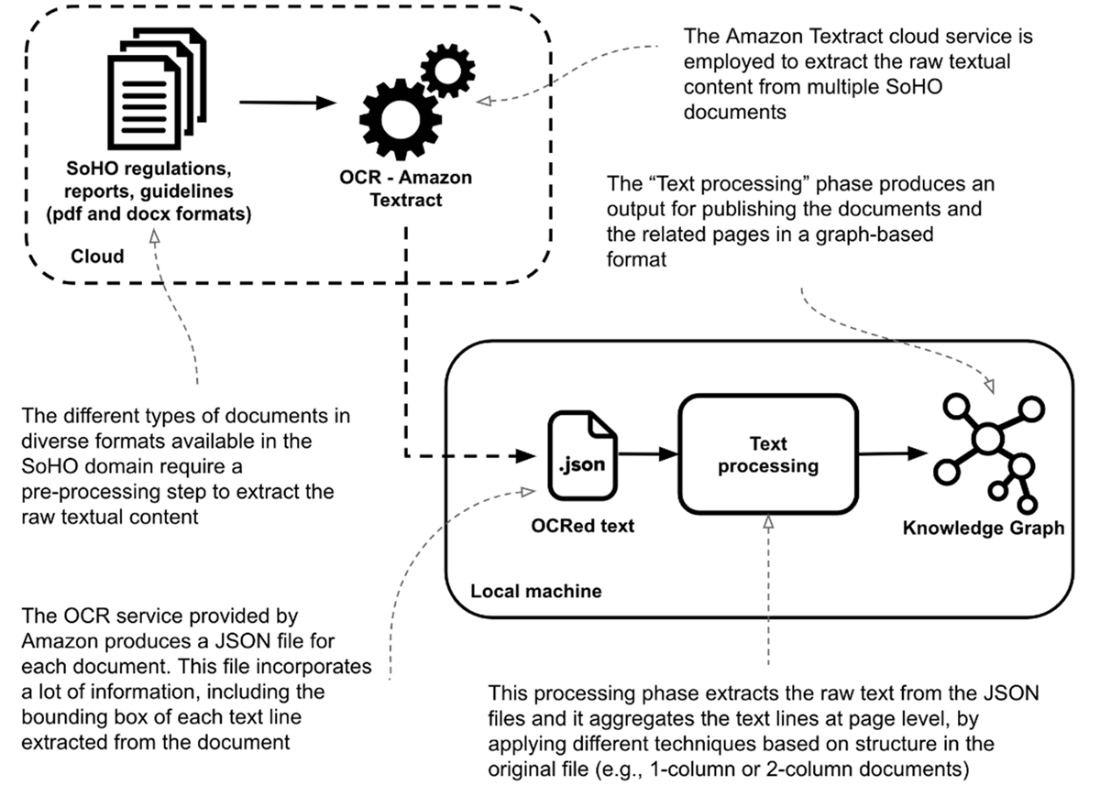
The extraction of the text from SoHO documents has been already performed using the Amazon Textract service. You will need to run on your local machine the text processing script for reconstructing the full text of the pages and then load the results into the Knowledge Graph.
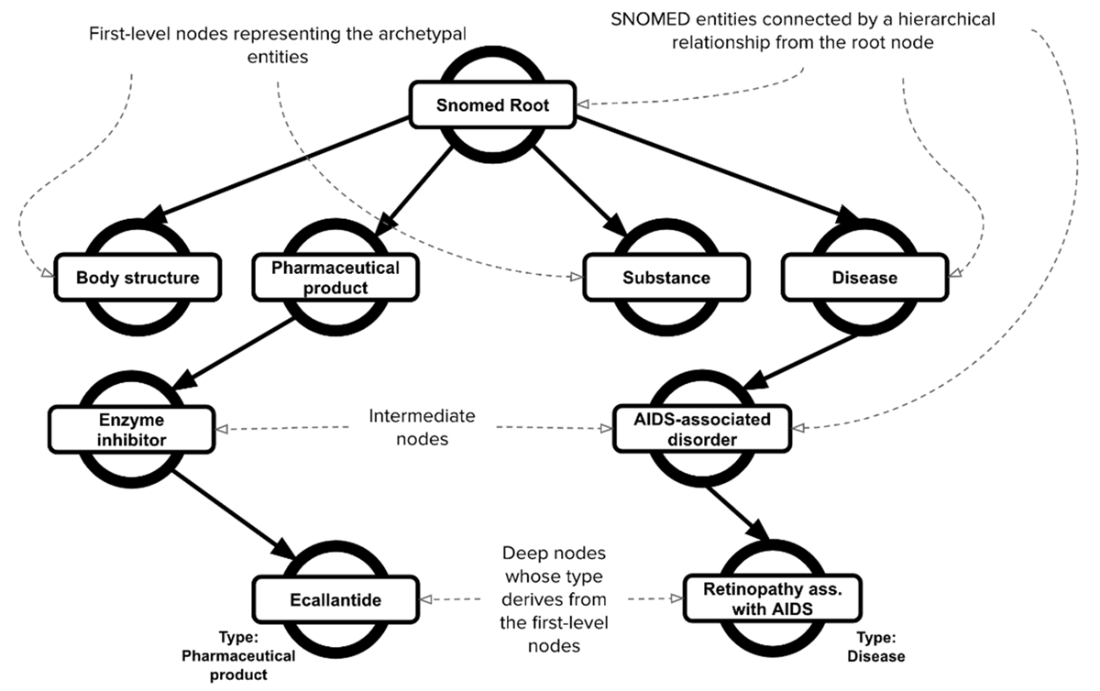
A sample of the hierarchical structure of the SNOMED ontology. Leveraging this hierarchical structure, nodes located on a deeper level, such as “Ecallantide” and “Retinopathy associated with AIDS”, can be categorized using the information from the first-level nodes, such as “Pharmaceutical product” and “Disease”, which represent the archetypal entities of the ontology.
After the generation of the KG, we can perform the analysis phase. This analysis consists in the application of defined use cases that are useful address the business problems and provide a solution based on the KG.
Mental model reporting the differences between the traditional full-text search and the conceptual search. The full-text search query is directly performed on the set of documents, while the conceptual search query leverages information from ontologies to expand the search space before searching into the group of documents.
Mental model reporting the differences between the conceptual search and the structured knowledge-based search. In this case, the search process involves medical entities connected by ontology relationships to the entity detected in the search query. Starting from the “islets of Langerhans” search, the system searches for “diabetes type 1” and “hyperglycaemia”, which are two diseases that can affect “islets of Langerhans”.
SNOMED ontology paths including only the CAUSATIVE_AGENT relationship. The navigation of this subset of relationships is particularly useful for identifying diseases that are carried by the same virus types.
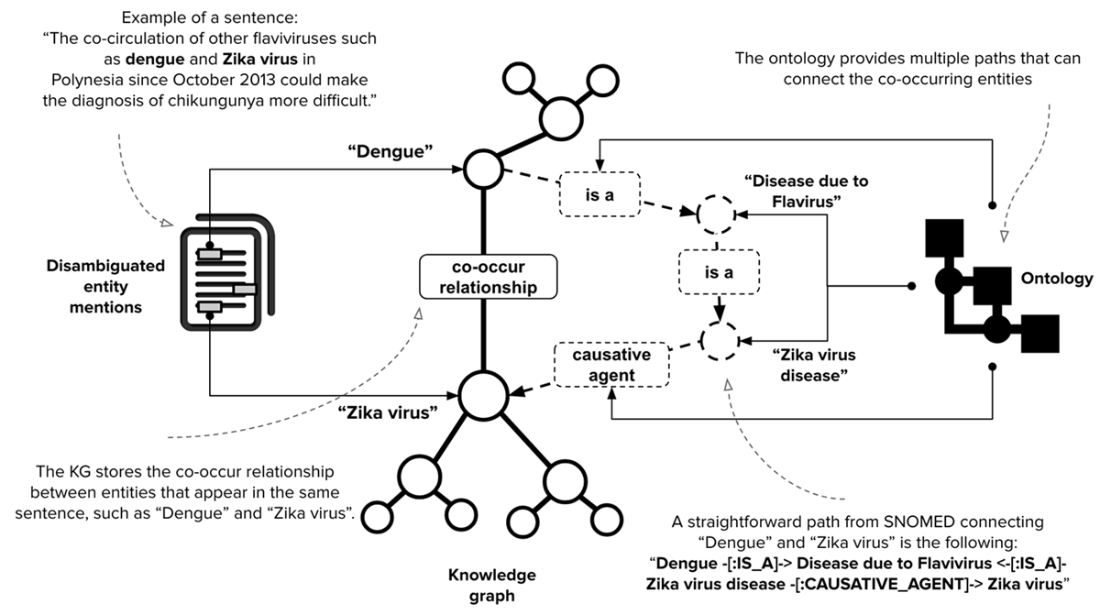
Mental model describing the KG-based interpretability and discovery process. In this case, co-occurring entities in the text can be connected by multiple ontology paths in the SNOMED ontology.
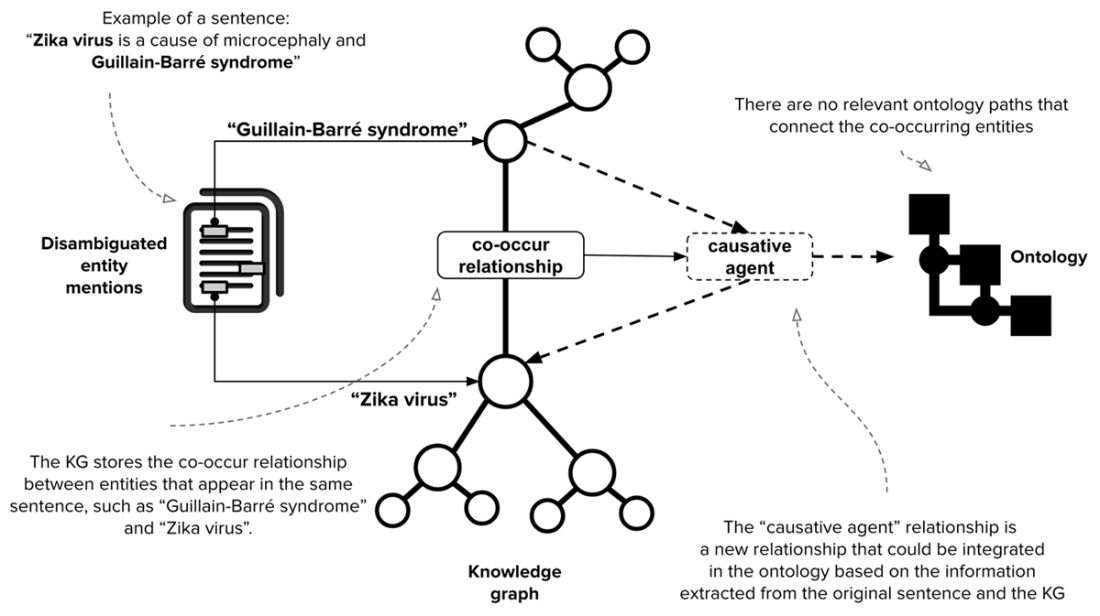
Mental model describing the new knowledge uncovering process. In this case, “Zika virus” and “Guillain-Barré syndrome” appear multiple times in the same sentences but the medical ontologies do not provide any relevant connection between these entities.
Summary
- Named Entity Disambiguation (NED) is a crucial step that allows you to connect entities mentioned in the text to a reference knowledge base.
- The combination of NED with KG technologies opens new opportunities to develop advanced services in critical domains, such as the management of substances of human origin.
- This application domain is particularly complex because it involves different types of unstructured content, such as regulation proposals, stakeholders’ positions, guidelines for SoHO management, bulletins to monitor infectious diseases.
- From these documents, we can extract medical entities and incorporate biomedical ontologies to enrich the extracted information and represent all this heterogenous information in a KG-based unified view.
- The KG construction requires multiple steps, including the definition of the schema, the ingestion of the documents, the disambiguation of medical entities from these documents, the integration of the domain ontologies and the mapping the extracted medical entities, the generation of a co-occurrence relationship between medical entities located in the same sentence.
- Advanced analysis can be performed on this KG to support different use cases in the application domain: conceptual search, structured knowledge-based search, KG-based interpretability and discovery, and new knowledge uncovering.
- Bodenreider, O. (2004). The unified medical language system (UMLS): integrating biomedical terminology. Nucleic acids research, 32(suppl_1), D267-D270. https://academic.oup.com/nar/article-abstract/32/suppl_1/D267/2505235
- Cornet, R., & de Keizer, N. (2008). Forty years of SNOMED: a literature review. BMC medical informatics and decision making, 8(1), 1-6. https://bmcmedinformdecismak.biomedcentral.com/articles/10.1186/1472-6947-8-S1-S2
- European Centre for Disease Prevention and Control. (2016). Communicable disease threats report.
- Köhler, S., Gargano, M., Matentzoglu, N., Carmody, L. C., Lewis-Smith, D., Vasilevsky, N. A., ... & Robinson, P. N. (2021). The human phenotype ontology in 2021. Nucleic acids research, 49(D1), D1207-D1217.
- Neumann, M., King, D., Beltagy, I., & Ammar, W. (2019). ScispaCy: fast and robust models for biomedical natural language processing. arXiv preprint arXiv:1902.07669. https://arxiv.org/abs/1902.07669
- Shi, J., Yuan, Z., Guo, W., Ma, C., Chen, J., & Zhang, M. (2023). Knowledge-graph-enabled biomedical entity linking: a survey. World Wide Web, 1-30. https://link.springer.com/article/10.1007/s11280-023-01144-4
- Widenfalk, B., Rastad, J., Wilbrand, S., & Vinnars, B. (2014). Guide to the quality and safety of tissues and cells for human application.
FAQ
Why is Named Entity Disambiguation (NED) needed beyond Named Entity Recognition (NER)?
NED resolves the ambiguity that NER leaves unresolved. NER can find mentions like “Zika” and label them as a virus or a disease, but it cannot decide which exact real-world entity each mention refers to. NED examines the surrounding context and links each mention to a unique entry in a knowledge base (e.g., UMLS), enabling precise downstream retrieval, analytics, and integration across documents and data sources.What are the main phases of a KG-based NED system?
- Candidates selection: generate possible KB entities for each mention from a reference knowledge base.
- Candidates ranking: score candidates using contextual features and pick the best target entity.
- Ontology integration: map disambiguated entities into domain ontologies and use relationships to enrich context and enable graph queries.
Can large language models replace domain NED and assign UMLS IDs?
No. General LLMs are not guaranteed to carry UMLS identifiers or align outputs to medical ontologies. In critical domains (e.g., healthcare), you need domain-specific linking to UMLS (and others) and KG integration to ensure traceable, structured references and reliable downstream queries.How is ScispaCy used for biomedical NED in this chapter?
- spaCy pipeline with scispaCy linker detects biomedical entities and proposes UMLS candidates.
- The linker ranks candidates based on context and returns a UMLS concept (CUI) per mention.
- Different surface forms (or the same surface string in different contexts) are resolved to the correct, distinct UMLS entities (e.g., Zika virus vs Zika virus infection vs congenital Zika syndrome).
How do UMLS, SNOMED, and HPO work together during ontology integration?
- UMLS acts as the hub: disambiguated mentions have UMLS CUIs, which map to codes in other ontologies.
- SNOMED contributes rich relationships (e.g., CAUSATIVE_AGENT, FINDING_SITE, IS_A) and clinical concepts.
- HPO provides phenotypic features and disease–phenotype links; imported via RDF with neosemantics and linked back to UMLS where available.
What business scenario motivates this chapter and what value does NED+KG add?
The SoHO (substances of human origin) regulatory context requires timely, reliable knowledge integration from diverse documents (ECDC bulletins, EDQM guides, regulatory texts). NED+KG enables:- Unifying terminology across sources via entity linking.
- Advanced search that understands concepts, synonyms, and ontology relations.
- Traceable, explainable insights to support policy and safety decisions.
What is conceptual search and why is it better than full‑text in this setting?
Conceptual search finds all text passages that truly mention a concept, regardless of the exact wording or synonyms (e.g., “dengue fever” vs “breakbone fever”). Unlike keyword search, it uses disambiguated entities and ontology aliases, reducing false hits and surfacing the exact contexts and counts of mentions for explainability.What is structured knowledge‑based search and how does it work?
It leverages ontology relationships to expand a query across related concepts before retrieving text. Examples:- From “Islets of Langerhans,” follow FINDING_SITE to diseases affecting those cells and fetch relevant passages.
- From “Zika virus,” traverse CAUSATIVE_AGENT chains in SNOMED to retrieve documents mentioning diseases caused by related viruses (e.g., other flaviviruses).
What is KG‑based interpretability and discovery from co‑occurrences?
- Interpretability: when two entities co‑occur in a sentence, ontology paths can explain why (e.g., disease–causative agent connections, shared pathological process).
- Discovery: ontology paths can reveal additional, clinically meaningful links not explicit in the sentence (e.g., organ involvement, related syndromes), enriching the analyst’s understanding.
How does the chapter uncover new knowledge when ontologies lack direct links?
- Identify strong, repeated co‑occurrences (e.g., Zika virus with Guillain–Barré syndrome).
- Search ontology paths; when none are specific, filter out hub nodes using graph data science (degree centrality) to avoid overly generic connectors.
- Flag high‑support text patterns as candidate facts to consider for ontology curation, closing the loop between text‑derived KG and formal knowledge.
What are the main steps to build the SoHO knowledge graph?
- Define the graph schema (File, Page, EntityMention, MedicalEntity, SnomedEntity, HpoEntity, HpoDiseaseEntity, and relationships).
- Ingest documents (OCR/processing), store pages and text.
- Run NED (ScispaCy) and load disambiguated entities with UMLS metadata.
- Load and map ontologies (SNOMED, HPO) via UMLS cross‑refs.
- Generate sentence‑level co‑occurrence edges for downstream analysis.

 Knowledge Graphs and LLMs in Action ebook for free
