2 Intelligent systems: a hybrid approach
This chapter introduces a pragmatic view of intelligence for building real-world systems, framing intelligence as the ability to acquire and apply knowledge. It decomposes an intelligent agent into two core components—knowledge representation and reasoning—and argues for transparency, trustworthiness, and safety, especially in high-stakes domains. A key distinction is drawn between intelligent autonomous systems that act on behalf of users and intelligent advisor systems that support human decision-making; the book focuses on the latter, emphasizing user control, continuous learning from interactions and context, and the importance of domain-specific knowledge.
The chapter contrasts how Knowledge Graphs (KGs) and Large Language Models (LLMs) acquire and represent knowledge and shows why their complementary strengths are best realized in hybrid systems. KGs encode explicit, interpretable structures—entities, relationships, and ontologies—that support precise, deductive reasoning and incremental updates. LLMs learn implicit, high-dimensional representations that excel at language understanding and probabilistic inference but are opaque and costlier to update. Reasoning is framed along deductive and inductive axes: KGs shine when rules and structure matter, while LLMs handle ambiguity, pattern abstraction, and uncertainty. The chapter also highlights failure modes—LLMs’ tendency to follow familiar but irrelevant patterns and KGs’ dependence on completeness—arguing for multi-engine orchestration and feedback loops that refine knowledge and decisions over time.
Design guidance centers on four characteristics: a meaningful, user-driven objective; an intelligent experience that captures feedback; continuous knowledge creation and update; and orchestration of multiple algorithms and tools. The authors advocate a purpose-driven approach to KG construction—revisiting CRISP-DM—to avoid bottom-up data dumping and instead model only what serves the task. In practice, KGs unify and structure domain knowledge, while LLMs help extract entities and relations from text, interpret queries, and reason under uncertainty; representation learning bridges graphs and vectors for deeper analytics. The result is an intelligent advisor architecture that is more explainable, adaptable, and effective across domains such as medicine, law enforcement, and fraud detection.
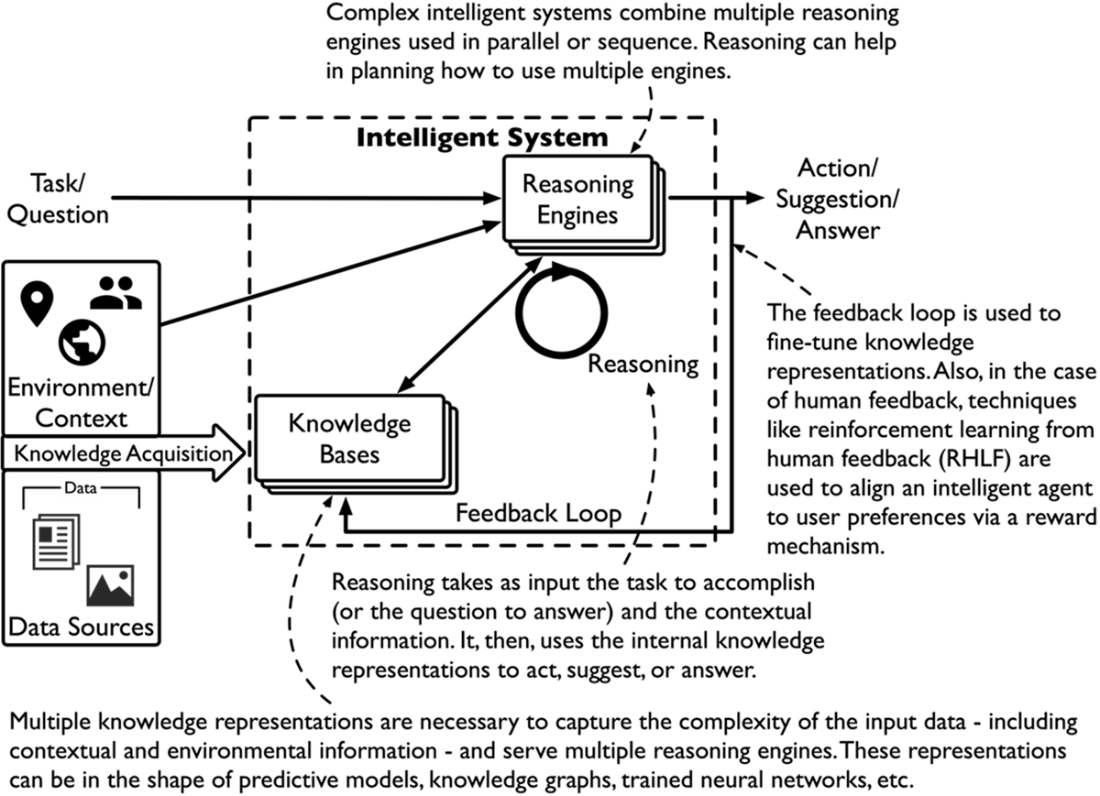
A high-level schema of an intelligent system. It is made of 2 component types: knowledge bases and reasoning engines. Each type can have multiple instances based on the tasks that the Intelligent system has to serve.
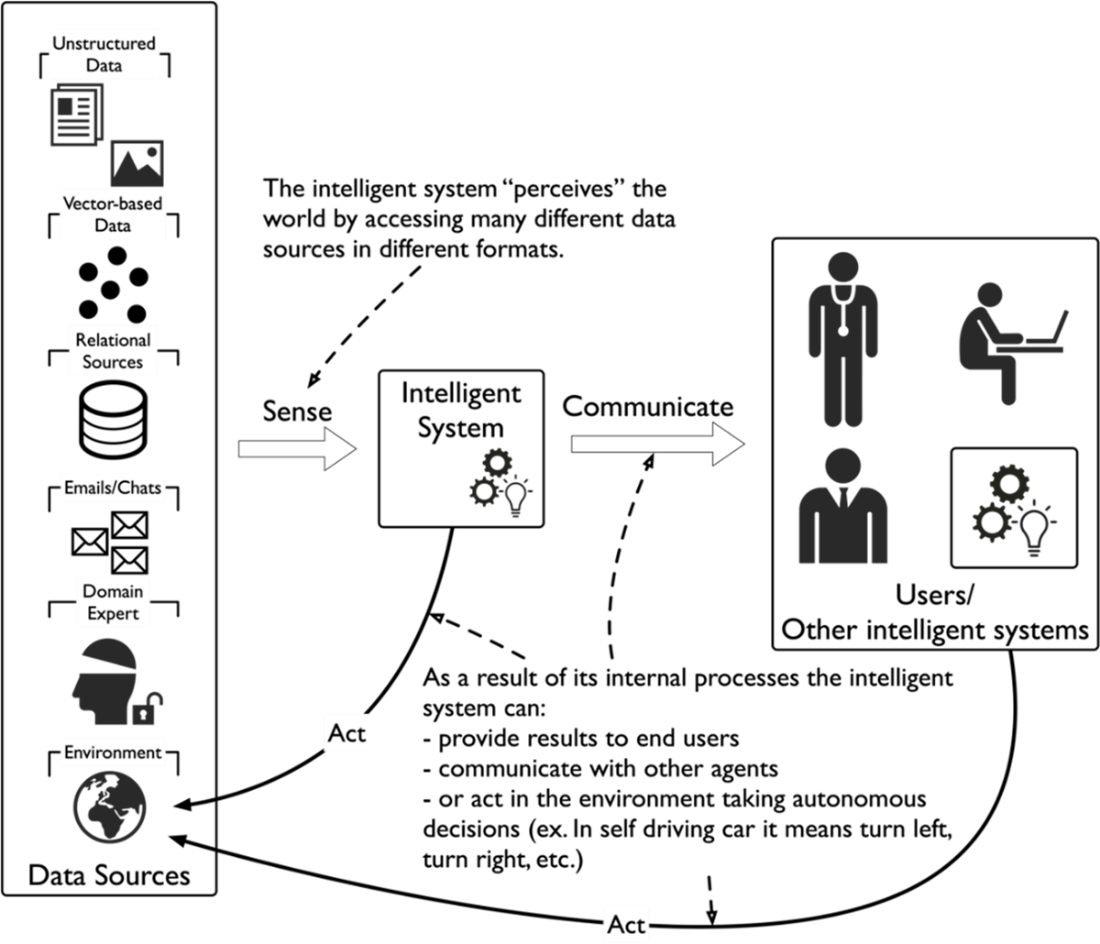
A high-level overview of an intelligent system and its interactions with other elements. An intelligent system acquires knowledge by observing the environment or by ingesting data from existing sources. The internal processes elaborate the knowledge and provide results to the end user. These results can be either suggestions or concrete actions.
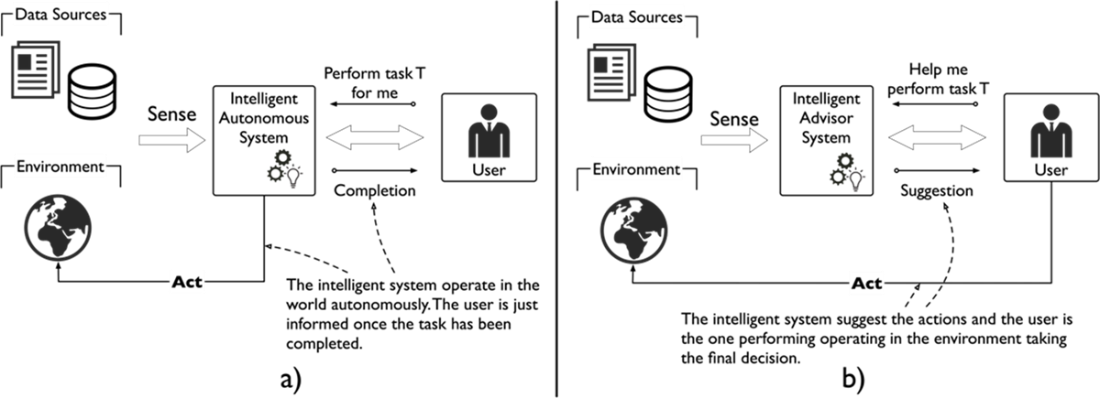
Differences between a) an intelligent autonomous system and b) an intelligent advisor system. The first acts on behalf of the users, while the second only makes suggestions. In both cases, the intelligent system supports or helps the end user, it is not aimed to replace it.
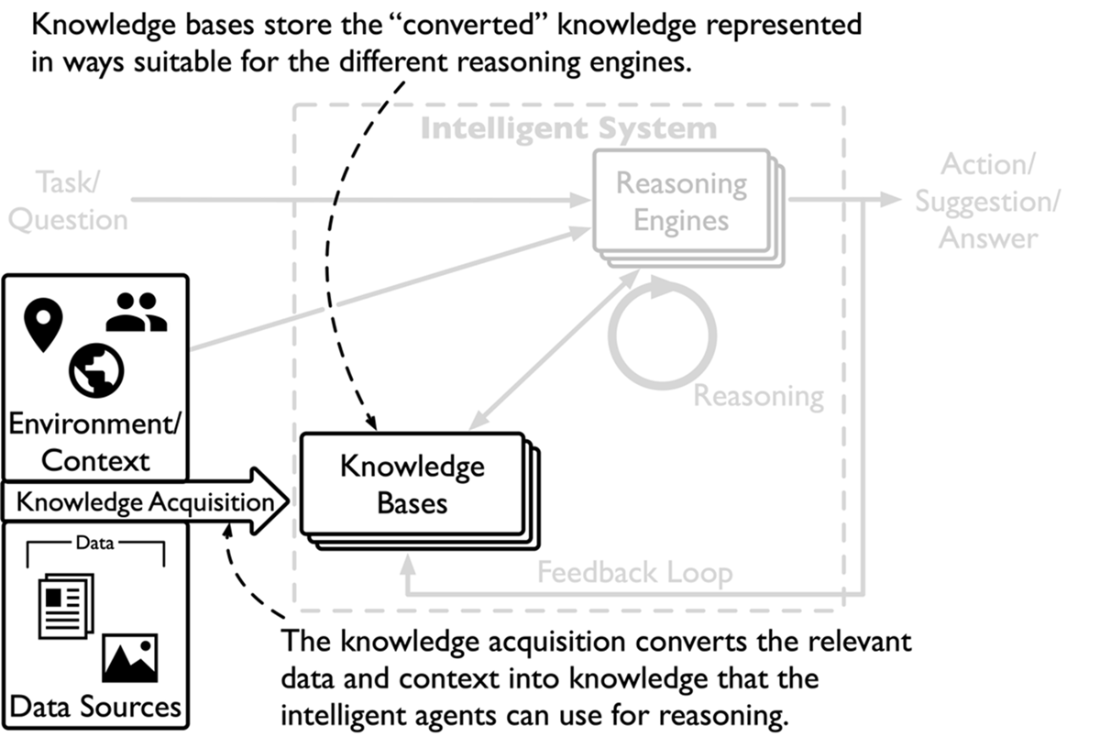
Extended model of an intelligent system. The focus is on the core components (the knowledge base and the reasoning engine) and the core processes (knowledge acquisition and reasoning). This is how they will be presented in the following sections.
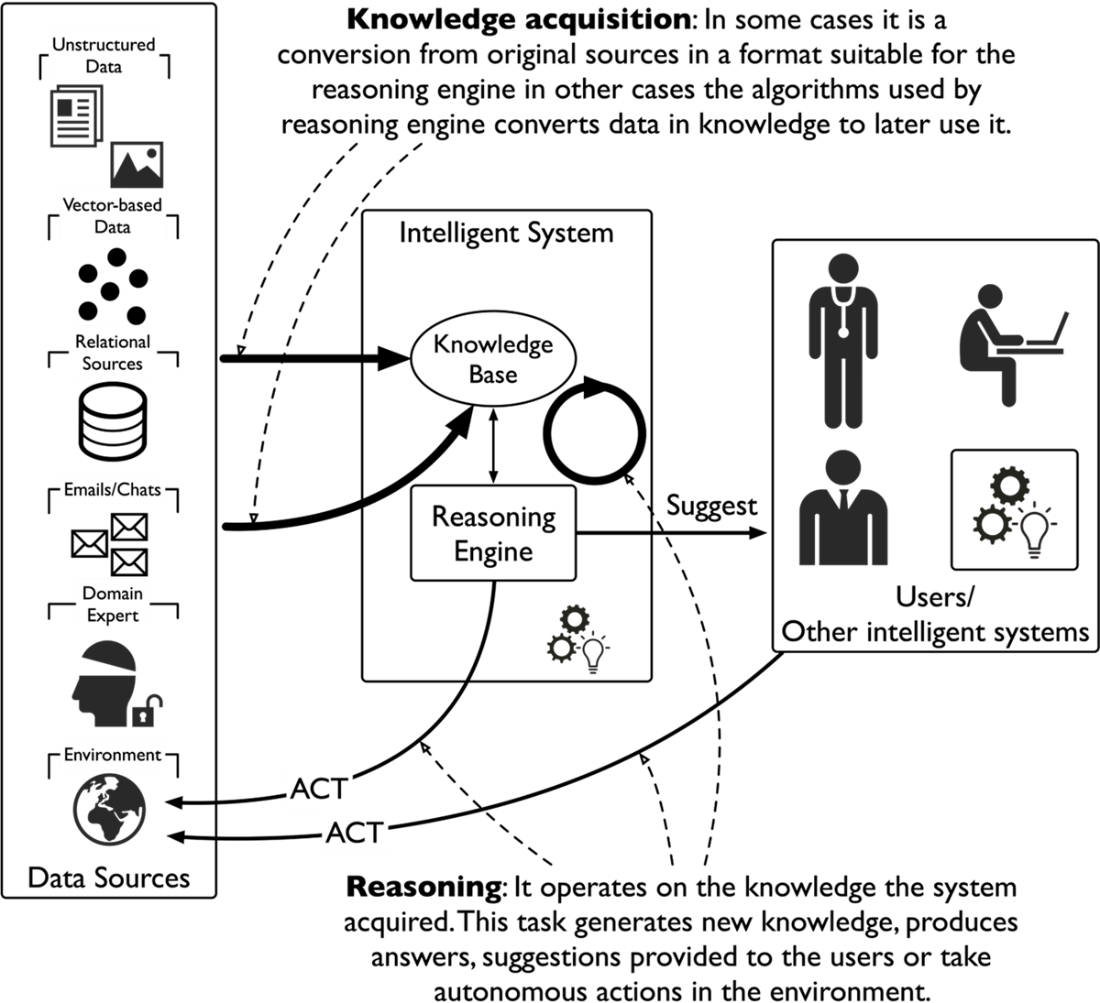
We are focusing in this section on the knowledge acquisition part of our mental model and how it is represented in the knowledge bases. It allows the intelligent system to acquire data and convert it in knowledge.
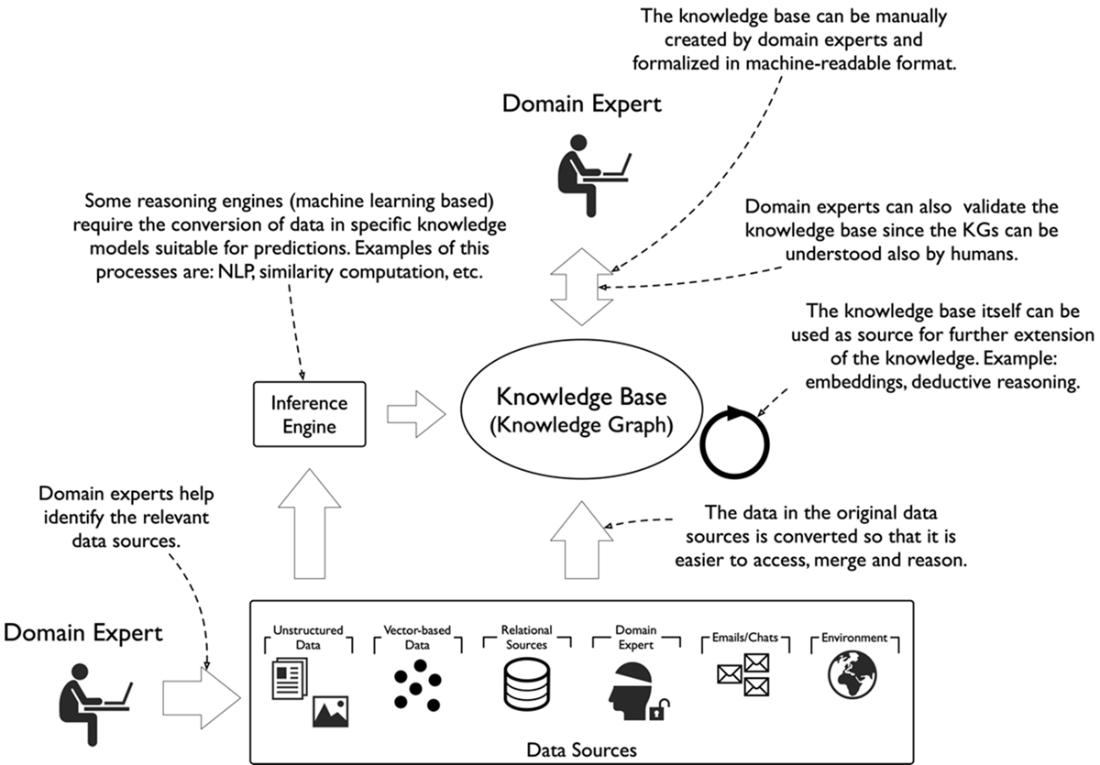
Knowledge acquisition for KGs: converting available data into explicit knowledge representation through structured entities, relationships, and properties. This process involves domain expert to identify relevant data sources, supporting the data model and evaluate the results.
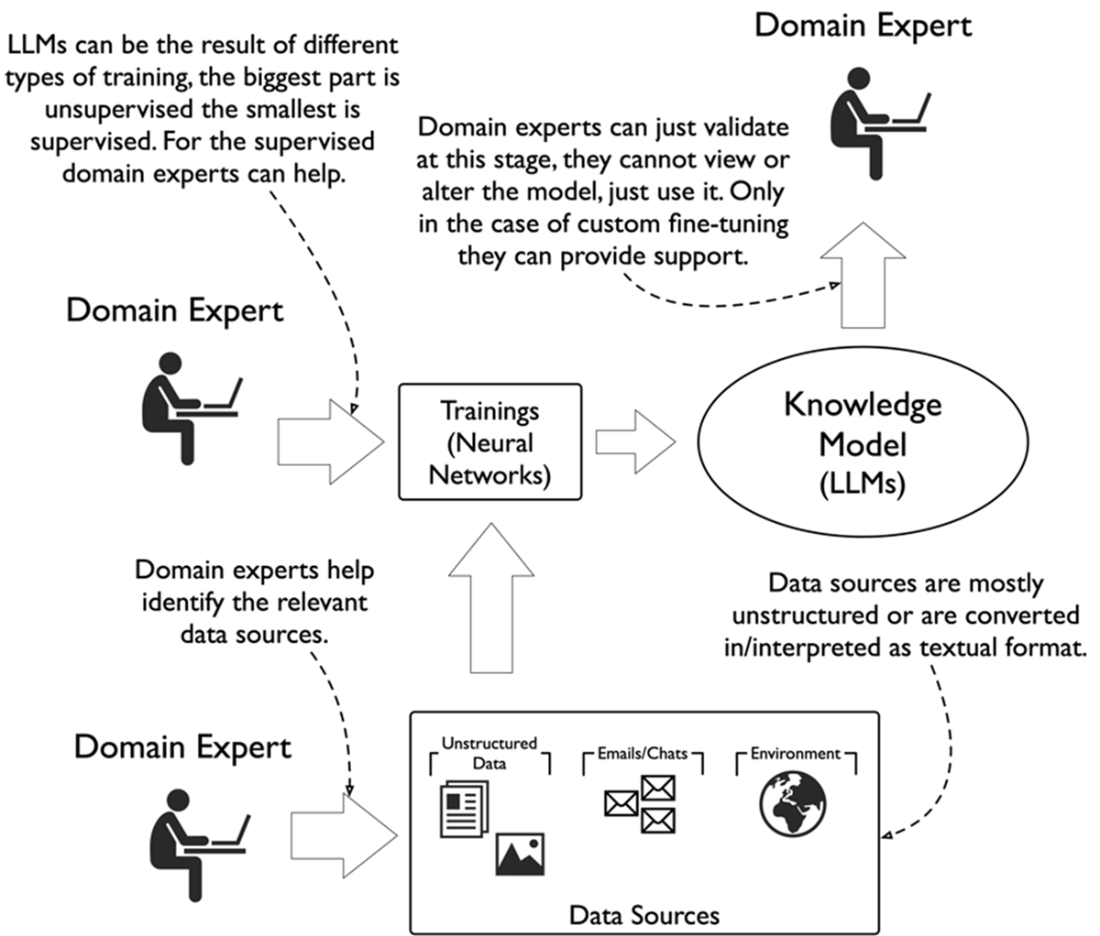
Knowledge acquisition for LLMs: converting text data into implicit knowledge representation through statistical parameters. The domain experts are involved during the data source selection and the results evaluation.
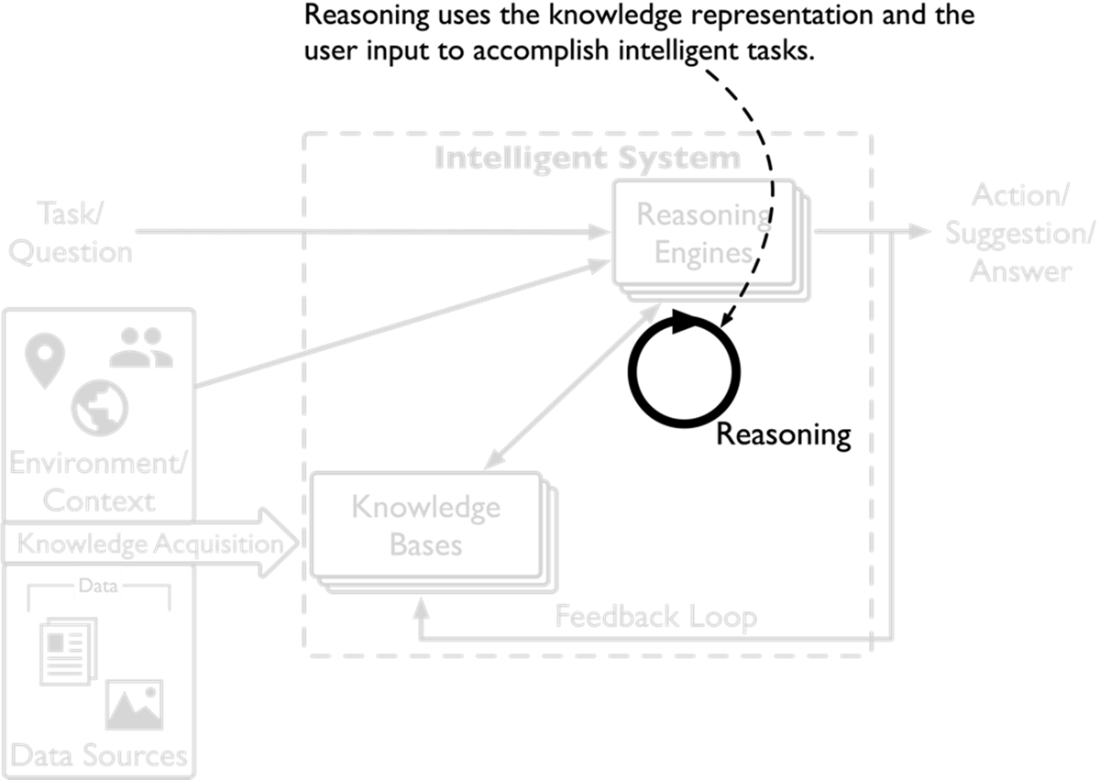
Reasoning uses the knowledge base(s) to accomplish the tasks the intelligent system is supposed to deliver to the end users.
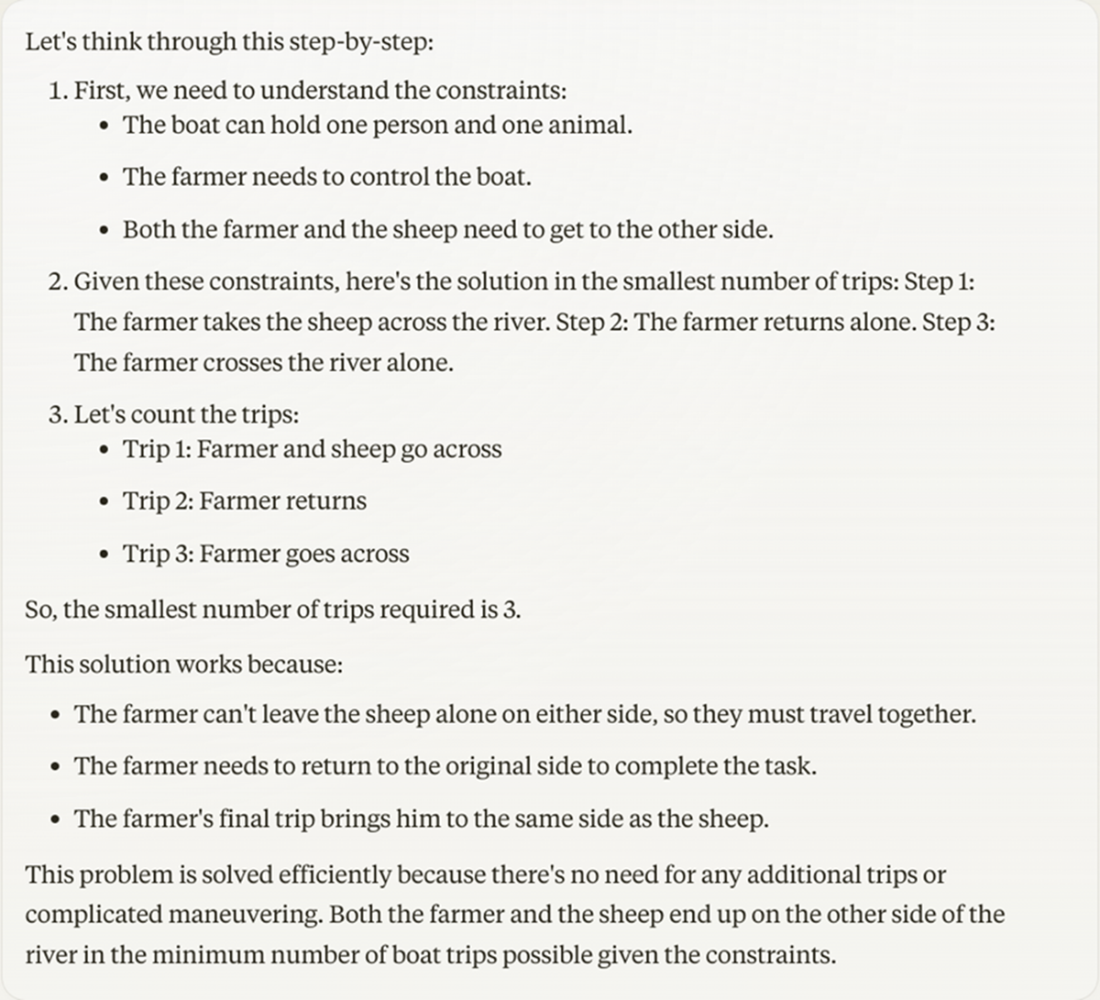
Result from Claude.ai prompting it with the content of the Listing 2.1.
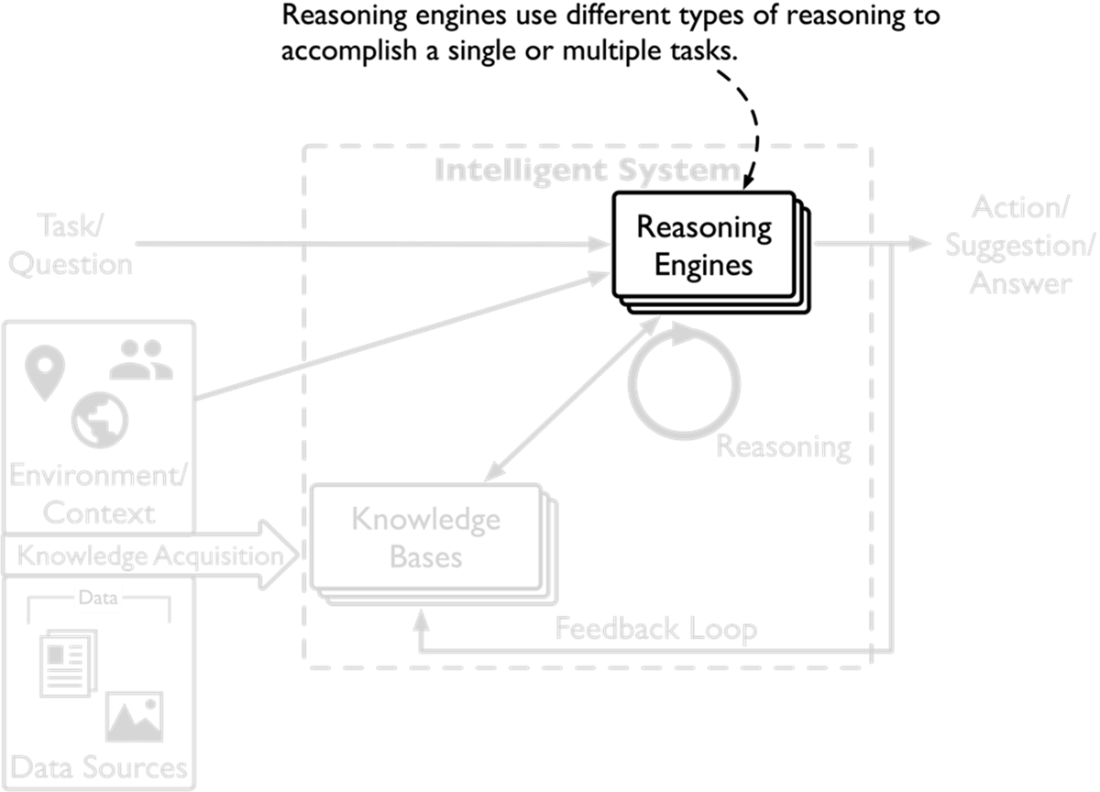
Multiple reasoning engines, each with different types of reasoning strategy, can contribute to delivering the tasks required to the intelligent system.
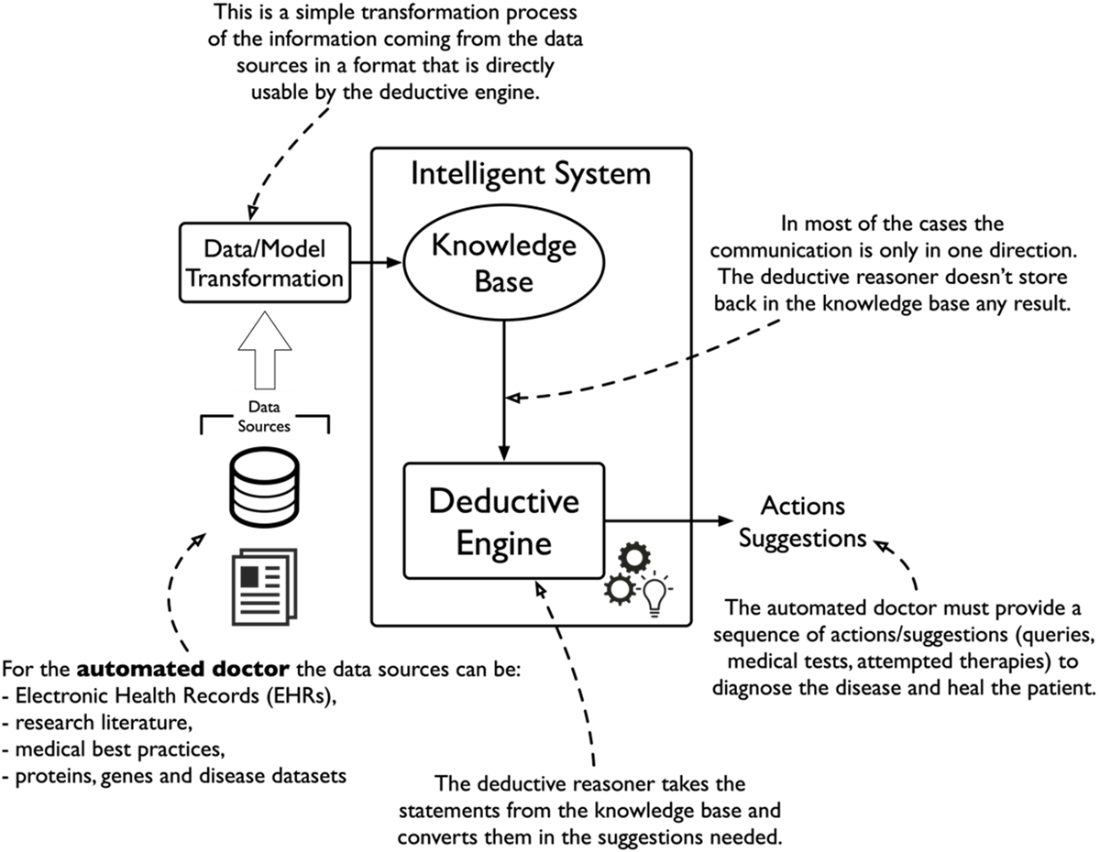
The deductive reasoner. The knowledge base is created by transforming the sources. The deductive reasoner uses logical statements applied to segments of the knowledge base to act or to provide suggestions.
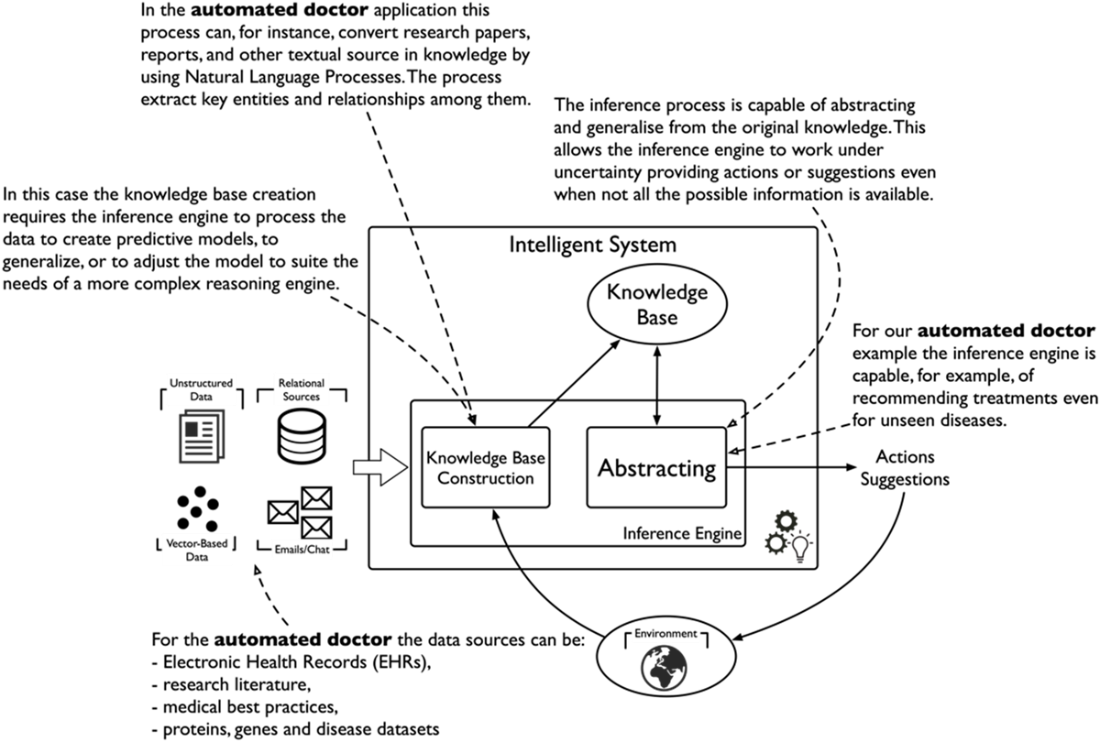
An inductive reasoner. The knowledge base construction requires more effort; it is not a simple transformation. This reasoning engine is capable of abstracting from the knowledge base and, hence, works under some level of uncertainty.
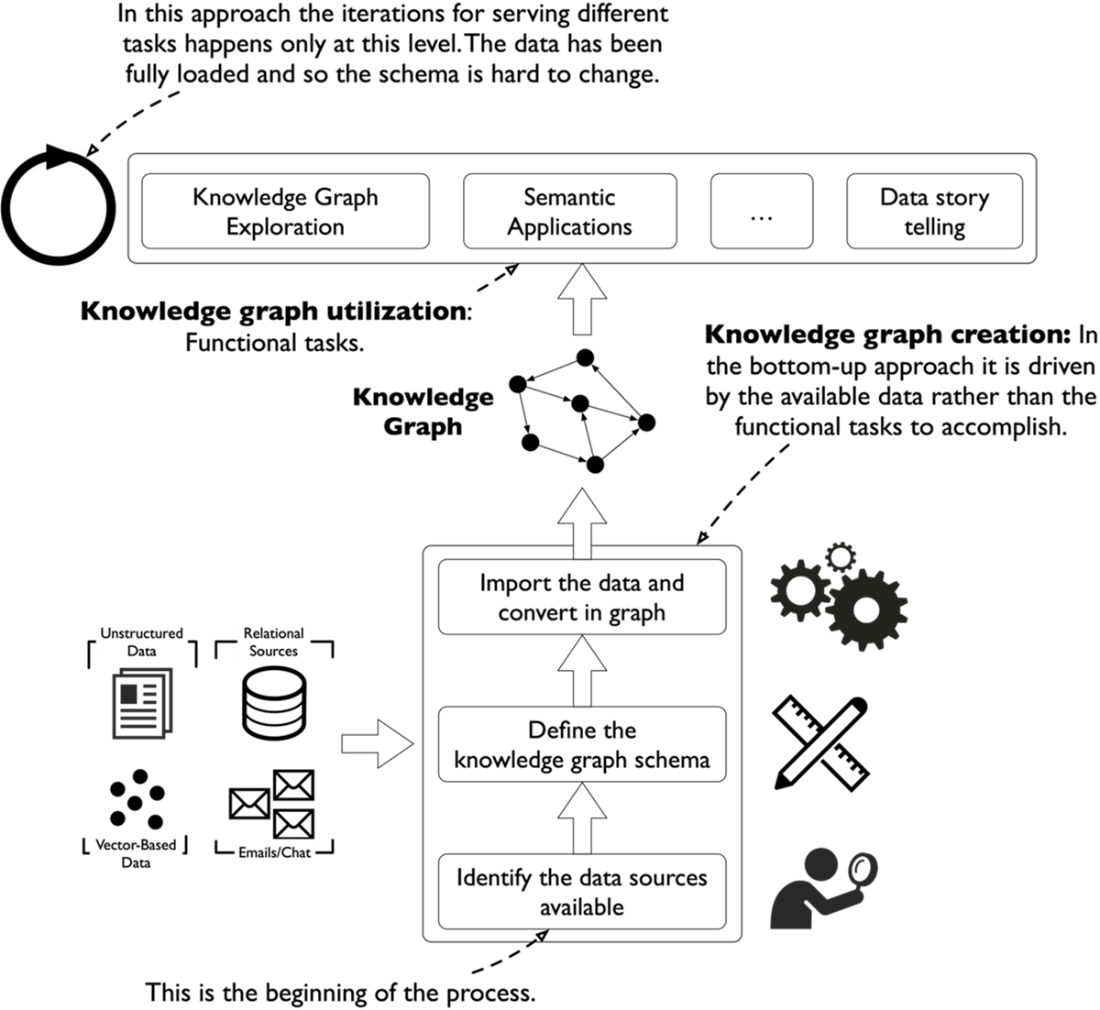
A bottom-up approach to KG creation. It starts by importing all the data instead of thinking first about the functional tasks we want to achieve. Not all data should be converted in a KG if not needed.
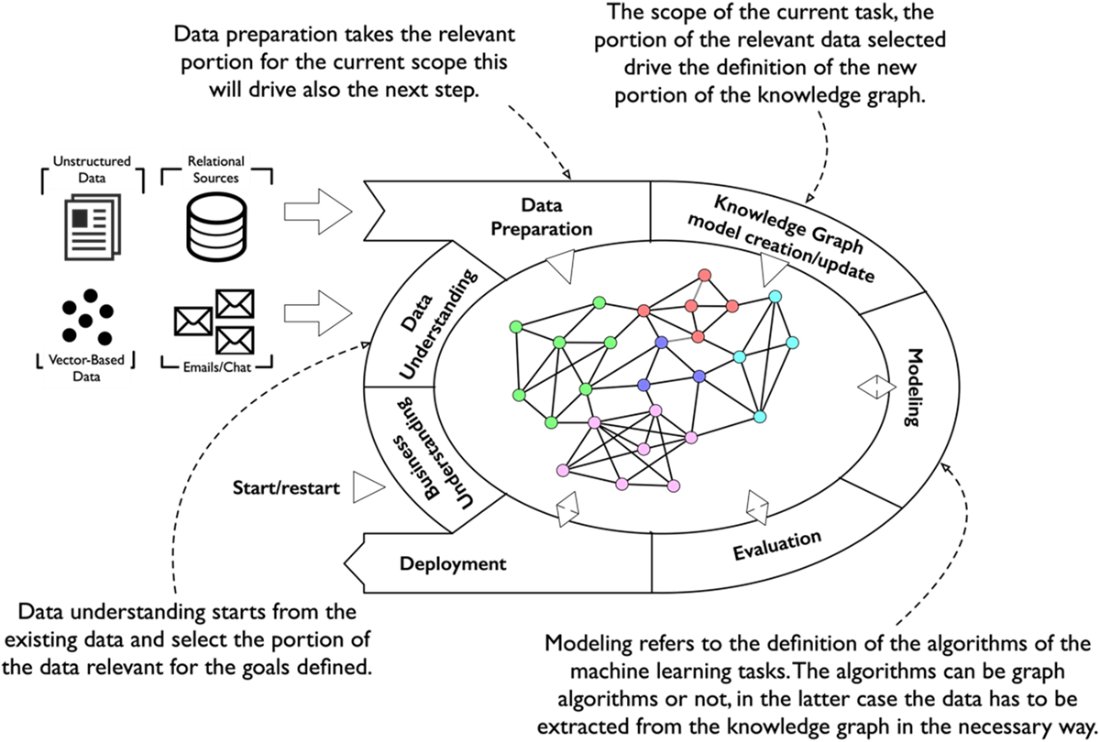
CRISP-DM revisited to apply to KG platforms. The KG is used as a model of the knowledge base for the intelligent system. It is the center of the revisited CRISP-DM process.
Summary
- Intelligence is fundamentally about acquiring and applying knowledge, making knowledge representation and reasoning the core components of intelligent system architecture.
- Intelligent systems are categorized as autonomous systems that act independently or advisor systems that support human decision-making.
- Knowledge acquisition differs between KGs and LLMs: KGs use explicit, structured representations requiring domain expertise but offering interpretability, while LLMs use implicit statistical patterns capturing language understanding but lacking transparency.
- Hybrid systems combining KGs and LLMs leverage complementary strengths—KGs provide structured reasoning and explicit knowledge while LLMs handle ambiguity, context, and natural language understanding.
- LLMs enhance reasoning engines by bridging knowledge gaps and providing contextual interpretation, making intelligent systems more robust with incomplete or ambiguous information.
- Purpose-driven KG development starting from business objectives proves more effective than bottom-up data integration strategies that often lead to project failure.
- G. Hulten, Building Intelligent Systems: A Guide to Machine Learning Engineering, 1st ed. New York, NY, USA: Apress, 2018
- M. Molina. “What is an intelligent system?”, arXiv Labs, arXiv preprint arXiv:2009.09083, Feb. 12, 2020. Accessed: May 5, 2022. [Online]. Available: https://arxiv.org/abs/2009.09083
- A. Negro, Graph-Powered Machine Learning. Shelter Island, NY, USA: Manning Publications, 2021
- Z. Wu et al. “Reasoning or Reciting? Exploring the Capabilities and Limitations of Language Models Through Counterfactual Tasks” arXiv:2307.02477, 2023. Accessed: October 13, 2024 [Online]. Available: https://arxiv.org/abs/2307.02477
- X. Dong et al., “Knowledge vault: A web-scale approach to probabilistic knowledge fusion,” presented at SIGKDD. ACM, 2014, pp. 601–610
- M. Nickel et al., “A review of relational machine learning for knowledge graphs,” Proceedings of the IEEE, vol. 104, no. 1, 2016, pp. 11–33
- Q. Wang et al., “Knowledge graph embedding: A survey of approaches and applications,” IEEE TKDE, vol. 29, no. 12, 2017, pp. 2724–2743
- A. Hogan et al., “Knowledge graphs,” arXiv Labs, arXiv preprint arXiv:2003.02320, 2020. Accessed: May 5, 2022. [Online]. Available: https://arxiv.org/abs/2003.02320
- F. N. Stokman and P. H. de Vries, “Structuring knowledge in a graph,” in Human-Computer Interaction, Springer-Verlag. 1988, pp. 186–206 -> fixed
- D. Sculley et al., “Hidden technical debt in Machine learning systems,” Proceedings of the 28th Int. Conf. on Neural Information Processing Systems, vol. 2 (NIPS'15). Cambridge, MA, USA: MIT Press, 2015, pp. 2503–2511.
- J. Pan et al., Large Language Models and Knowledge Graphs: Opportunities and Challenges. Transactions on Graph Data and Knowledge, 1 (1): 2:1--2:38 (2023) Accessed: October 13, 2024 [Online]. Available: https://arxiv.org/abs/2308.06374
- R. Wirth and J. Hipp. “CRISP-DM: Towards a Standard Process Model for Data Mining.” Proceedings of the Fourth Int. Conf. on the Practical Application of Knowledge Discovery and Data Mining, 2000, pp. 29–39

 Knowledge Graphs and LLMs in Action ebook for free
