Overview
11 Algorithmic trading
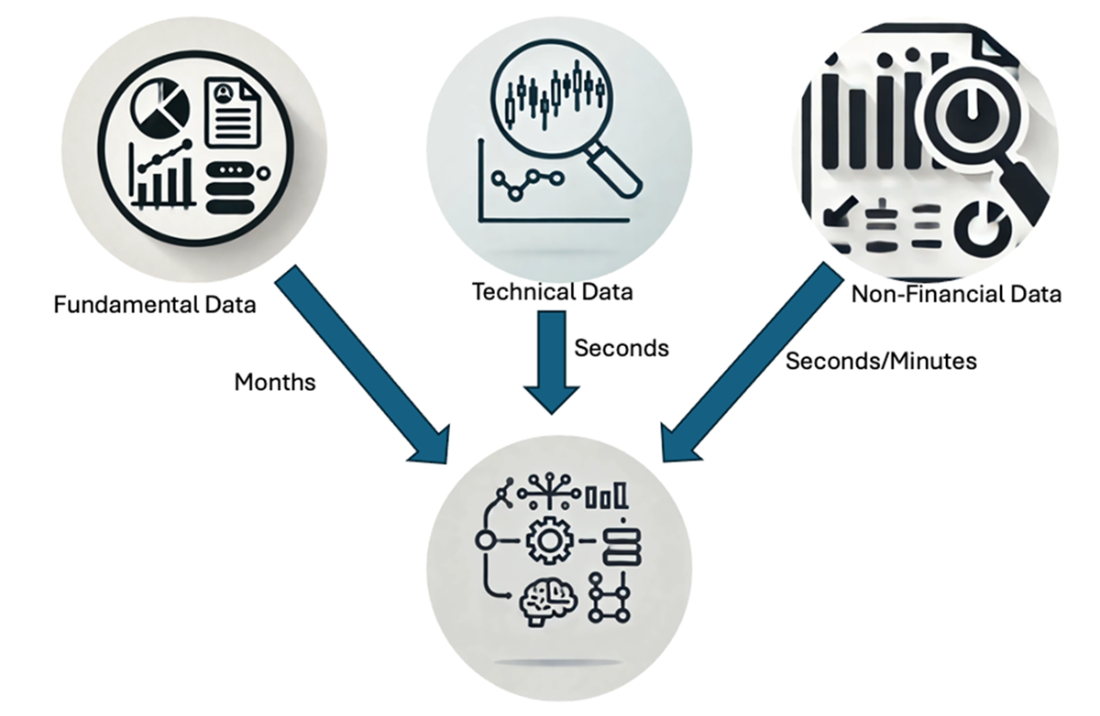
Illustrates how three types of data flow can lead to insights, and non-financial data, being the newest of them, can be of special interest.
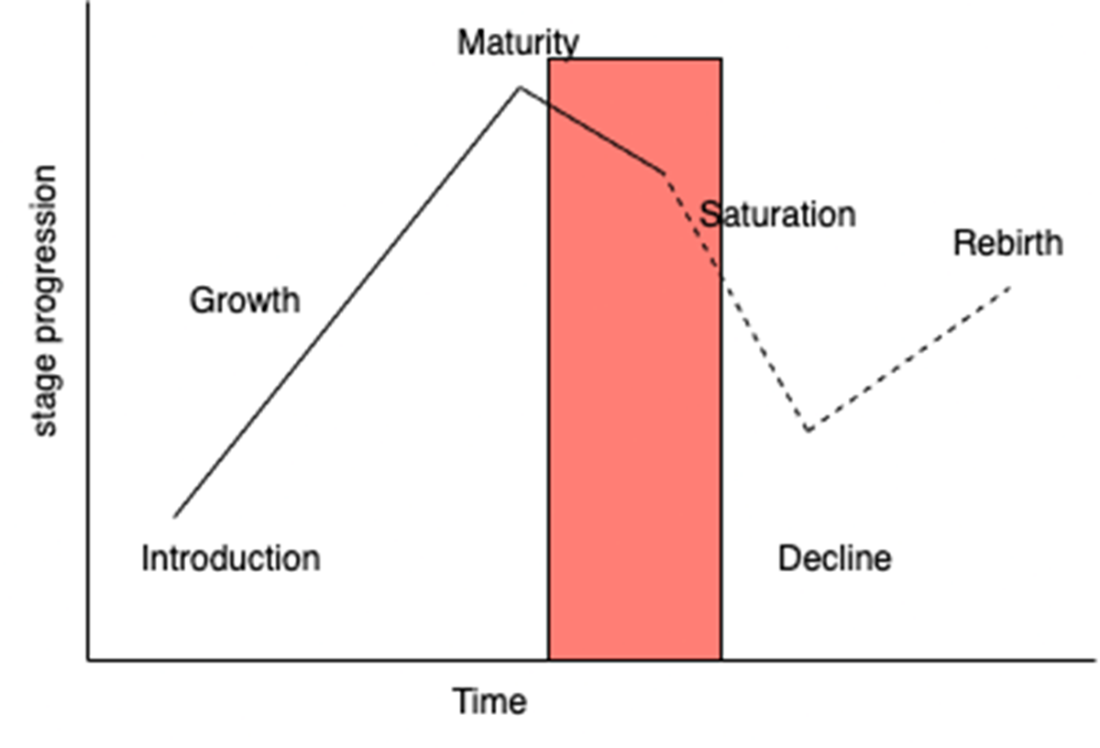
Shows how companies might evolve. The shaded area marks a window of opportunity. A merger or acquisition can rescue a company in decline.
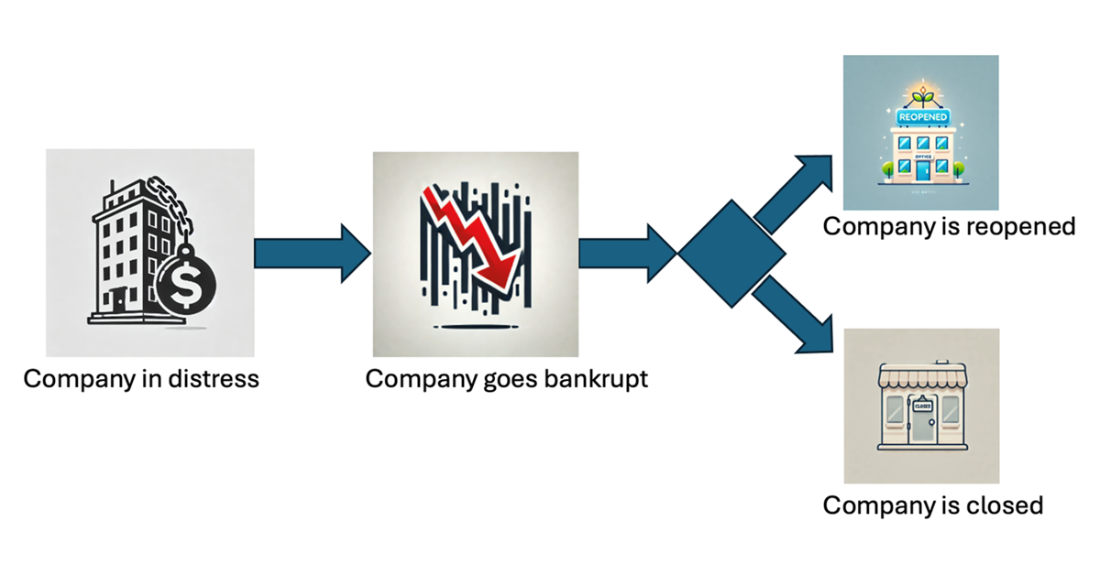
Shows the workflow of a company in distress and its possible turnaround depending on its assets.
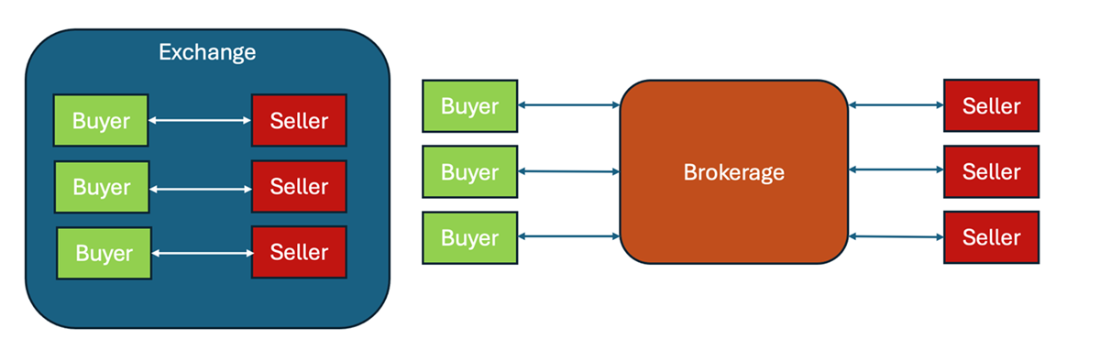
On an exchange, sellers and buyers can interact directly. A broker is an entity between a buyer and a seller. A broker usually facilitates trading on one or more exchanges.
Summary
- The efficient market theory assumes that we cannot beat the market because the price results from all the information available to investors.
- Non-financial data can be an untapped resource for learning details about assets that other investors do not yet know. It can contain hidden information to beat the market.
- Data such as media, geolocation data, demographics, or trends might tell you much about additional insights that can be added as factors to a model.
- Non-financial data is not as openly available as financial data (which must be reported for public companies). However, you can purchase access to non-financial data on some marketplaces.
- A catalyst in equity markets is something that propels the price of a stock dramatically up or down.
- Catalysts include mergers and acquisitions(M&A), bankruptcy filings, earnings calls, disasters, and interest rate changes.
- M&A means that two companies join forces. Such a big event often creates bigger movements in share prices. Being able to predict successful M&As can be rewarding.
- Bankruptcy is also a profit opportunity if existing shareholders panic and sell their shares too fast. However, it is a considerable risk to bet on a bankrupt company's turnaround. If a stalking horse agreement (a buyer’s commitment to buy the resources at a minimum price if an auction does not yield a higher price) is in place, risks are lower.
- Every publicly traded company has quarterly earnings calls, during which the executives report on the company’s performance. Missing or surpassing the earnings estimates can cause substantial shifts in stock prices.
- Disasters, such as wars and natural catastrophes, affect share prices. Some companies make more profits when disasters happen. Buying shares of them at the beginning of a calamity or selling them before a disaster ends can be a strategy to make profits.
- The federal reserve interest (or its equivalent in other countries) defines the interest rate at which it lends money to borrowers. Capital-intensive companies—those that need more external investments to be successful—are more affected by interest rate changes.
- Investing in low-priced capital-intensive companies can be beneficial before the FED reduces the rate. However, some capital-intensive companies face bankruptcy risks if the interest rates are high.
- You can define algorithmic trading strategies, which you define when you buy and when you sell.
- Backtesting is a way to test buy and sell the strategies you created by validating them using historical data.
- Even if your backtesting strategy is successful, past results do not guarantee future results.
- An SMA crossover strategy extracts buy and sell signals based on two simple moving averages (SMAs) with different time windows.
- SMA crossover strategies do not always return better results than “buy low and sell high” strategies.
- We can add more complex rules to evaluate buy-and-sell decisions in algorithms. Factors are the criteria we might consider for decision-making.
- While we can use Python to program trading algorithms and backtest them, some platforms offer this service. Customers of these services do not need coding experience.
- A trader buys assets through a broker, who will purchase them from an exchange. Brokers hold assets in the name of a holder.
- A trader can buy crypto assets directly from an exchange.
- Exchanges and brokers charge commissions per order.
- A market order is to be transacted immediately at the current price.
- A limit order is an order executed at a specific price. The order is canceled if the price is not reached during a trading day.
- A stop order triggers an order when the share price exceeds a defined stop price.
- A stop limit triggers an order executed when the share price is between a minimum (limit price) and a maximum (stop price).
- A trailing stop order adjusts the stop price. It moves with the market price and is triggered by sharp changes.
- Fill or kill(FOK) is a parameter that determines whether an entire order is executed. The broker will not execute the order in parts.
- Good ‘til canceled(GTC) is a parameter for an order that does not expire. The person who created it can either execute or cancel it. Some brokers will still mark GTC orders as expired if they are not executed over an extended period.
- If you set a stop order with a GTC, you can prevent yourself from significant losses when the market collapses.

 Investing for Programmers ebook for free
