Overview

6 Machine-augmented work: Productivity, education, and economy

This chapter surveys how generative AI, especially large language models, is moving from novelty to everyday copilot across work and life. In medicine, models already draft insurer appeals, summarize charts, and help clinicians communicate more empathetically—while still requiring human oversight. In law, they speed discovery, surface relevant cases, and produce first-draft documents; in finance, they parse market information and power customer service with care to avoid hallucinations. Creative teams use models as accelerants, with human–AI collaboration often outperforming either alone. For technologists and non-coders alike, coding assistants, agentic tools, and no‑code builders compress idea-to-prototype cycles; beyond work, people rely on chatbots for planning, shopping, language practice, and self-improvement. The throughline is augmentation: AI produces fast first passes and syntheses, while humans provide judgment, domain expertise, and final accountability.

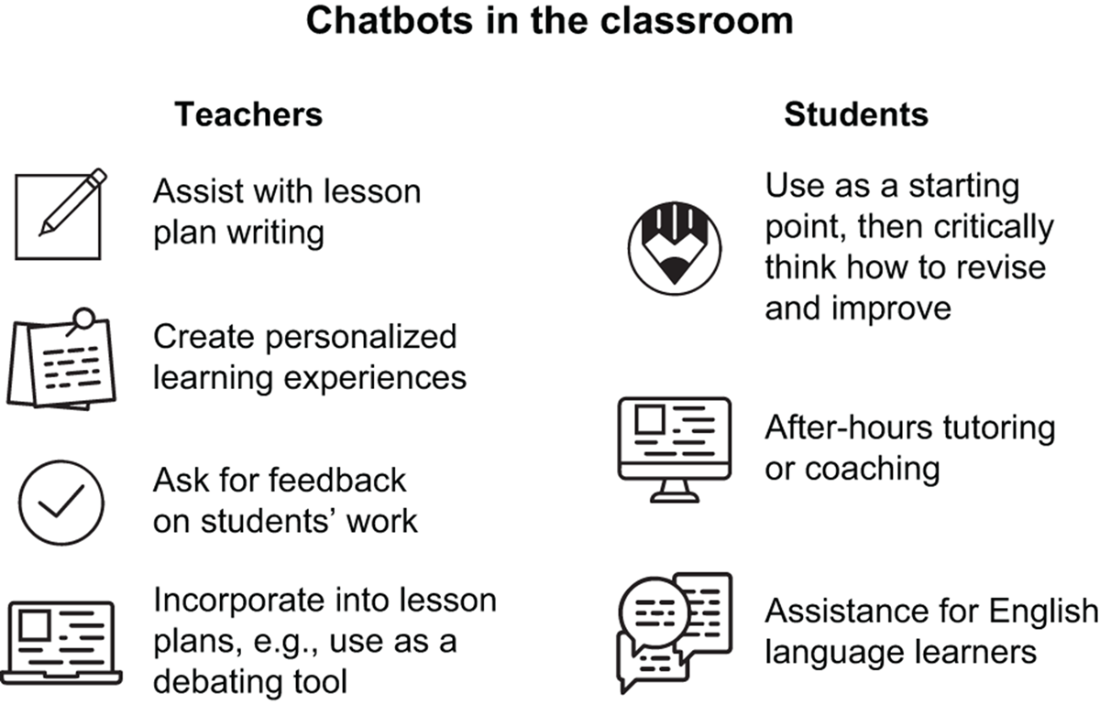
Education has been transformed just as quickly, shifting from initial bans and integrity concerns to pragmatic integration with attribution and clear norms. Early reliance on AI detectors proved unreliable and biased, prompting a pivot toward pedagogy, assessment redesign, and AI literacy for students and teachers. Schools and ministries now emphasize equitable access, responsible use, and transparency; teachers use AI to differentiate instruction, draft materials, and give feedback, while students learn to critique and refine AI drafts and to verify sources. Edtech platforms embed tutoring and feedback features, and large-scale professional development efforts aim to guide ethical adoption. Tensions persist—over uneven policies, faculty use versus student restrictions, and risks of overreliance—but the consensus is to teach with and about AI, using its flaws as teachable moments.

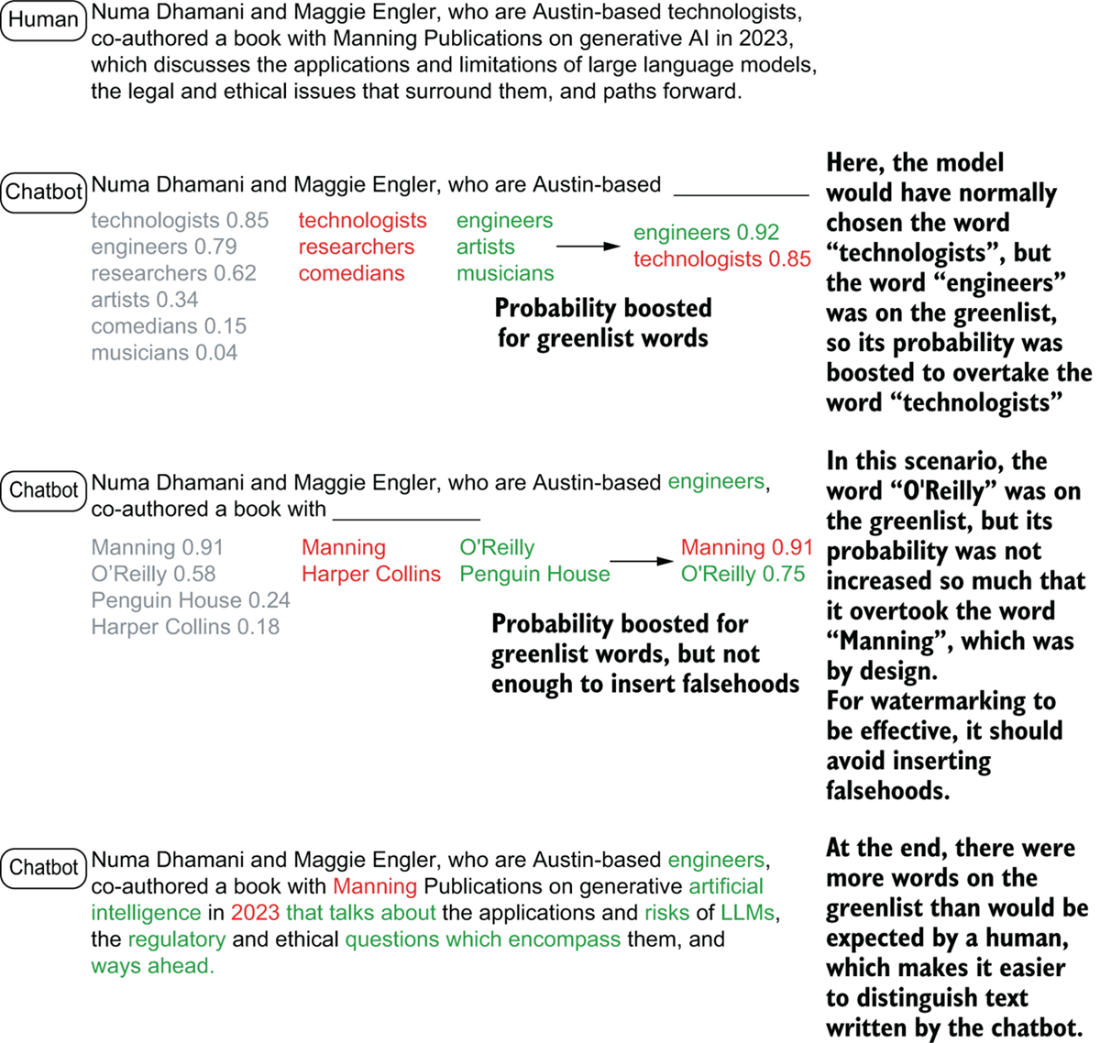
Determining authorship remains difficult. Statistical signals (perplexity/burstiness, GLTR), classifiers, and perturbation methods like DetectGPT are brittle, degrade across models, and are easy to evade via paraphrasing. Watermarking (for example, biasing token choice during generation) and content provenance systems offer complementary paths but face fragility, interoperability, and governance hurdles, especially as AI-written text circulates and risks recursive training feedback. Economically, evidence shows substantial task-level gains and the promise of broader productivity growth, though macro effects may arrive gradually. Exposure is highest in white‑collar work, with roles more likely to be reconfigured than erased; augmentation can narrow skill gaps, yet entry-level pathways may shrink and inequality may widen if incentives favor substitution. Market concentration, open-source countercurrents, labor pushback, and evolving policy will shape who benefits. The outcome hinges less on model capability than on how institutions integrate AI—tilting choices toward human–AI complementarity, worker upskilling, and fair distribution of the gains.

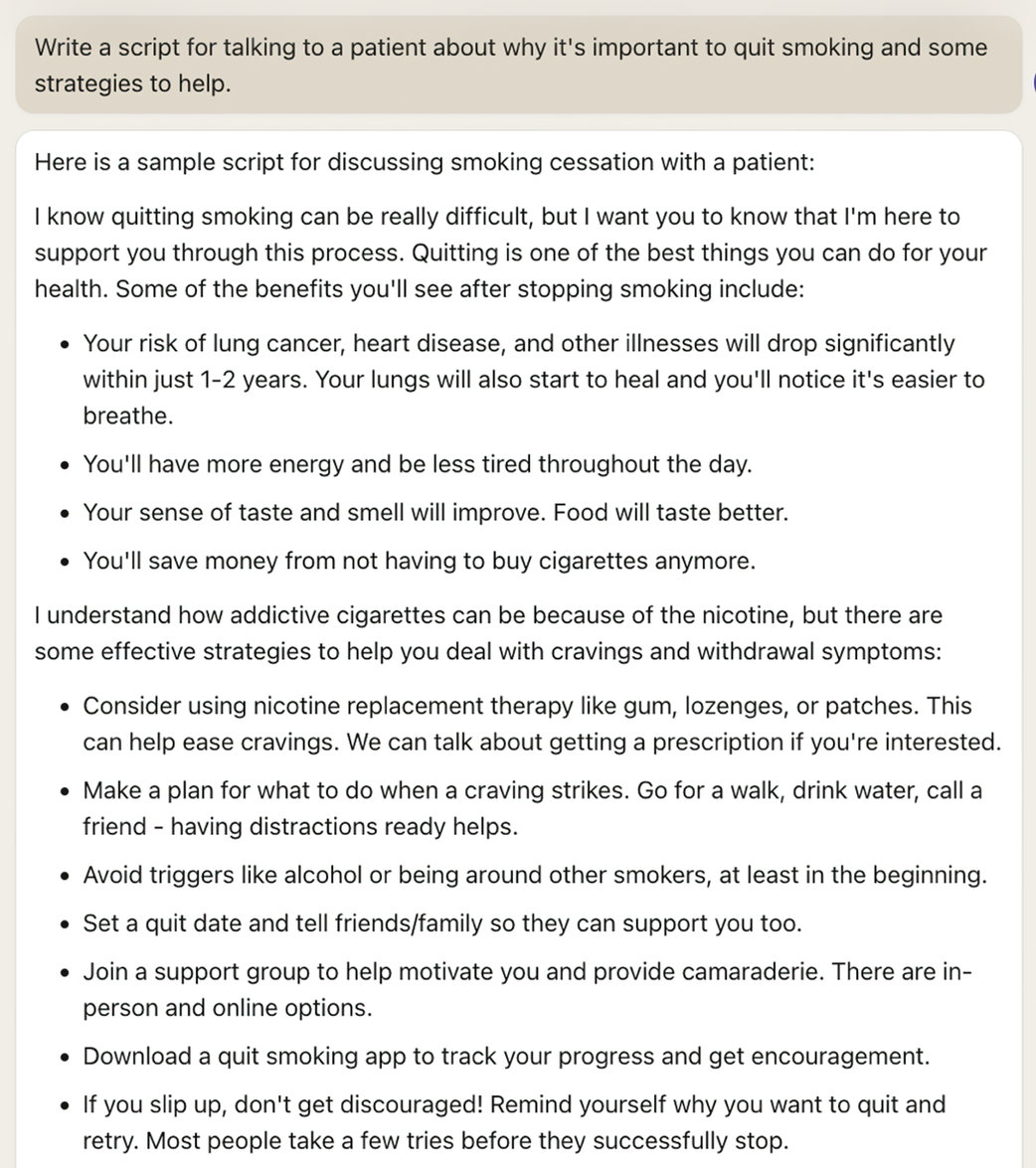
The beginning of a response written by Claude to a request for a script about smoking cessation
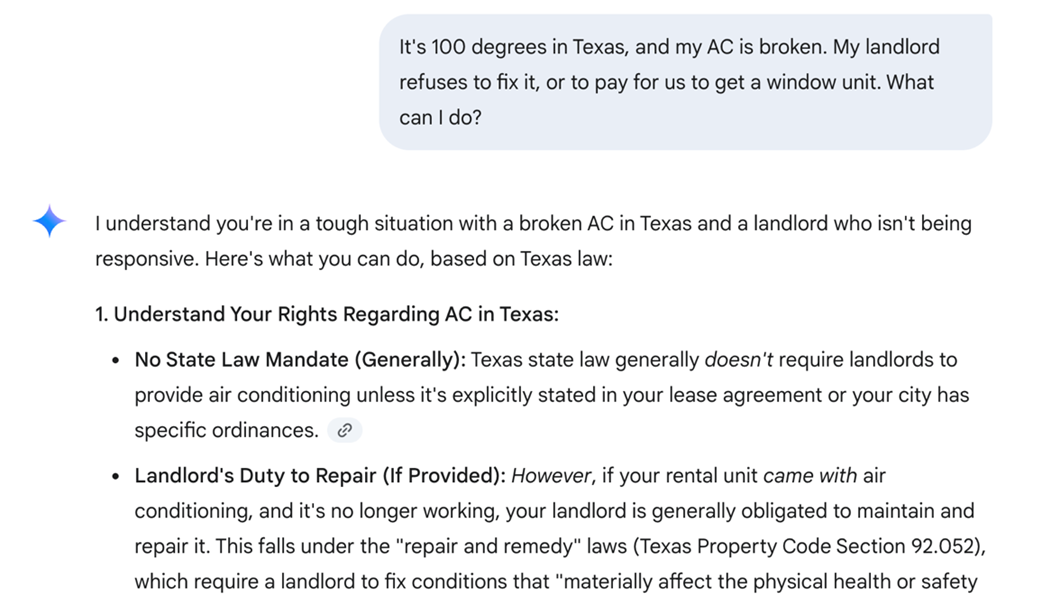
Part of Gemini’s response to a query from a renter about a dispute with their landlord
An AI-generated advertisement, created with the prompt “poster for a new energy drink called Buzz” by the open source image generation model Stable Diffusion

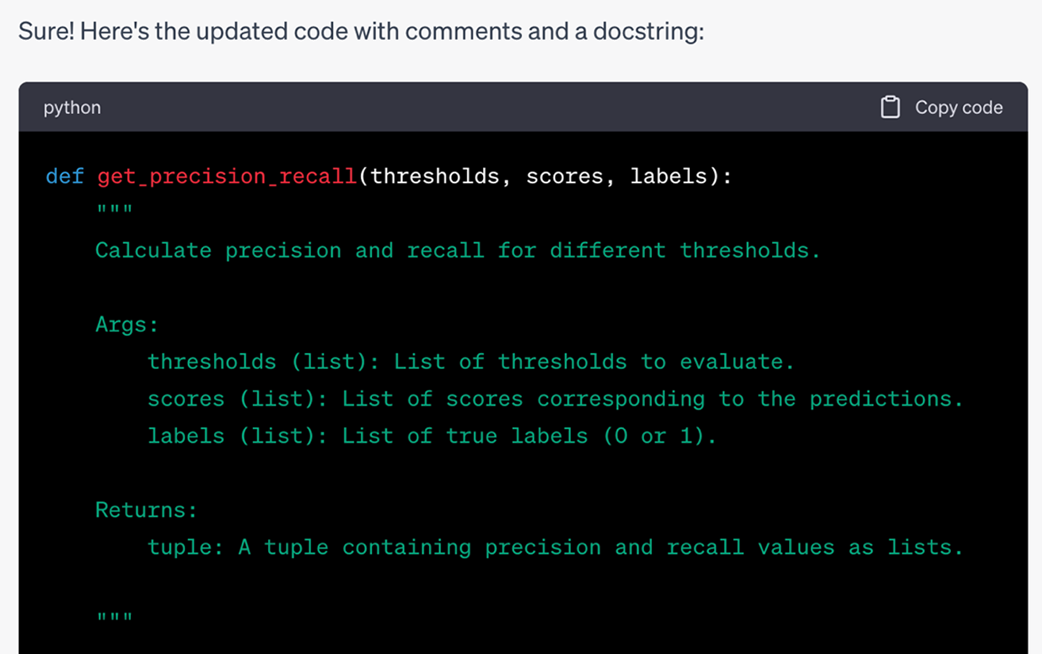
The docstring produced by ChatGPT correctly describes the function given and each input.
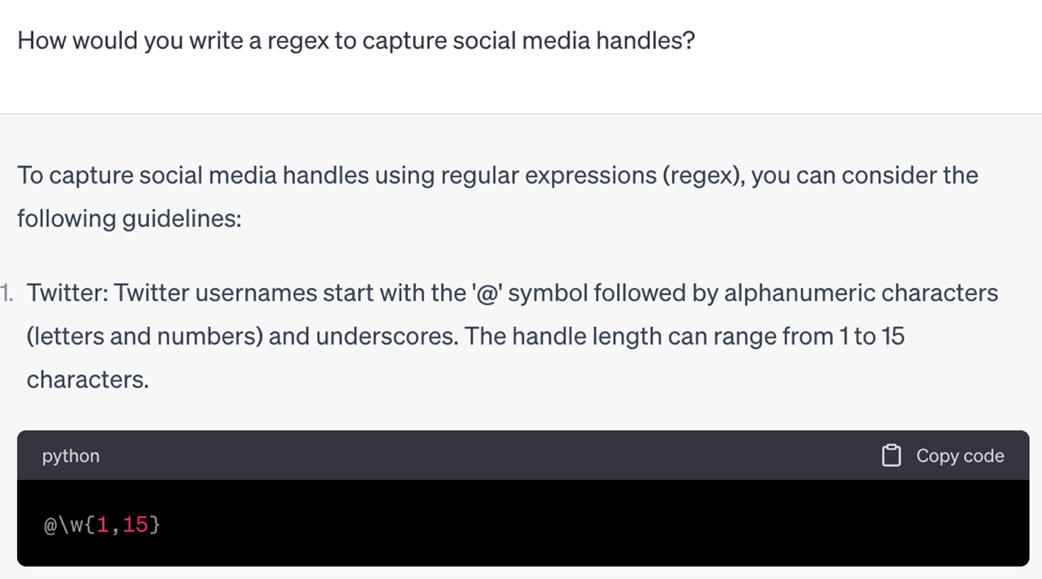
A partial response from ChatGPT when prompted to give a regex for social media handles. The full response gave regexes for Twitter (now X), Instagram, Facebook, and LinkedIn usernames. We note here that the regex is correctly described, but X handles actually range from 4 to 15 characters.
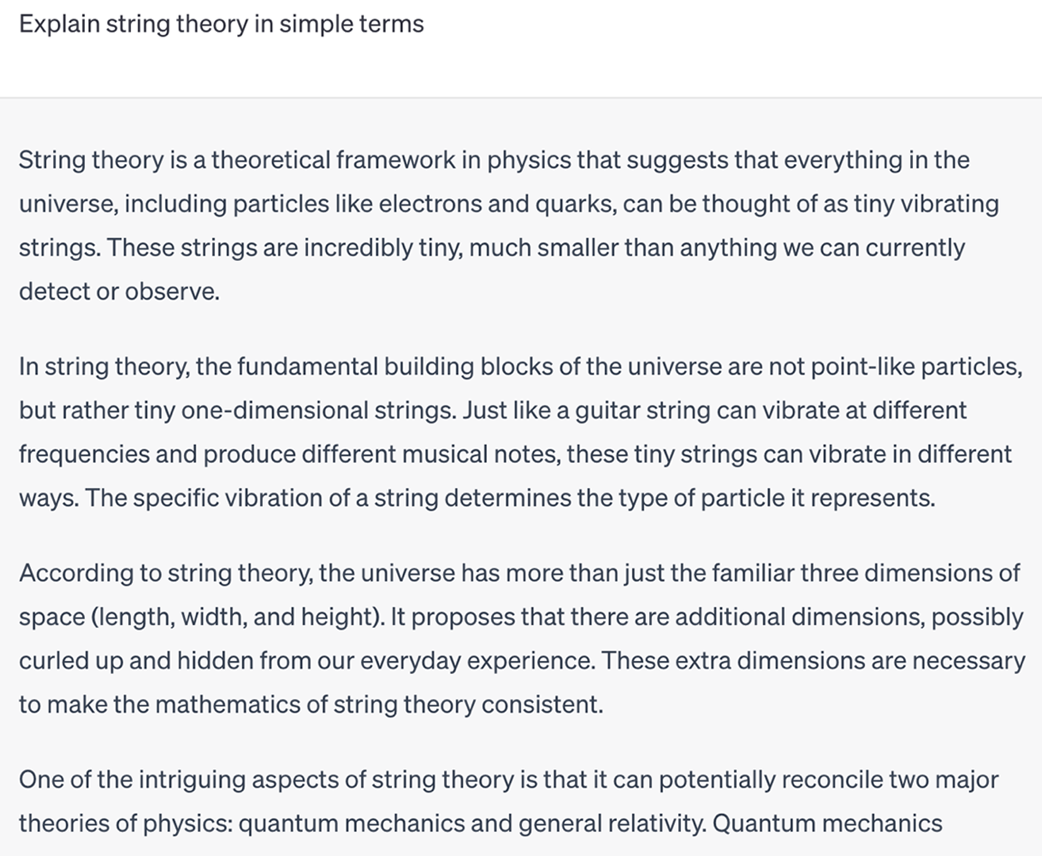
The partial response of ChatGPT to a prompt about string theory
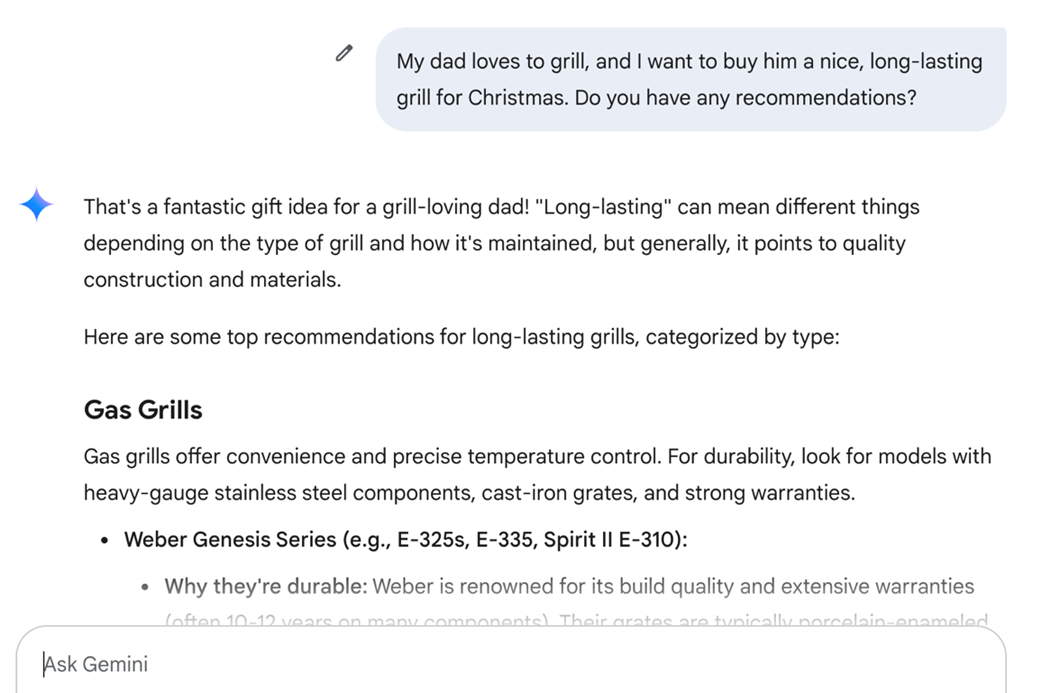
Gemini’s partial response to a query about possible grills to purchase
Examples of how educators and students can integrate generative AI tools in the classroom
How a language model uses greenlist word biasing to embed watermarks in the generated text
Summary

  • People are using generative AI tools to assist with both personal and professional tasks, especially to offload administrative and repetitive work.
  • Large language models (LLMs) are being used as coding assistants to help programmers write code and speed up development, though human oversight remains essential.
  • In creative fields, LLMs can generate copy, advertisements, and concepts, but the most effective results often come from human–AI collaboration.
  • Some of the more powerful proposed applications of LLMs require the models to act as agents, systems that interact with their environment, retrieve external data, and pursue goals adaptively (discussed further in chapter 8).
  • Educators must adapt to a world in which generative AI is integrated into the learning process.
  • Debates over AI in education, authorship, and integrity underscore the need for thoughtful policies, equitable access, and transparent communication among students, teachers, and institutions.
  • Efforts to detect machine-generated text include statistical techniques, classifiers, watermarking, and provenance systems; however, each approach has its limitations and trade-offs.
  • Watermarking in text works by subtly biasing word choices during text generation to embed detectable signals, but these can often be removed through simple edits or paraphrasing.
  • There is no single technical solution that can reliably detect all AI-generated content. Detection remains a cat-and-mouse game, complicated by the rapid advancement of models and widespread evasion tactics.
  • Economists are divided on whether generative AI will lead to a productivity boom or exacerbate inequality. While short-term task gains are clear, broader impacts on wages, employment, and market concentration remain contested.
  • The economic impact of generative AI is likely to be evolutionary rather than revolutionary but still transformative, affecting how we work, what jobs exist, and who benefits.

FAQ

How are LLMs being used across professional domains?They are augmenting, not replacing, knowledge work. In medicine, they draft notes, letters, and patient communications; in law, they summarize discovery, surface relevant cases, and draft documents; in finance, they help parse market news and power customer-service chat; and in creative industries, they rapidly generate concepts and copy. The most effective pattern is a human–AI team: the model produces a first pass; professionals review, correct, and add judgment.
What can LLMs do for doctors, and what are the risks?LLMs can cut administrative burden—drafting insurer appeals, summarizing charts, answering routine patient messages, and creating patient-facing scripts in plain language. Benefits include more time with patients and clearer communication. Risks include privacy, clinical safety, and “outsourcing empathy.” Models can sound confident while being wrong; they should not replace medical judgment and must be used under appropriate safeguards.
How are lawyers using generative AI, and where are the limits?Use cases include e-discovery summarization, legal research with explanations of case similarities, and drafting complaints, wills, and contracts. AI can also assist with regulatory compliance Q&A. Gains come with caveats: hallucinations, incomplete drafts, and the need for careful supervision. Properly used, these tools can expand access to plain-language legal guidance for common civil issues but do not replace expert counsel.
How do LLMs help programmers in practice?They act as pair programmers that autocomplete functions from docstrings, explain APIs, write tests, generate regexes and scripts, and produce or improve documentation. Newer agentic tools can take actions across a codebase, and no‑code services can scaffold prototypes from prompts. Experts still matter: AI-written code may miss edge cases or be inefficient; developers must review, test, and architect systems thoughtfully.
What are the pros and cons of agentic and no‑code “vibe coding” approaches?Pros: faster iteration, lower barrier to prototyping, and rapid scaffolding of full apps. Cons: brittle or hard-to-debug code, poor architecture, technical debt, and difficulty diagnosing failures without fundamentals. Best used for prototypes and learning; production systems still require engineering discipline and human oversight.
How are people using LLMs in daily life, and what are agentic assistants?Common uses include learning summaries, exam prep explanations, shopping research, trip planning, habit and training plans, and routine writing (emails, notes). Agentic assistants go beyond fixed commands: they break goals into steps and, when connected to tools (search, calendars, payments, home devices), can execute multistep tasks. This is the direction from traditional command-and-control (e.g., early voice assistants) toward goal-seeking AI helpers.
How is education adapting to generative AI?After early bans, many institutions shifted to guided use with attribution, AI literacy, and teacher training. Classrooms use AI for lesson planning, differentiated materials, tutoring, and first-draft generation followed by critique. Policies emphasize transparency, process-oriented assessment, and equitable access, while acknowledging risks like overreliance, fabricated citations, and inconsistent rules between faculty and students.
Can we reliably detect AI‑generated text?Not reliably. Statistical tools (e.g., perplexity-based), classifiers, and methods like DetectGPT often produce false positives and degrade as models change or text is lightly edited or paraphrased. Detectors have disproportionately flagged non‑native English writers and neurodivergent students, prompting many institutions to curb their use. Evasion is easy; small edits can defeat detection.
What alternatives to post‑hoc detection exist?Two complementary approaches are watermarking and content provenance. Watermarking subtly biases token choices during generation to embed a detectable signal (e.g., SynthID‑Text), but it is fragile to paraphrasing and requires provider cooperation. Provenance systems (e.g., C2PA-style cryptographic signatures and metadata) aim to record content origin and edits. Neither is a silver bullet; a layered, ecosystem approach is needed.
What is the economic impact of generative AI on productivity and jobs?Studies project sizable but gradual gains: task-level boosts (coding speed, faster writing, and customer support productivity) and macro estimates of higher GDP and sector value when AI is embedded in workflows. Most jobs are more likely to be transformed than eliminated, with tasks shifting toward areas needing judgment, creativity, and interpersonal skills. Risks include displacement of entry-level roles, widening inequality, and concentration of power among a few AI providers. Policy, training, and augmentation-focused design will shape who benefits.

pro $24.99 per month

  • access to all Manning books, MEAPs, liveVideos, liveProjects, and audiobooks!
  • choose one free eBook per month to keep
  • exclusive 50% discount on all purchases
  • renews monthly, pause or cancel renewal anytime

lite $19.99 per month

  • access to all Manning books, including MEAPs!

team

5, 10 or 20 seats+ for your team - learn more


choose your plan

team

monthly
annual
$49.99
$499.99
only $41.67 per month
  • five seats for your team
  • access to all Manning books, MEAPs, liveVideos, liveProjects, and audiobooks!
  • choose another free product every time you renew
  • choose twelve free products per year
  • exclusive 50% discount on all purchases
  • renews monthly, pause or cancel renewal anytime
  • renews annually, pause or cancel renewal anytime
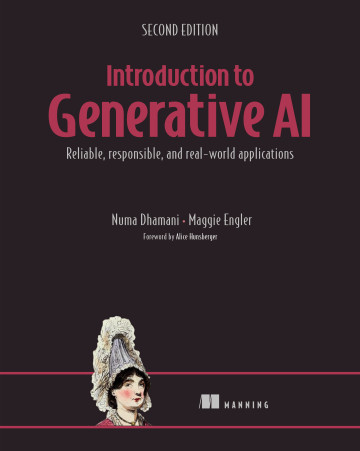
  • Introduction to Generative AI, Second Edition ebook for free

choose your plan

team

monthly
annual
$49.99
$499.99
only $41.67 per month
  • five seats for your team
  • access to all Manning books, MEAPs, liveVideos, liveProjects, and audiobooks!
  • choose another free product every time you renew
  • choose twelve free products per year
  • exclusive 50% discount on all purchases
  • renews monthly, pause or cancel renewal anytime
  • renews annually, pause or cancel renewal anytime
  • Introduction to Generative AI, Second Edition ebook for free