Overview
11 Frontiers of AI: Open questions and global trends
This chapter surveys the leading edges of today’s AI landscape and the tensions shaping its trajectory. It examines the hopes and hype around artificial general intelligence, renewed debates over machine consciousness, the mounting environmental costs of training and running large models, the rapid rise of open source ecosystems, and the global race to invest in chips, data centers, and national AI capacity. Across these themes runs a consistent thread: a struggle between speculation and accountability, progress and sustainability, concentration and openness, and how power and benefits are distributed.
On AGI, the authors underscore the absence of a consensus definition or agreed benchmarks, even as prominent figures treat its arrival as imminent. They trace how utopian and dystopian narratives, along with ideologies like transhumanism and longtermism, can distract from real, present-day harms—bias, labor exploitation, copyright conflicts, and the consolidation of power. The sentience debate is explored through the LaMDA episode and theories of consciousness, with the conclusion that current models do not exhibit credible markers of consciousness; the larger danger lies in anthropomorphism that can induce unwarranted trust. The chapter argues for redirecting energy from speculative endpoints toward building well-scoped, testable systems with clear, measurable benefits and human oversight.
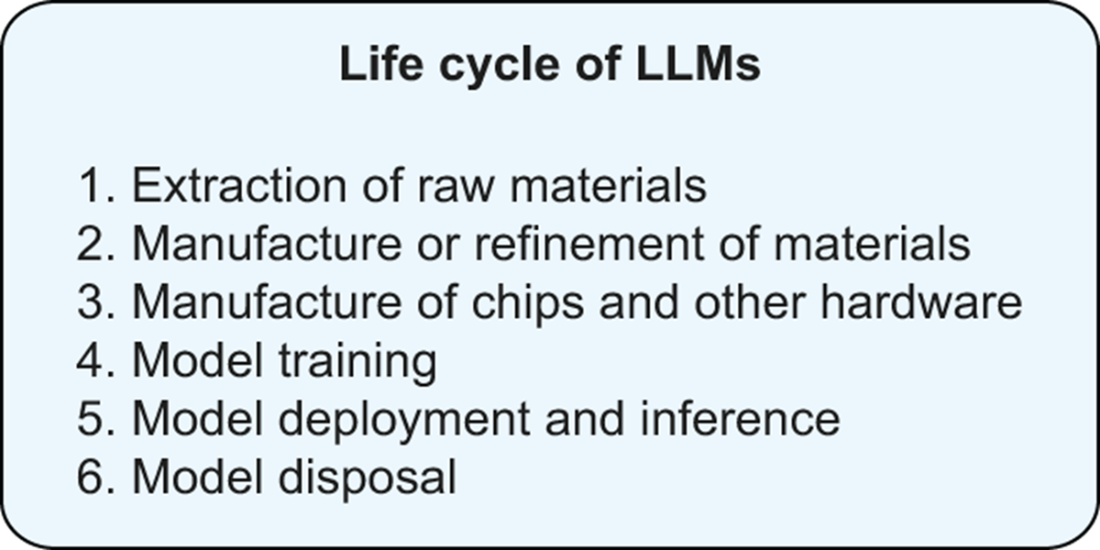
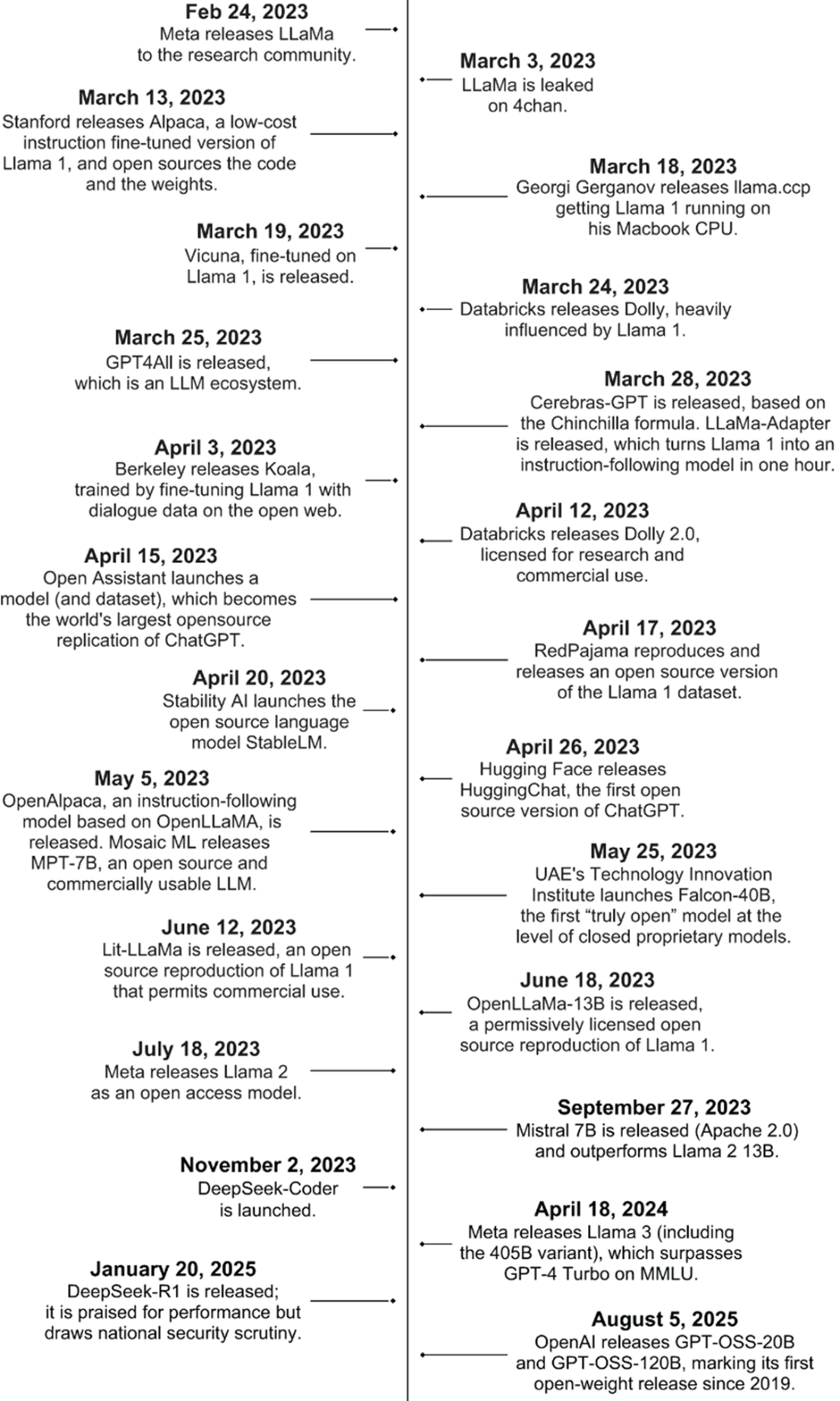
On environmental impact, the chapter details the lifecycle costs of LLMs—material extraction for chips, training and inference energy, and cooling water use—while highlighting emerging measurement tools, revealing case studies, and the push for smaller, more efficient models. It charts the open source surge from early LLaMA derivatives to today’s competitive open-weight models, enabled by community methods, permissive tooling, and shared infrastructure, alongside persistent licensing ambiguities and safety risks. Finally, it maps global investment trends: escalating spend on compute and data centers, national strategies for sovereignty stacks, export controls and chip scarcity, and widening compute inequality. The authors close by calling for governance, transparency, and sustainability to match technical scale—so that the systems being built are equitable, auditable, and aligned with the public interest.
Summary
- Artificial general intelligence (AGI) has no clear or testable definition, yet hype around AGI continues to shape public narratives, corporate strategies, and funding priorities.
- Ideologies like transhumanism and longtermism influence how some tech leaders frame AGI’s purpose and risks, often at the expense of addressing real, present-day harms.
- While no AI systems today exhibit consciousness or sentience, their ability to mimic humanlike dialogue can mislead users and complicate ethical assessments.
- Training and deploying large language models consumes significant energy and resources; more systematic environmental reporting and support for efficient model development are urgently needed.
- Open source communities have driven rapid innovation, customization, and global access but have also surfaced new challenges around safety, misuse, and licensing.
- Global AI investment reflects competing priorities: some nations prioritize scale and strategic dominance, while others focus on alignment, access, or sovereignty.
- Access to compute remains deeply unequal, raising concerns that a small group of companies and countries will determine who gets to build and benefit from AI.
FAQ
How does this chapter define artificial general intelligence (AGI), and why is it so hard to agree on?
AGI has no universally accepted, testable definition. This chapter uses a pragmatic one: a single system capable of performing any cognitive task at the level of humans. Disagreement persists because “general” intelligence spans reasoning, learning, planning, transfer, and real-world robustness—domains where benchmarks are incomplete and subjective. This ambiguity fuels conflicting claims and timelines and makes it difficult to declare AGI “achieved” in any rigorous sense.Are today’s AI systems sentient or conscious?
No. The chapter distinguishes sentience (capacity to feel) from consciousness (self-aware experience). While theories like global workspace, higher-order thought, and integrated information offer testable ideas, current LLMs lack credible indicators of metacognition or subjective experience. The more immediate risk is anthropomorphism: systems that convincingly simulate feelings can induce overtrust despite well-known limitations.Why is there so much hype—and worry—about AGI?
Public narratives often swing between utopian hopes (abundance, scientific breakthroughs) and dystopian fears (loss of control, existential risk). The chapter links some AGI enthusiasm to broader ideologies like transhumanism and longtermism, which prioritize speculative futures over present harms. It argues for redirecting focus toward well-scoped, testable systems with clear benefits and accountability.What contributes most to the environmental footprint of large language models (LLMs)?
Training dominates energy use due to vast floating-point operations on power-hungry GPU clusters, with additional impacts from data center cooling and water consumption. Inference can also be significant at scale, especially for reasoning-heavy models and agentic workflows that iterate many times per user request. Overall footprint depends on hardware efficiency, training duration, model size, and the carbon intensity of the electricity grid.How can teams measure and reduce the carbon impact of LLMs?
- Measure: use tools (e.g., CodeCarbon) to log energy and estimate CO2e during training and inference; report methodology and assumptions.
- Mitigate: choose cleaner grids or renewable-matched regions; improve efficiency (smaller or sparse models, quantization); use parameter-efficient fine-tuning (LoRA/QLoRA); optimize inference serving; avoid unnecessary retries/loops in agents.
- Be cautious with offsets: the chapter notes offsets are debated and should not replace direct reductions.What does “open source” mean here, and how did open LLMs evolve so quickly?
Strictly, open source means permissive licenses with full use, modification, and redistribution; many popular releases are “open-weight” (weights shared, data/pipeline closed). Momentum accelerated after Llama 1’s leak enabled low-cost fine-tunes (e.g., Alpaca, Vicuna), followed by commercial-friendly releases (Llama 2) and efficient newcomers (Mistral, Mixtral, Phi-2, Llama 3). Community tools (LoRA/QLoRA, vLLM, llama.cpp) and hubs/leaderboards standardized sharing and benchmarking, enabling rapid iteration.What are the main benefits and risks of open models compared to closed ones?
Benefits: transparency, offline use, customization, faster community-driven innovation, and lower costs for many use cases. Risks: uneven alignment and safety, easier jailbreaking or misuse, infrastructure burden on deployers, and license ambiguity (open vs open-weight/community terms). The chapter highlights community mitigations (e.g., LlamaGuard, guardrail libraries, red-teaming) but notes gaps remain.Why does compute access matter so much—and how are countries responding?
High-end GPUs and large training clusters are scarce and expensive, concentrating power among a few firms and states. Responses include national supercomputers, subsidies for domestic chip manufacturing (e.g., CHIPS Act), public research clouds (e.g., NAIRR), export controls, and efforts to build “sovereignty stacks” spanning chips, compute, models, data, and policy. Compute scarcity shapes who can train frontier models and at what terms.Where is global AI investment going, and is the current boom sustainable?
Spending spans models, chips, data centers, and integration tools; hyperscale data center buildouts dominate physical investment. Many providers operate at a loss due to high inference and energy costs, while enterprises often struggle to realize ROI from pilots. The chapter warns that pricing, access, and consolidation could shift as costs outpace revenues, with regional strategies (US, China, EU, UK, Gulf, India) reflecting different trade-offs in scale, sovereignty, and regulation.What guiding principles does the chapter recommend for navigating AI’s frontiers?
- Prioritize present, measurable harms over speculative futures.
- Build well-scoped, testable systems with clear benefits and accountability.
- Measure and report environmental impact; favor efficient models and cleaner energy.
- Support open ecosystems with responsible release practices, transparency, and guardrails.
- Invest in public literacy, resilient regulation, and energy infrastructure so progress aligns with societal goals.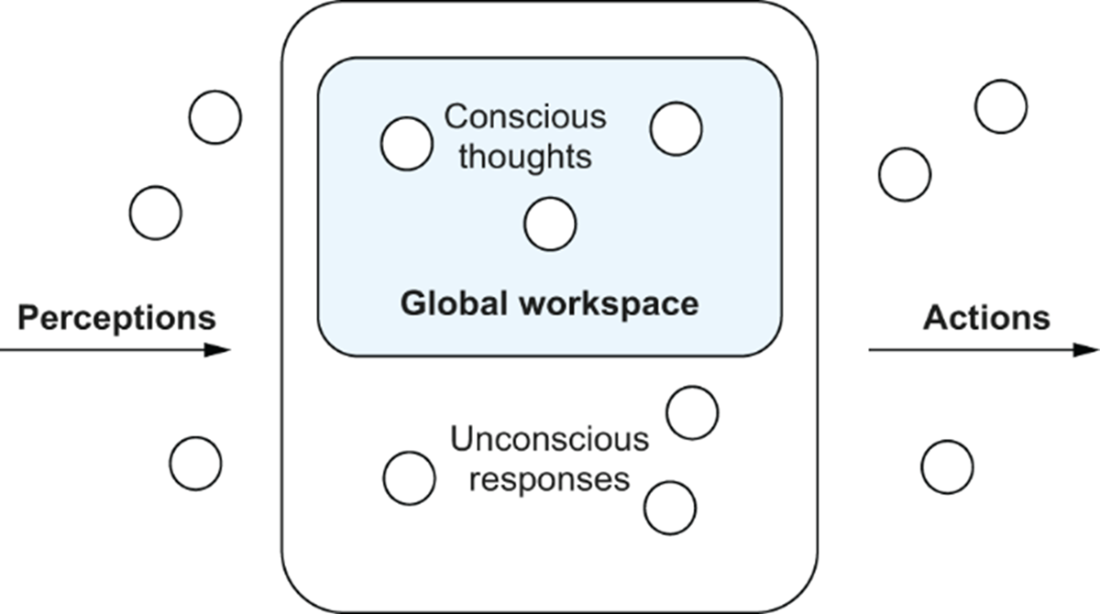

 Introduction to Generative AI, Second Edition ebook for free
