10 The future of responsible AI: Risks, practices, and policy
Generative AI is presented as a transformative, internet-scale shift whose full effects remain uncertain, with development rapidly advancing toward language as the default, multimodal interface, increasingly agentic systems, and deeply personalized assistants. The chapter argues for viewing these technologies as sociotechnical systems—shaped as much by incentives, institutions, and design choices as by model capabilities—and emphasizes that proactive governance and thoughtful regulation must evolve alongside new interfaces, tools, and embodied applications. Framed as an evolution rather than a sudden revolution, the chapter urges aligning innovation with public interest to ensure benefits are broadly shared.
It synthesizes a landscape of intertwined risks—bias and representational harms, hallucinations and epistemic damage, privacy leakage, adversarial exploits, emergent agentic failures, domain-specific misuse, emotional dependency, and labor disruption—showing how technical vulnerabilities magnify in real contexts. In response, it proposes layered best practices across the stack: curating and documenting datasets; strengthening privacy with clear policies and PETs; improving transparency, explainability, and bias evaluation; adopting safer architectures (retrieval, memory controls, modular pipelines); training for safety (RLHF/RLAIF, unlearning) with continuous red teaming; building provenance and synthetic-media tracing; instituting platform safeguards and user controls; keeping humans meaningfully in the loop; and investing in public education and digital literacy. The message is that safety, reliability, and trust emerge from systems thinking—not from model tuning alone.
Policy and governance are surveyed across regions: a mixed and shifting approach in the United States that blends voluntary commitments, agency guidance, and state action; a risk-based, auditable framework in the European Union with obligations for high-risk uses and general-purpose models; and China’s iterative, vertical regulations moving toward a comprehensive law. The chapter also weighs the promise and limits of corporate self-governance and calls for coordinated global oversight to manage systemic risks and distribute gains, potentially through an independent international body. It concludes that responsible AI demands interoperable standards, enforceable accountability, and sustained collaboration among developers, platforms, regulators, and civil society to steer increasingly capable, personalized, and agentic systems toward human well-being.
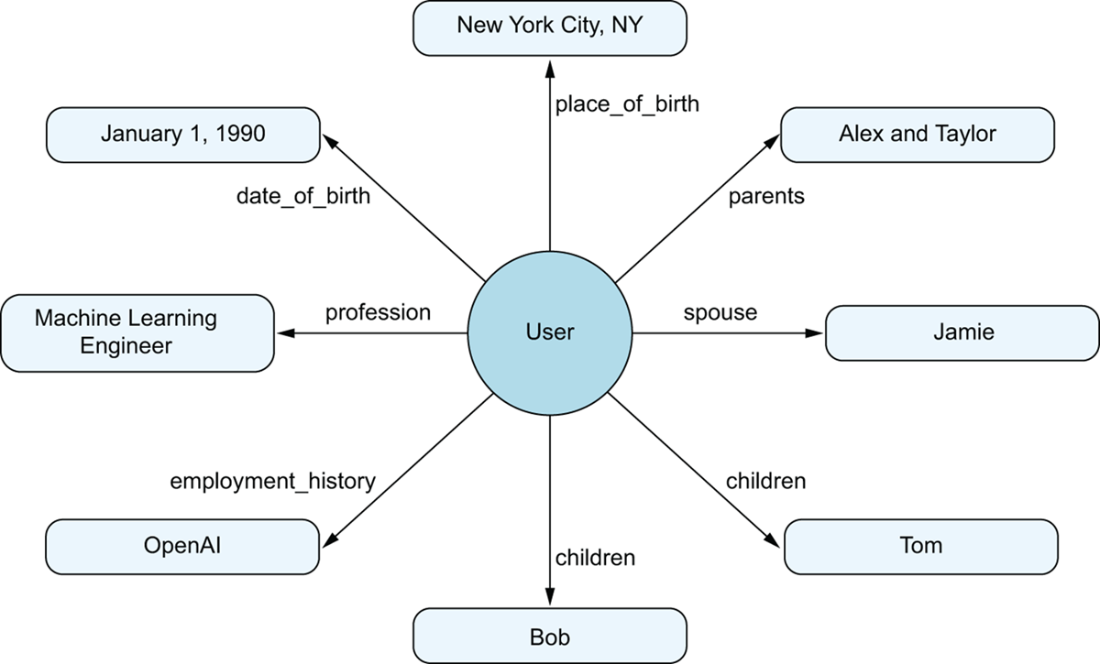
Structured memory graph for personalized AI
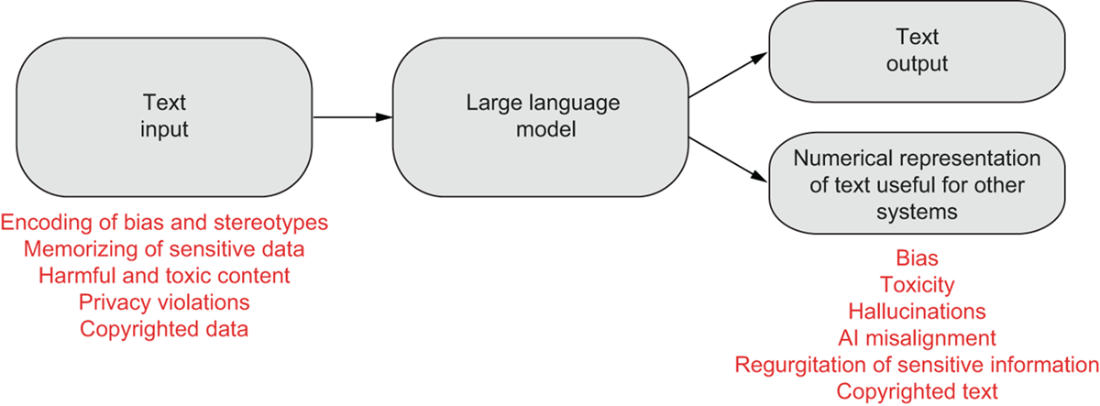
Risks across the LLM pipeline, from data ingestion to output generation, and how they connect to broader sociotechnical harms
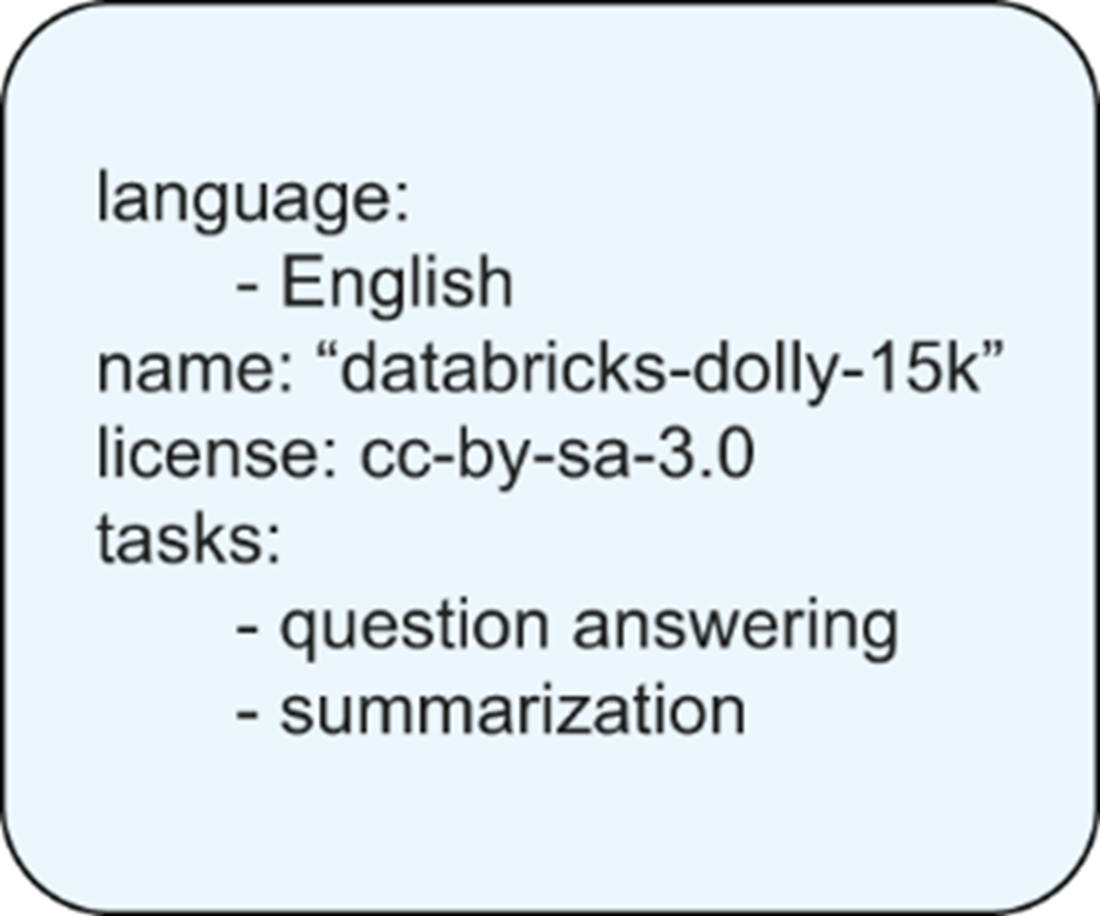
A dataset card for the databricks-dolly-15k dataset
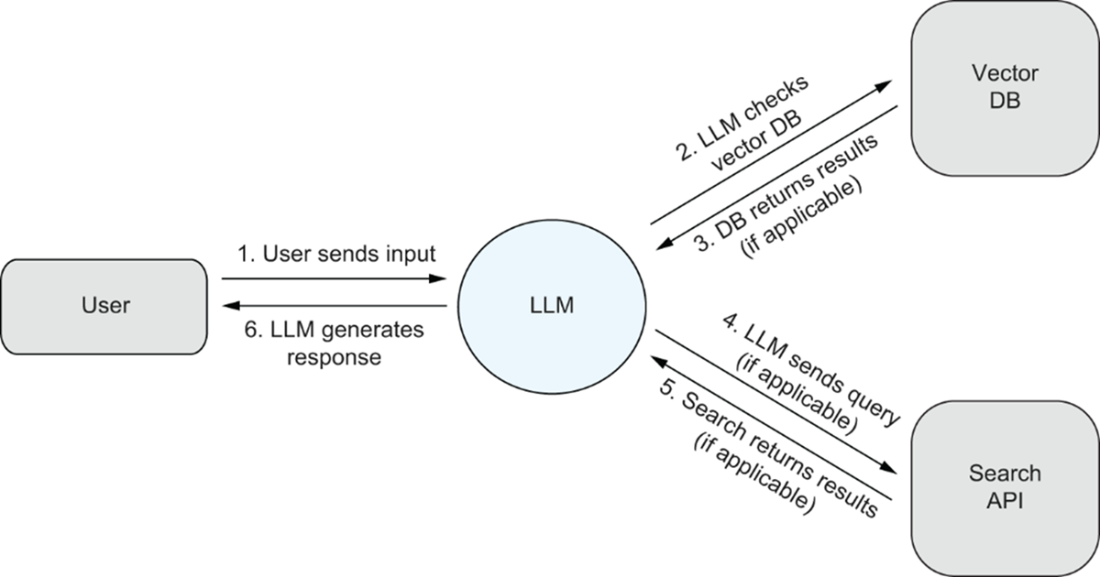
A schematic diagram for an LLM accessing data stored in a vector database and retrieving search results from the web
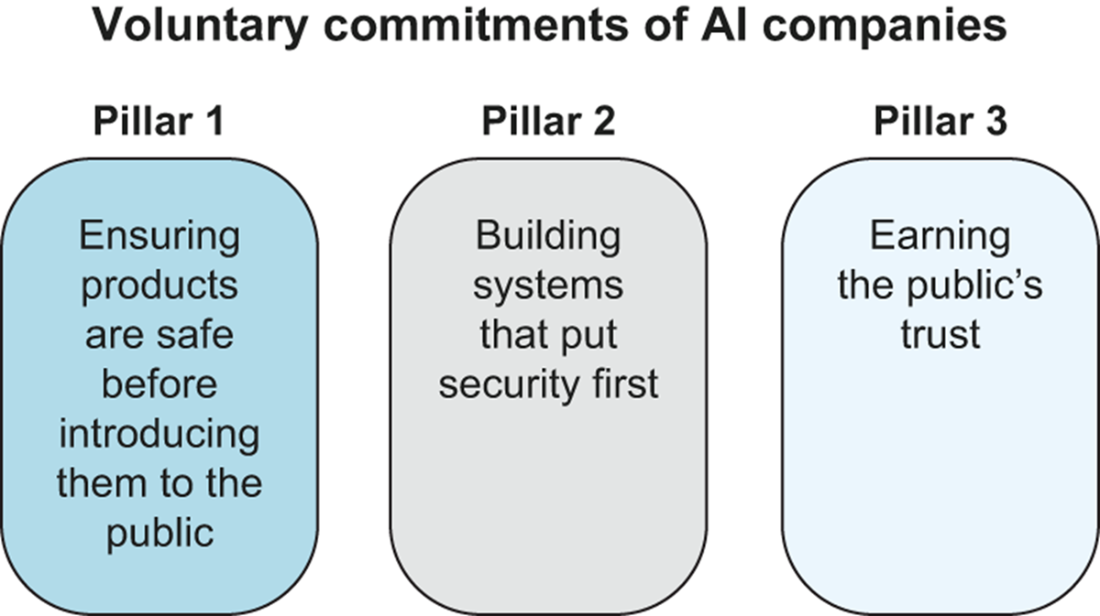
The three pillars of voluntary commitments made to the White House by leading AI companies
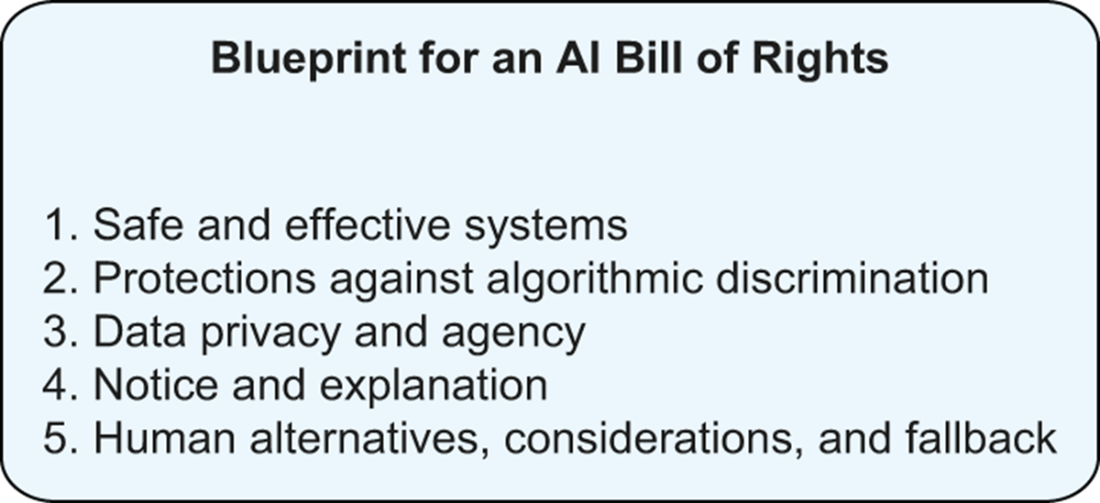
The five principles listed by the OSTP as a “Blueprint for an AI Bill of Rights” [35]
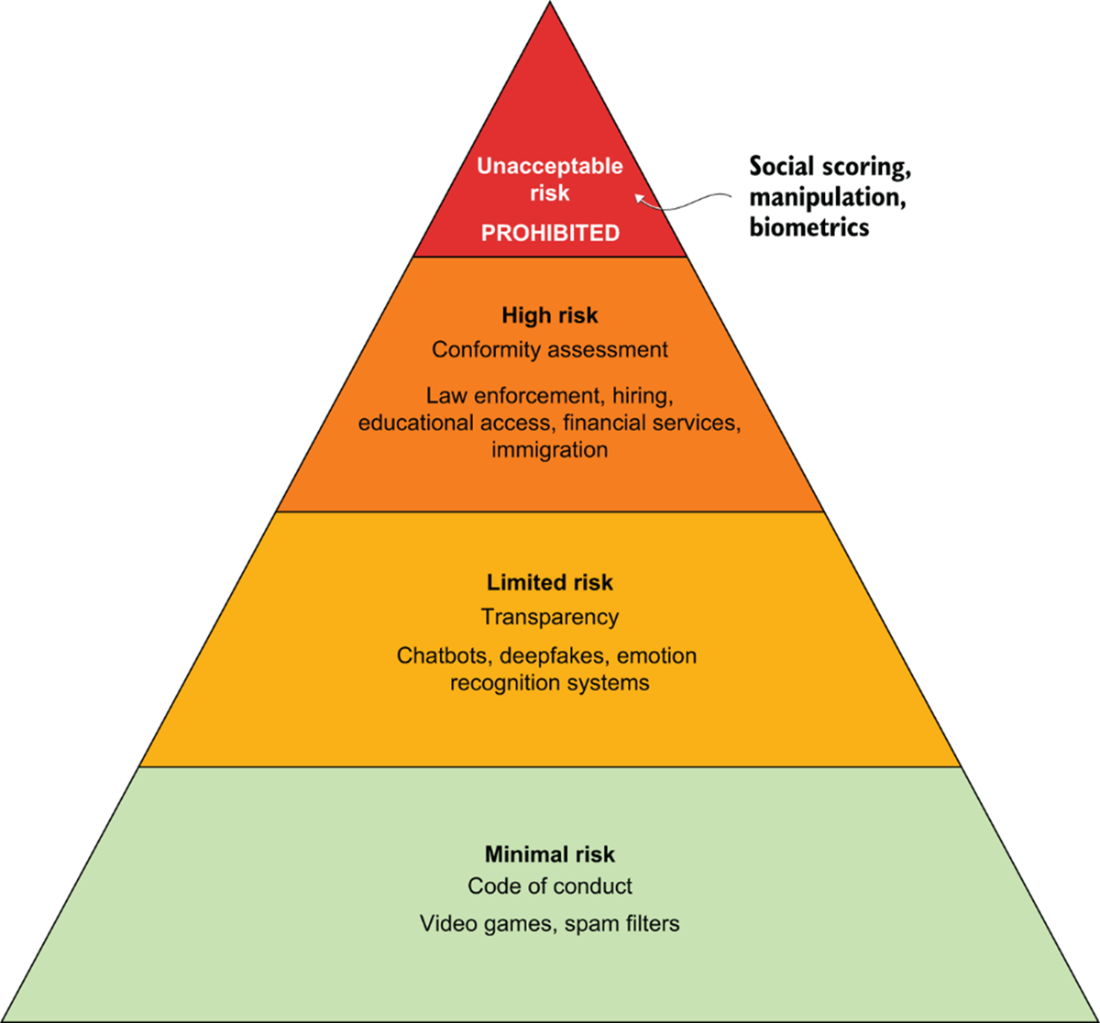
The four risk categories in the AI Act
Summary
- In the near future, we can expect to see generative AI integrated into more applications and becoming increasingly agentic, efficient, and personalized.
- The EU’s AI Act takes a risk-based approach to AI regulation and is one of the first major laws to regulate AI.
- The United States hasn’t attempted a large-scale AI regulation like the EU, but it has published an AI Action Plan focused on promoting innovation and development.
- China has implemented interim measures on Generative AI Services and signaled a desire to participate in and lead global AI policy discussions.
- Corporate self-governance could complement existing or future regulatory efforts, as well as fill in a critical gap by developing a more comprehensive approach to AI systems governance.
- The risks exposed by generative AI have emphasized what many experts have been calling for: the need for a new, permanent, independent, well-funded, and resourced institution to holistically ensure public benefit.
FAQ
How is the human–AI interface changing with generative models?
Natural language is becoming the default interface across apps and devices, increasingly multimodal (text, images, audio, code), and embedded in everyday tools. Search is shifting from lists of links to conversational answers, and commerce is blending into chat. This improves access and convenience but also concentrates gatekeeping power in the interface, raising questions about transparency of recommendations, monetization, and the visibility of original sources.What are AI agents and why do they matter?
Agents move beyond one-shot replies to plan, call tools and APIs, remember context, and take actions over time. They can orchestrate workflows in domains like law, medicine, education, and enterprise operations. Benefits include automation and coordination; risks include cascading errors, misinterpretation that triggers real-world actions, evaluation challenges, and over-trust. Economically, agents can redistribute tasks from execution to supervision and exception handling.How is personalized AI evolving, and what are the key risks?
Personalization now uses large context windows, retrieval, and persistent memory to adapt to user preferences across devices and modalities. This makes assistants feel more “relational,” but amplifies privacy and autonomy concerns: who owns the memory, how it is edited or transferred, and how to prevent manipulation or surveillance. Responsible designs provide memory inspection, editing, portability, expiration, and clear consent.What are the major sociotechnical risks of generative AI?
- Bias, toxicity, and representational harms (e.g., skewed recommendations and stereotyping)- Hallucinations and epistemic harms (confidently false outputs that damage trust or reputations)
- Privacy and data leakage (memorized training data, unsafe sharing of user inputs)
- Adversarial and security risks (prompt injection, data poisoning, jailbreaks)
- Autonomy/agentic risks (unsafe actions, tool misuse, feedback loops)
- Misuse across domains (disinformation, scams, unsafe deployments in sensitive areas)
- Dependency and emotional harms (unhealthy attachment, manipulation)
- Labor and economic disruption (deskilling, surveillance, concentration of power)
Which system and architecture choices improve safety and reliability?
- Retrieval-augmented generation to ground answers in verifiable sources and provide citations- Memory with user controls (review, edit, delete, portability, access limits)
- Modular pipelines for retrieval, generation, validation, and safety filtering with observability
- Long-context and planning combined with guardrails to improve continuity without overfitting to stale assumptions
- Interfaces that expose sources, rationales, and confidence to aid user verification
What training and post-training strategies help make models safer?
- Data curation and documentation to understand and reduce harmful content and imbalance- Post-training with RLHF/RLAIF to encode policies and align with human preferences
- Post hoc safety layers (classifiers, filters) and continuous monitoring for drift and violations
- Machine unlearning and feature-level interventions to remove memorized sensitive facts or risky behaviors
- Ongoing hardening against jailbreaks and prompt injection, recognizing perfect robustness is unlikely
What is red teaming for AI systems, and why is it essential?
Red teaming is targeted, adversarial testing that probes unsafe generations, tool misuse, reward hacking, memory corruption, and multi-step failures. It mixes expert humans with automated frameworks to generate diverse attacks and scenarios, including for agentic and multi-agent setups. Findings feed mitigation: updating policies and prompts, tightening tool permissions, adding isolation layers, refining datasets, and informing architectural changes.How can we detect or trace synthetic media responsibly?
Post hoc detection of AI text remains unreliable; detection for images/audio/video is improving but imperfect. Watermarking can help but is vulnerable to removal or imitation and may reduce quality. Provenance infrastructure (e.g., cryptographic content credentials) offers more durable traceability when widely adopted. A layered approach—provenance, selective watermarking, platform policies, and public media literacy—is required.How are AI regulations evolving across regions?
- United States: A mix of voluntary commitments, agency guidance, executive actions, and growing state-level laws; emphasis fluctuates between promoting innovation and risk oversight.- European Union: The AI Act’s risk-based framework (from banned to high-, limited-, and minimal-risk systems), plus GDPR, DSA, and DMA drive transparency, accountability, and competition; GPAI providers face documentation and safety obligations.
- China: Iterative, vertical regulations (recommendation algorithms, deep synthesis, generative AI services) with rapid updates, and movement toward a broader AI law; strong emphasis on content controls, security, and industry development.
What does a practical framework for responsible AI development and governance look like?
- Data: Curate sources, document datasets, and disclose training summaries where required- Privacy: Minimize sensitive data use, apply PETs where feasible, and set clear user controls
- Transparency and evaluation: Report methods, benchmarks, biases, and limitations; add explainability hooks
- Architecture: Use retrieval, memory controls, modular safety layers, and observability
- Safety training: RLHF/RLAIF, post hoc filters, monitoring, and unlearning where needed
- Adversarial testing: Continuous red teaming and bug bounties tied to mitigation workflows
- Provenance: Adopt content credentials and complementary watermarking
- Platform safeguards: Permissions, audit trails, user-in-the-loop for sensitive actions, healthy engagement metrics
- Human oversight and labor practices: Keep experts in the loop; protect workers and affected users
- Education and policy: Invest in digital literacy; align with regional regulations; contribute to emerging global governance efforts

 Introduction to Generative AI, Second Edition ebook for free
