Overview
6 Problem solving, time management, negotiation, and change questions
This chapter explains how interviewers probe four core competencies—analytical problem solving and decision making, time and project management, negotiation, and change management—to predict on-the-job performance. Beyond outcomes, they want to see your thinking: how you frame a problem, weigh options, prioritize under pressure, collaborate across functions, influence stakeholders, and measure impact. The guidance emphasizes selecting relevant, comprehensible examples, balancing “I” and “we,” and anchoring stories in concrete data that tie actions to business, team, or customer results.
For problem solving and decision making, candidates are urged to detail the context, what made it complex, constraints or obstacles, the analysis performed, alternatives considered, the rationale for the choice, implementation steps, and measurable outcomes. The chapter cautions against vague, buzzword-heavy narratives, encourages humility when acknowledging missed obvious solutions, and stresses showing both the human and business sides of tough calls (e.g., performance terminations or layoffs) with clear cost/benefit thinking. On time and project management, it highlights describing systems and tools used to juggle competing priorities, distinguishing urgent from important, managing scope creep through stakeholder alignment, and quantifying delivery, quality, and customer-impact metrics—while avoiding unsafe or noncompliant shortcuts.
Negotiation guidance centers on uncovering true priorities, framing value over price, navigating constraints, and achieving win‑win compromises—again, with specific roles, challenges, concessions, and quantified results. For change management, the focus is on influencing rather than dictating: engaging resistors, mapping benefits to their concerns, coordinating cross‑functional plans, setting timelines, communicating clearly, and demonstrating post‑change improvements in metrics such as satisfaction, speed, and revenue. Throughout, illustrative examples show common pitfalls (overly general answers, unclear ownership, missing before/after metrics) and model stronger alternatives. The chapter closes with a self‑prep checklist prompting candidates to preselect high‑impact stories, articulate their process, gather hard numbers, and be ready to discuss trade‑offs, stakeholder dynamics, and lessons learned.
Key takeaways
The key takeaways from this chapter are:
- Interviewers want specific examples that demonstrate how you approach solving problems and making decisions so they can understand how you think. This will help them determine if your approach matches what they need for this job.
- Answers should have enough detail so that interviewers can understand your analysis process and the impact of the problem or decision described. However, your descriptions should not be so detailed that it makes your answer too long and the core message gets lost.
- Results for your customer or company should be included to show the importance of the decision or solution.
- If the interviewer asks the applicant to explain a mistake they made, the answer needs to include what was learned as a result.
- Interviewers want to find out if candidates have the skills to develop win-win solutions to problems. Candidates for jobs that require direct negotiation skills such as sales should be prepared with specific examples that show positive results.
- Even if the job doesn’t necessarily include negotiations skills, candidates may be asked about this topic to understand their persuasion and relationship-building skills.
- Interviewers often ask questions about change, especially if the job or industry involves a lot of innovation or technological advances. Some change is expected in most jobs and companies, and applicants need to show that they can adapt and thrive.
- Candidates also need to show that they can influence and collaborate with others to successfully implement new changes.
FAQ
What are interviewers really assessing with problem-solving and decision-making questions?
They’re trying to see how you think. Beyond the outcome, they want your reasoning: how you defined the problem, analyzed data and processes, weighed options, managed constraints, involved stakeholders, chose a path, and measured results. Clear, specific steps and why they mattered are more persuasive than generalities.How should I answer “Describe a complex problem you solved”?
Use a clear, concise structure:
- Context: What the problem was and why it was complex (constraints, obstacles, impact).
- Analysis: Data/process review, root-cause insights, and how you framed options.
- Options: Pros/cons, trade-offs, and decision criteria.
- Action: What you did, your role vs. the team, and how you implemented.
- Results: Quantified impact on the business, team, or customer, plus lessons learned.How can I discuss missing an obvious solution without hurting my candidacy?
Pick an early-career or low-risk example. Briefly explain the problem, how you overcomplicated it, the simple fix you overlooked, and who helped you spot it. Emphasize humility and growth: what you changed in your approach (e.g., check for “horses before zebras,” confirm system/policy basics) and how that’s improved your outcomes since.What should I include when describing my most difficult on-the-job decision?
Show balanced judgment:
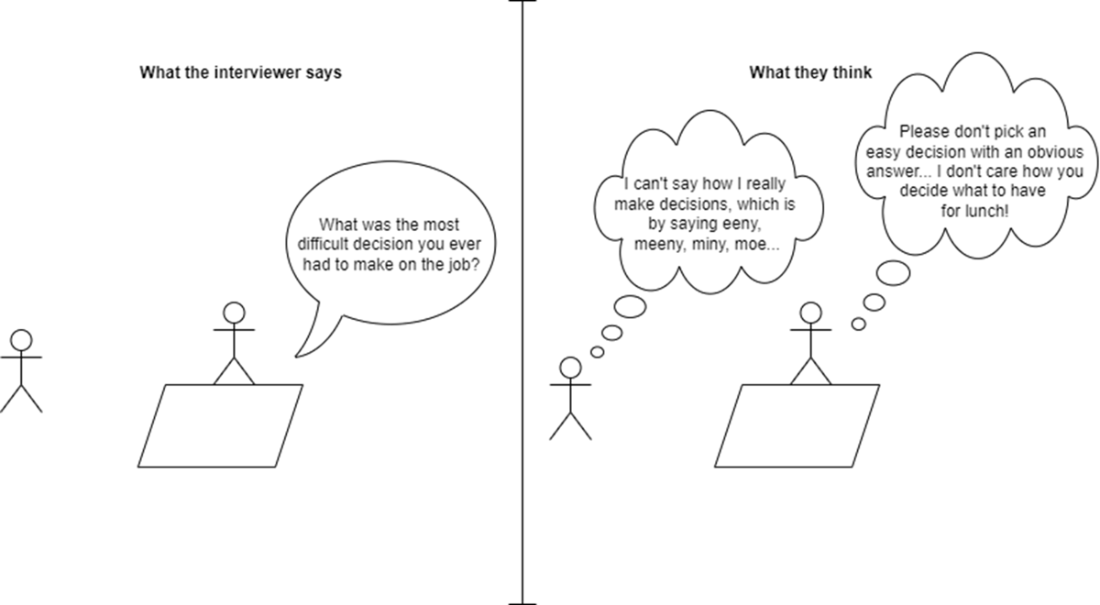
- Why it was difficult (stakes, constraints, incomplete data, competing priorities).
- Your analysis (cost/benefit, risks, ethics/compliance, stakeholder input).
- Decision and rationale (trade-offs you accepted and why).
- Implementation (communication, mitigation, follow-through).
- Results (concrete metrics and business impact). If discussing firing/layoffs, reflect both the human and business considerations and the outcome.How do I describe my decision-making process in a way that fits different company cultures?
Explain a repeatable approach:
- Define the problem, objectives, and success criteria.
- Gather inputs (data, SMEs, customers) and note constraints (time, budget, precedent).
- Generate options and evaluate trade-offs transparently.
- Engage stakeholders for alignment and surface risks.
- Decide, communicate the “why,” and set feedback loops.
- Measure and adapt based on results. Keep jargon light and emphasize collaboration and learning.How do I demonstrate strong time and project management when juggling multiple priorities?
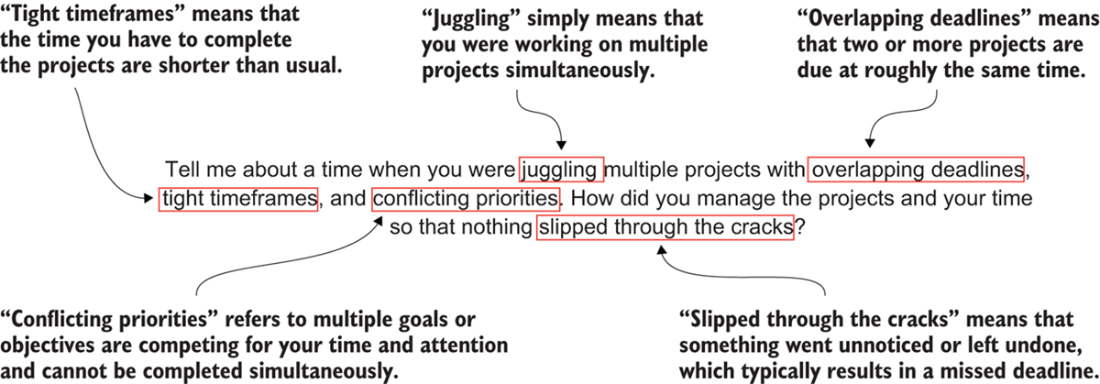
Paint a credible scenario and show your system:
- Tools: Calendar blocks, Kanban/boards, PM software, dashboards, or simple lists.
- Method: Break down work, sequence dependencies, and buffer for risk.
- Prioritization: Differentiate urgent vs. important; confirm priorities with your manager.
- Communication: Align stakeholders on scope/deadlines and renegotiate when needed.
- Results: On-time delivery rates, quality metrics, and examples of risks avoided.How should I handle scope changes and shifting expectations in a project example?
Demonstrate proactive control:
- Clarify the impact of scope changes on time, budget, quality, and resources.
- Communicate trade-offs and gain the right approvals.
- Negotiate priorities, phase features, or adjust timelines/budgets.
- Maintain stakeholder visibility with regular updates.
- Deliver and quantify outcomes (e.g., adoption, cycle-time reduction, NPS, revenue).What makes a strong negotiation example (especially when costs are critical)?
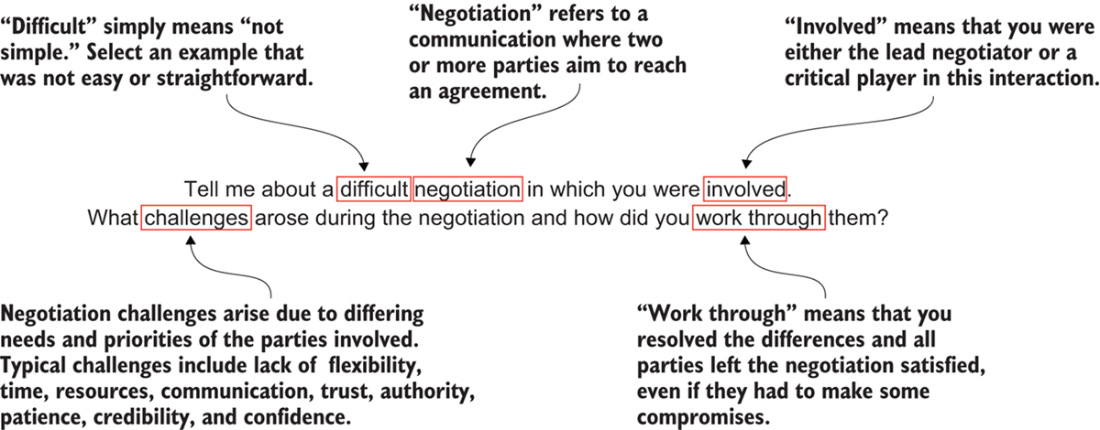
Show you can reach win-win outcomes:
- Your role (lead/sole negotiator) and what was at stake.
- Challenges (budget constraints, timelines, competing interests).
- Discovery: How you uncovered the other party’s true priorities.
- Strategy: Value over price, creative concessions, and package options.
- Agreement: The final deal and why both sides accepted it.
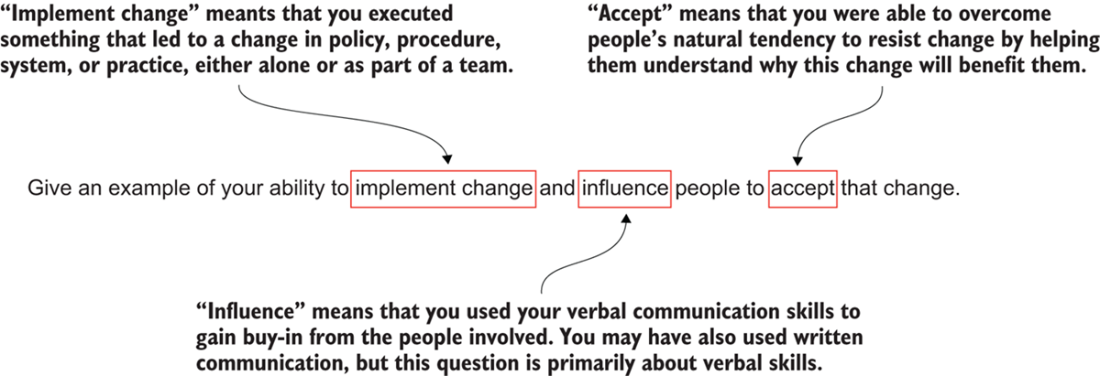
- Impact: Quantified savings/revenue, margin, retention, or expansion.How do I prove I can implement change and get others to adopt it?
Highlight influence, not authority:
- Problem/opportunity and approval path.
- Stakeholder mapping: who might resist and why.
- Engagement: Listen, address “what’s in it for me,” training/support, and early wins.
- Implementation: Phasing, communications, and feedback loops.
- Outcomes: Adoption rates, efficiency/quality gains, customer impact, and anecdotes from former resisters.How do I show success amid frequent, unexpected changes?
Demonstrate agility with discipline:
- Mindset: You thrive in change and stay solution-focused.
- Tactics: Rapid re-prioritization, timeboxing, clear checkpoints, and risk triage.
- Communication: Quick alignment with leaders/teams and resetting expectations.
- Team leadership (if applicable): Clarity of goals, calm cadence, and support.
- Results: Hitting critical milestones, protecting quality/safety/compliance, and lessons that improved future response.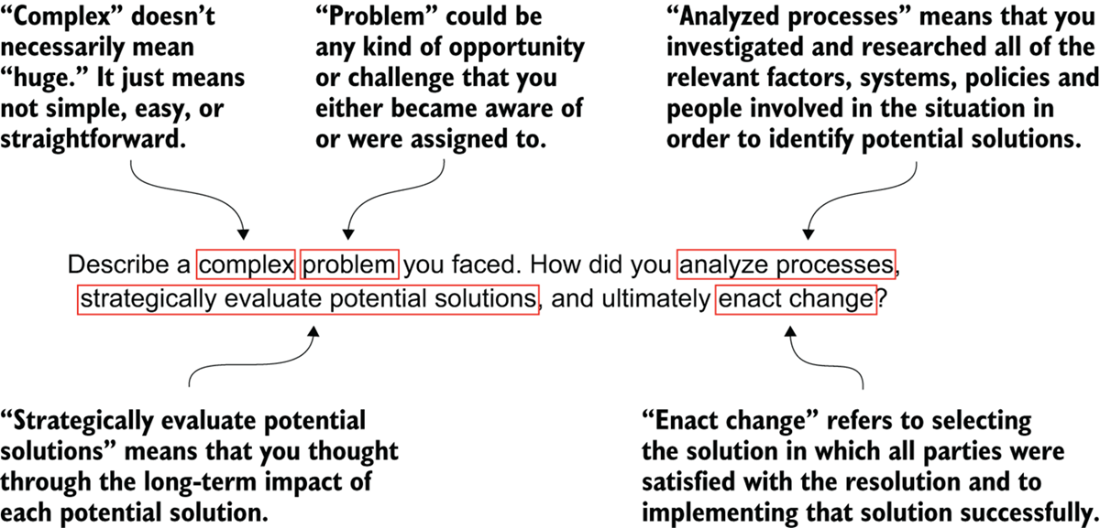

 Interview Speak ebook for free
