2 Common questions and special situations
This chapter explains why initial interviews rely on a core set of questions used across industries and levels, and it shows how to prepare authentic, concise answers that move you to the next round. Instead of memorizing canned lines, you’re encouraged to tailor responses that highlight relevant skills, experiences, and motivation for the specific role and company. The authors provide “translations” of what interviewers are really asking, practical “how to answer” guidance, and illustrative examples—both strong and weak—so you can learn to convert good answers into great ones.
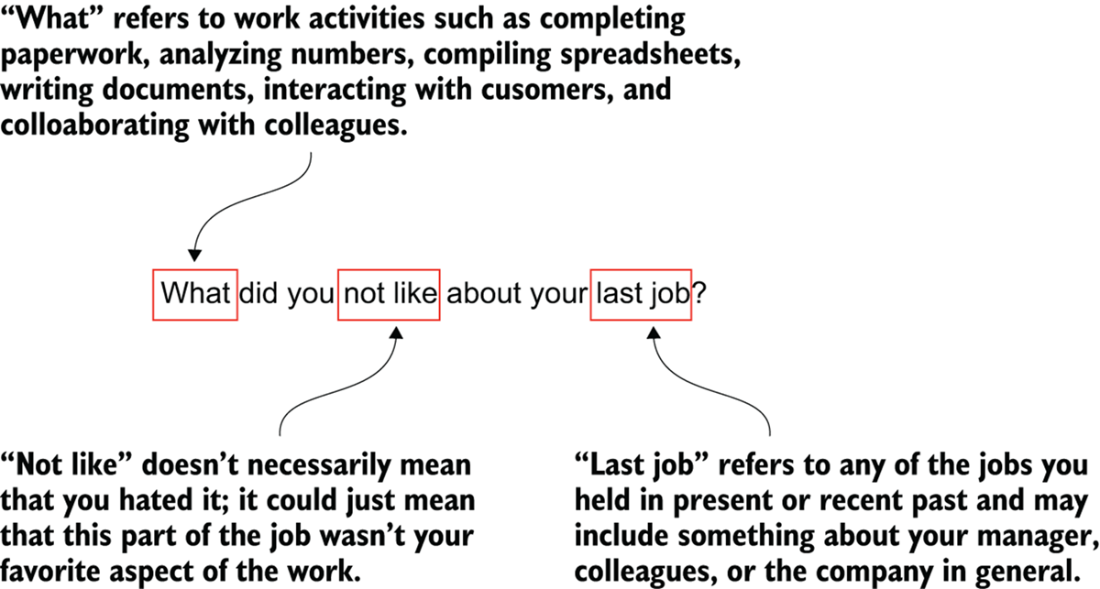
Core topics include handling “Tell me about yourself” as a 30–60 second, targeted pitch; addressing the “exit” question with a “negative sandwich” (positive context, brief business reason, positive forward focus); and aligning what you want next with the job’s responsibilities. You learn how to navigate salary conversations (seek their range first, offer a researched range if pressed), demonstrate genuine interest in the company and role, and show you’ve done real homework. The chapter covers strengths (pair each with a brief example) and weaknesses (avoid clichés; show self-awareness and improvement), what you liked and liked less in your last job, why you should be hired (your unique combination of qualifications), and how to ask high-value questions that reveal priorities, success metrics, and team challenges while avoiding “what’s in it for me” topics until after an offer. Throughout, examples from Ari and Lucas model effective structure and specificity, while “Clueless Clark” illustrates common missteps like arrogance, vague claims, and lack of evidence.
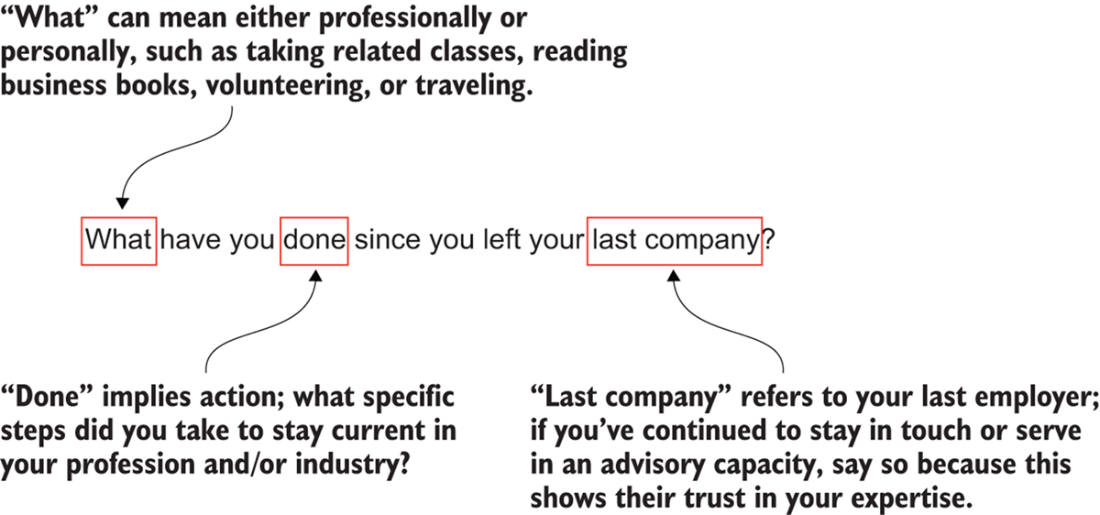
The chapter also prepares you for special situations that trigger interviewer concerns and shows how to address them head-on. If unemployed, demonstrate productivity and currency (projects, learning, consulting, or volunteer work) and readiness to contribute immediately. If you have frequent moves, briefly explain neutral business reasons and affirm long-term intent; if you’ve been at one employer a long time, show adaptability and quick ramp-up through past change. When changing industries, connect shared challenges and give examples of solving analogous problems; when applying for a lower-level role, sell the fit by emphasizing the core activities you both excel at and enjoy, and why this is the right role now. The chapter closes with prompts to practice your answers, quantify results where possible, and proactively prepare explanations for any special circumstances.
Key takeaways
The key takeaways from this chapter are:
- To get to know applicants, most interviewers ask some common questions. They include questions like, “Tell me about yourself”, “Why are you in the job market?”, and “Why are you interested in this job?”.
- The goal of the interviewers is to get to know you and see if you meet their basic qualifications so they can decide whether to move you to the next round of interviews. They are also listening for any potential “red flags” that may come up.
- It’s important for you to be prepared to answer these common questions. For each question, we provide a translation of the meaning behind the question as well as suggestions for what to include and not include in your answers.
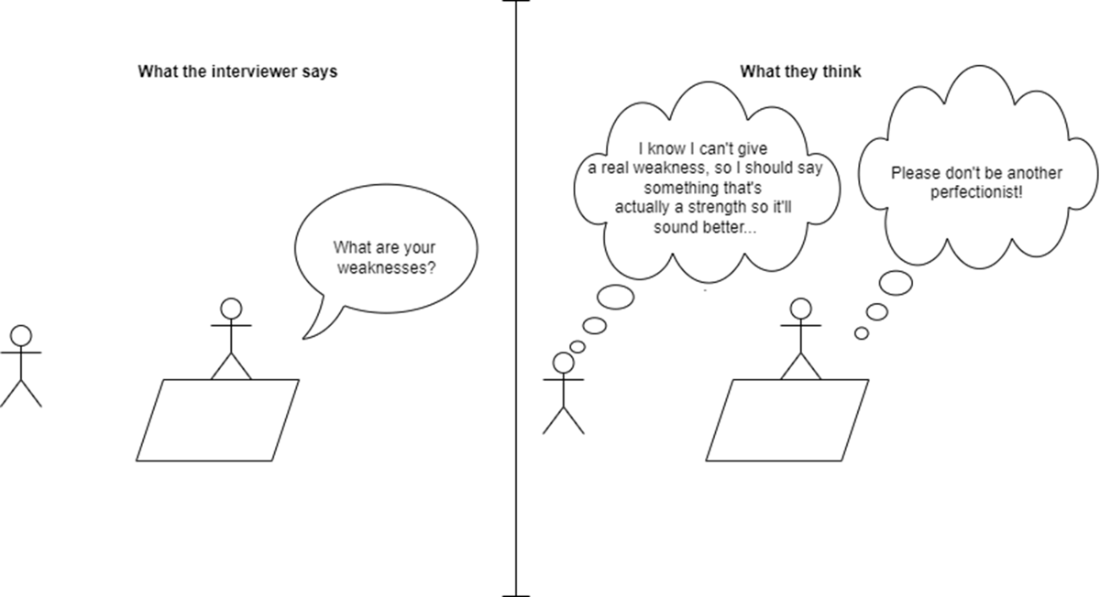
- One of the most difficult common questions is about your strengths and weaknesses. This is an area where a lot of people make a mistake by trying to disguise a strength as a weakness. For example, someone may say that they are a perfectionist. The problem is that interviewers have heard this answer plenty of times before and see that as BS. Instead, they want an honest answer.
- Your answers should address what the interviewers are really asking while also being true for you. They do not want to hear typical BS answers and will view them negatively.
- Interviewers are looking for confirmation that you are a good fit for the job and are likely to stay for a while. They don’t want to have to try to fill the position again in a few months.
- Some typical situations that interviewers watch for include applicants who have changed jobs frequently, stayed a long time at one job or company, worked in a different industry, are unemployed, or have applied for an obviously lower-level position.
- If any of the special situations discussed in this chapter apply to you, it’s important for you to understand the interviewer’s concerns and clearly address them. If not, it may be difficult to advance to the next round of interviews.
FAQ
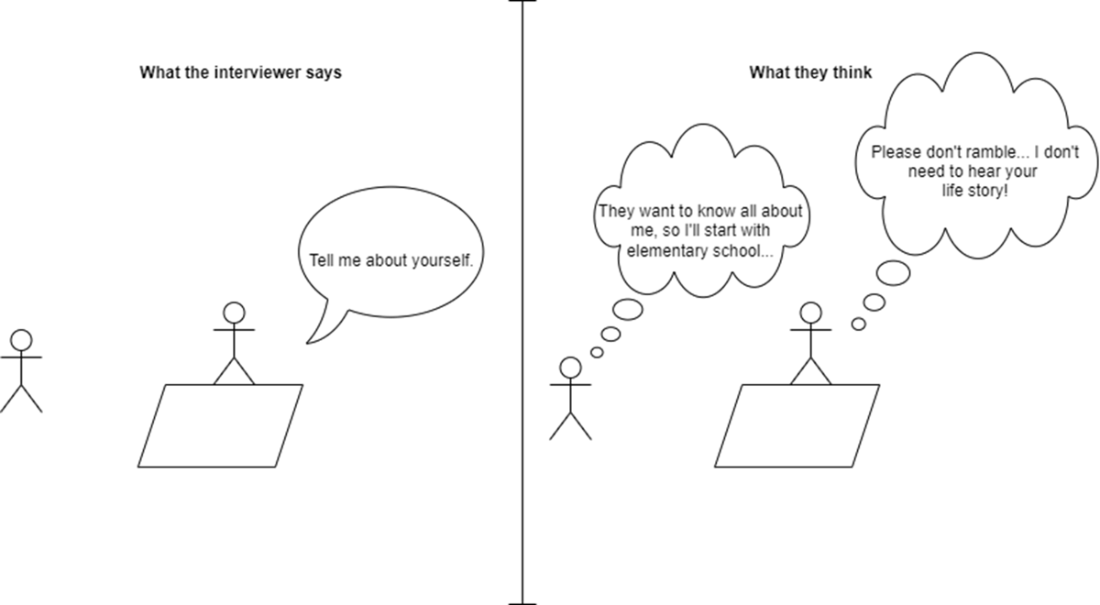
Why do interviewers ask “Tell me about yourself,” and how should I answer it?
Keep it to 30–60 seconds. This is your chance to guide first impressions and point them to your fit.
- Start with gratitude and a brief rapport point.
- Name 2–3 skills that map directly to the job.
- Share 1–2 relevant accomplishments with outcomes.
- Close with why this company/role excites you.
Avoid rambling, life stories, or reciting your resume.
How do I answer “Why are you looking for a new job?” or “Why did you leave your last job?”
Use the negative sandwich: positive → business reason → positive.
- Positive: Something you valued about the role/team/company.
- Reason: Brief, factual business reason (reorg, limited growth, M&A, budget cuts, etc.).
- Positive: What you want next and why this role/company fits.
Stay neutral, avoid blame, and sound confident and prepared.
What should I say when asked “What are you looking for next?”
Align directly with their job description.
- Mention key activities you want that match their posting (a, b, c).
- Highlight skills you’ll use that they need (x, y, z).
- Keep titles flexible; focus on work you’ll do and impact you’ll make.
Don’t frame this job as a short-term stepping stone.
How do I respond to “What do you not want to do?”
Choose tasks not central to this role and keep it professional.
- Point to duties outside this function/industry (e.g., direct sales if you’re in Finance).
- Reinforce that you still deliver 100% when needed.
- Pivot back to what you do best and what this job emphasizes.
What’s the best way to answer “What kind of salary are you looking for?”
- First, ask for their range if it wasn’t shared: “What range is budgeted for this role?”
- If pressed, give a researched range with a caveat: “Depending on the full package, based on similar roles I’ve seen, X–Y is fair.”
- Confirm alignment if their stated range works for you.
Avoid “commensurate with experience.” Aim to pass the screen and keep momentum.
How do I explain “Why are you interested in this job?”
Show the sweet spot: what you’re great at and love doing.
- Pick 2–3 core responsibilities and tie them to past wins.
- State why those activities energize you.
- Express genuine enthusiasm for their mission/products/customers.
How should I answer “What do you know about our company?”
Demonstrate real homework and connect it to your fit.
- Mention recent news, products, markets, or strategy.
- Tie what you learned to how you can contribute.
- Show excitement and preparedness, not just a website skim.
How do I talk about my career goals without raising red flags?
- Avoid rigid titles/timelines.
- Focus on developing relevant skills (a, b, c, d) the role uses.
- Express interest in earning advancement at the right time through impact.
Signal growth mindset and realistic expectations.
What’s the right way to handle “What are your strengths and weaknesses?”
Strengths:
- Share 2–3 job-relevant strengths (hard and soft skills).
- Give brief examples with results.
Weaknesses:
- Be candid. Use the “negative sandwich.”
- Either a past weakness you improved, or a strength that can overplay—plus how you manage it.
- Avoid clichés (perfectionism, “work too hard,” work-life balance).
How do I answer “Why should we hire you?”
- Synthesize your top 3–5 qualifications most relevant to the role.
- Highlight your unique combination (e.g., “I bring a and b, plus c and d”).
- End with the impact you’ll deliver quickly in their context.

 Interview Speak ebook for free
