9 Architecting for the Cloud: Trading Pets for Cattle and Concrete for Code
The chapter introduces cloud architecture as a fundamental shift in how software is built, not just where it runs. It explains that public cloud systems are multi-tenant, shared environments where hardware is rented, not owned, so architects must think differently about reliability, scale, and cost. The key mindset change is to stop treating servers as precious, long-lived “pets” and instead treat them as disposable “cattle,” which means designing systems so any individual server can fail and be replaced without harming the application. That requires externalizing state, avoiding local file storage, and embracing the cloud’s temporary, elastic nature.
From there, the chapter walks through the cloud compute spectrum, showing the tradeoff between control and convenience. Virtual machines offer maximum control but impose the highest operational burden, while containers package applications in portable images that reduce environment problems and suit modern microservices. Platform services further reduce operational work by letting developers focus on code, but at the cost of flexibility and portability. Serverless goes even further by abstracting away infrastructure almost completely, but it demands strict statelessness, short execution times, and acceptance of cold starts; AI-as-a-service extends abstraction to logic itself, while introducing nondeterminism and the need for guardrails such as retrieval-augmented generation.
The chapter’s operational core is that cloud success depends on automation and immutability. Manual portal clicking and direct production edits create fragile snowflake systems, configuration drift, and costly outages, so infrastructure should be described declaratively as code, versioned, reviewed, and deployed through repeatable pipelines. Tools like Terraform are presented as the standard way to provision and reconcile cloud resources safely, with state files, remote state, and locking preventing duplication and team conflicts. Finally, the chapter argues for immutable infrastructure: instead of patching live servers, build new images, deploy replacements, switch traffic, and destroy the old ones. That approach improves predictability, rollback, security, and resilience, while helping teams avoid the financial and human risks of unmanaged cloud complexity.
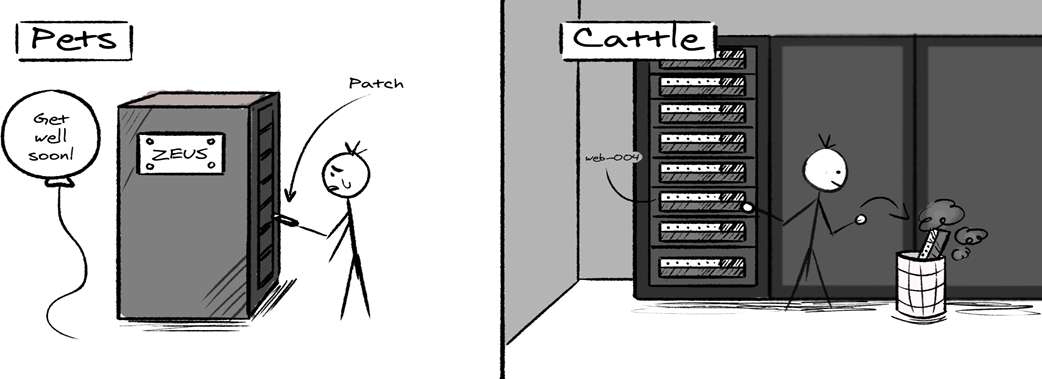
Stop naming them and start numbering them. In the cloud, servers are disposable tools, not family members.
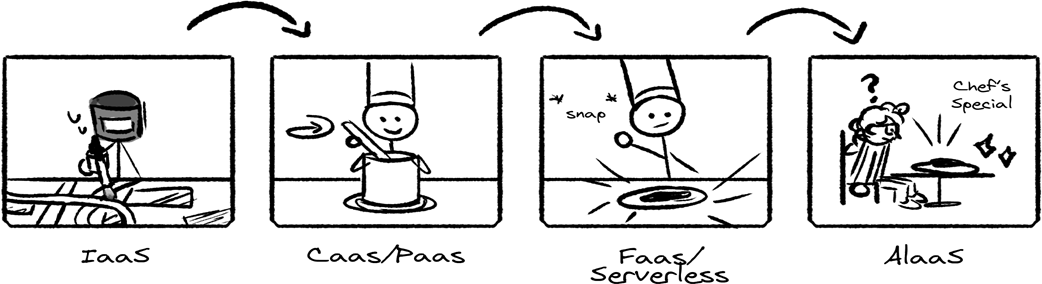
The Compute Spectrum: You are always trading the power to control the environment for the speed of convenience.
Always read the "Execution Plan." In the cloud, a single character change can be the difference between an update and a disaster.
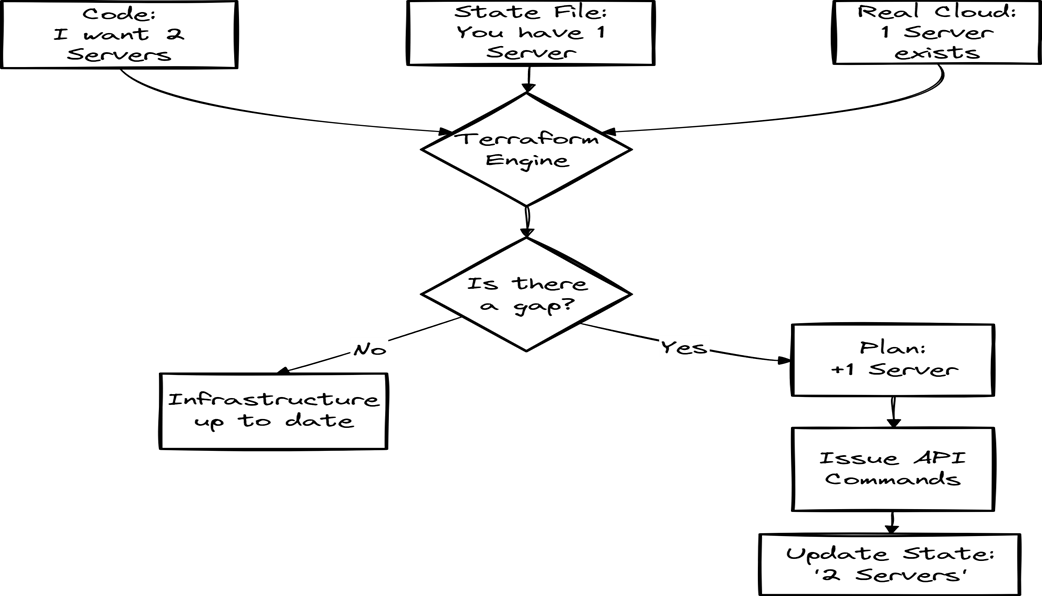
Terraform doesn't just "run scripts"; it reconciles reality with your text files!
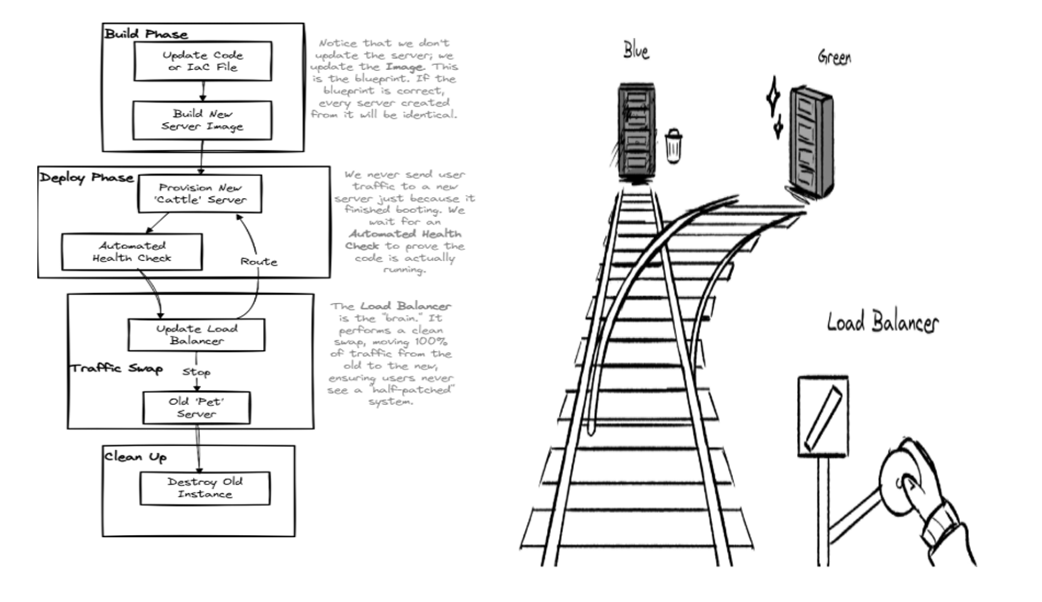
The Immutable Deployment Pipeline. Instead of patching live servers, we build a fresh Server Image from our code, deploy a new instance, automatically verify its health, seamlessly swap the user traffic at the Load Balancer, and finally destroy the old infrastructure.
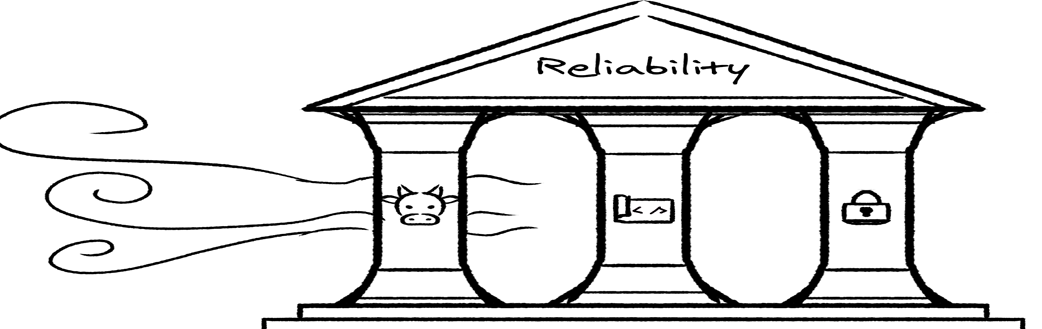
When you combine Cattle, IaC, and Immutability, you build a foundation that can survive almost any storm.
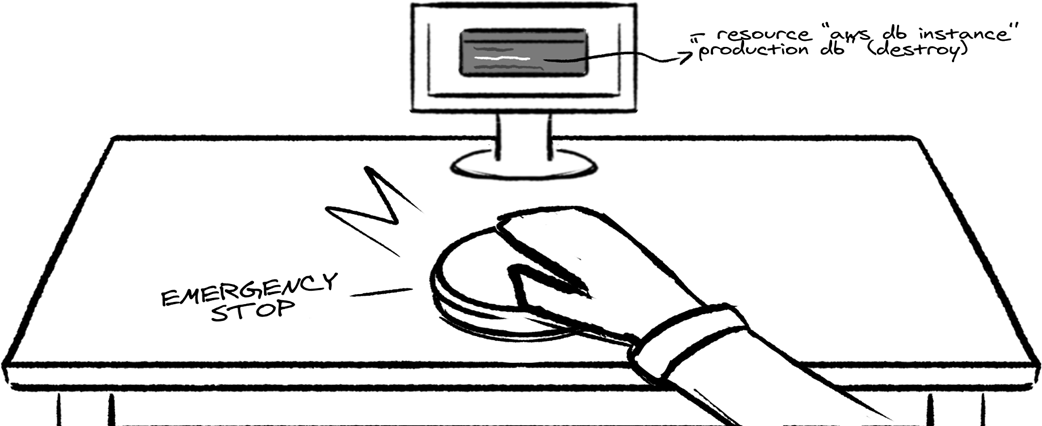
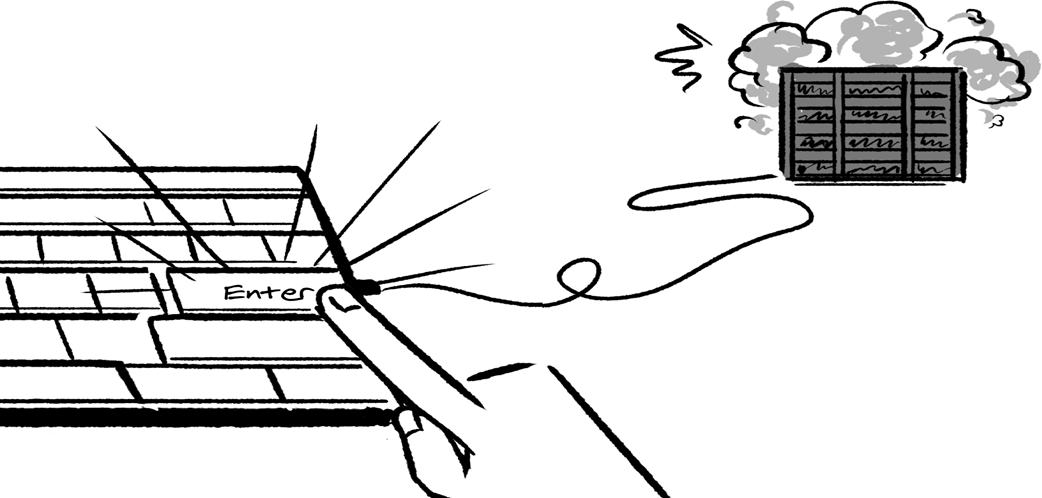
Friends don't let friends type in production. The 2017 AWS S3 outage proved that human fingers are the most dangerous part of any architecture.
Moving from a drawing to a declarative plan.
Recap
- From Pets to Cattle: Treat servers as identical, automated, and instantly replaceable ("Cattle"), rather than hand-crafted, delicate machines that you manually nurse back to health ("Pets").
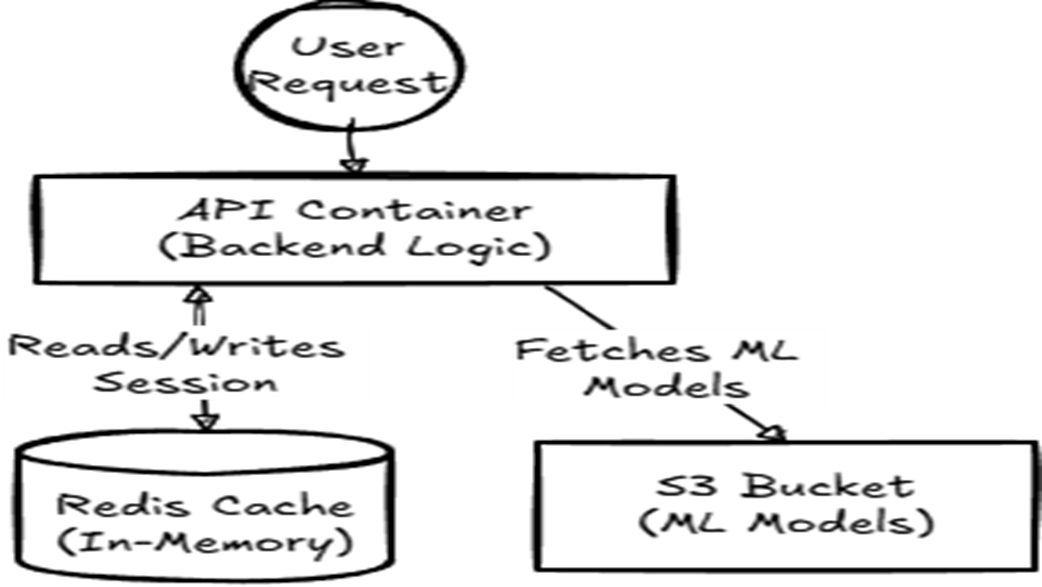
- The Price of Admission (Statelessness): To unlock the cloud's infinite scale, your applications must be stateless. They cannot store local session data or files; everything must be pushed to external databases or cloud storage so any server can process any request.
- The Compute Spectrum: Balance Control vs. Convenience. IaaS offers raw power but requires high maintenance; CaaS/PaaS handles the OS so you can focus purely on container Images and code; FaaS (Serverless) scales to zero but introduces constraints like time limits and Cold Starts; and AIaaS (AI as a Service) pushes abstraction to the absolute edge, letting the cloud handle complex machine learning models for you.
- The End of "ClickOps": Manual cloud configuration creates fragile, undocumented "Snowflake" servers. Infrastructure as Code (IaC) is a mandatory architectural requirement for predictable, version-controlled history and instantly recoverable environments.
- The IaC Engine (Terraform): Terraform is an industry-standard, open-source IaC tool. It serves as the execution engine that reads your configuration files, communicates with the cloud provider's API, and automatically provisions the infrastructure for you.
- Cloud Financial Management (FinOps): Moving to the cloud shifts your budget from a fixed capital expense to an ever-running "taxi meter." Treating the monthly bill as a primary architectural constraint is now a mandatory engineering discipline.
- Declarative Blueprints & State: IaC relies on declarative language (stating what you want) rather than on imperative scripts (stating how to build it). The engine uses a State File to remember what currently exists, allowing it to calculate and apply only the exact changes needed.
- Remote State & Locking: A local Terraform State File is a single point of failure and causes catastrophic collisions for teams. Professional IaC pipelines use secure remote cloud storage and State Locking to safely co-develop infrastructure.
- Immutable Infrastructure: Treat servers like constants (const). Never patch or tweak a live server. Instead, your CI pipeline must build a brand new, frozen "Image" as its deployable artifact. You deploy that new instance, route traffic to it, and destroy the old one
- Remove the Human Element: Humans make typos (as seen in the massive 2017 AWS S3 outage). Protect production by strictly enforcing automated IaC pipelines and revoking manual terminal access.
- Multi-Tenancy & The Noisy Neighbor: The cloud is a shared apartment building, not a private house. You share the underlying physical hardware with other companies, introducing unpredictable "Noisy Neighbor" latency that forces you to architect defensively.
FAQ
What does it mean to treat servers as “Pets” versus “Cattle” in the cloud?
Pets are servers you name, nurse, and manually repair because they feel unique and irreplaceable. Cattle are identical, numbered, disposable servers that can be terminated and recreated automatically. Cloud architecture prefers cattle because it supports resilience, scaling, and automation.
Why is statelessness considered the “price of admission” to the cloud?
Because cloud instances are disposable, your application cannot depend on local disk or server memory for important data. State must be moved to external systems like databases or object storage. Once an app is stateless, it becomes much easier to scale, replace, and recover from failures.
What is the Compute Spectrum in cloud architecture?
The Compute Spectrum describes the tradeoff between control and convenience across cloud options. On one end, IaaS gives maximum control. In the middle, Containers and PaaS reduce operational work. On the far right, Serverless and AIaaS give more convenience but less control.
When should I use Virtual Machines (IaaS) instead of higher-level services?
Use IaaS when you need OS-level control, special system dependencies, or a quick lift-and-shift of a legacy application that cannot easily be rewritten. It is also useful when compliance or legacy software requires a dedicated server-like environment.
What is the main advantage of using containers?
Containers package an application and its dependencies into a portable, consistent image. This makes deployments behave the same on a laptop, in testing, and in production. Containers are a strong choice for microservices, polyglot systems, and avoiding “works on my machine” problems.
What makes Serverless different from containers or virtual machines?
Serverless is not just another deployment option; it changes how you write code. Your function runs only when triggered, scales automatically, has strict time limits, and must remain stateless. It is ideal for spiky traffic, event-driven tasks, and background jobs.
Why is ClickOps considered dangerous in cloud environments?
ClickOps means creating infrastructure manually through cloud dashboards. It leads to Snowflake servers, configuration drift, poor repeatability, and mistakes that are hard to reproduce or audit. In the cloud, infrastructure should be defined as code, reviewed, versioned, and automated.
What is Infrastructure as Code (IaC) and why is it important?
IaC means provisioning and managing cloud resources using version-controlled text files. It replaces manual setup with declarative blueprints, making environments repeatable, reviewable, and recoverable. Tools like Terraform help enforce consistency and reduce production mistakes.
What is a Terraform State File and why does it matter?
The State File is Terraform’s record of what it has already built in the real world. Terraform compares your code, the state file, and the live cloud to decide what to create, change, or destroy. It prevents duplicate resources, but it must be protected because it can contain sensitive data.
Why should you never patch a live server directly?
Directly modifying a live server causes configuration drift and breaks the immutable infrastructure model. Instead, you should update the image or infrastructure code, build a fresh replacement, test it, shift traffic to it, and then destroy the old one. This approach makes rollbacks safer and avoids outages caused by human error.

 Grokking Software Architecture ebook for free
