6 Reliable API Design: Public Contracts and Synchronous Communication
At its core, the chapter reframes an API as more than a set of URLs: it is a public promise between a client and a server. The client asks, the server responds, and that interaction crosses a network boundary where latency, failures, and retries are unavoidable. Because of that, the architecture must be built around reliability, clear responsibilities, and a contract that is explicit enough for humans, machines, and increasingly AI agents to depend on.
The chapter contrasts REST and GraphQL as two different ways to honor that contract. REST emphasizes standardized resources, stateless requests, cacheability, and built-in reliability patterns such as idempotent verbs like GET, PUT, and DELETE. GraphQL trades that rigidity for precise querying and reduced over-fetching, but it shifts more responsibility onto the server and requires explicit measures like idempotency keys for safe retries. In both cases, the author stresses that the real design task is not picking a trendy technology, but making a defensible decision based on who consumes the API, what kind of performance is needed, and how much change the system must tolerate over time.
The chapter also warns that good-looking abstractions can hide serious operational problems. Controllers should remain thin translators, keeping business logic out of the transport layer, while versioning protects consumers from breaking changes when the contract evolves. Hidden dangers such as the N+1 query problem, API sprawl, and chained synchronous dependencies can undermine even a clean API if the underlying implementation is careless. The closing message is that reliable API design is about clarity, stability, and disciplined evolution: preserve the contract, document behavior accurately, and shape interfaces so they remain usable for both current clients and future ones.
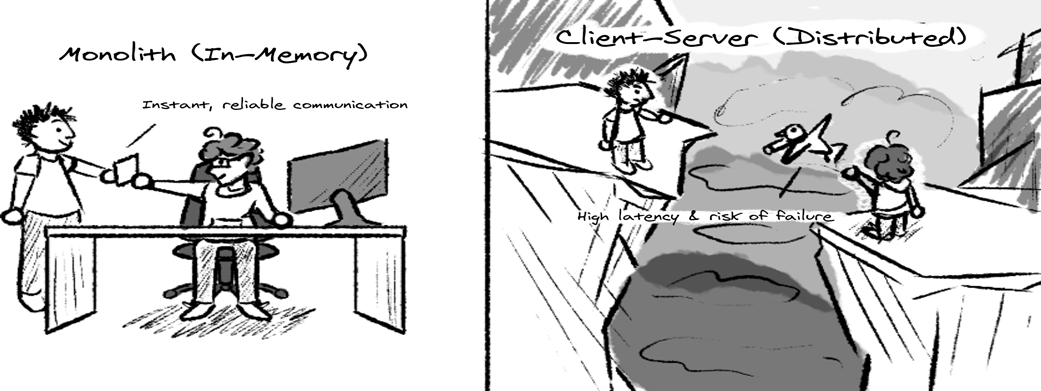
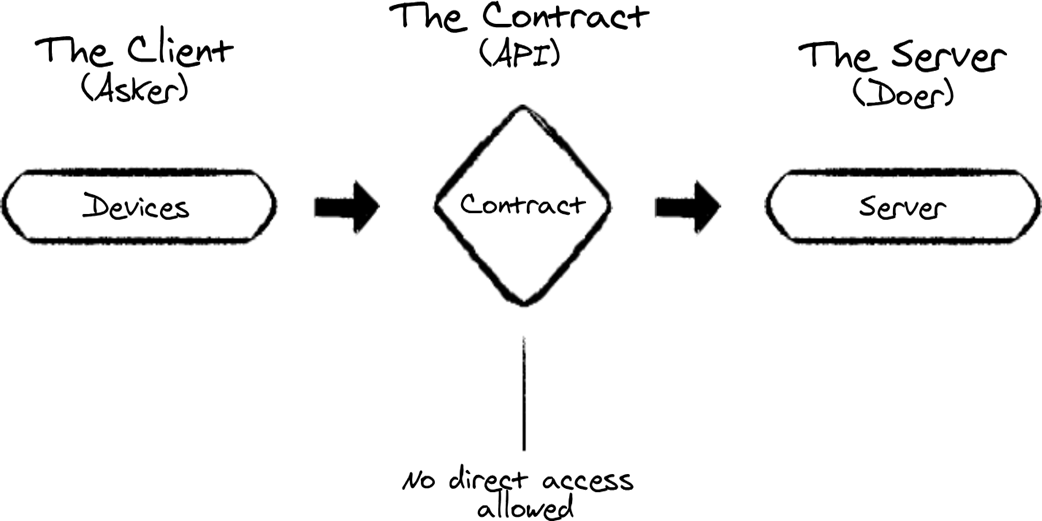
Crossing the boundary introduces latency, risk, and complexity.
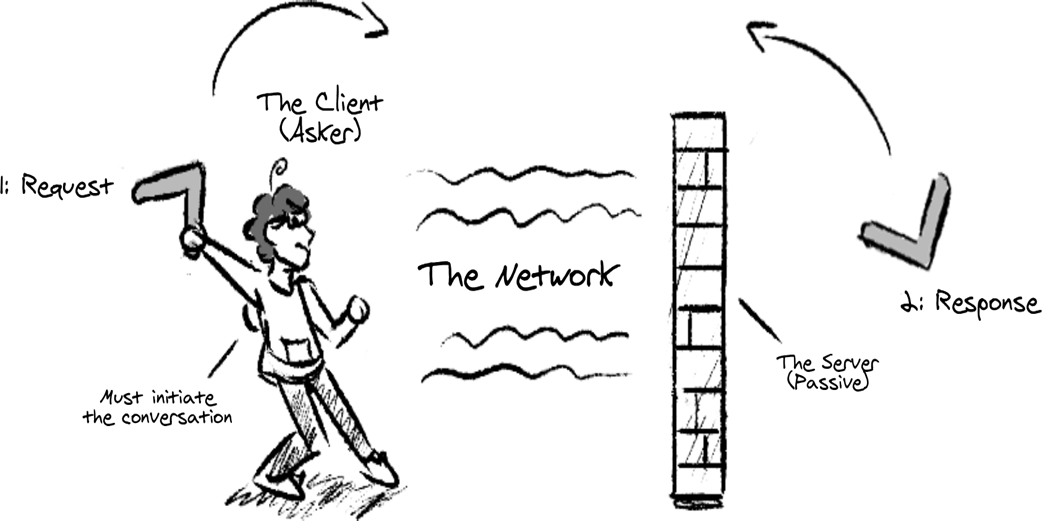
The Server never speaks first. The Client must always throw the boomerang.
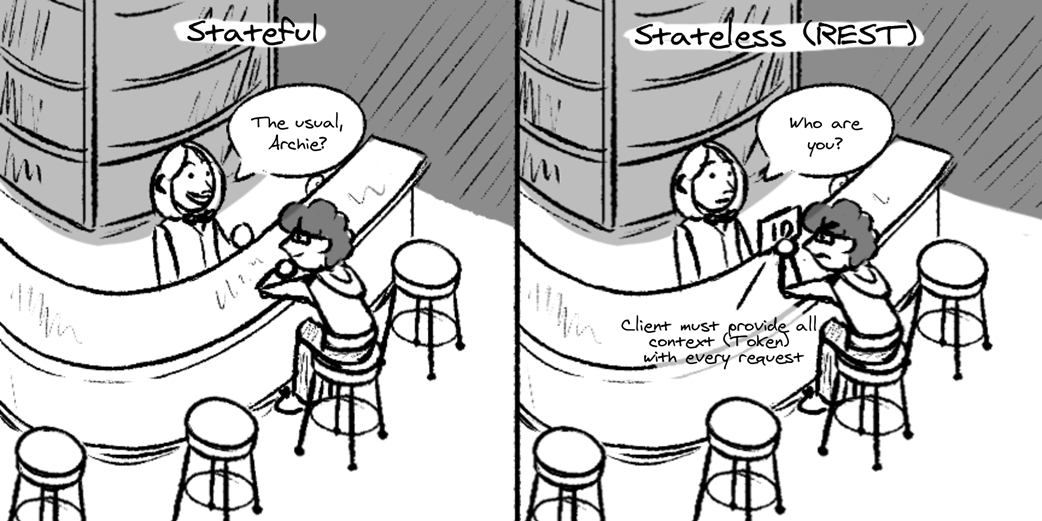
In a stateless architecture, you have to reintroduce yourself and provide all context with every single request.
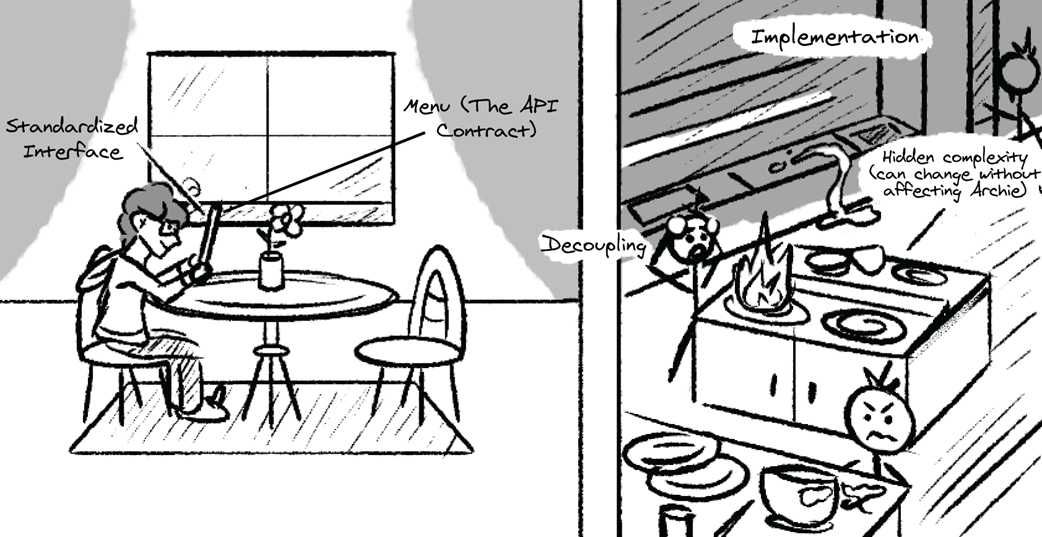
Decoupling: The Customer doesn't need to know how the kitchen works.
To successfully cross the Network Boundary, both the Client and Server must strictly adhere to the overarching Safety Clause (Idempotency) and the four operational elements of the exchange: the Endpoint, Headers, Request/Response Body, and Status Code.
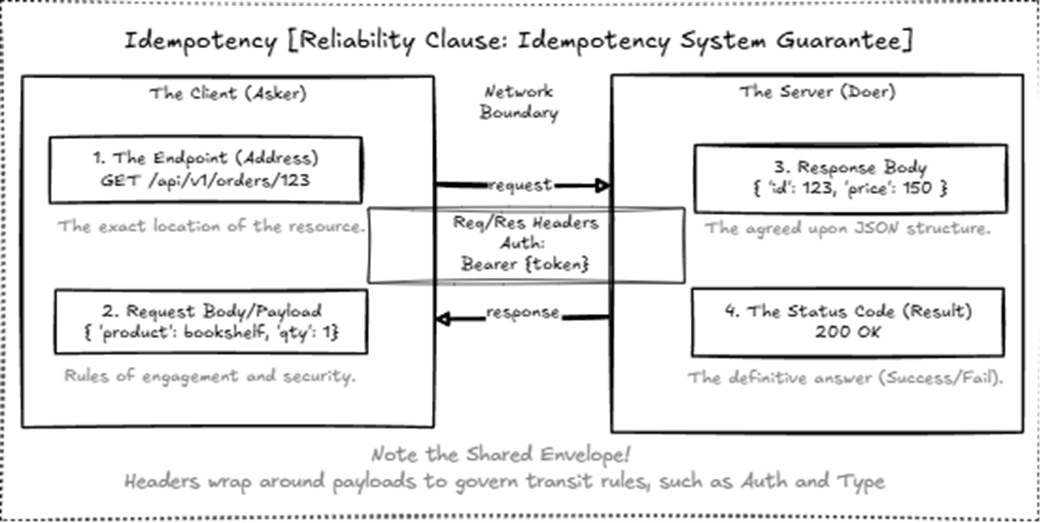
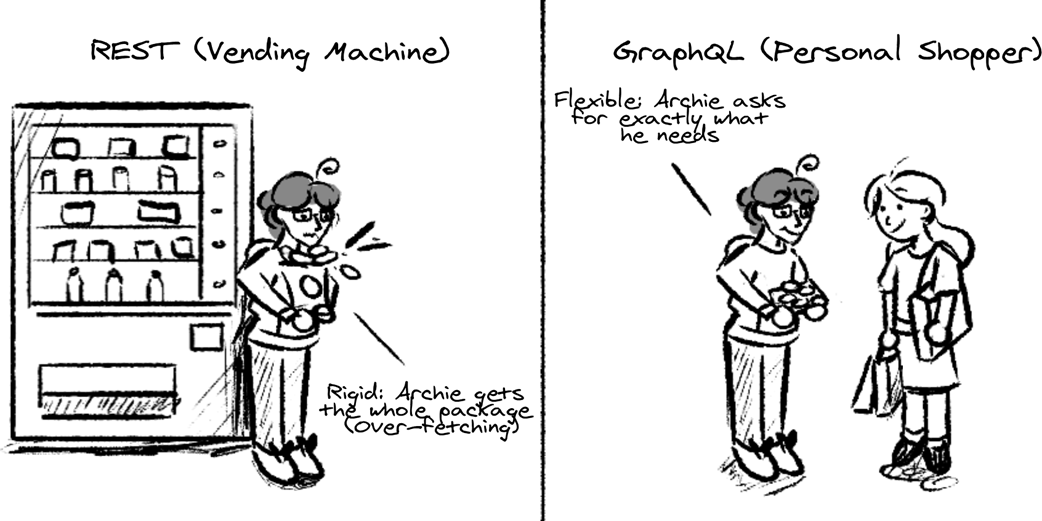
The REST Vending Machine vs. The GraphQL “Personal Shopper”.
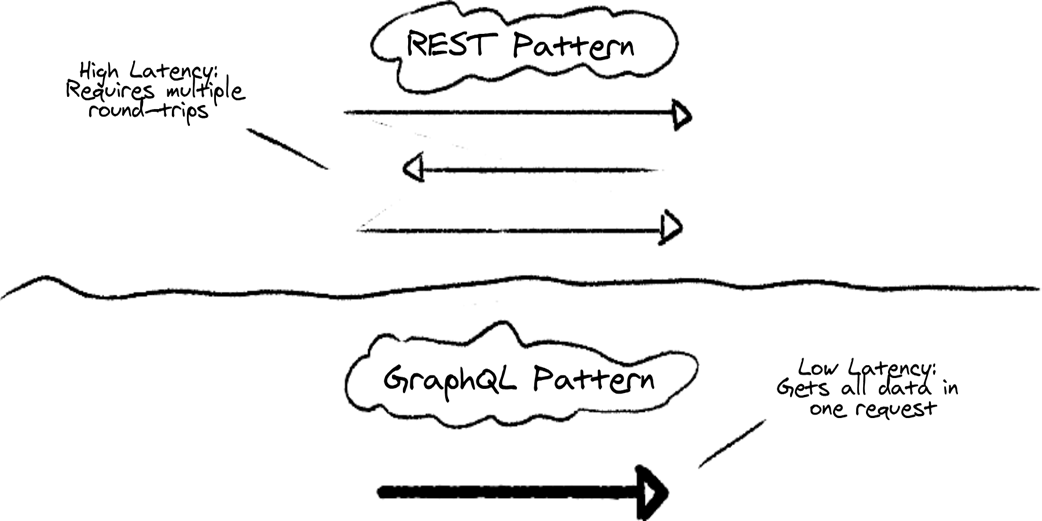
REST is far more “chatty”, needing multiple roundtrips, while GraphQL only needs a single roundtrip!
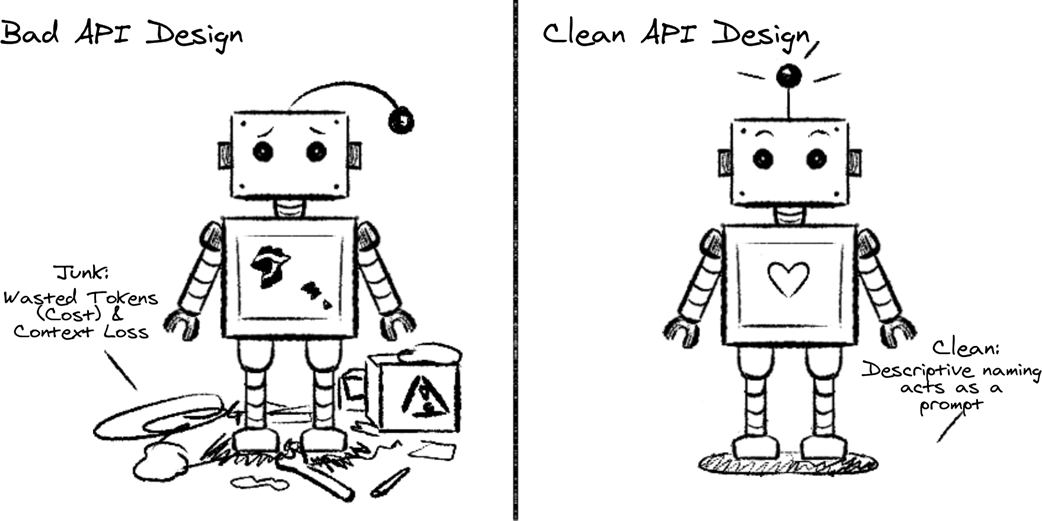
Designing clean API’s for AI is vital to allow them to work properly and not hallucinate!
The client and the server never touch directly; they use the contract as the middleman!
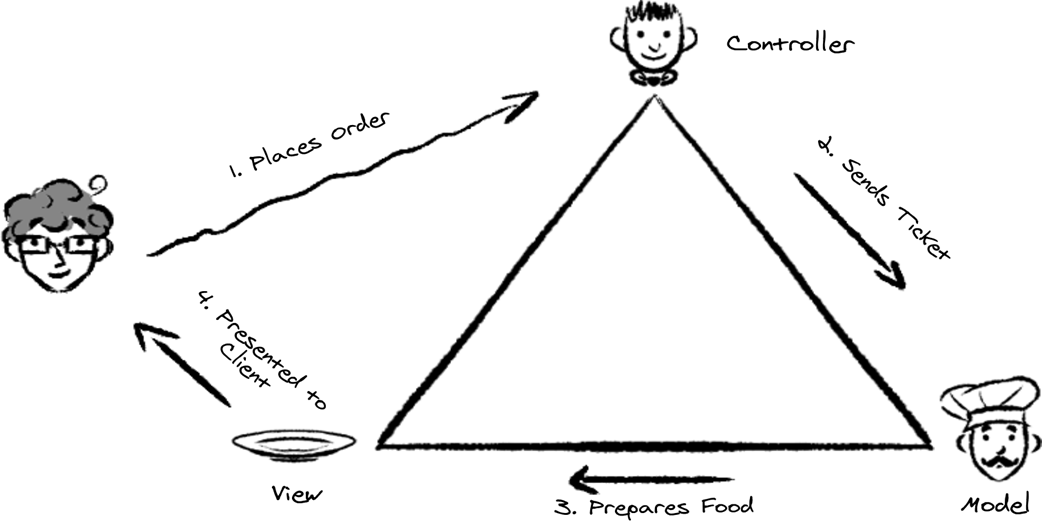
A visual of how the “MVC” Pattern works.
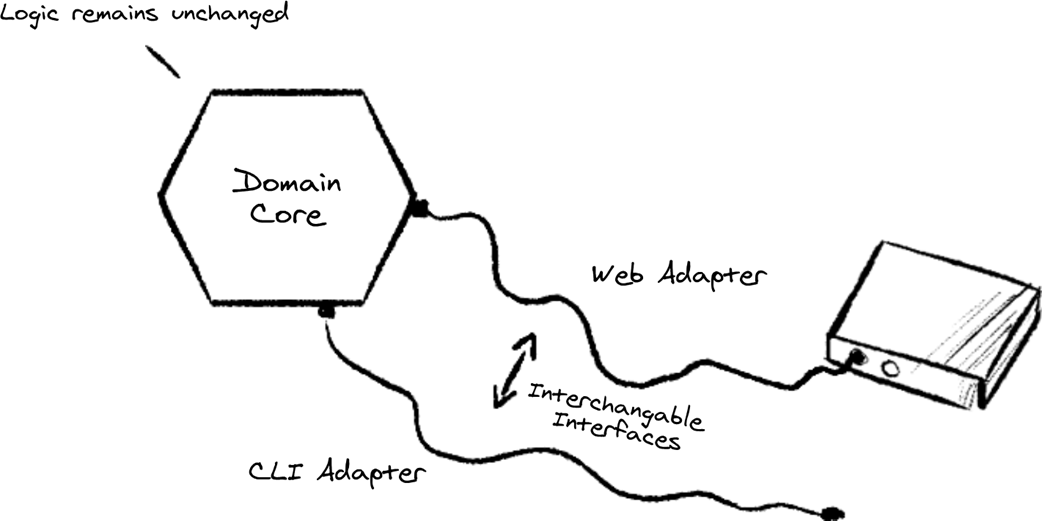
Swapping out a WebAdapter for a CLIAdapter is easy using Controllers!
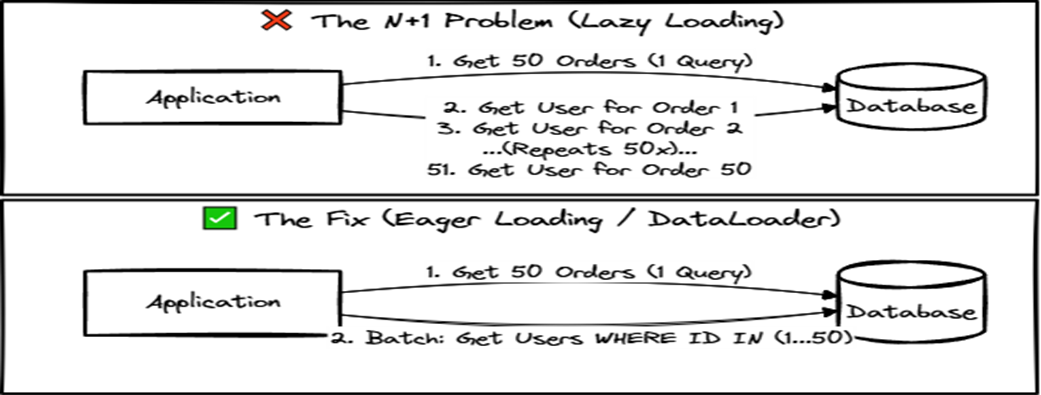
The N+1 Performance Trap: Fetching related child records inside a loop cripples your database with excessive network chatter. The architectural fix is to batch those requests into a single trip using Eager Loading or a DataLoader.
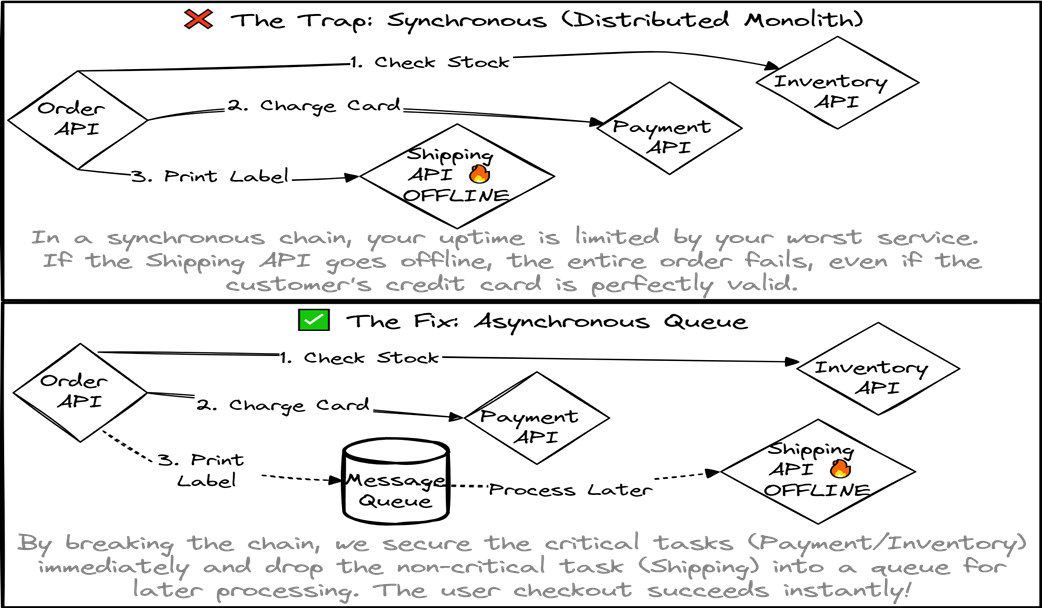
Avoiding the Distributed Monolith: Breaking a fragile synchronous chain with an asynchronous queue ensures critical tasks succeed even if non-critical services fail.
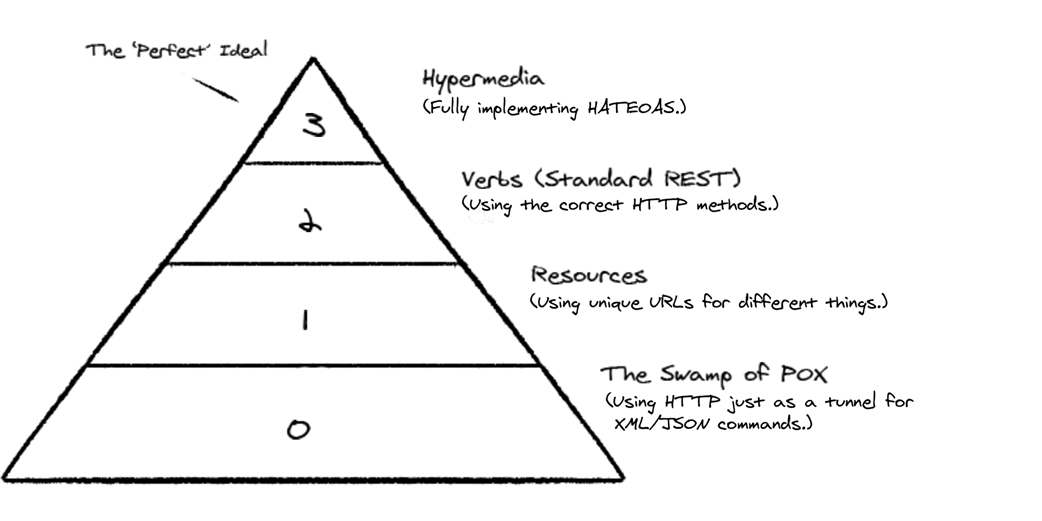
The Richardson Maturity Model. Transitioning from the "Swamp" of chaotic commands to the "Hypermedia" peak of self-discovery.
Recap
- The Client-Server Model splits the world into "Askers" (Presentation) and "Doers" (Logic/Data), separated by a Network Boundary.
- Communication vs. Flow: Don't let the technical handshake fool you. You can use Synchronous Communication (the API call) to trigger an Asynchronous Flow (background work). This is the key to preventing "Blocking Chains" where one slow service freezes your entire system.
- Statelessness means the server has "Amnesia": every request must contain all necessary context because the server forgets you immediately.
- Idempotency is the API's "Safety Switch." It guarantees that retrying the exact same request multiple times (due to network drops) will only change the system state once. REST handles this natively through specific verbs (like PUT and DELETE), while GraphQL requires developers to manually design an Idempotency Key into their mutations to prevent duplicate actions.
- An API is a binding Public Contract. Changing it breaks your consumers, so design it with care and support it with versioning.
- The Four Pillars of REST that make the web scalable are: Client-Server separation, Statelessness, Cacheability, and a Uniform Interface.
- REST is the standard for simple, cacheable, resource-based APIs (The Vending Machine).
- GraphQL is for complex, flexible querying where bandwidth is at a premium (The Personal Shopper).
- API Design Tips: To build an AI-ready API, prioritize Granularity (to save tokens), Descriptive Naming (to act as system prompts), and Strict Versioning (to honor the contract).
- The Controller is a Translator, not a Decision Maker. It protects the core by handling the dirty work of HTTP.
- AI Agents consume APIs as humans do, but rely heavily on clear context and descriptive naming.
- Roy Fielding defined REST in 2000 to describe the architecture that makes the World Wide Web work.

 Grokking Software Architecture ebook for free
