2 The Architect's Toolkit: A Guide to Defensible Decisions
This chapter frames software architecture as a discipline of making clear, defensible choices rather than searching for a mythical perfect design. It introduces the architect’s toolkit: a shared vocabulary for quality, a way to surface real-world constraints, a visual method for exposing priorities, and a lightweight record for capturing decisions. The central message is that good architecture is not about eliminating pain, but about choosing the right pain intentionally and explaining it well to the team.
The chapter emphasizes the “-ilities” as the language of quality: reliability, maintainability, scalability, performance, security, testability, observability, and related concerns like usability and resilience. These qualities are never free, so architects must ask which ones matter most for the current problem and which ones can be deferred. Through examples such as simplifying messy code, improving testability with dependency injection, and boosting performance with caching, the text shows how small design choices directly affect long-term maintainability, flexibility, and user experience.
It also stresses that decisions are bounded by constraints such as time, people, money, technology, and risk, all of which define what is actually feasible. To make decisions durable, the chapter recommends documenting significant choices in an Architecture Decision Record, including context, options, tradeoffs, risks, and review triggers. It concludes by showing how the Tradeoff Triangle and the CAP Theorem help make impossible choices visible, reinforcing the idea that architecture is about balancing competing priorities, communicating them clearly, and leaving a record future developers can trust.
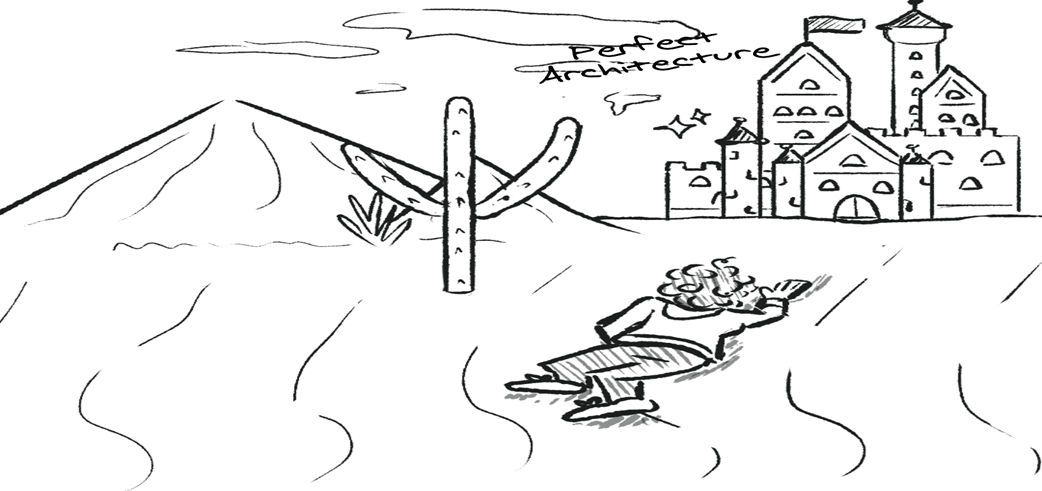
Archie sees the mirage of perfect architecture in the distance. He desperately tries to crawl towards it, not realizing it’s a figment of his imagination.
Campaigning for your ideas and explaining why is an important part of an architect's role.

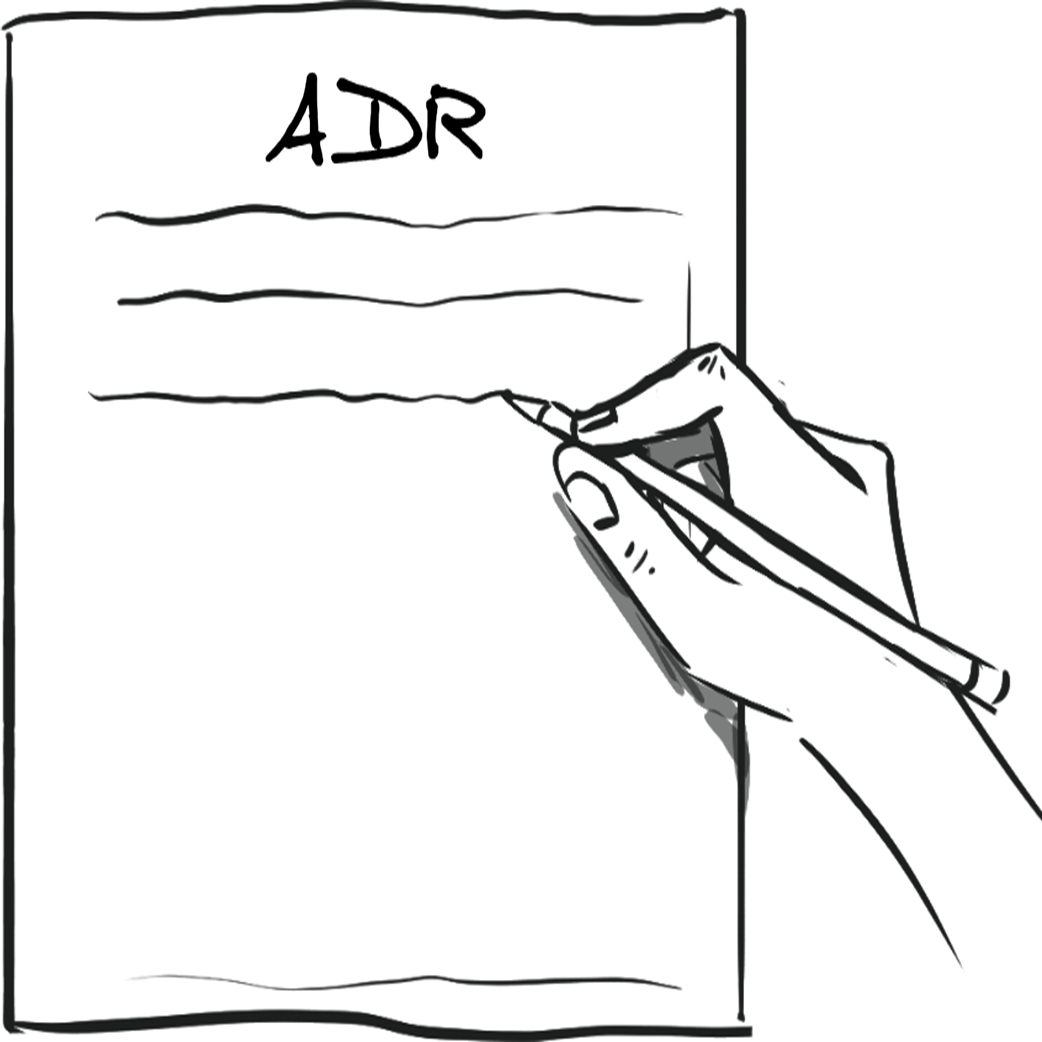
Documenting decisions is a necessary role of an architect.
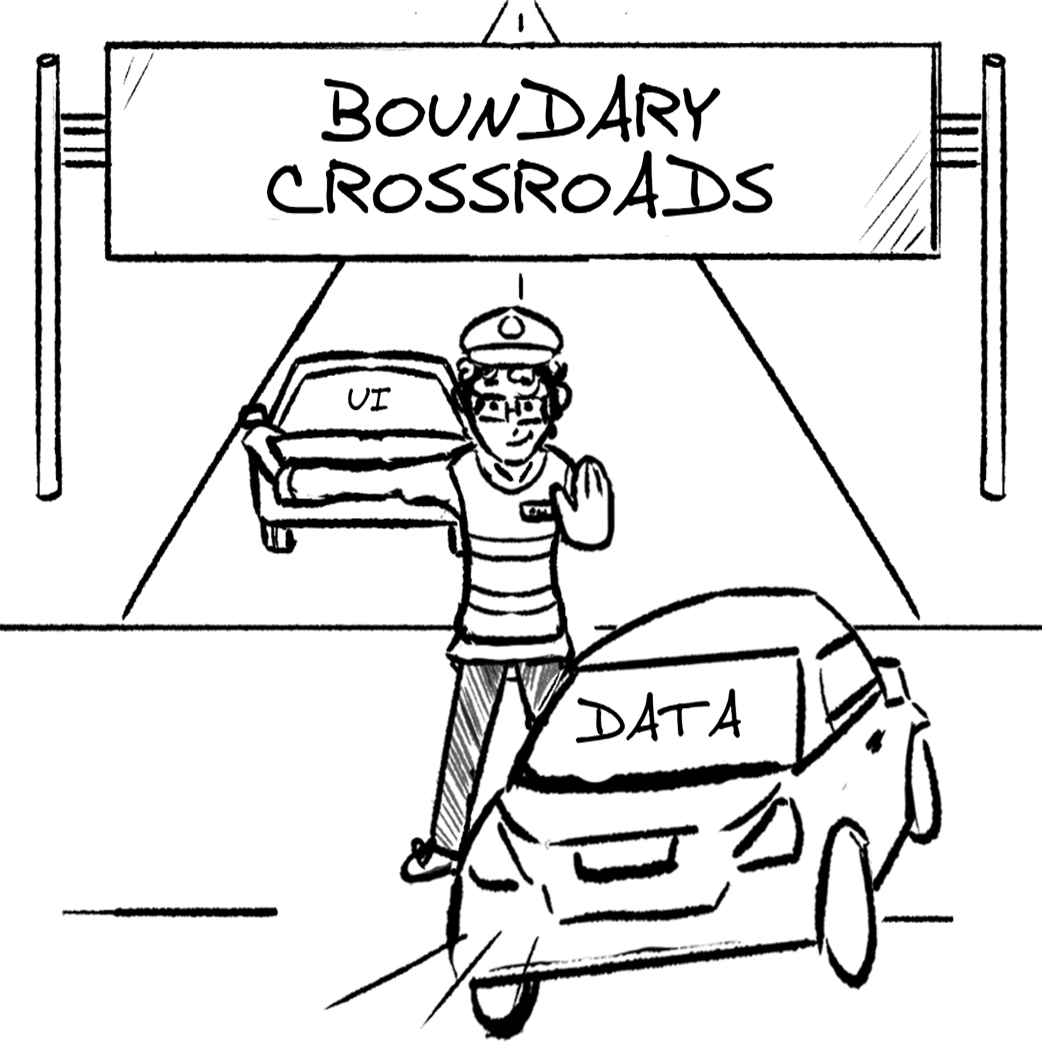
Archie, in his role as the Boundary Keeper to determine what to allow in and what to keep out, is a key role for any architect.
A Risk Scout helps identify problems before they become major ones.
The ‘-ilities’ introducing themselves to each other so they can build quality together.

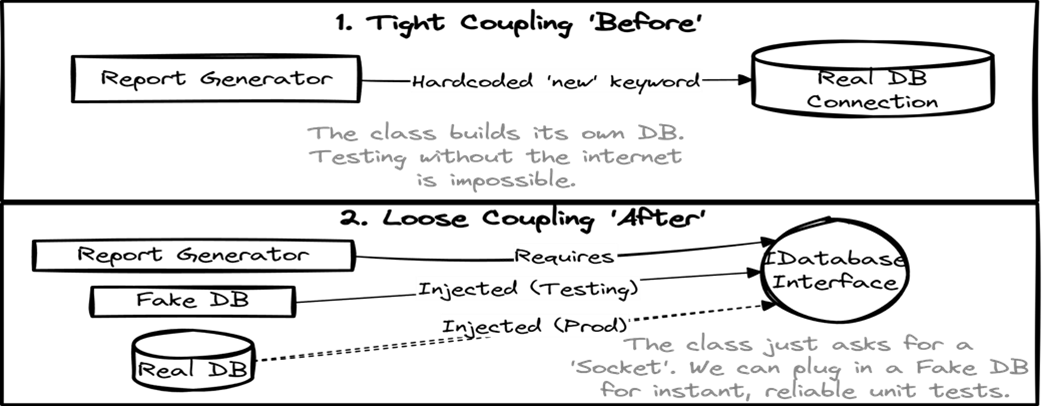
Loose coupling replaces hardcoded connections with a flexible "Socket" (Interface). This allows the Report Generator to stay stable while you swap in a Fake DB for fast testing or a Real DB for production without changing the core code.
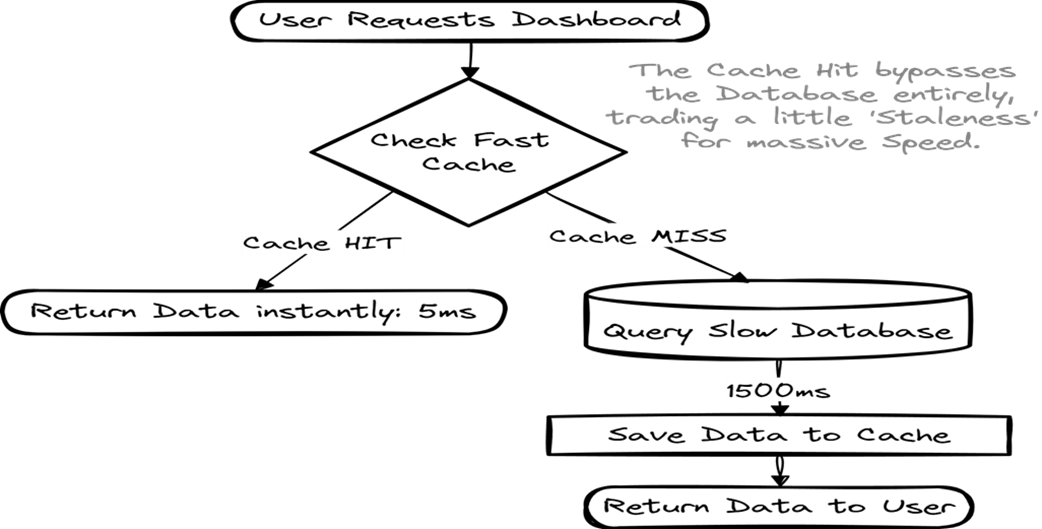
By checking a fast cache first, the system avoids expensive database queries. A Cache Miss creates a temporary delay to fetch and save data, but each subsequent request becomes nearly instantaneous.
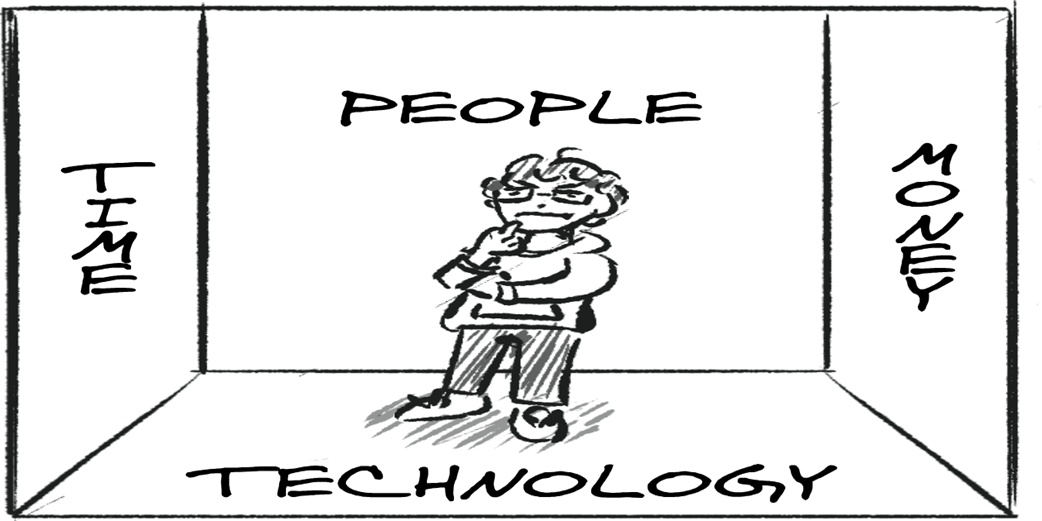
Constraints force you to think before you act.
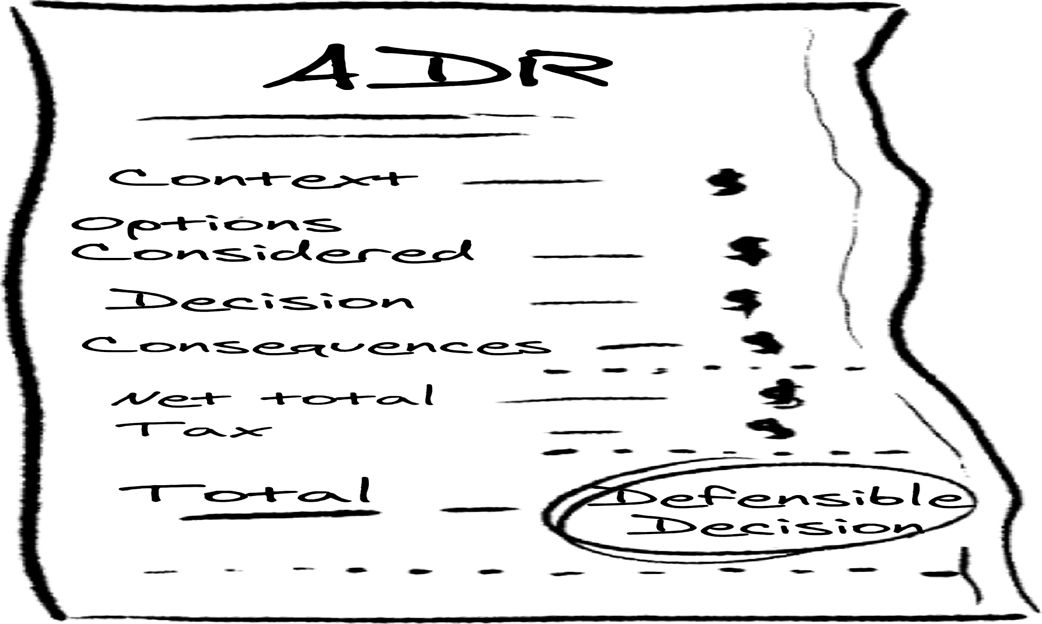
An ADR documents key decisions so the team can reference them later to understand why a decision was made.
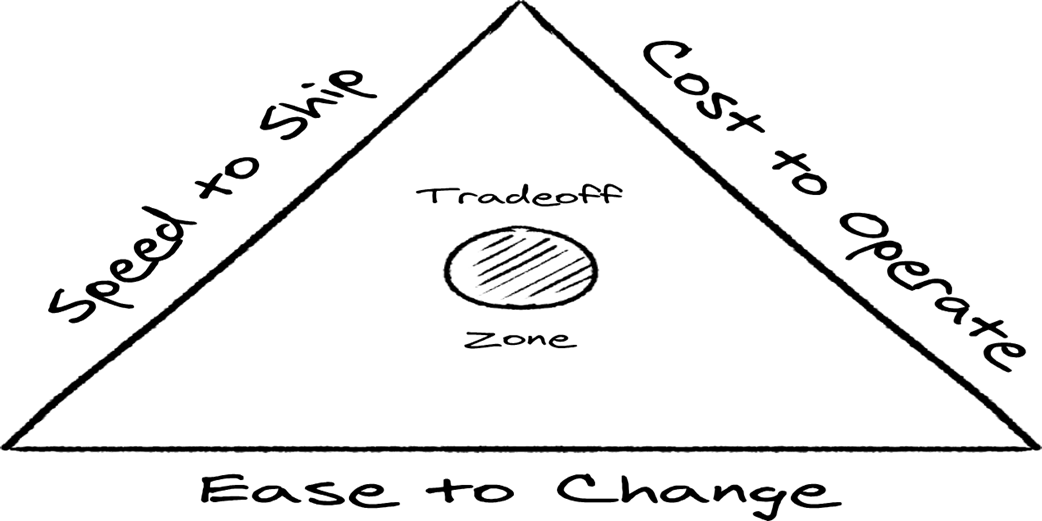
The Tradeoff Triangle allows you to visualize priorities quickly.
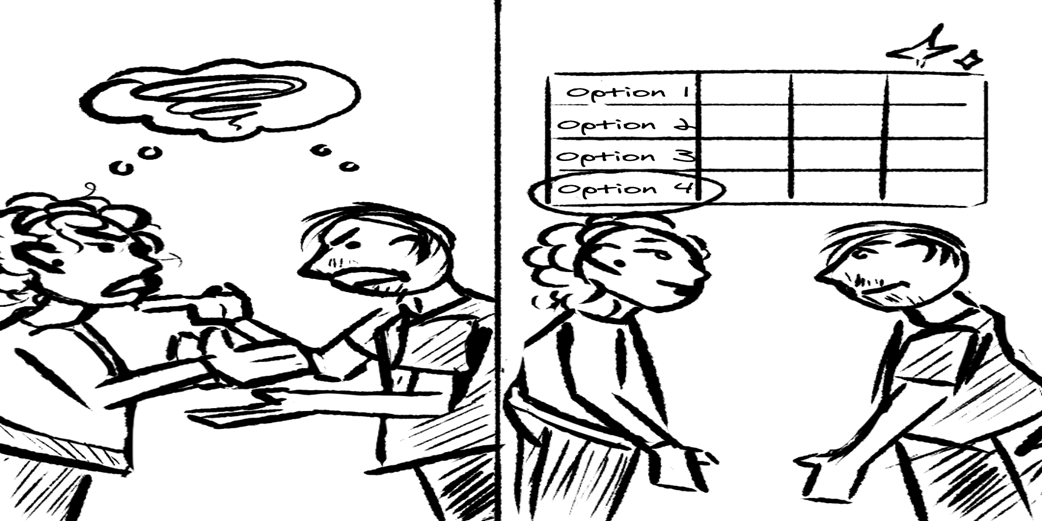
Weighted Decision Models help make defensible decisions that make sense long after the original problem was forgotten.
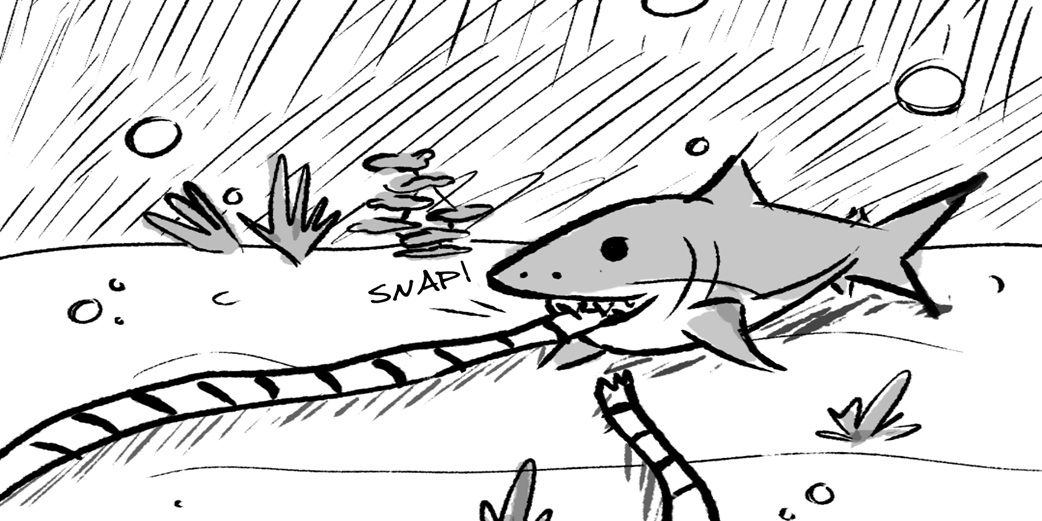
Undersea cables DO actually break occasionally, causing partitions that you need to account for.
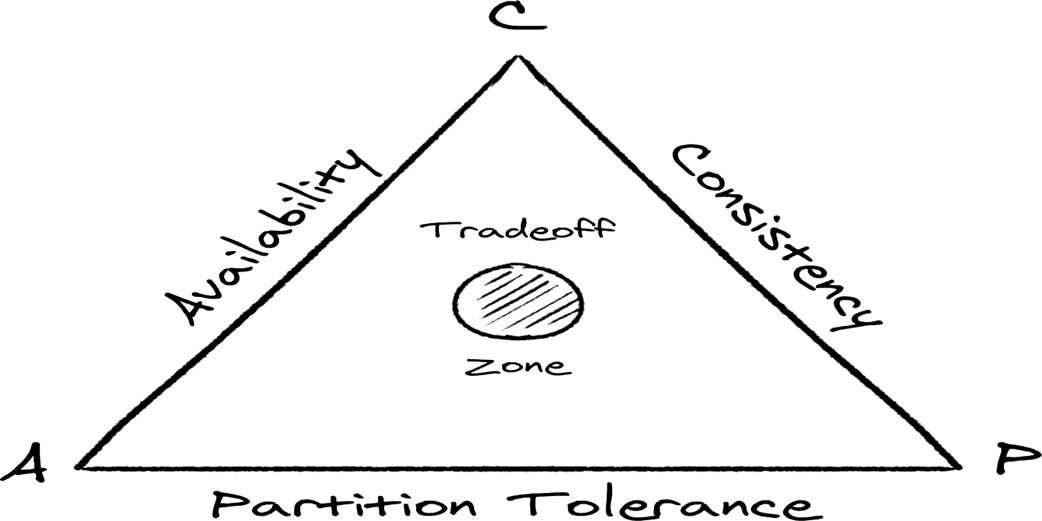
The CAP Theorem is a specific version of a Tradeoff Triangle!
Recap
- There is no "perfect" architecture; the goal is to pick your pain on purpose by making deliberate tradeoffs based on the current context.
- The -ilities (e.g., Scalability, Maintainability, Performance) provide the essential vocabulary for defining system quality and serve as the criteria for decisions.
- Constraints like Time, Money, and People are not obstacles but focusing forces that help define the boundaries of the optimal solution.
- The Tradeoff Triangle is a rapid visual tool used to expose competing priorities (such as Speed to Ship, Cost to Operate, and Ease to Change) and align team expectations quickly.
- An Architecture Decision Record (ADR) is the primary tool for documenting a significant choice, the options considered, and the rationale, creating a lasting and valuable record for the team.
- The CAP Theorem dictates that any distributed system must make a fundamental trade-off between Consistency (C) and Availability (A), a choice with profound business consequences.
- An architect's role extends beyond writing code to being an Explainer-in-Chief, a Decision Scribe, a Boundary Keeper, and a Risk Scout.
- Good architecture is the practice of making defensible decisions and having a repeatable process for creating and documenting them.
- This chapter's toolkit directly maps to the five-step framework: the -ilities and Constraints for Inquiry, the Triangle for evaluating Options, and ADRs for capturing the final Decision.

 Grokking Software Architecture ebook for free
