12 The Great Debate: Monoliths vs. Microservices— Navigating the Distributed Divide
In this chapter, the author reframes the monolith-versus-microservices debate as a tradeoff spectrum rather than a moral contest. A monolith offers the simplicity of one deployable unit, in-memory calls, and easy debugging, while microservices provide independent deployment and scaling at the cost of much greater operational and communication complexity. The chapter argues that architecture should be chosen based on business context, team size, and change patterns, not industry fashion or résumé-driven hype.
A major theme is that microservices are usually an organizational scaling strategy first and a technical scaling strategy second. Conway’s Law explains why large teams eventually benefit from splitting systems so that teams can work autonomously, but the chapter warns against premature adoption because it often creates a distributed monolith: services that are physically separated but still tightly coupled through shared databases or synchronous calls. As a pragmatic middle ground, the modular monolith uses vertical slice organization and automated architectural tests to preserve clean boundaries without paying the network tax.
When change is unavoidable, the chapter recommends evolving legacy systems gradually using the Strangler Fig pattern instead of attempting a risky big-bang rewrite. It emphasizes that moving to distributed services introduces hidden costs such as latency, reliability issues, serialization overhead, security exposure, consistency problems, and observability challenges, all captured in the “network tax” and the fallacies of distributed computing. Microservices are worthwhile when the organization truly needs independent scaling, polyglot technology, or stronger blast-radius isolation, but the chapter’s overall message is to start with a well-structured monolith, extract only what clearly needs to be separate, and let architecture follow real constraints.
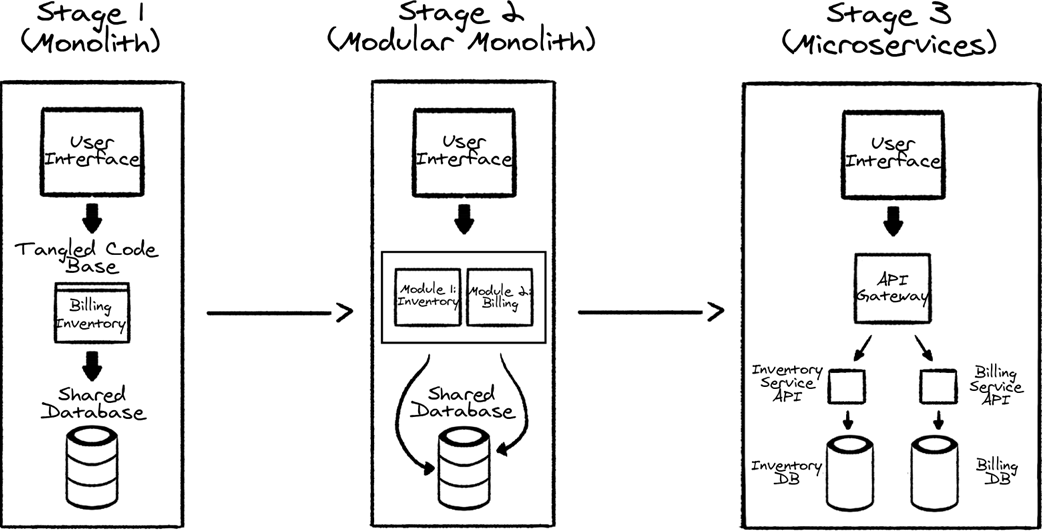
The Architecture Spectrum. Moving to Microservices is a two-step evolution. You must first decouple your internal logic using strict interfaces (The Modular Monolith) before you safely decouple your infrastructure across a network.
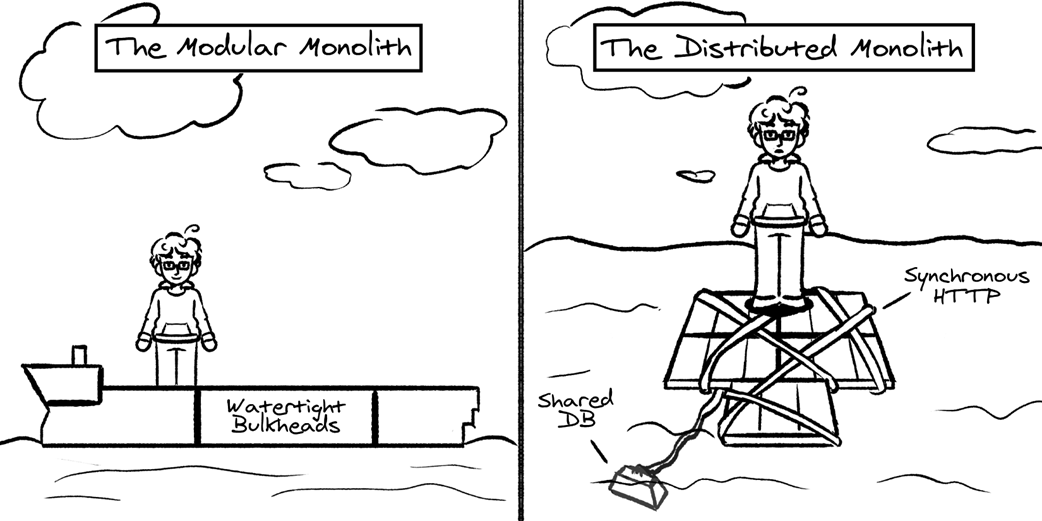
A Distributed Monolith provides the illusion of separation, but maintains extreme logical coupling. It is a monolithic ball of mud stretched across a fragile network.
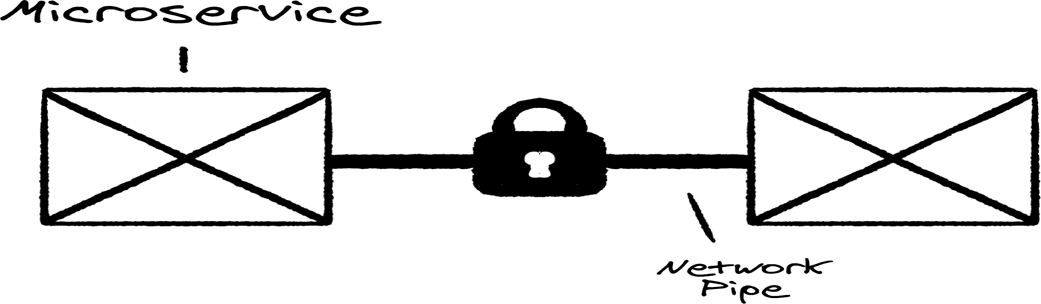
Enforcing Zero-Trust wire-level communication via Mutual TLS (mTLS).
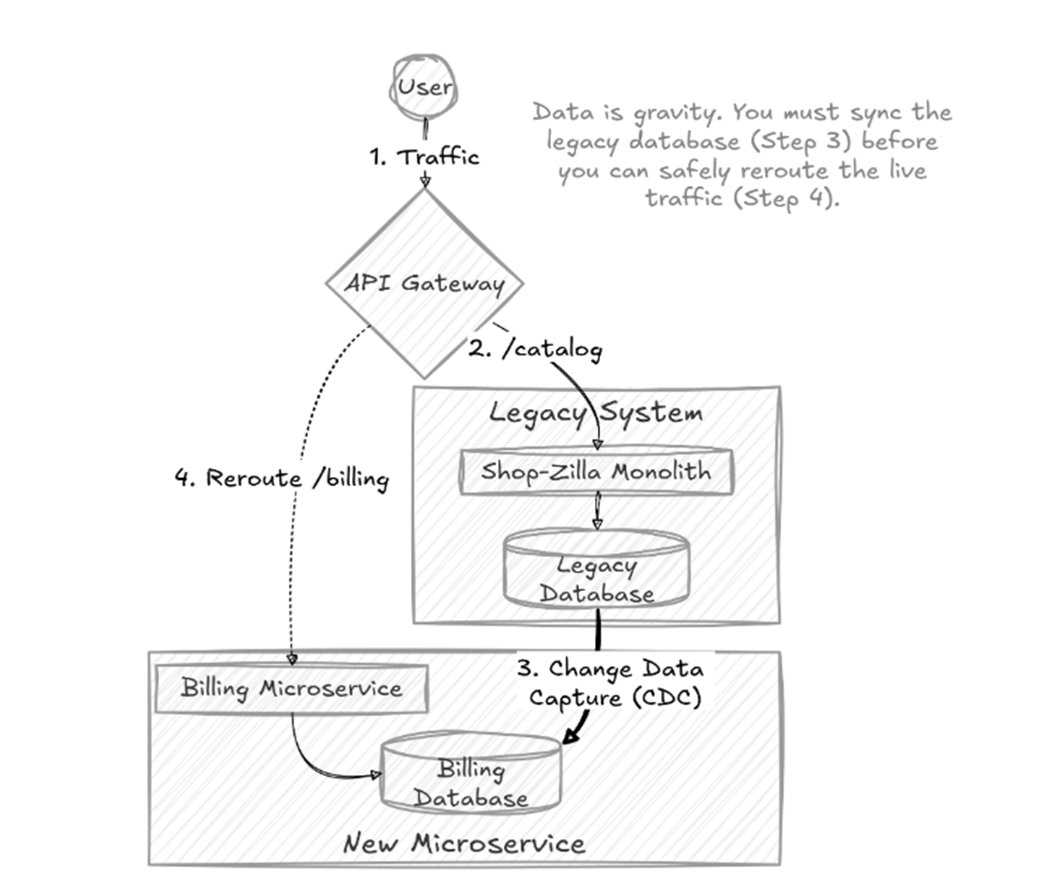
The Strangler Fig Migration. Instead of a risky "Big Bang" rewrite, an API Gateway incrementally reroutes traffic to the new Microservice, while Change Data Capture (CDC) safely syncs the underlying data in the background.
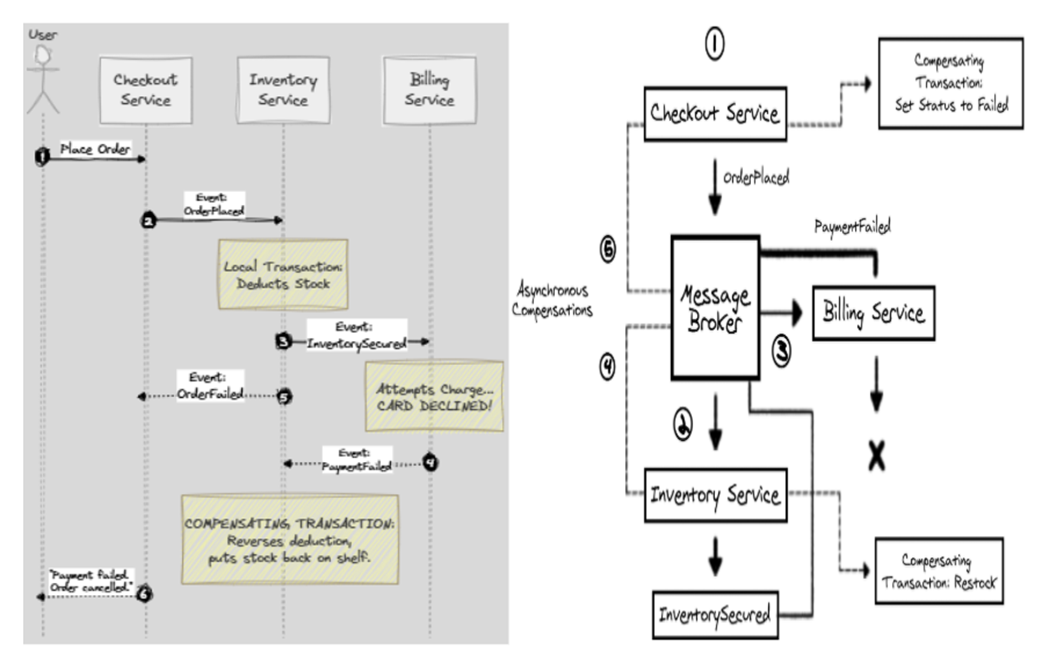
The Saga Failure Path. Because independent Microservices cannot share a single ACID "rollback" button, they must clean up after each other. When the downstream payment fails, it triggers a Compensating Transaction, forcing the upstream Inventory service to manually reverse its work.
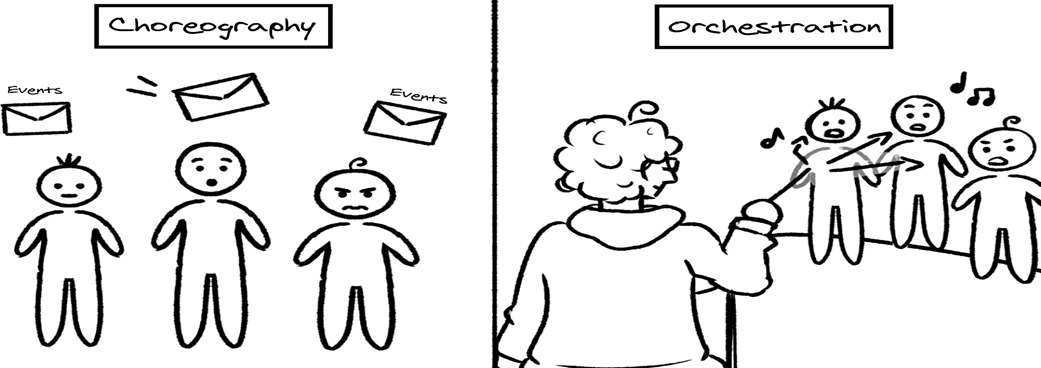
Choreography relies on services reacting to decentralized events, while Orchestration relies on a central manager commanding the workflow.
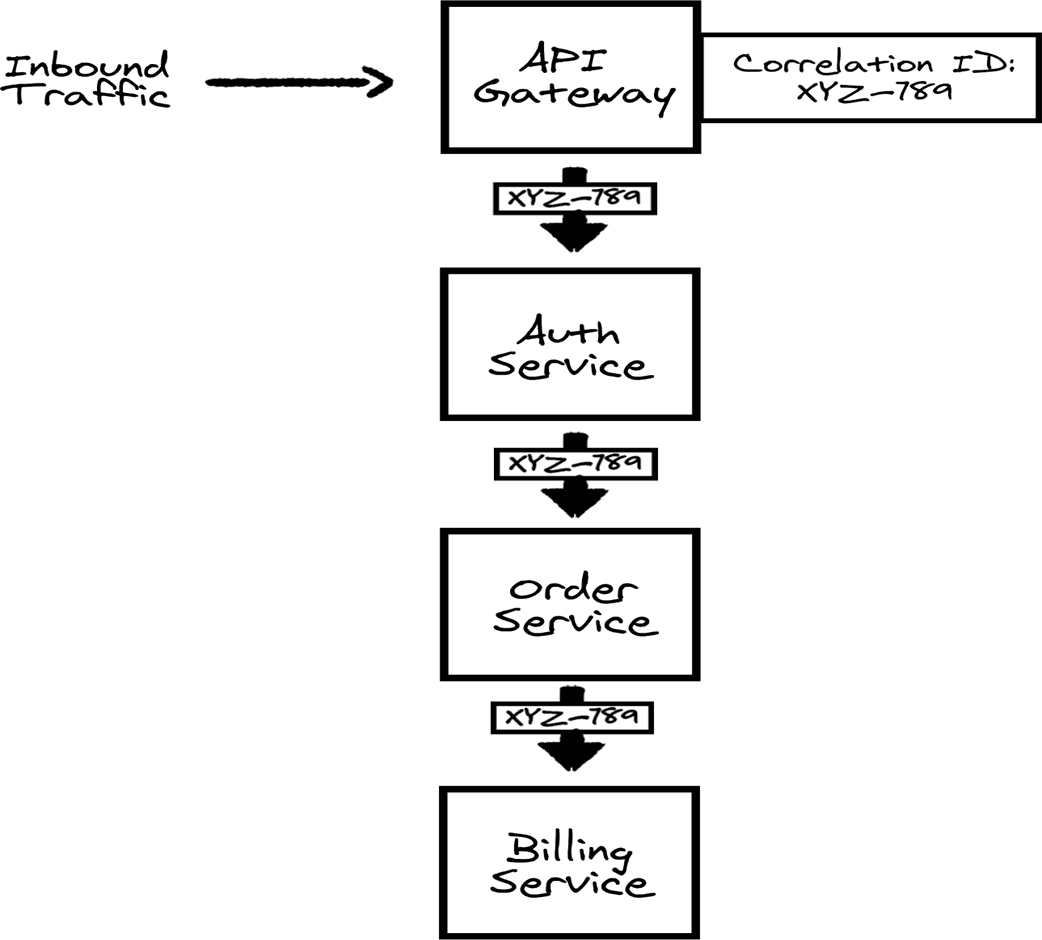
Distributed tracing across decoupled boundaries. Central tracking requires a single correlation index to follow a request's state transfers through the graph.
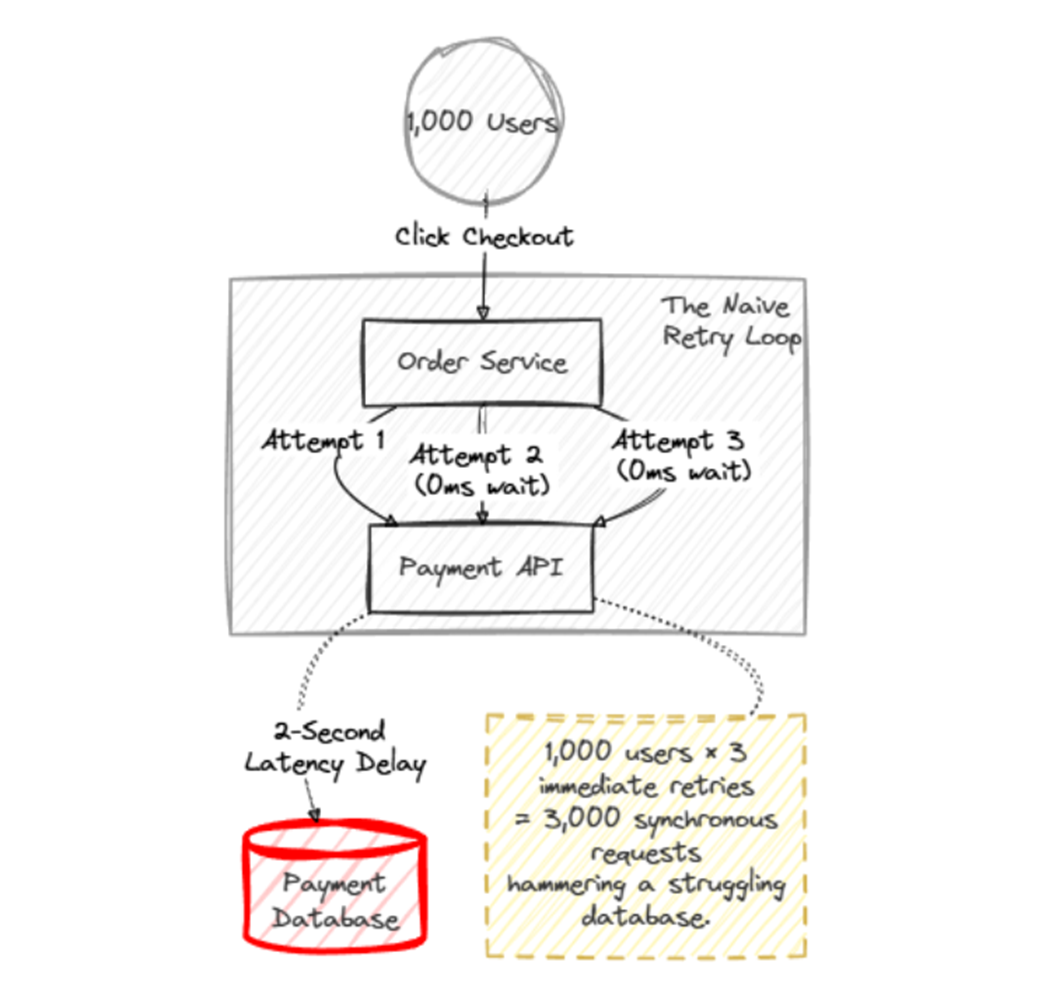
The Retry Storm. Without exponential backoff or a circuit breaker, a minor 2-second network delay causes naive loops to multiply traffic, accidentally launching a Distributed Denial of Service (DDoS) attack against your own database.
Recap
- The Architecture Spectrum: System design is not a binary choice between Monoliths and Microservices. It is a spectrum of coupling and deployment strategies.
- Monolith is Not a Dirty Word: A monolithic architecture is highly optimized for developer velocity, ease of refactoring, and ultimate simplicity. The "Monolith First" approach is almost always the correct starting point for a new project.
- Conway's Law: Any organization that designs a system will inevitably produce a design whose structure is a copy of the organization's communication structure. Microservices are the solution to human scaling problems.
- The Distributed Monolith: The most dangerous architectural trap. It occurs when you separate your deployable units while keeping them logically coupled (e.g., by sharing a single database or relying on synchronous HTTP chains).
- The Modular Monolith: By organizing code into highly cohesive Vertical Slices and enforcing strict boundaries with automated CI/CD tools, you achieve clean microservice separation without incurring networking costs.
- The Microservice Premium: Microservices require a massive baseline of operational overhead (CI/CD Pipelines, Kubernetes, Service Meshes) just to exist. You should pay this premium only when you hit strict business triggers, such as massive team sizes, polyglot environments, or asymmetrical scaling needs.
- The Strangler Fig Pattern: You should never pause a business for a "Big Bang Rewrite." Instead, use an API Gateway to slowly grow new microservices around the legacy monolith, rerouting traffic incrementally until the old system is starved and can be deleted.
- Data is Gravity: When strangling a monolith, the hardest part is moving the data. Architects use Change Data Capture (CDC) to silently stream database transaction logs from the old system to the new system.
- The Network Tax: Splitting a monolith forces you to face the 8 Fallacies of Distributed Computing. You must pay severe taxes in Latency, Reliability, Security, Data Consistency, and Observability.
- Sagas and Outboxes: Because distributed systems lack a shared ACID transaction, data consistency must be maintained using the Saga Pattern (a sequence of local transactions with compensating fallbacks) and the Transactional Outbox Pattern (to guarantee that network events are published).
- The Bullwhip Effect: In a distributed network, a minor latency delay can cause a downstream service to panic and fire an un-spaced Retry Storm. You must dampen this effect using strict Circuit Breakers and Exponential Backoff.

 Grokking Software Architecture ebook for free
