10 Architecting for Resilience and Scale: Preparing for the Worst, Scaling for the Best
This chapter starts by challenging the dangerous assumption that software will run on a perfect “happy path.” In real cloud and distributed systems, networks fail, services slow down, hardware breaks, and traffic can spike without warning. The central lesson is that good architecture does not try to eliminate all failure; it prepares the system to survive failure gracefully. That means distinguishing between temporary glitches and permanent problems, and responding to each with appropriate behavior instead of treating every error the same.
To build resilience, the chapter presents a layered set of patterns that keep failures contained. Timeouts prevent the system from waiting forever on slow dependencies, retries give transient errors a second chance without overwhelming downstream services, and exponential backoff slows repeated attempts so a struggling service can recover. When those measures are not enough, fallbacks provide a Plan B that preserves the user experience or business transaction. Circuit breakers go further by stopping calls to a failing dependency once trouble crosses a threshold, and bulkheads isolate resource pools so one flooded area cannot sink the whole system. Together, these patterns keep failures local instead of letting them cascade across the application.
The chapter then connects resilience to scalability and business reality. Scaling up makes one machine stronger, while scaling out adds more machines, but horizontal scale only works when the system is stateless and the data layer is designed for replication, failover, and backups. Caching reduces unnecessary computation so the system can handle more demand without buying extra infrastructure, though it must be used carefully to avoid stale data. The chapter closes with a cautionary Ariane 5 example showing how reused code, missing context, and “convenient” shortcuts can become catastrophic when assumptions no longer hold. The overarching message is that architects must design for both the worst day and the best day, while always balancing technical ambition with cost, accountability, and the business’s actual needs.
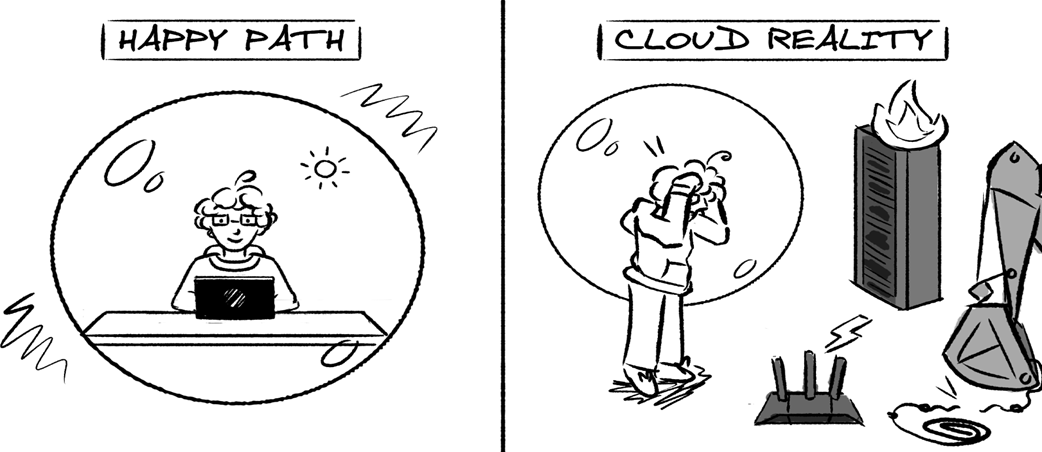
The "Happy Path" vs. Cloud Reality: Why assuming a perfect network is the most dangerous mistake an architect can make.
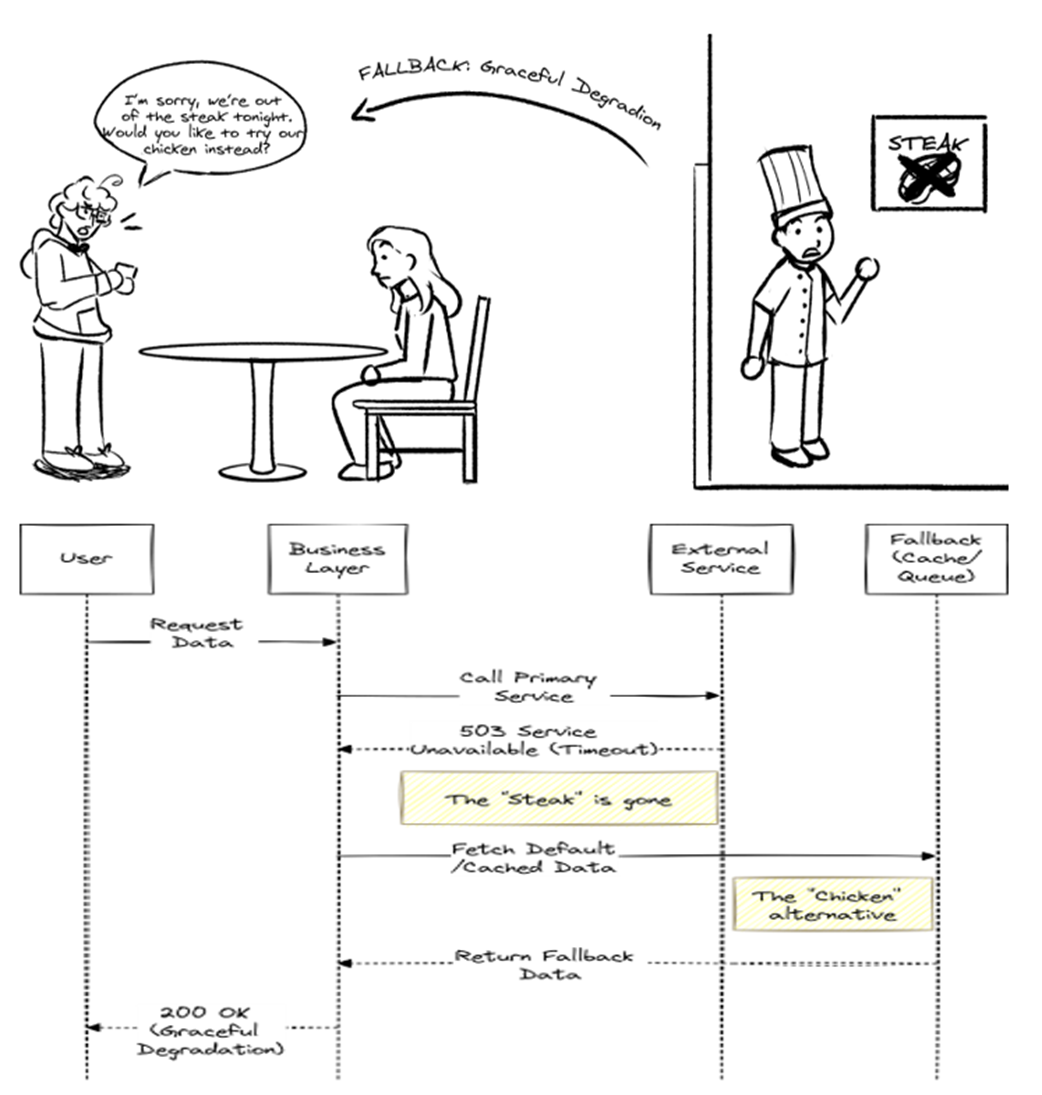
The Resilient Waiter: A Fallback doesn't fix the broken system (the missing steak); it gracefully degrades the experience (the chicken) to save the transaction.
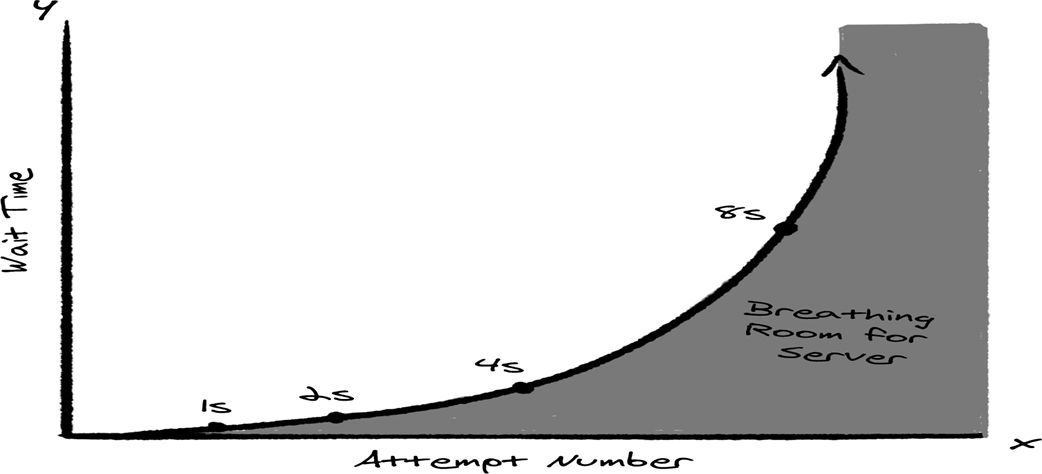
Exponential Backoff: Giving a struggling downstream service the necessary "breathing room" to recover instead of accidentally attacking it with instant retries.
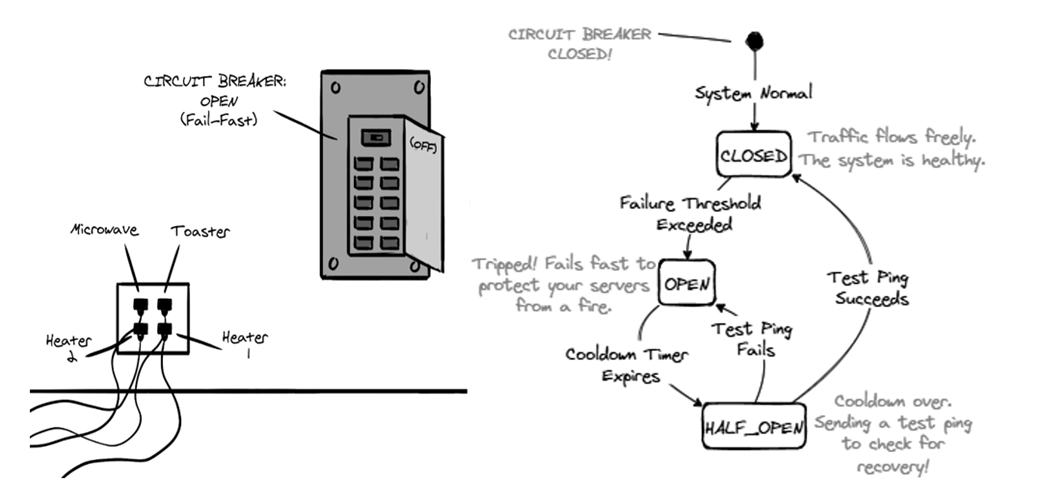
The Circuit Breaker Pattern: Failing fast to prevent a localized dependency failure from cascading and burning down your entire application.
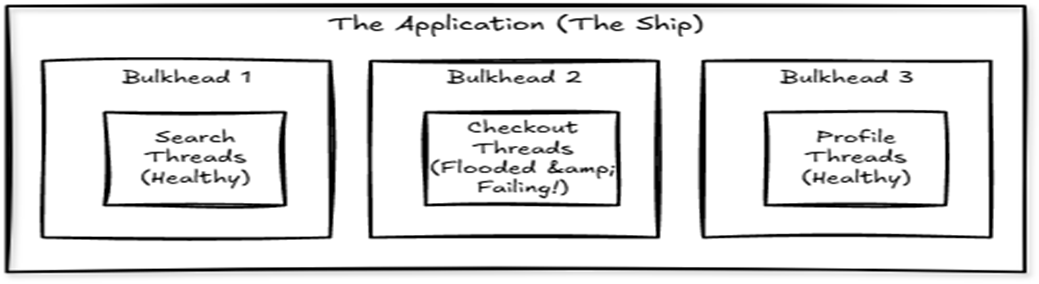
The Bulkhead Pattern. Just like a ship's watertight compartments, isolating your resources ensures that when one service floods and fails (Checkout), the damage is completely contained. The rest of your application remains healthy and afloat.
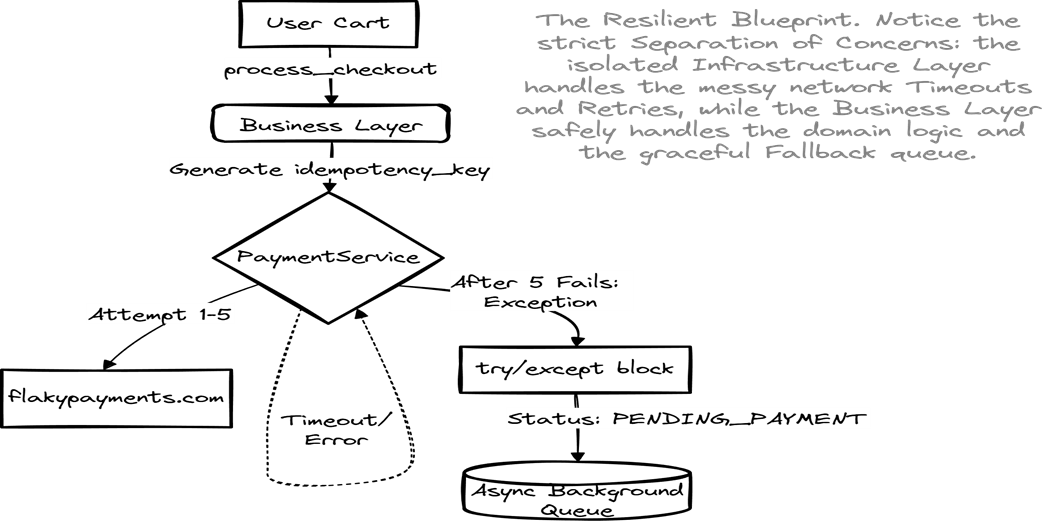
The Resilient Blueprint Code Map: Tracing the execution flow of a resilient checkout process before getting into the code.
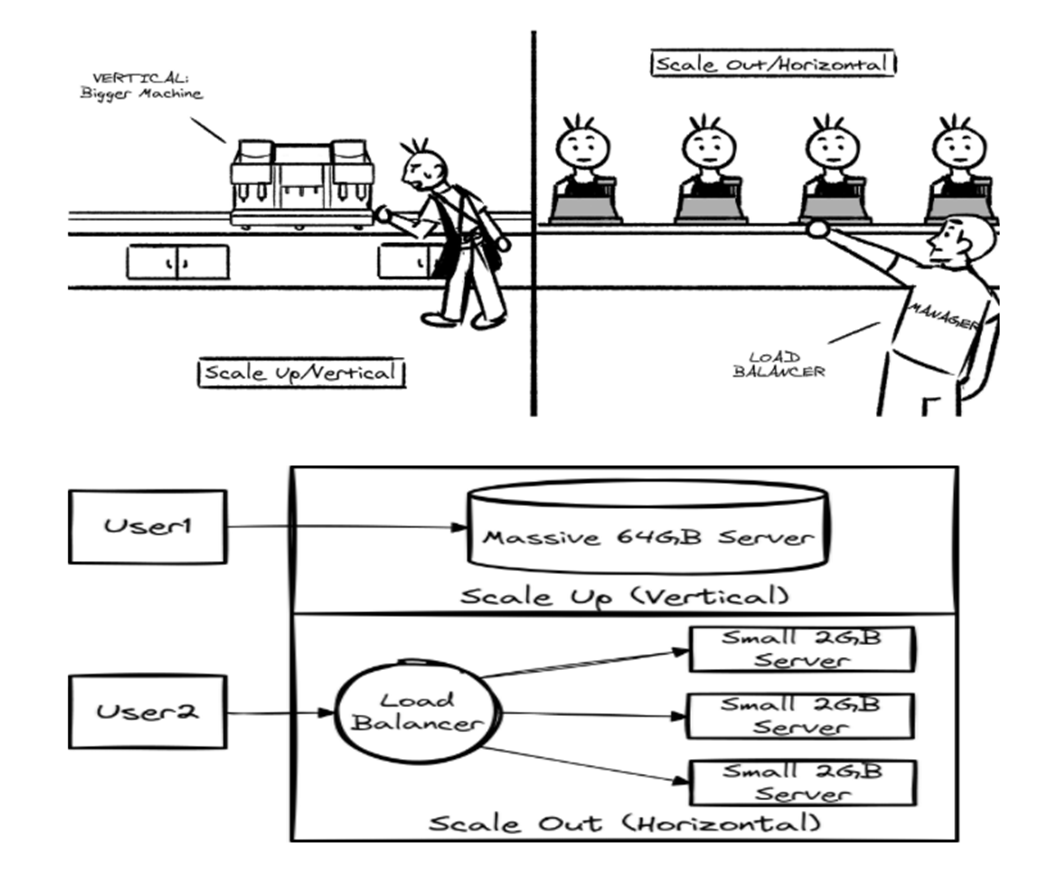
Scaling Up (Vertical) makes a single worker more powerful, but Scaling Out (Horizontal) offers a practically infinite, resilient scale by adding more identical workers.
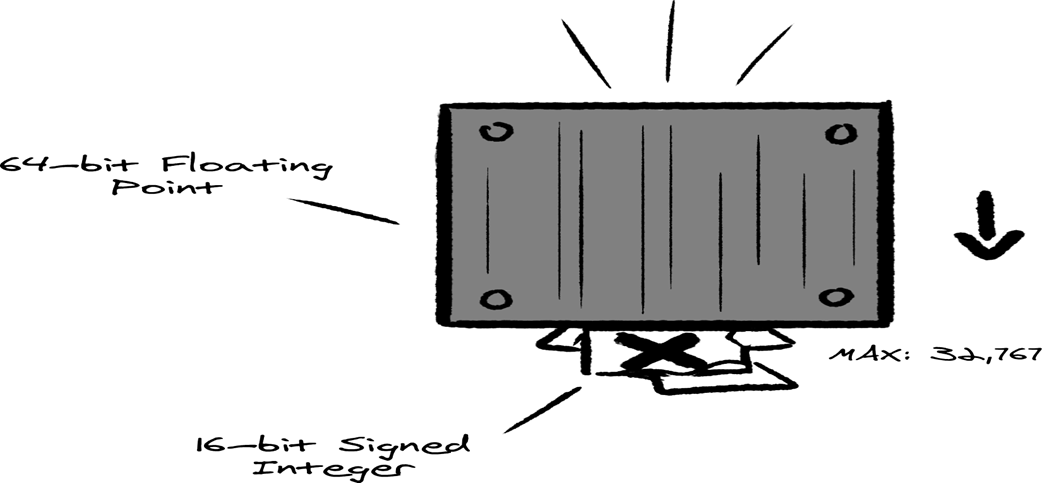
The Ariane 5 Bug: An architectural failure of physical context. A massive 64-bit vector of physical force fundamentally cannot fit into a 16-bit memory space.
The Shop-Zilla Black Friday Blueprint. By layering your shock absorbers, you protect your server threads from the struggling FlakyPayments API and gracefully degrade to a background queue, ensuring zero sales are lost.

Recap
- In a distributed cloud environment, the "Happy Path" is an illusion. Networks drop packets, databases lock up, and third-party APIs will eventually fail; a true architect plans for when things go wrong.
- Timeouts act as an essential escape hatch to prevent infinite waiting and thread exhaustion. Without them, a slow downstream dependency will quickly consume your server's memory and crash your application.
- When network requests fail, Retries combined with Exponential Backoff provide a polite second chance. Progressively increasing the wait time ensures you give struggling systems the breathing room they need to recover, rather than accidentally DDoS-ing them.
- The Circuit Breaker pattern acts as a fire alarm. It fails fast (OPEN state) to protect your infrastructure from cascading failures, and occasionally sends a test ping (HALF-OPEN state) to check whether the downstream service has recovered.
- Paired with a Circuit Breaker, a Fallback is your "Plan B." It allows your application to gracefully degrade the user experience and save the transaction (often by shifting to asynchronous processing) rather than throwing a fatal error.
- The Bulkhead Pattern acts as watertight compartments for your architecture. While a Circuit Breaker prevents a fire by cutting a connection, a Bulkhead prevents a flood by isolating your server's resources (like thread pools) so that a failure in one service doesn't sink the rest of the application.
- Resilience mechanisms should not clutter business logic. Using language features like Decorators or Attributes allows you to wrap fragile code in protective shock absorbers while maintaining strict Separation of Concerns. Ultimately, Resilience is just Separation of Concerns applied to failure.
- Architecture is a Financial Record: Resilience patterns aren't just for preventing crashes; they protect the company's budget. By setting hard limits based on an SLA, your system logs become the automated evidence needed to eliminate the "wait-tax" and claim Service Credits during vendor outages.
- Scaling Up (Vertical) makes a single server more powerful but has a hard physical ceiling. Scaling Out (Horizontal) offers practically infinite scale and resilience by distributing traffic via a Load Balancer, provided the application is completely stateless.
- The fastest, cheapest way to scale is to avoid computing what you can simply remember. A single, distributed cache (like Redis) prevents redundant database queries, but Multi-Level (L1/L2) caching should only be used in extreme cases to avoid the nightmare of "flickering data."
- The $370 million Ariane 5 disaster proved that code does not exist in a vacuum. Leaving unneeded code running in production purely for developer convenience is architectural malpractice; every active thread is a liability.

 Grokking Software Architecture ebook for free
