3 Overview of database design
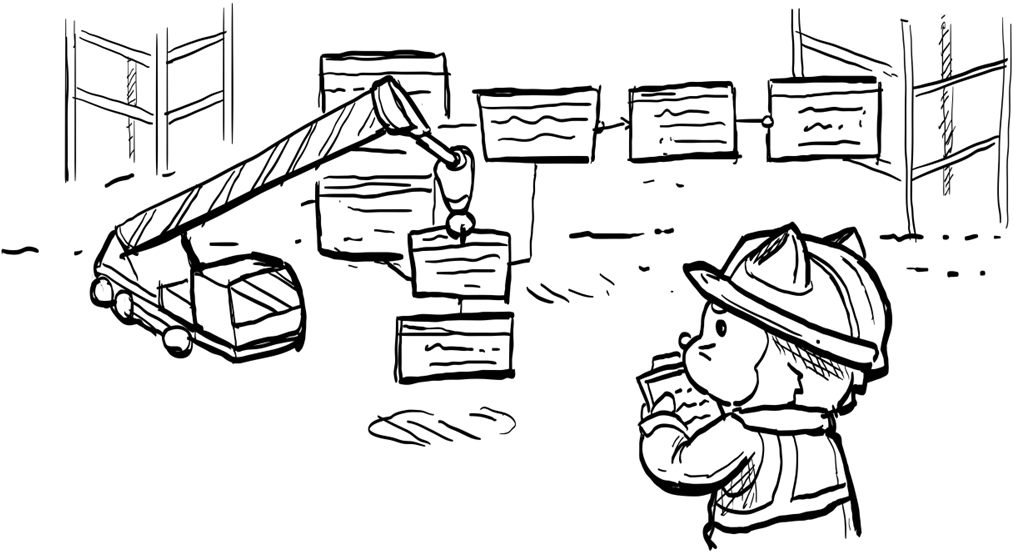
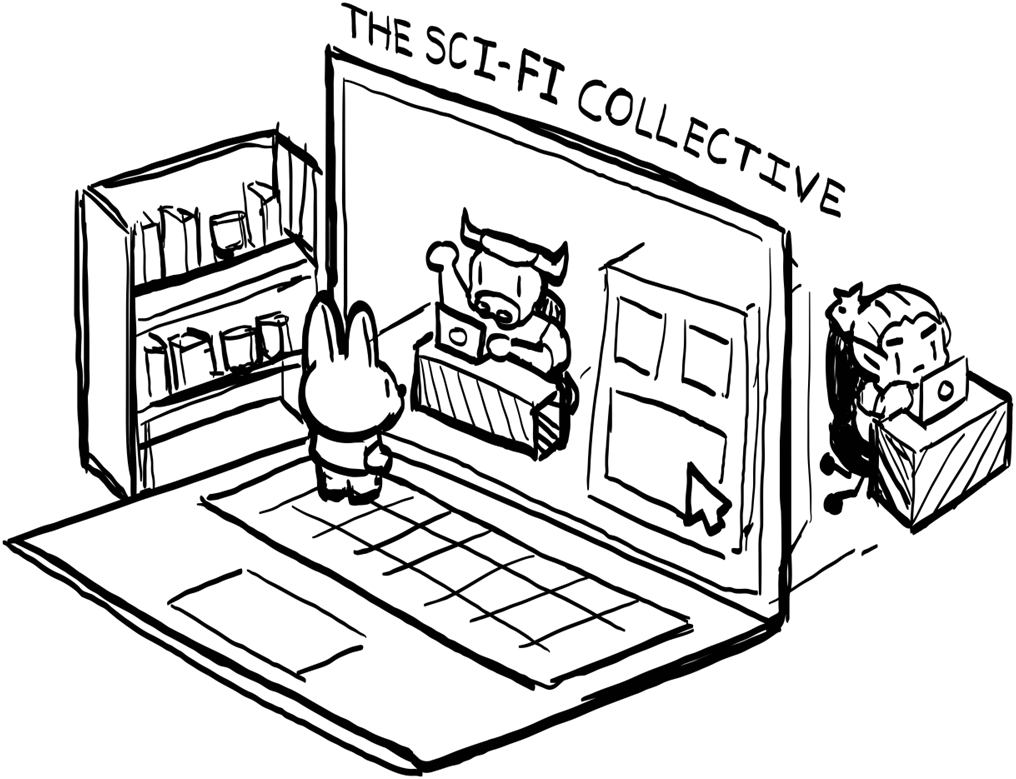
This chapter transitions from basic SQL to end-to-end relational database design, using The Sci-Fi Collective’s online store as a running example. It positions the goal of design as delivering a well-structured, efficient database that truly fits user and organizational needs, and it sets expectations for the journey ahead. You begin translating objectives into concrete design choices by kicking off requirement analysis for the project.
The chapter distills five guiding aims of good database design: data consistency and integrity (appropriate types, keys, and constraints to minimize redundancy and avoid insert, update, and delete anomalies); maintainability and ease of use (clear naming and conventions that make schemas intuitive); performance and optimization (for example, indexing frequently sorted columns like review dates); data security (preventing unauthorized actions and protecting sensitive data through measures such as encryption); and scalability and flexibility (schema separation and caching to handle growth without sacrificing speed). These aims define what “good” looks like and anchor trade-offs throughout the work.
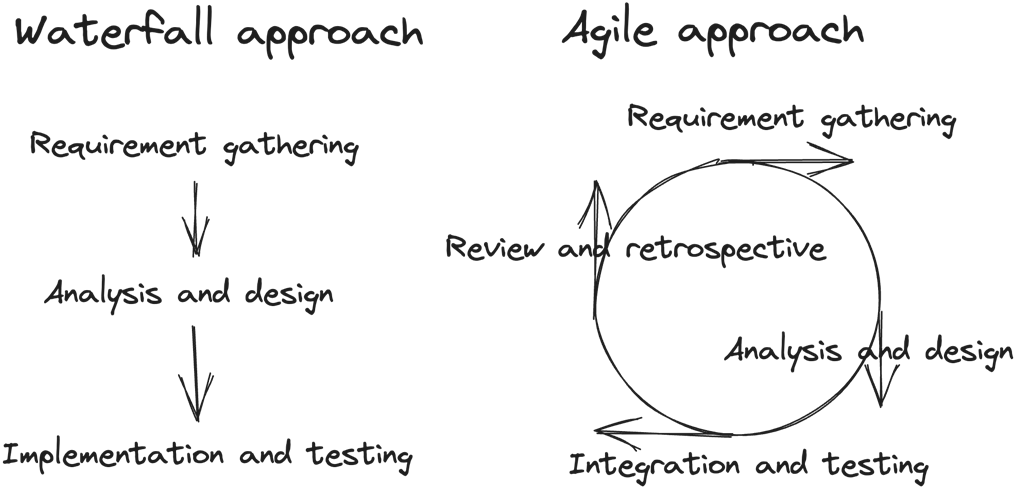
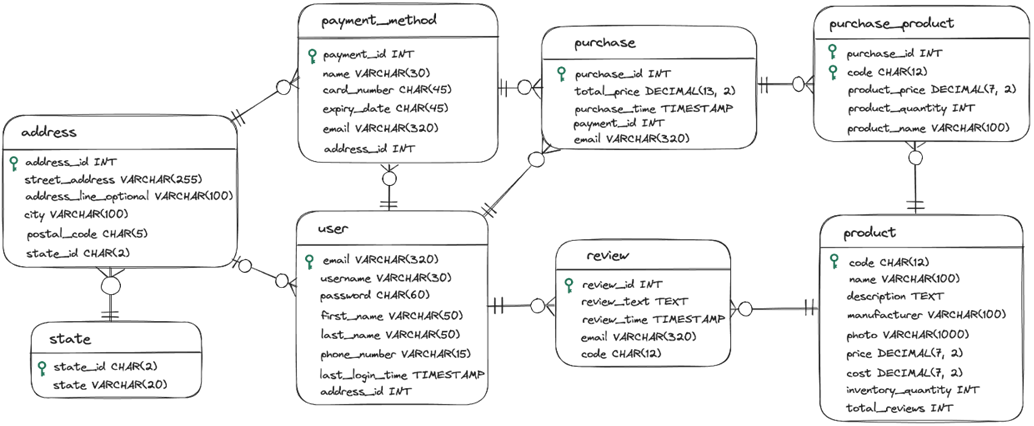
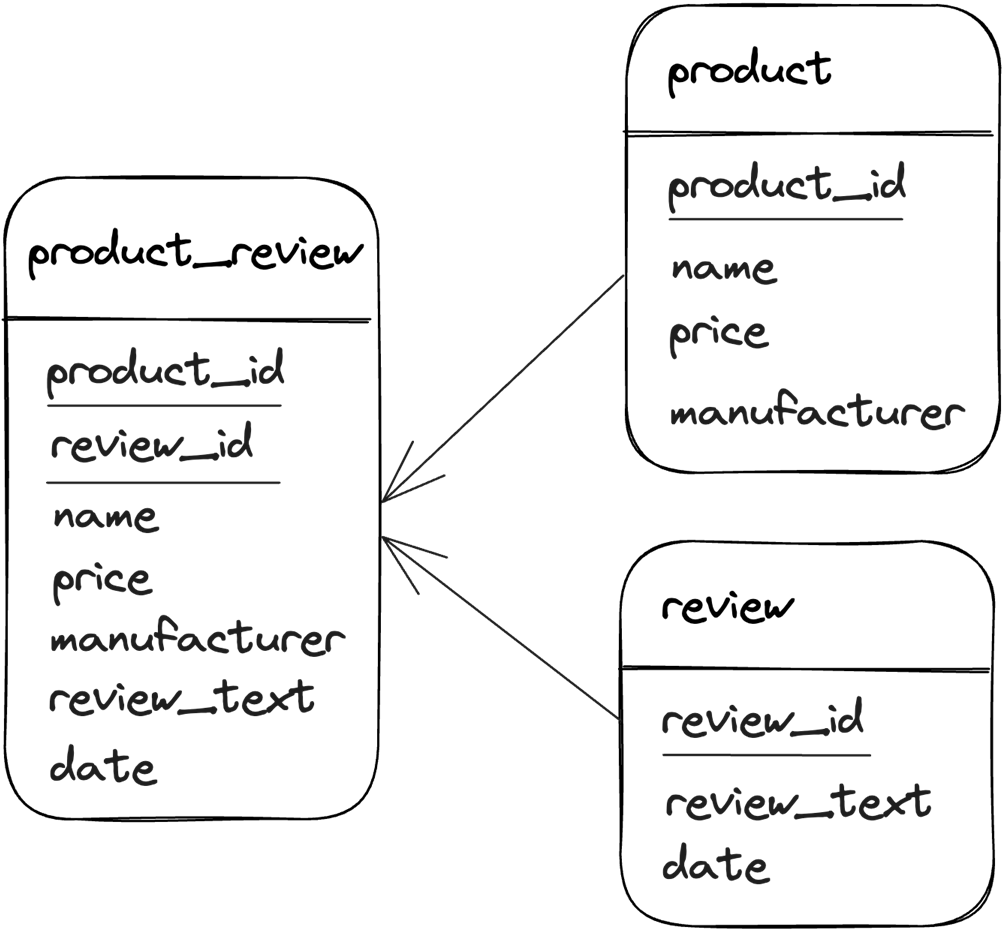
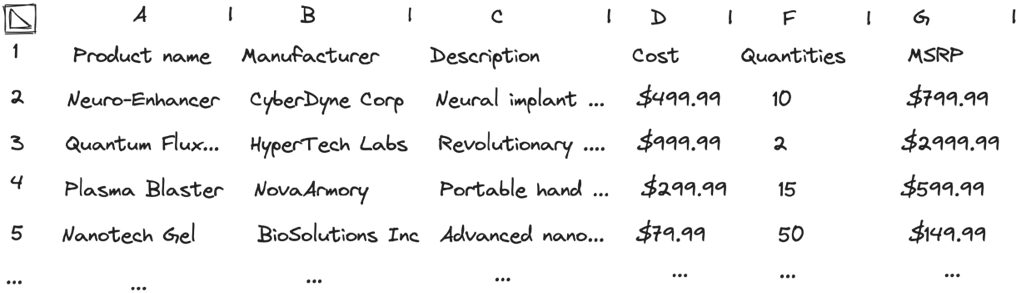
It then surveys the process shared across methodologies: requirement gathering, analysis and design, and implementation/integration with testing. Requirement gathering emphasizes interviewing stakeholders, subject-matter experts, and technical staff; studying legacy systems and informal tools (spreadsheets, forms); requesting demonstrations and data samples; and crystallizing goals—for The Sci-Fi Collective, managing products (inventory, reviews), users (accounts, payment methods, purchases), and the transactions linking them. Analysis and design convert findings into models (E-R diagrams) and apply normalization to reduce redundancy (e.g., splitting a combined product_review table into product and review), while implementation creates tables, data types, relationships, constraints, and indexes, followed by tests of functionality, performance, and security; along the way you identify subjects, their characteristics, and relationships such as one-to-many between users and orders and many-to-many between orders and products.









Summary
- The overall goal of database design is to deliver a well-structured and efficient database.
- A series of key subgoals of database design include (1) data consistency and integrity, (2) maintainability and ease of use, (3) performance and optimization, (4) data security, and (5) scalability and flexibility.
- All database design approaches share the same key phases, including requirement gathering, analysis and design, and implementation/integration and testing.
- Requirement gathering is the phase in which you gather information about the database via different ways, such as talking to all the people involved in using the database, studying existing databases, or examining other relevant aspects of information management.
- The analysis and design phase involves carefully thinking through all the requirements and coming up with a solid plan for how the database will be structured and how it will work.
- The implementation/integration and testing phase is about building and validating the database based on the blueprint you made in the design and analysis phase.
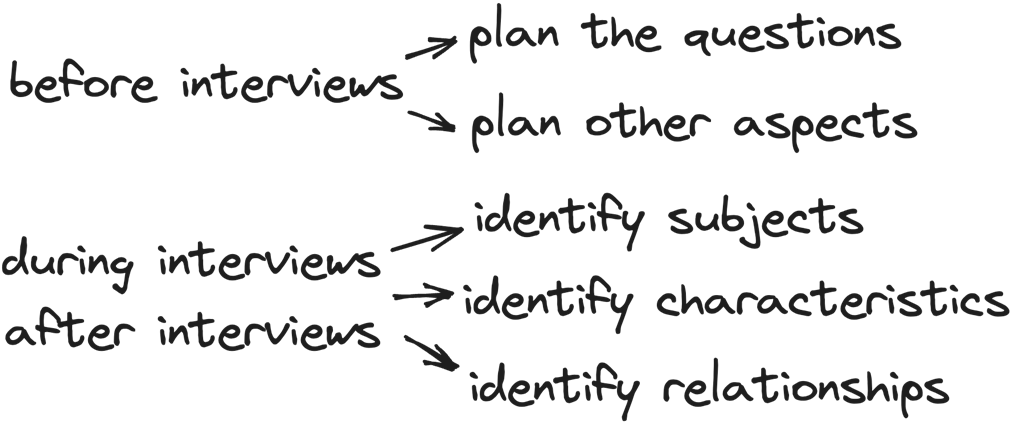
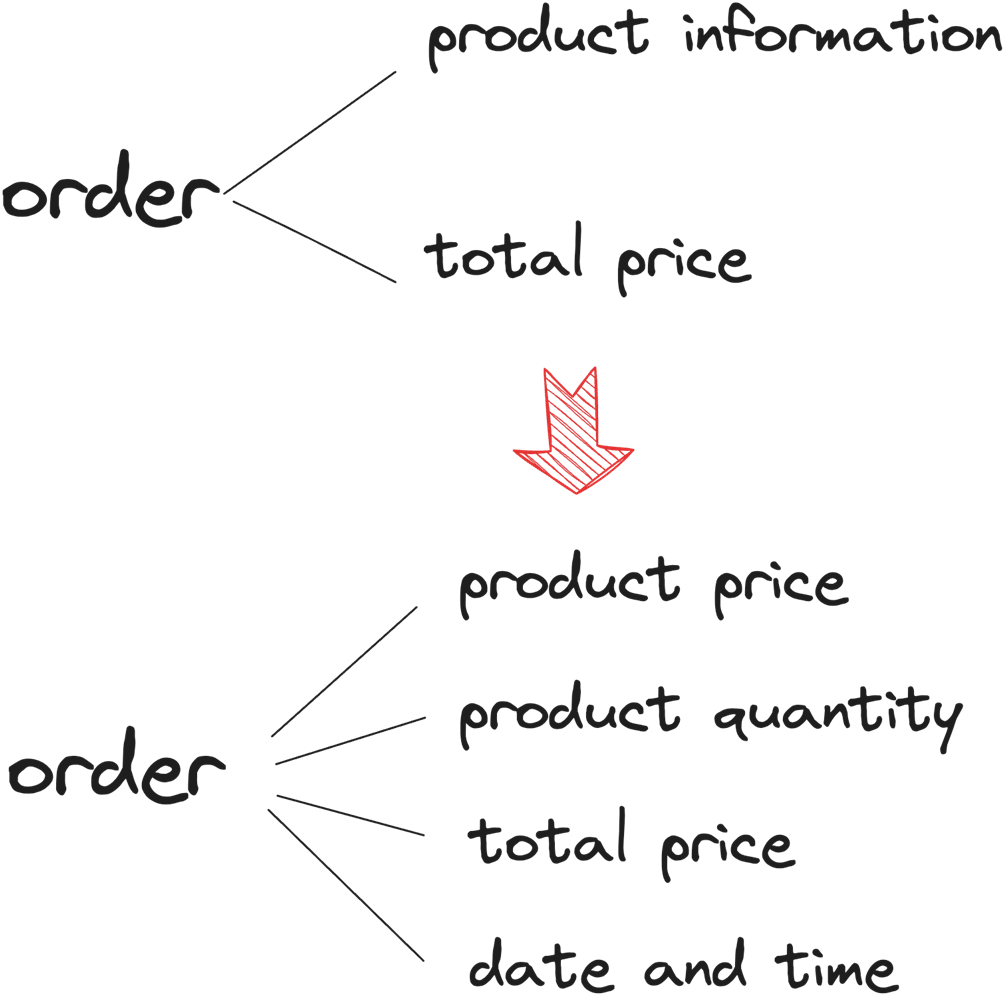
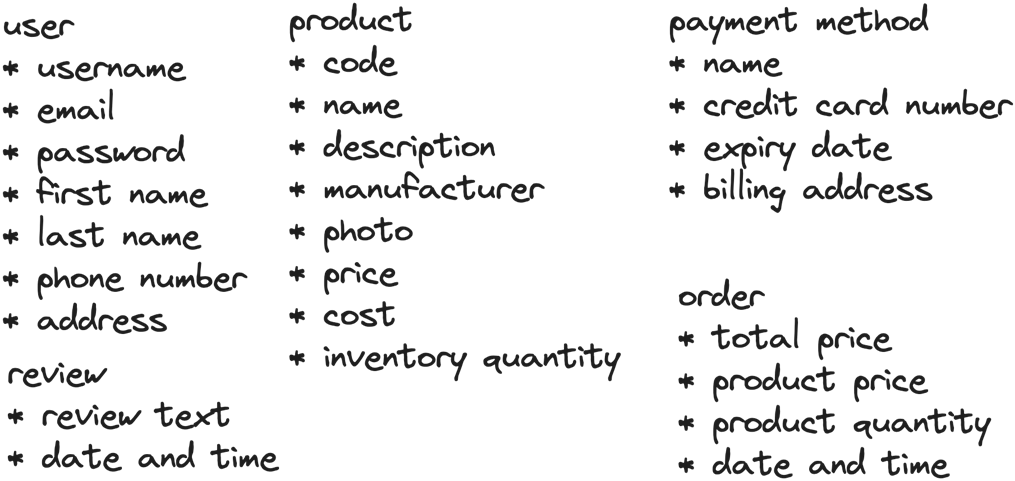
- Interviews are the most important task in requirement gathering. Before interviews, you need to carefully plan the interview questions. During and after the interviews, you need to identify subjects, characteristics, and relationships among subjects.
FAQ
What is the overall goal of database design?
To deliver a well-structured, efficient database that meets user and organizational requirements while achieving five common goals: data consistency and integrity, maintainability and ease of use, performance and optimization, data security, and scalability and flexibility.
What are insert, update, and delete anomalies?
- Insert anomaly: You cannot add a new record without also adding unrelated data.
- Update anomaly: Modifying data causes inconsistencies across the dataset.
- Delete anomaly: Removing data unintentionally deletes other important information.
How can I improve maintainability and ease of use in a database?
- Adopt consistent naming conventions for tables and columns.
- Design intuitive schemas that are easy for DBAs, analysts, and developers to understand.
- Keep structures clear to reduce confusion (e.g., standardize on “id” vs “Id” vs “key”).
How can I optimize database performance?
- Use indexing on columns frequently used for sorting or filtering (e.g., index a review date column to speed up “latest reviews”).
- Design schemas that reduce unnecessary scans and expensive joins.
- Balance normalization with performance needs where appropriate.
Think of an index like a card catalog that lets you quickly find and sort records without scanning every row.
What measures help ensure data security?
- Protect against unauthorized access, insertion, modification, and deletion.
- Encrypt sensitive data at rest (e.g., payment methods), not store it in plain text.
- Plan for incident recovery so data remains protected and can be restored.
How do I design for scalability and flexibility?
- Split large, multi-purpose tables into smaller, focused tables to speed lookups.
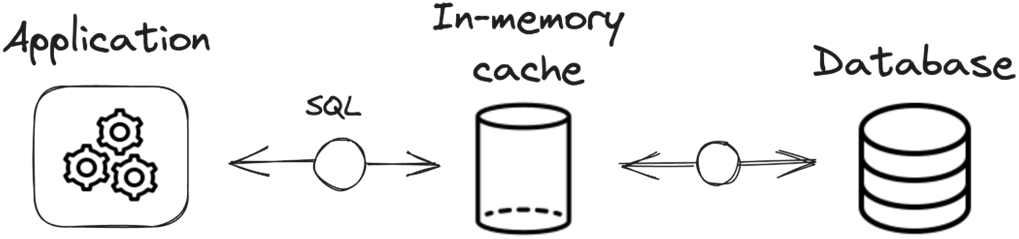
- Introduce caching for frequently accessed data (e.g., product info) using systems like Redis or Memcached.
- Aim to accommodate growth and changing requirements without sacrificing performance.
What are the key phases of the database design process?
- Requirement gathering
- Analysis and design
- Implementation/integration and testing
Approaches vary: waterfall emphasizes sequential completion; agile iterates and adapts as the project unfolds.
What does requirement gathering involve?
- Interview stakeholders, subject matter experts, and technical staff to learn what data is needed and how it’s used.
- Study existing/legacy databases to identify gaps with current needs.
- Examine other information management (spreadsheets, forms) and obtain real sample data to confirm attributes and data types.
How do I identify subjects, characteristics, and relationships from interviews?
- Look for nouns in responses; use “has/owns” sentences to distinguish subjects (owners) from characteristics (owned attributes).
- Ask follow-up questions to complete the set of characteristics for each subject.
- Clarify relationships between each pair of subjects (e.g., one-to-many between users and orders; many-to-many between orders and products).
What happens in analysis/design and in implementation/testing?
- Analysis and design: Model data conceptually with an E-R diagram, then normalize to minimize redundancy (e.g., split a product_review table into product and review).
- Implementation/integration: Create tables, define data types, keys, constraints, relationships, and indexes; integrate components incrementally (agile) or all at once (waterfall).
- Testing: Validate functionality (CRUD), performance (load/volume), and security (protection of sensitive data).

 Grokking Relational Database Design ebook for free
