This chapter presents testing as more than a safety net: in Go, tests are a practical tool for improving code, guiding design, and exposing performance and correctness issues early. It introduces the idea that tests can be used proactively, not just defensively, and highlights Go’s strong built-in tooling for unit testing, benchmarks, fuzzing, and coverage analysis. The chapter also emphasizes that a good test suite provides peace of mind while helping developers refine code as requirements evolve.
The core of the chapter explains how Go organizes and runs tests. Test files must end in _test.go, and test functions follow naming conventions such as TestXxx, BenchmarkXxx, and FuzzXxx. The go test command compiles and runs tests, reports failures clearly, and supports flags for verbose output, selecting specific tests, and collecting coverage. It also covers the testing.T API for logging, non-fatal and fatal failures, and writing useful failure messages that make debugging easier.
The chapter then applies these ideas in a test-driven workflow using a calculator example, showing black box testing, sentinel error checks, table-driven tests, and lifecycle-oriented tests that verify both normal behavior and error recovery. Coverage tools are used to find an untested bug in the calculator’s memory logic, demonstrating how coverage can reveal design flaws that basic tests miss. Finally, the chapter broadens the view with HTTP handler testing via httptest, performance comparisons with benchmarks, and fuzz testing to uncover edge cases, reinforcing the broader lesson that Go’s testing ecosystem helps build safer, faster, and more reliable software.
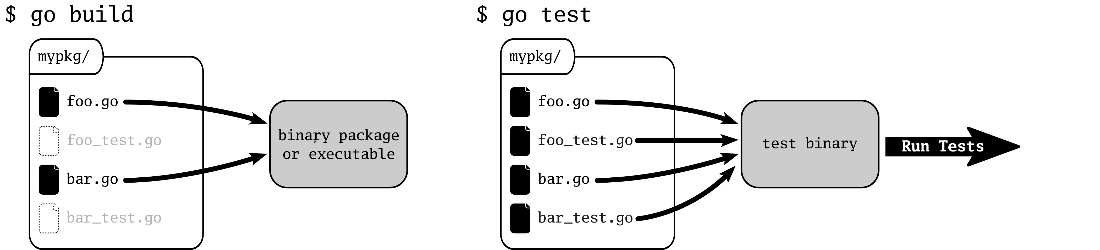
Files Used In Build Vs. Testing
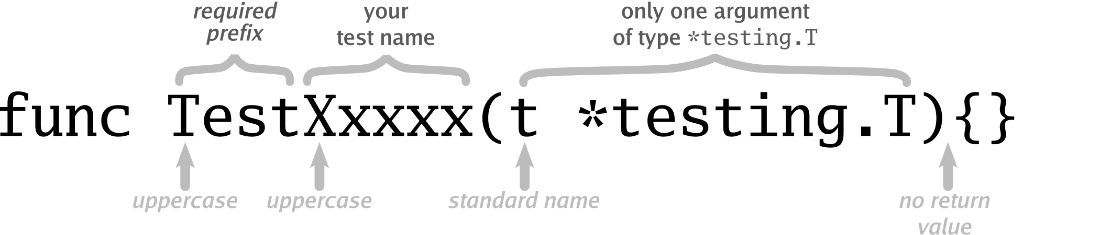
Signature Of A Test Function
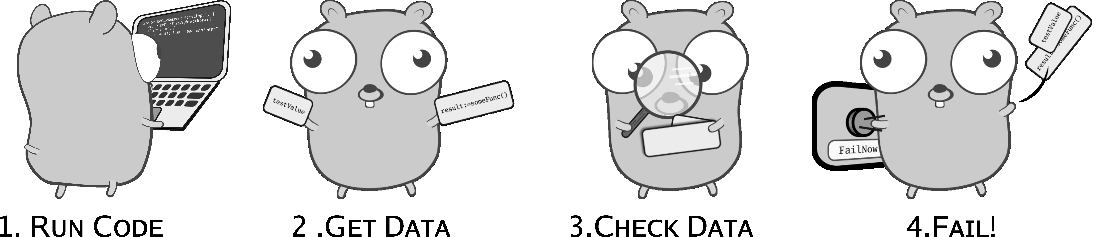
Testing steps
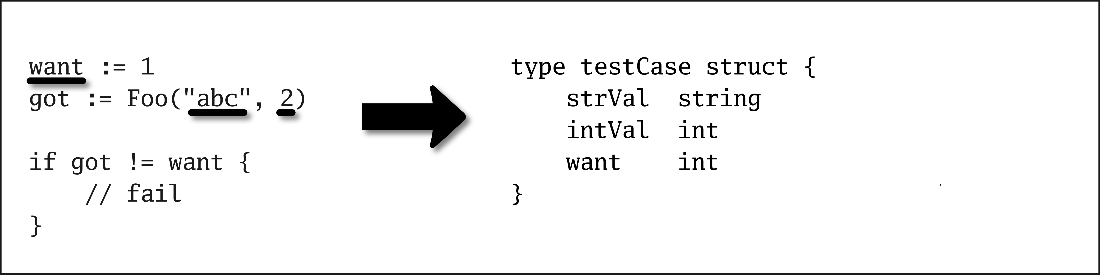
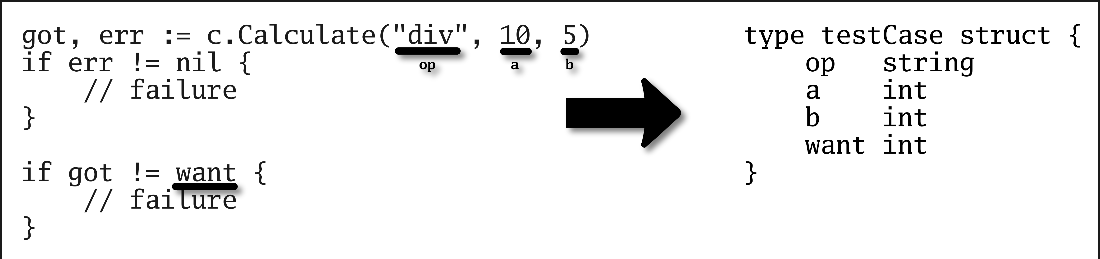
Creating A Struct To Hold Test Case Values
Testing A Slice Of Test Cases In A Loop
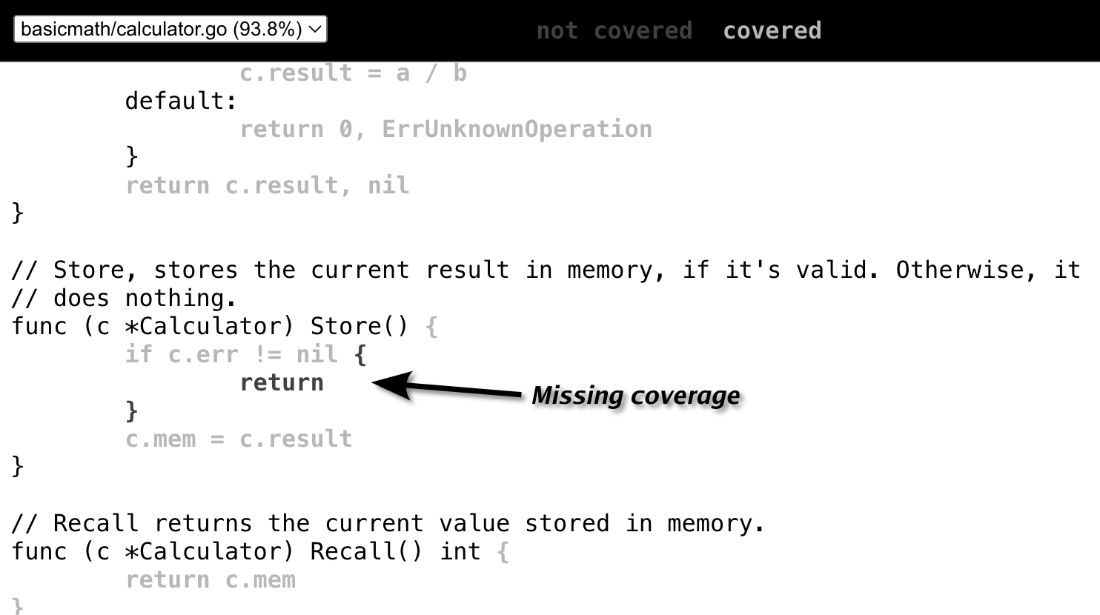
Screenshot Of The Coverage Viewer Web Application
Summary
Testing in Go uses functions and test files to allow your code to test itself.
Go comes packaged with the powerful go test test runner, which performs a host of useful functions in addition to running your tests.
If you choose to follow a test-driven development workflow, tests can act as your design specification and guide development instead of merely checking existing code.
Techniques such as table-driven tests can simplify the process of repetitive tasks.
Test coverage is an important tool to help you check for gaps in your testing and find new bugs.
In addition to unit testing, the Go test tooling can run benchmark and fuzz testing to test performance and edgecases for your function.
FAQ
What is the role of the `testing` package in Go?The `testing` package provides Go’s built-in support for writing and running unit tests, benchmarks, fuzz tests, and examples. It gives you the `*testing.T`, `*testing.B`, and `*testing.F` types for reporting results, logging, and controlling test execution.How are test files recognized by `go test`?Go test files must use the `*_test.go` naming pattern. Files with this suffix are ignored during normal builds, but they are compiled and included when you run `go test`.What naming convention must a Go test function follow?A normal test function must start with `Test` and have the signature `func TestXxx(t *testing.T)`. The name after `Test` should be unique and begin with an uppercase letter.How does `go test` decide whether a test passed?A test passes by default if it does not time out, panic, or explicitly fail. You do not need to manually mark success; Go assumes success unless a failure is reported through `testing.T`.What is the difference between `t.Error` and `t.Fatal`?`t.Error` records a non-fatal failure and lets the test continue. `t.Fatal` records a fatal failure and stops the test immediately. The same idea applies to `Errorf` vs. `Fatalf`, and `Fail` vs. `FailNow`.Why are non-fatal test failures often preferred?Non-fatal failures let a test report multiple issues in one run, which makes debugging easier. Fatal failures are best reserved for cases where the test cannot continue safely, such as a missing setup value or unexpected dependency failure.What is black box testing in Go?Black box testing uses the `_test` package name so tests interact with the target package only through its exported API. This reflects how a real user would consume the package and avoids relying on unexported internals.How do table-driven tests help in Go?Table-driven tests store multiple test cases in a slice of structs and run them in a loop. This reduces repetition, makes tests easier to maintain, and makes it simple to add or remove cases.How do you check code coverage with Go?You can run `go test -cover` to see the percentage of statements covered by tests. For more detail, `go test -coverprofile=coverage.out` creates a coverage report that can be viewed with `go tool cover -html=coverage.out`.What are benchmarks and fuzz tests used for in Go?Benchmarks measure performance under repeated load using `BenchmarkXxx` functions and `*testing.B`. Fuzz tests use `FuzzXxx` functions and `*testing.F` to generate many inputs automatically and find edge cases or unexpected bugs.
pro $24.99 per month
access to all Manning books, MEAPs, liveVideos, liveProjects, and audiobooks!

 Go in Action, Second Edition ebook for free
