5 End-to-end credit scoring for financial applications: a real-world AI approach
This chapter presents a practical, end-to-end view of building a credit scoring system in a financial setting, starting from messy operational data and ending with an interpretable score that can support lending decisions. It emphasizes the realities of financial AI: strict compliance, missing or partial data, leakage prevention through point-in-time correctness, and the need to document disclaimers, lineage, and resource usage throughout the workflow. Rather than treating modeling as a standalone task, the chapter frames it as part of a broader pipeline that must be auditable, stable, and easy to govern.
The chapter first explains how to assemble a credit-ready data mart from multiple sources such as transaction logs, bureau data, KYC records, demographics, and watchlist flags. It shows how batch orchestration tools like Airflow can coordinate daily or monthly merges, while feature stores can centralize reusable variables and preserve consistent definitions across teams. Along the way, it highlights production considerations such as masking sensitive data, logging HPC usage, handling missing bureau snapshots, tracking version changes, and maintaining security controls and audit trails.
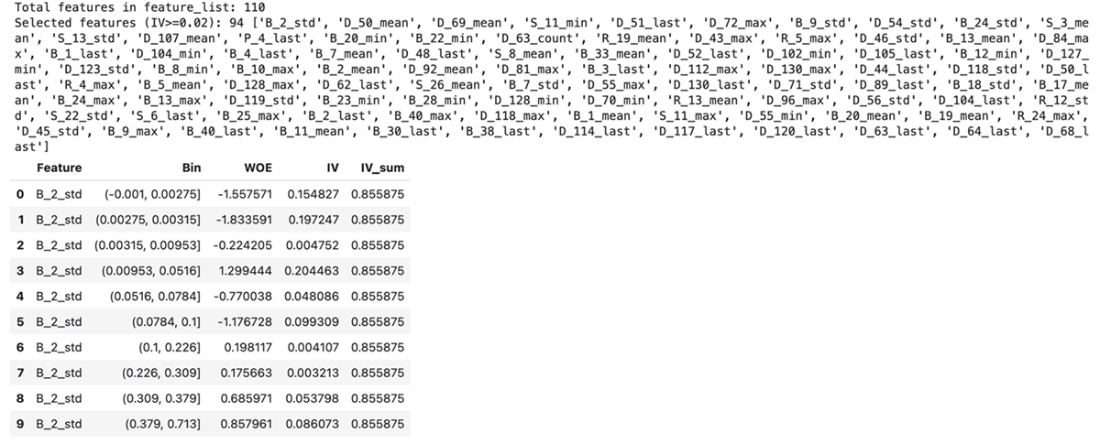
On the modeling side, the chapter uses a realistic tabular dataset to demonstrate a classic financial risk workflow: exploratory analysis, sparse-column removal, categorical encoding, missing-value treatment, and WOE/IV computation for feature screening and interpretability. It then trains an XGBoost classifier with stratified cross-validation, evaluates performance with ROC curves and confusion matrices, and converts predicted default probabilities into a standardized credit score using a PDO-style log-odds scale. The result is a deployment-minded scoring approach that balances predictive power with explainability, regulatory expectations, and operational continuity.
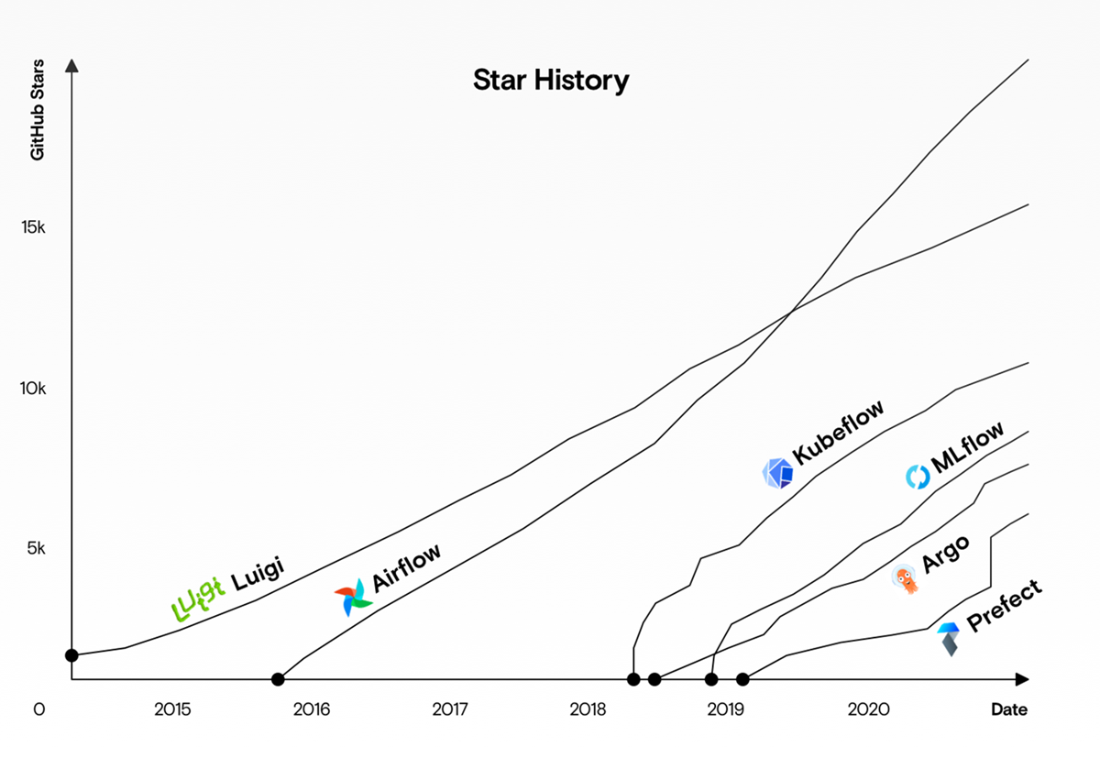
GitHub stars for Airflow, Argo, Kubeflow, Prefect, and MLflow from 2015 to 2023. (source: star-history.com)
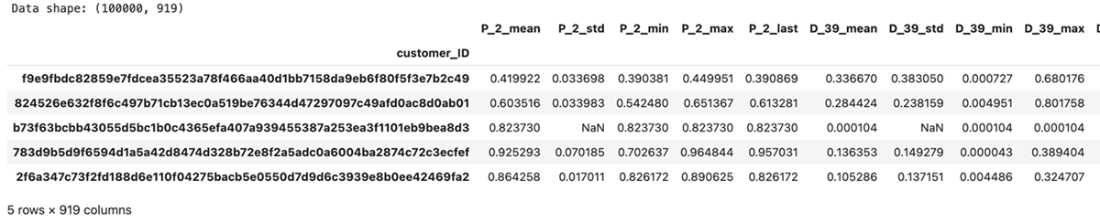
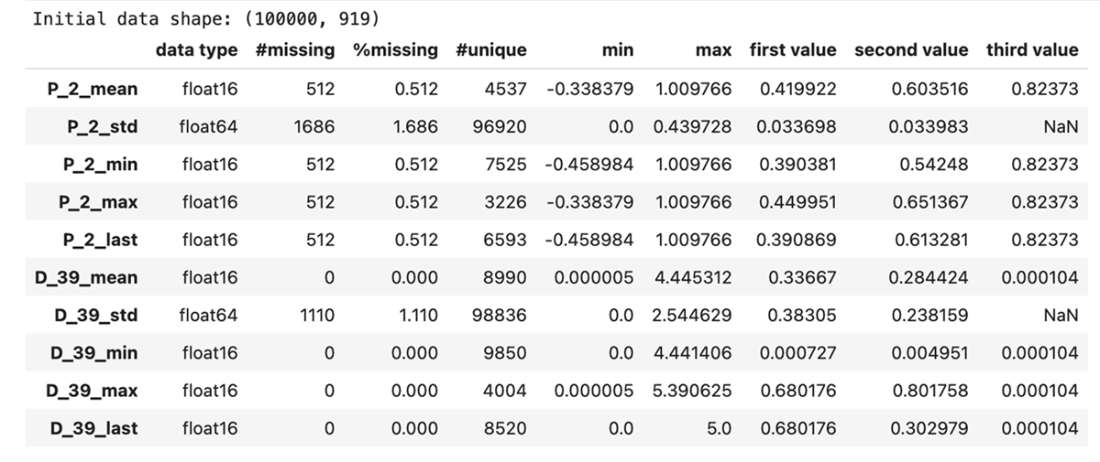
Summary of dataset columns showing data types, missingness, and sample statistics.
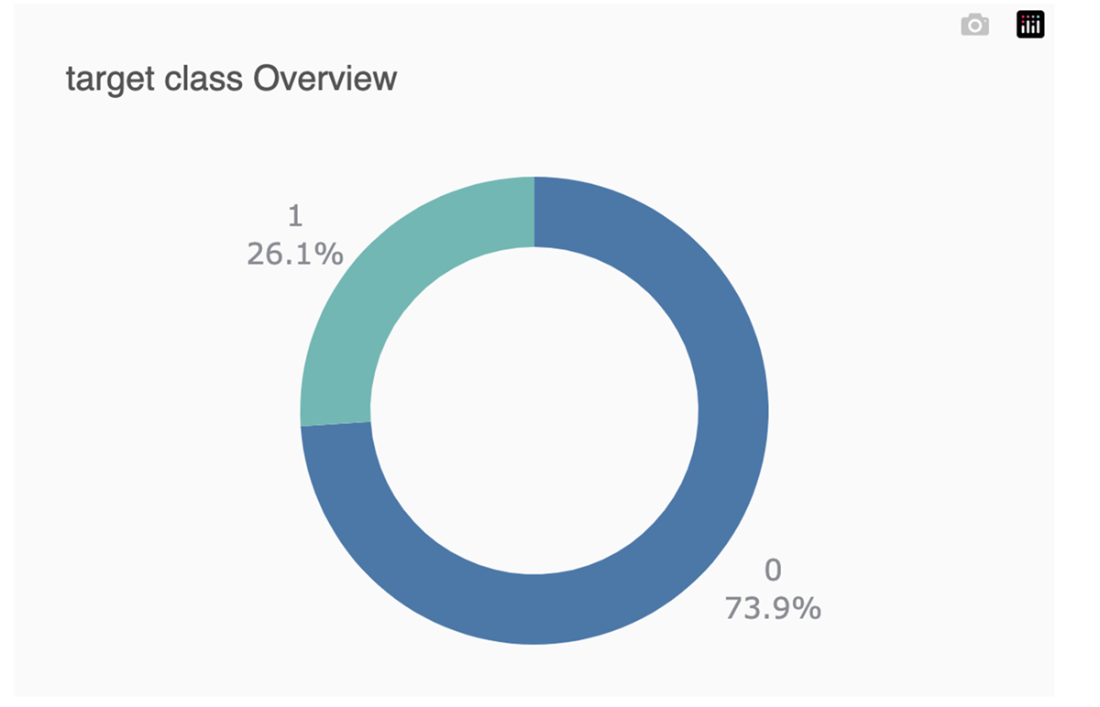
highlights the class imbalance in the target variable—a common challenge in credit modeling.
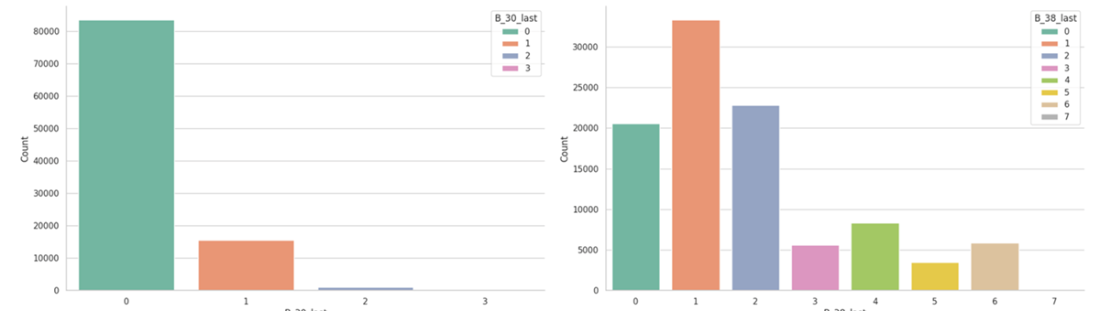
Countplots of encoded categorical features. These bar plots reveal the frequency distribution of key categorical variables. Such visualizations help detect class imbalance or rare labels, informing grouping or filtering decisions during preprocessing.
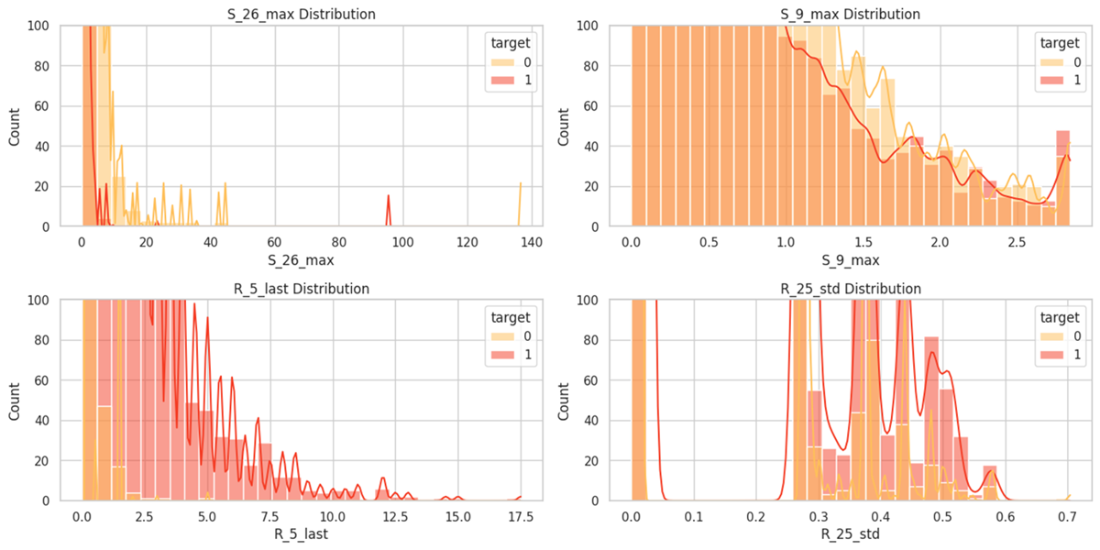
Histograms of numeric features split by target. Each histogram shows the distribution of values for defaulted (target=1) vs. non-defaulted (target=0) cases. These visualizations can reveal variables that separate well by target, highlight outliers, or suggest binning opportunities.
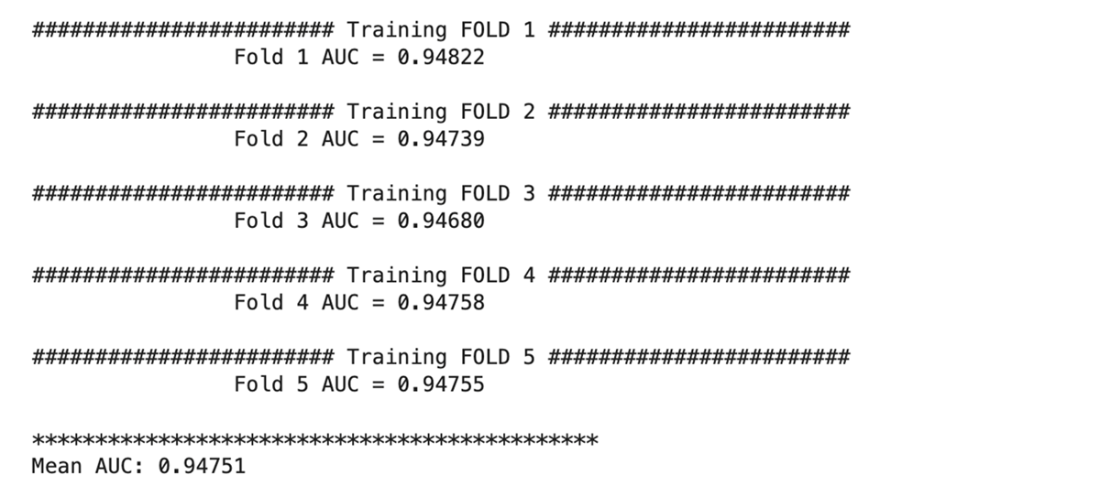
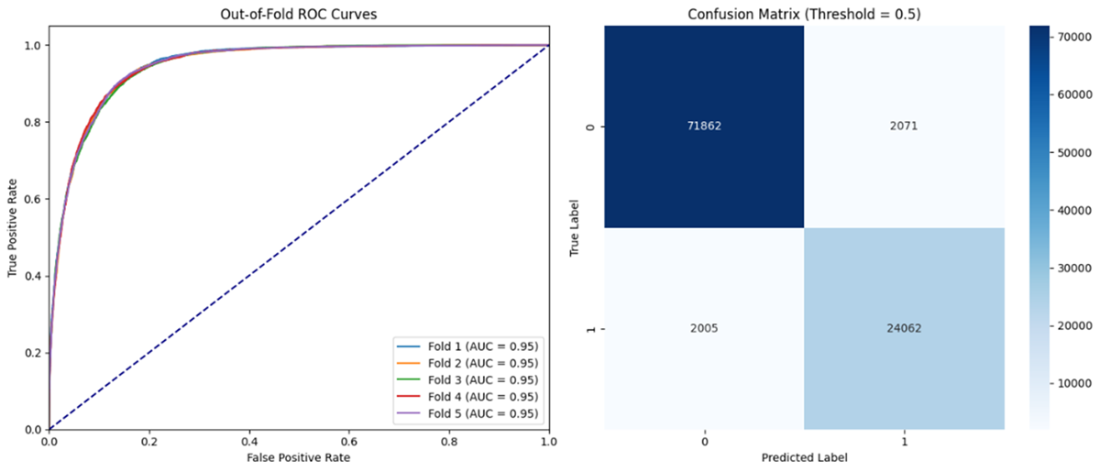
ROC and Confusion Matrix for XGBoost Model. This figure shows each fold’s ROC curve and the resulting confusion matrix at a 0.5 threshold. ROC curves illustrate the trade-off between true positive and false positive rates, while the confusion matrix shows misclassified cases. These visuals help BFSI teams balance business risks when deploying credit-scoring models.
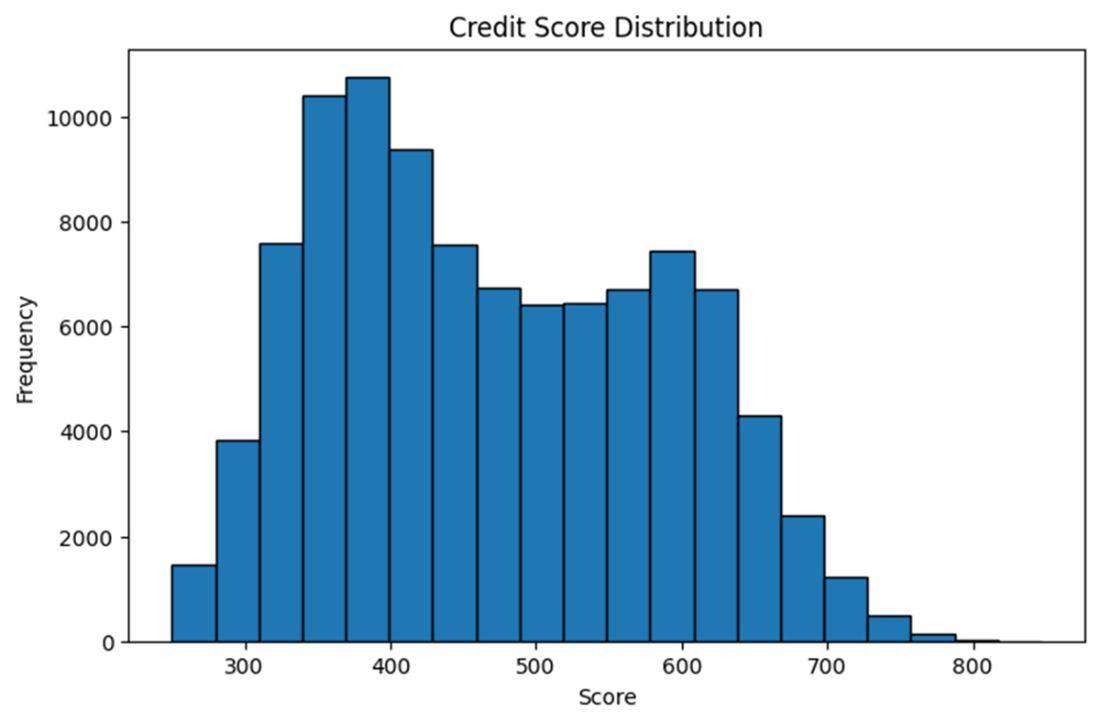
Distribution of Credit Scores Generated from Model Probabilities.This histogram shows the distribution of scores derived from model outputs using a standard Points-to-Double-Odds (PDO) scale. By default, every 20 points doubles the odds of being a good borrower. The distribution reflects the underlying risk makeup of the dataset and is clipped to [250, 1000] for stability.

Summary
- BFSI credit systems require robust pipelines that unify transaction logs, bureau data, and KYC information into credit-ready structures while applying compliance-driven transformations and disclaimers at ingestion.
- Orchestration tools like Airflow help schedule and monitor recurring data ingestion jobs in BFSI, ensuring reliability, traceability, and alignment with regulatory expectations.
- Production-grade BFSI pipelines include critical components such as lineage tracking, HPC usage logging, partial coverage tagging, role-based access controls, and alerting systems to support transparency and audit readiness.
- Feature stores centralize validated features, metadata, and disclaimers, enabling consistent reuse, version control, and compliance logging across BFSI modeling and analytics teams.
- Tree-based tabular models like XGBoost are well suited for BFSI risk modeling due to their performance on mixed-type, high-dimensional data and their support for feature-level interpretability.
- Reliable credit modeling starts with rigorous data cleaning—dropping high-missingness columns, encoding categorical features consistently, and imputing missing values to avoid unintended bias or loss of data.
- Exploratory visualizations such as target distributions, category counts, and histograms split by class help diagnose imbalances, outliers, and patterns that inform feature engineering and risk segmentation.
- Weight of Evidence (WoE) and Information Value (IV) are foundational tools in BFSI modeling, transforming features into a log-odds scale and allowing credit teams to quantify and prioritize predictive strength.
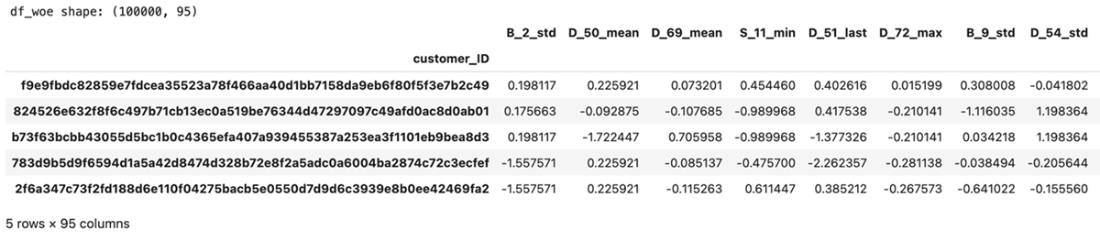
- Replacing raw features with WoE-coded versions enhances interpretability, enforces monotonicity, and ensures model inputs align with regulatory frameworks and explainability standards.
- K-Fold cross-validation is essential for evaluating model robustness in BFSI, especially in imbalanced datasets, offering stable estimates for AUC and supporting risk-based threshold tuning.
- ROC curves and confusion matrices offer visual tools for understanding model trade-offs, such as the cost of false positives versus false negatives—a critical consideration in BFSI lending decisions.
- Model probabilities are converted into a Points-to-Double-Odds (PDO) score scale for compatibility with legacy systems, easier business interpretation, and consistent cutoff setting across operations.
- Interpreting credit scores in BFSI requires understanding score distributions, odds ratios, and policy-driven cutoffs, often guided by legacy thresholds, risk tolerance, and champion–challenger testing frameworks.
- Packaging models using PMML, ONNX, or containerized services ensures consistent deployment, version traceability, and embedded disclaimers—all of which are vital for production readiness and compliance.
- A complete credit scoring pipeline—from ingestion to scoring—must balance predictive performance with interpretability, regulatory adherence, and operational continuity in high-stakes BFSI environments.

 Financial AI in Practice ebook for free
