3 Set user-centered performance goals
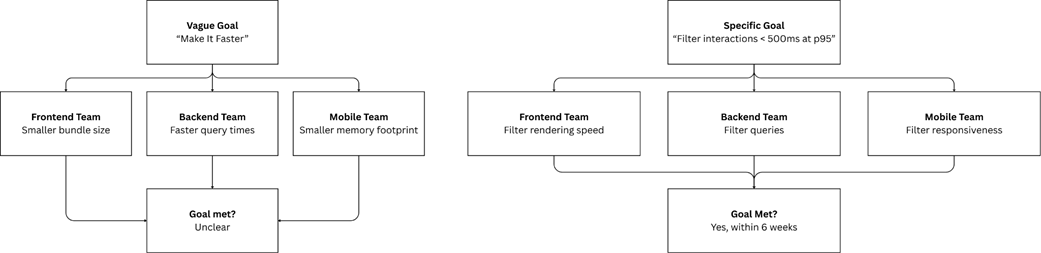
Good performance work starts by replacing vague ambitions with clear, user-centered goals. Instead of saying “make it faster,” teams should define exactly what they are measuring, what success looks like, and which user frustration will disappear when they hit the target. This avoids silo optimization, where separate teams improve isolated components without improving the actual experience people have.
Effective goals are specific, realistic, and tied to user journeys. The chapter shows that metrics like page load speed, response time, startup time, or frame rate matter most when they reflect what users notice in real flows such as search, checkout, login, or opening content. It also explains that the right metrics differ by platform: web teams should focus on perceived loading and interaction responsiveness, backend teams on percentiles, throughput, and error rates, mobile teams on startup and smoothness, and desktop teams on launch, input latency, and resource use.
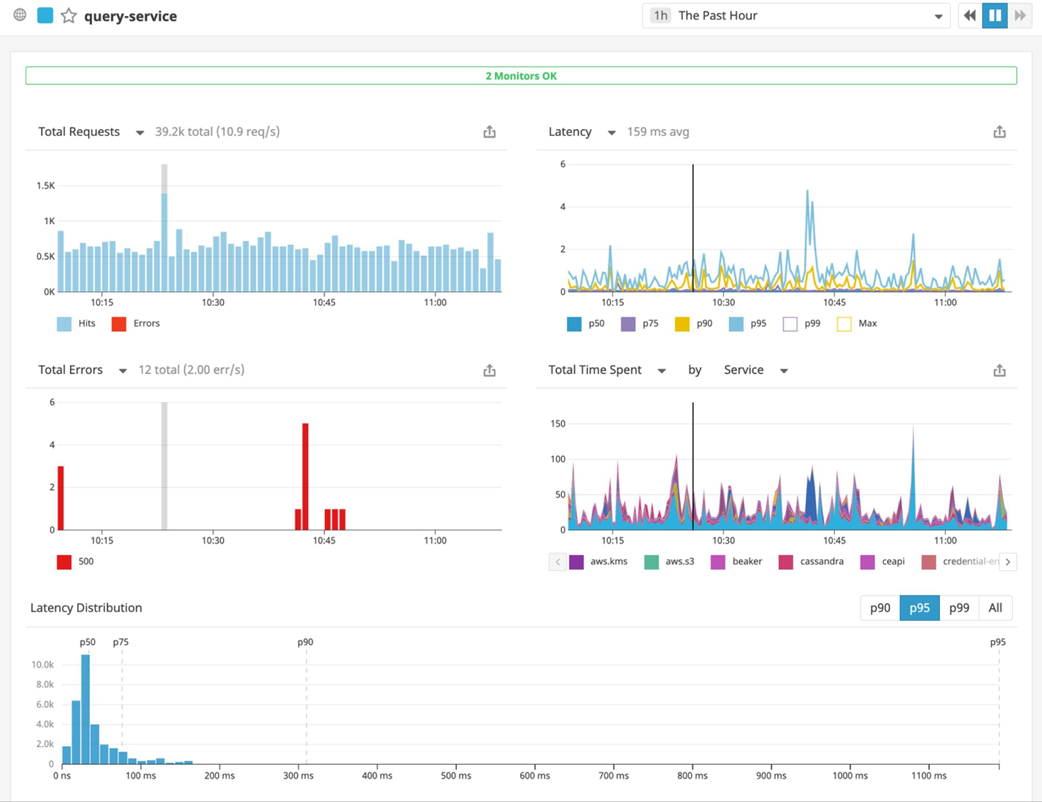
The chapter also emphasizes that good measurement combines lab data and field data. Lab tests help teams iterate quickly and debug precisely under controlled conditions, while field data reveals what real users actually experience across devices, networks, regions, and workloads. The best targets balance these inputs, account for different user contexts, and change as the product matures, so performance work becomes part of everyday product development rather than a separate effort competing for attention.
Specific goals focus effort in areas that matter to users.
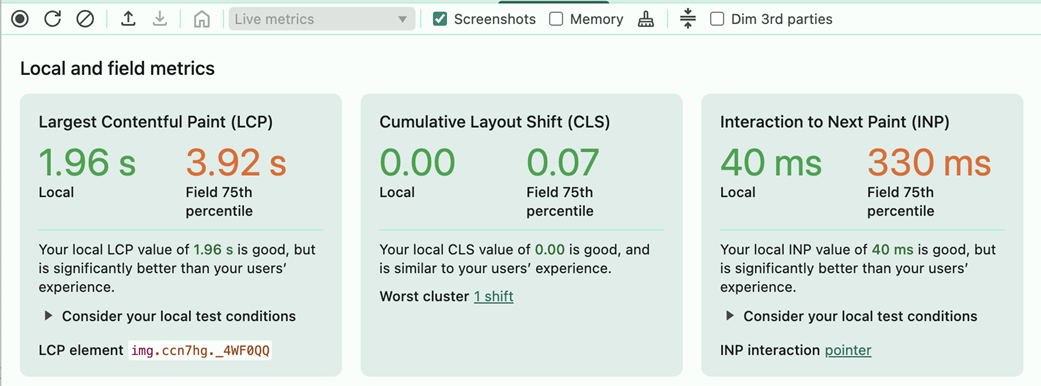
Core Web Vitals data shown in Chrome DevTools.
APM dashboard showing latency percentiles, throughput, and error rate
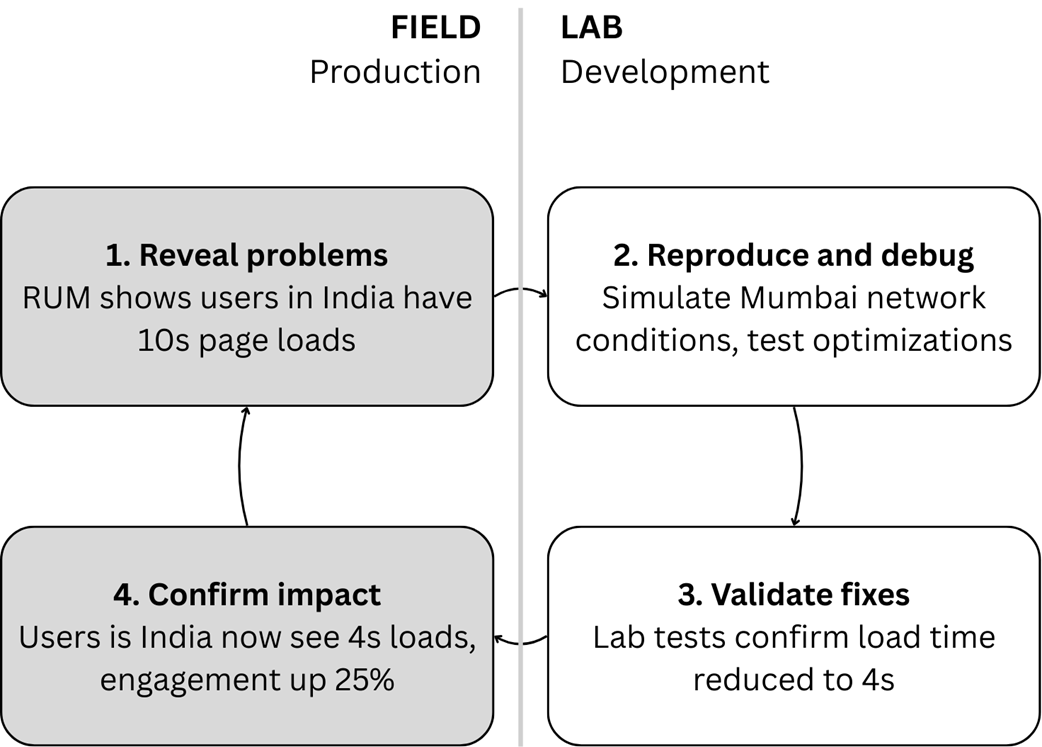
The lab-field measurement cycle.
Flow-based performance target for e-commerce checkout.

Summary
- Vague goals like "make it faster" waste effort by spreading teams thin across random optimizations and create measurement, priority, and validation problems.
- Performance goals work best when engineering and product leadership set them together, before optimization work begins.
- Effective performance goals are specific, realistic, and user-centered. They name exactly what you are measuring, account for your constraints, and connect to outcomes users care about.
- Choose metrics that predict user satisfaction for your platform: Core Web Vitals for web; response-time percentiles, throughput, and error rates for backend; startup time and frame rate for mobile; launch time, input latency, resource consumption, and file operation time for desktop.
- You need both lab data and field data: lab data enables rapid iteration and precise debugging, while field data reveals how users experience your product. Use field data to discover problems, lab data to debug and fix, and field data again to confirm impact.
- Effective targets focus on complete flows rather than isolated metrics, account for different user contexts, and evolve as your product matures.
- Goals only matter when embedded in daily work. Make performance part of your definition of “done.”
FAQ
What is wrong with vague performance goals like “make it faster”?
Vague goals waste effort because teams cannot agree on what to measure, they optimize the wrong things, and they cannot prove success. Clear goals should be specific enough that different people cannot interpret them differently.
What makes a performance goal effective?
Effective performance goals are specific, realistic, and user-centered. They define exactly what is being measured, what target must be met, and how that improvement affects the user experience.
Why should performance goals focus on user journeys instead of component-level metrics?
User journey metrics reflect the complete experience users actually care about, while component-level metrics only show isolated system parts. Optimizing parts of the system does not necessarily improve the full journey users experience.
How do engineering and product teams work together to set good performance goals?
Engineers help determine what is measurable and achievable, while product managers help identify which user journeys matter most to the business. Together, they can set goals that are both realistic and meaningful.
What does it mean to name exactly what you are measuring?
It means stating the specific metric, threshold, and user context clearly, such as “95% of search queries return results in under 200ms.” If two engineers could interpret the goal differently, it is not specific enough.
Why must performance targets be realistic?
Unrealistic targets demotivate teams and may be impossible given the current architecture, tools, or network conditions. Targets should be based on what the system can reasonably achieve and what can actually be measured.
Which metrics matter most for web applications?
For web apps, the most useful metrics often are Largest Contentful Paint (LCP), Interaction to Next Paint (INP), and Cumulative Layout Shift (CLS). These metrics reflect how fast content appears, how responsive interactions feel, and how stable the page is while loading.
Why is it important to combine lab data and field data?
Lab data helps you test and debug under controlled conditions, while field data shows what real users actually experience in production. Using both gives a complete picture and helps ensure optimizations improve real user satisfaction.
How should performance targets account for different user contexts?
Targets should be segmented by context such as device type, network quality, region, or usage pattern. A single target often favors privileged users and ignores others who may experience much worse performance.
How do performance goals change as a product matures?
Early-stage products should focus on preventing major problems, growth-stage products should tighten targets as performance affects conversion, and mature products should pursue more aggressive and differentiated performance. Targets should be reviewed regularly and updated as user expectations change.

 Fast by Default ebook for free
