2 Measure the real cost of slow performance
Speed is presented as a core ingredient of trust, engagement, and revenue: when products feel responsive, people stay in control and keep using them, but even small delays can quietly reduce conversions, increase support burden, and erode confidence. The chapter argues that performance should be treated as a durable product quality, not a one-off optimization, because slowdowns often become visible only after they have already affected real users and business outcomes.
Across web, mobile, backend, and desktop examples, the text shows how seemingly minor regressions can produce major losses. A slower checkout can cut sales, an API slowdown can trigger SLA breaches and customer churn, and a desktop rendering problem can lead to cancellations and bad reviews. It also explains that performance affects discoverability before users even arrive: search rankings, app store visibility, and enterprise evaluations all reward fast, stable systems and penalize slow ones, meaning some losses happen before analytics ever capture them.
The chapter then shifts inward to the hidden organizational costs of slow systems. Regressions create unplanned work, reduce developer productivity, hurt morale, and can exclude users on weaker devices, slower networks, or assistive technologies; they can also increase infrastructure spending. To make performance matter to stakeholders, the chapter recommends translating technical issues into money, time, and trust, and offers a simple repeatable method: pick a high-value flow, find the baseline, estimate the value of success, model a modest slowdown, and present the resulting cost clearly so performance becomes a business priority rather than an abstract concern.
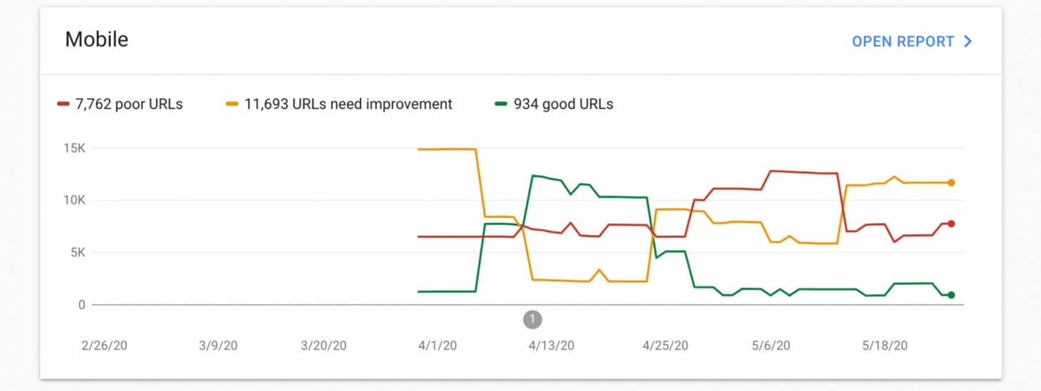
An example Core Web Vitals report in Google Search Console.
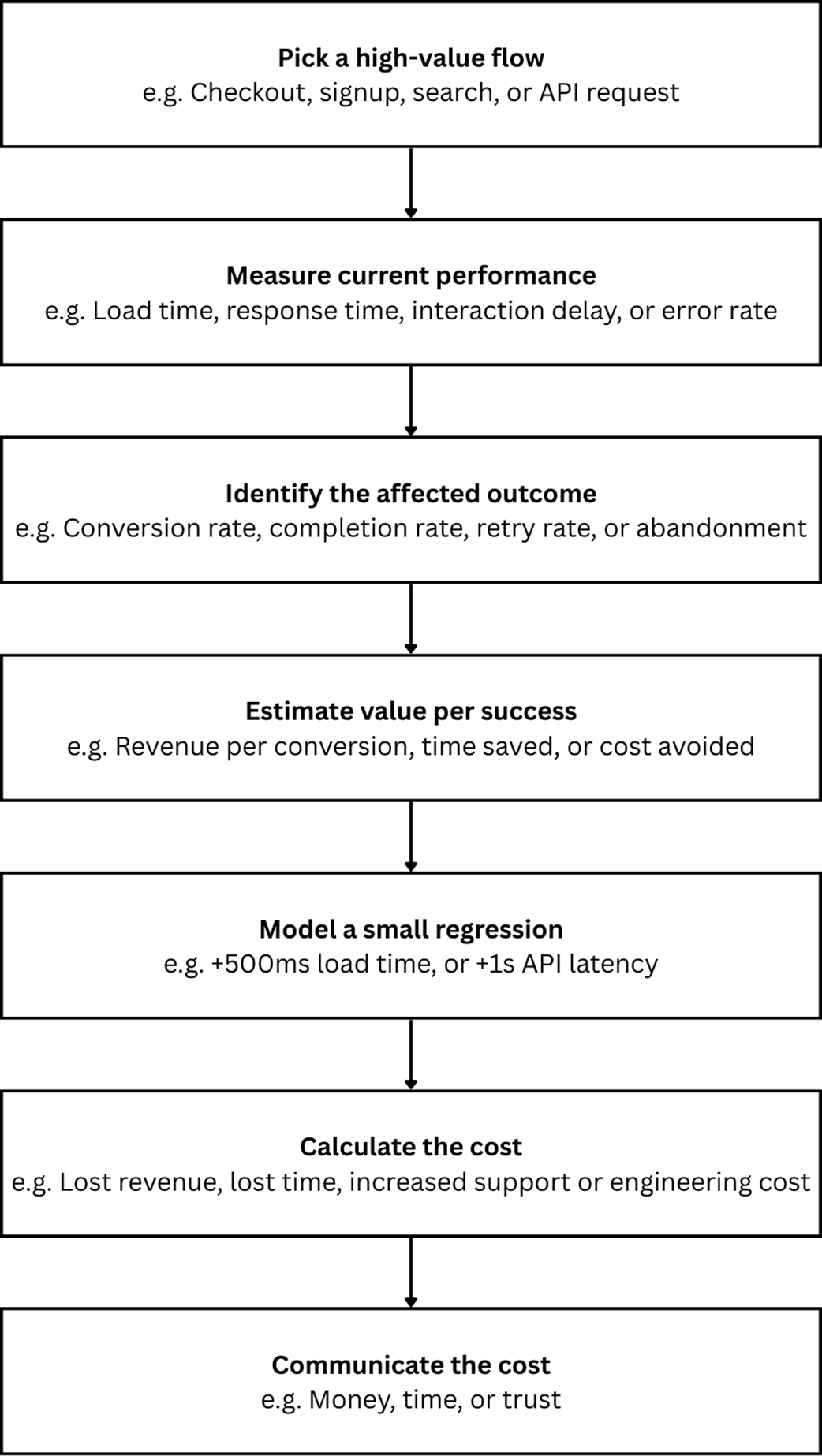
Workflow for estimating the cost of performance issues.
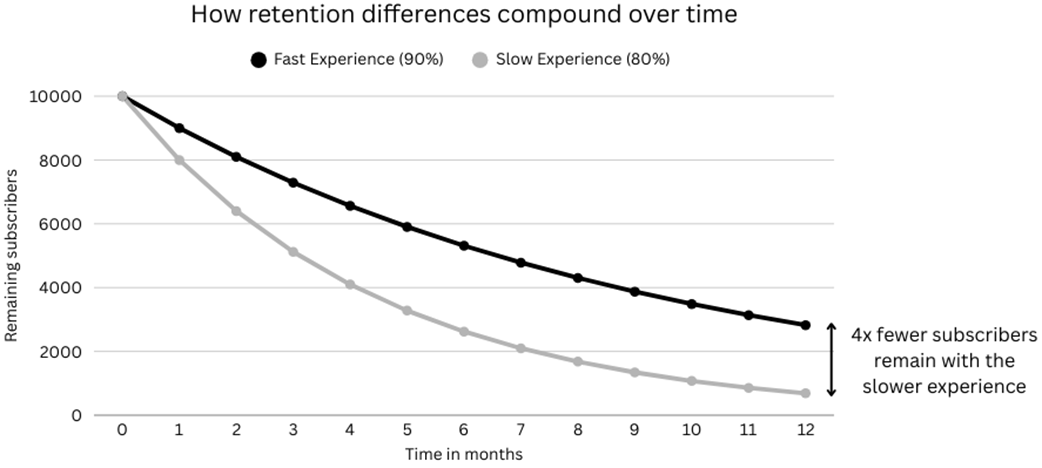
Small retention differences compound into large gaps over time.
Summary
- Performance regressions cause silent but significant damage across platforms.
- Slow performance affects discovery: search ranking, app-store placement, and API evaluation.
- Inside organizations, slow systems create productivity loss, morale erosion, reduced inclusion, and higher infrastructure costs.
- You can reframe performance issues using the currencies stakeholders care about: money, time, and trust.
- You can estimate impact using conversion deltas, productivity waste, and retention.
- A simple cost analysis on a single high-value flow can make performance risk visible to the rest of the organization.
FAQ
What is the main idea of chapter 2, “Measure the real cost of slow performance”?
The chapter explains that slow performance is not just a technical issue. It affects revenue, user trust, discoverability, engineering time, morale, inclusion, and infrastructure costs. The goal is to measure those costs so performance can be discussed as a business priority.
Why can slow performance be so expensive even when nothing appears to be broken?
Slowdowns often do not cause crashes or obvious errors. Instead, they subtly reduce conversions, increase churn, hurt rankings, and create hidden rework. Because the damage appears gradually across many sessions, the true cost can be much larger than it first seems.
How can a small slowdown affect conversions on web or mobile products?
Even a delay of a second or two can make users hesitate or drop off during important flows like checkout or sign-up. A small percentage drop in conversion can translate into millions in lost revenue when traffic volume is high.
What discovery costs does slow performance create before users even reach the product?
Slow performance can reduce search rankings, lower app store visibility, and cause enterprise buyers to reject APIs during evaluation. That means some users never arrive at all, so the loss is invisible in normal product analytics.
How does slow performance affect search rankings?
Search engines reward fast, stable experiences because they improve user satisfaction. Metrics like Core Web Vitals are part of ranking signals, so pages that load slowly or shift unexpectedly may rank lower and receive less traffic.
Why does performance matter for app store visibility and ratings?
App stores use signals like crashes, responsiveness, and battery drain to rank apps. Slow or unstable apps are more likely to get warnings, lower visibility, and poor reviews, which makes it harder for new users to discover and trust them.
What are the hidden internal costs of slow performance for engineering teams?
Slow systems create unplanned work: debugging regressions, profiling services, fixing queries, and rolling back changes. That takes time away from roadmap features, increases stress, and reduces overall productivity.
Why does slow performance hurt morale and collaboration?
Repeated firefighting makes teams feel like their work does not matter because regressions keep coming back. It also creates conflict between teams when performance trade-offs are made without shared metrics or business context.
How can performance problems create inclusion and accessibility issues?
Slow experiences hit hardest on low-end devices, slow networks, older hardware, and assistive technologies. Users in those conditions may bounce or be excluded entirely, which can create blind spots in data and even compliance risks in some regions.
What is the basic process for estimating the cost of slow performance?
Choose a high-value flow, establish a baseline, tie the flow to business value, model the impact of a small slowdown, and present the result clearly in terms of money, time, or trust. The chapter encourages using rough but reasonable estimates to make the cost visible and actionable.

 Fast by Default ebook for free
