1 What is performance engineering?
Performance engineering is presented as a disciplined way of building software so that speed and reliability happen by design, not by chance. Rather than treating performance as a late-stage rescue effort, it makes responsiveness a core requirement that influences architecture, coding, testing, deployment, and production monitoring from the beginning. The chapter argues that this approach matters because fast systems are not only technically healthier, but also more trustworthy, more efficient to run, and more likely to satisfy users and support business goals.
A major warning in the chapter is the performance decay cycle, in which teams ship features, wait for users to complain, rush a fix, and then return to feature work until the next regression appears. This reactive pattern allows small slowdowns to accumulate unnoticed, making systems progressively slower, more fragile, and harder to predict. The chapter shows that this cycle affects every platform: web and mobile apps lose conversions and engagement when delays are tiny, backend services lose adoption and productivity when latency grows, and desktop or native apps lose users when responsiveness falls short of expectations.
To break that cycle, the chapter introduces the Fast by Default model, which combines a simple view of how systems behave with four ongoing practices that keep performance healthy over time. The system is understood through a user-to-result flow that helps teams locate where delays originate, while the practices of measuring, building, owning, and maintaining ensure that performance is visible, designed for, shared across the team, and continually protected as the software evolves. Through an example dashboard, the chapter shows how these practices turn a sluggish product into one that can stay fast as features, traffic, and complexity grow.
The performance decay cycle. Teams ship updates to production as usual. At some point, users complain about performance, the team panics and scrambles into action, rushes out a hotfix, then returns to shipping features. The arrows show how each stage leads inevitably to the next: the hotfix buys time but does not prevent future regressions, so the cycle repeats.

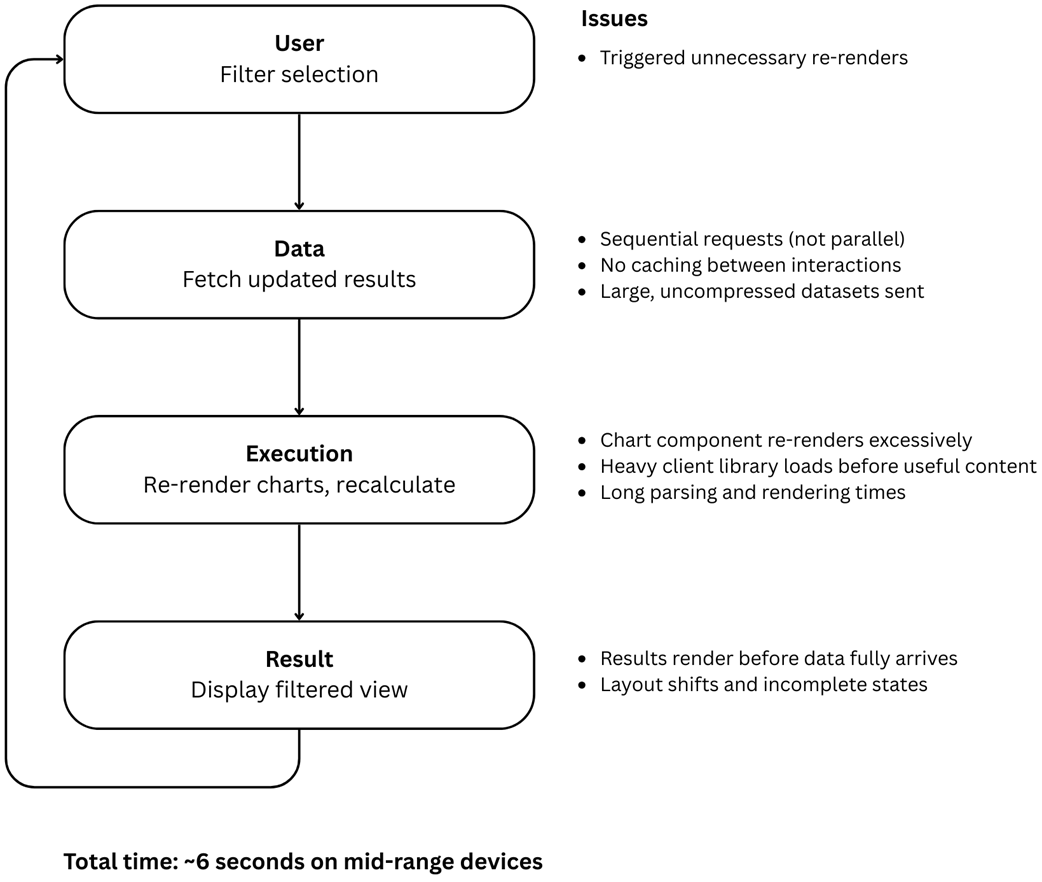
The System Paths. Every user-facing interaction follows these four stages: the user performs an action, data is fetched or updated, the system processes and renders the data, and a result appears. Performance problems can originate at any stage.

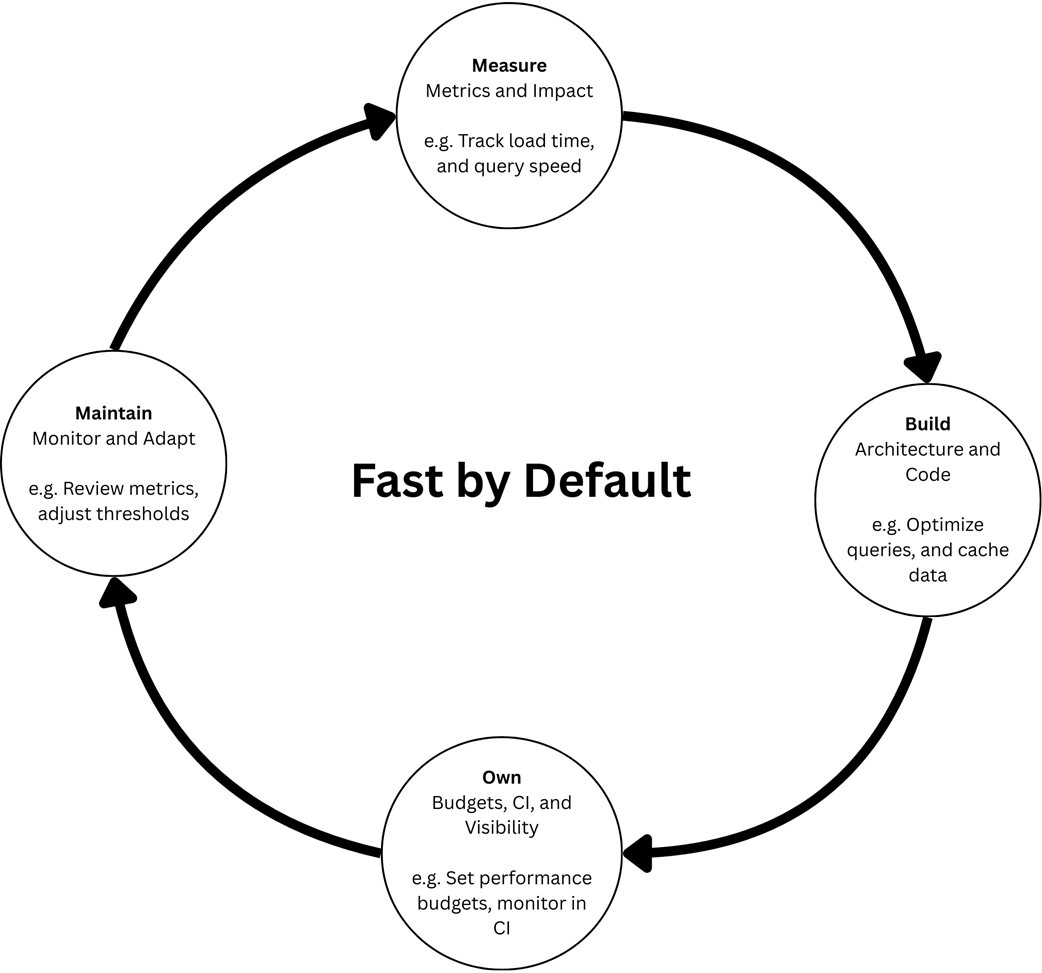
The Fast by Default practices. Teams keep systems fast through four continuous practices: measure metrics and impact, build speed into architecture and code, own performance through budgets and CI visibility, and maintain by monitoring and adapting over time. Each practice strengthens the next, and the cycle repeats as the system evolves.
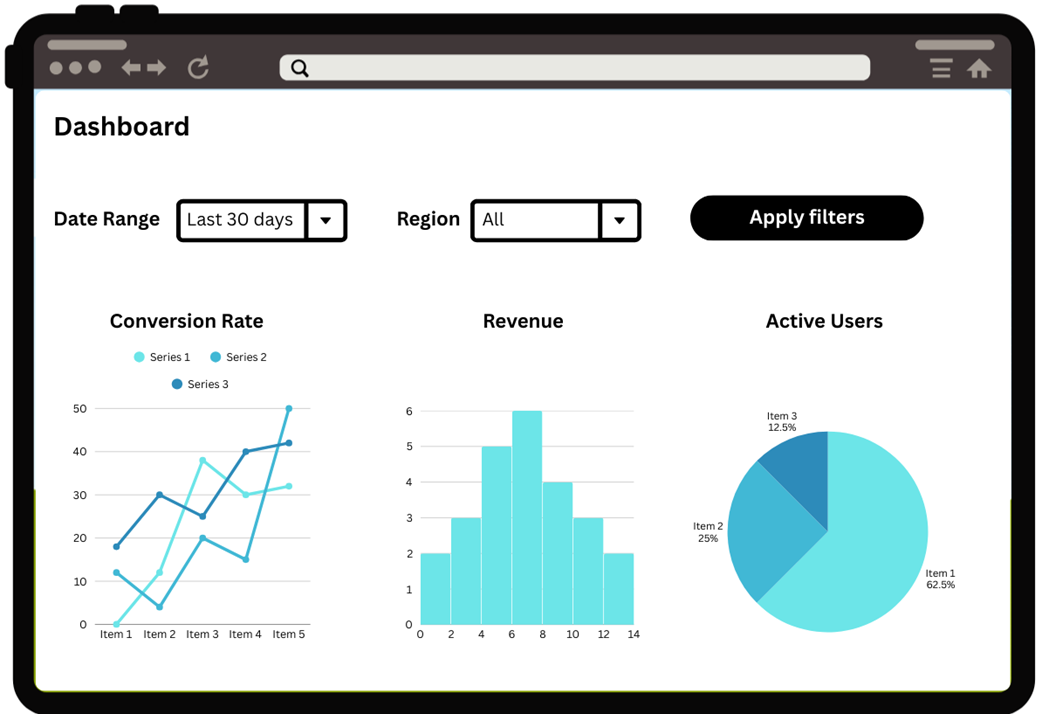
An example dashboard application. Filter controls at the top trigger data fetches and re-renders across three chart panels. Clicking "Apply filters" touches every System Path: the user acts, data is fetched, charts re-render, and results appear.
The slow dashboard’s System Paths. Each stage has problems that add to the total delay: the User stage triggers unnecessary re-renders, the Data stage makes sequential requests without caching, the Execution stage re-renders excessively with heavy libraries, and the Result stage shows incomplete states before data arrives.
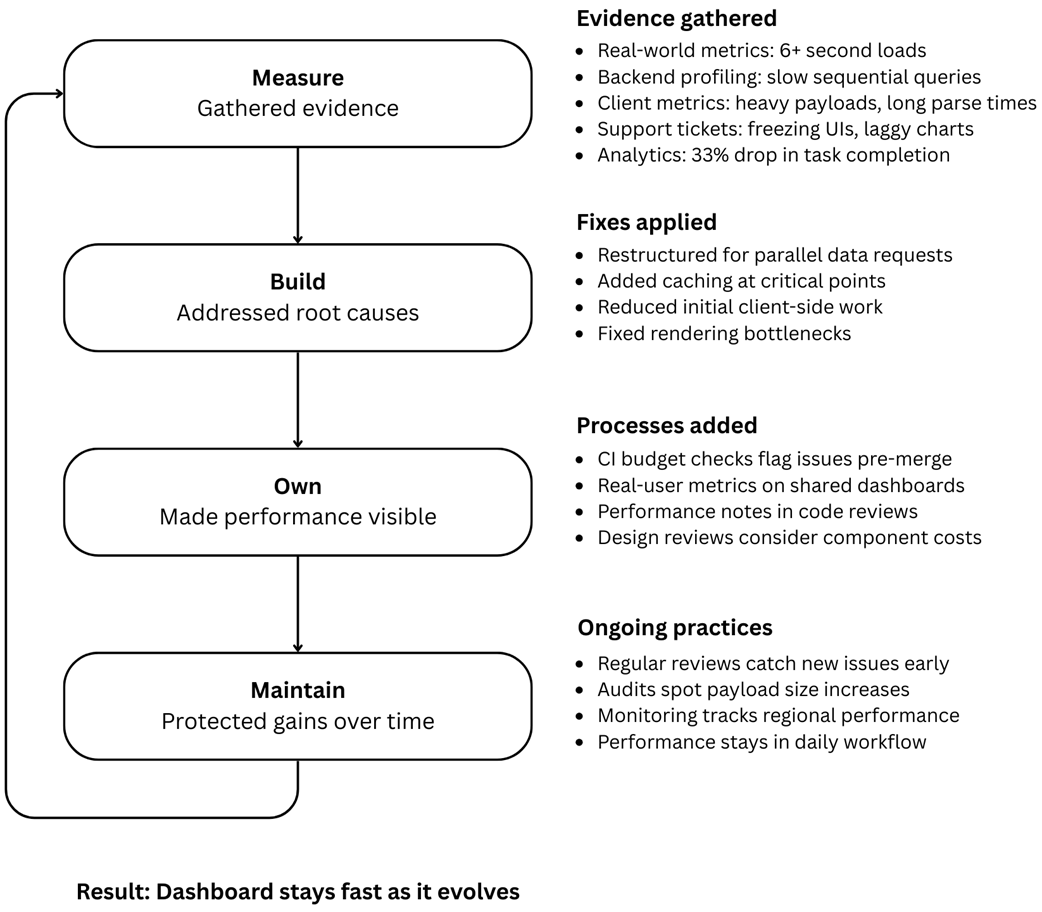
Applying Fast by Default practices to fix the dashboard. The team measures to gather evidence, builds fixes that address root causes, owns performance by making it visible in CI and code reviews, and maintains gains through regular reviews and monitoring. The cycle keeps the dashboard fast as it evolves.
Summary
- Performance engineering designs software so that fast behavior is the natural outcome, not an afterthought.
- Most teams fall into a reactive performance decay cycle: ship, wait for complaints, panic, patch, repeat. The Fast by Default model provides a repeatable alternative that keeps systems healthy.
- The System Paths describe where time is spent during any interaction: the user performs an action, data is fetched or updated, the system processes and renders, and a result appears. Performance problems can originate at any stage.
- The Fast by Default model helps teams recover and sustain speed through four practices: measure impact and set goals, build efficient architecture and code, own performance through budgets and CI visibility, and maintain gains through monitoring and regular review.
- The System Paths show where to look for problems. The four practices show how to fix and prevent them.
- Small delays compound in real-world conditions and quietly damage engagement, trust, and revenue.
- Performance is a business metric. It affects conversions, churn, customer confidence, and internal momentum.
- Treating speed as a shared responsibility creates systems that stay fast as they evolve.

 Fast by Default ebook for free
