Overview
Chapter 12. Emerging directions of event processing
Event processing is presented as a young but rapidly expanding technology whose future is shaped by broadening use cases and changing development practices. The authors argue that the field is moving from a narrow focus in a few industries toward many different application domains, which will force event processing languages and architectures to become more expressive, more distributed, and better suited to a wider range of situations. As the technology matures, it is also expected to shift from proprietary, one-off solutions toward standards that can support interoperability, component reuse, and more consistent ways of describing events, components, and event processing networks.
A major theme is the diversification of event processing itself. The book suggests that future systems will not be one-size-fits-all, but instead will offer different implementations for different functions, quality-of-service needs, and hardware or software platforms. At the same time, event processing will become easier for semi-technical users, especially business analysts, through higher-level tools and abstractions. The technology is also expected to become more deeply embedded in other systems such as BPM, BAM, BI, messaging platforms, ESBs, and packaged applications, where it can help detect situations, guide decisions, and support real-time business responses.
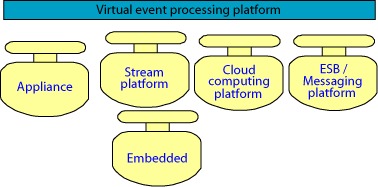
Looking ahead, the authors foresee event processing becoming more virtualized, more optimized, and more intelligent. A virtual event processing platform could hide differences among appliances, cloud systems, stream platforms, and embedded environments, while optimization techniques may evolve from scheduling-based tuning to approaches that can adapt the implementation itself to meet performance goals. They also emphasize the need for stronger software engineering methods, including design patterns, modeling standards, and best practices. Finally, intelligent event processing will likely incorporate machine learning, uncertainty handling, event prediction, and causality reasoning, pushing the field from reactive systems toward proactive ones that can anticipate and mitigate future problems before they occur.
FAQ
What are the main event processing trends described in Chapter 12?
The chapter highlights six major trends: moving from narrow to wide use cases, from monolithic to diversified implementations, from proprietary to standards-based approaches, from programmer-centric tools to semi-technical tools, from stand-alone platforms to embedded capabilities, and from reactive to proactive event processing.What does “going from narrow to wide” mean in event processing?
It means event processing is expanding beyond its early focus on a few industries, such as capital market trading, to many other domains like healthcare, logistics, banking, retail, energy, and transportation. This broader adoption drives language, architectural, and standards changes.Why is event processing expected to become more diversified?
Because different applications need different functions, quality of service levels, and platforms. Some need advanced statistical processing, some require hard real-time behavior or recoverable state, and others run on embedded devices, servers, or mixed environments. A one-size-fits-all approach is no longer enough.Why are standards important for the future of event processing?
Standards are needed to make diverse event processing components interoperable and reusable. The chapter mentions standards for event structure, domain metadata, component models, assembly models, distribution protocols, meta-models, and possibly event processing languages.How will event processing tools change for business users and analysts?
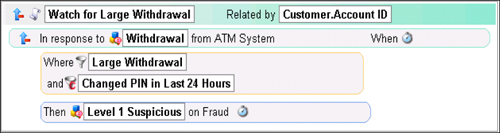
Tools are expected to become more semi-technical and less programming-centric. Business users and analysts will increasingly define rules and compose parts of event processing applications through higher-level interfaces, abstractions, and languages based on goals, intentions, and assertions.What does it mean for event processing to be embedded rather than stand-alone?
Instead of existing only as separate specialist platforms, event processing will increasingly be built into other systems such as BPM, BAM, BI, messaging systems, ESBs, and packaged applications. The chapter suggests that embedded event processing may become the dominant deployment model.How is event processing used in proactive computing?
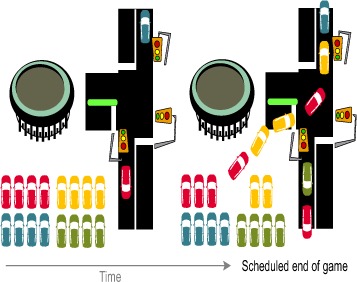
Proactive computing uses event processing to detect undesirable future states before they happen and to take preventive action. An example in the chapter is predicting traffic congestion and adjusting traffic light policies in advance, such as around the expected end of a basketball game.What is a virtual event processing platform?
A virtual event processing platform is a conceptual layer that can be mapped efficiently onto many different hosting platforms, such as hardware appliances, clouds, stream platforms, ESBs, and embedded devices. The goal is to avoid building separate event processing software for each platform.What kinds of optimization challenges are expected in future event processing systems?
Future systems will need more sophisticated optimization because different applications have different objectives, such as minimizing latency or maximizing throughput. The chapter distinguishes between black box optimization, which schedules existing implementations, and white box optimization, which may also change the implementation code itself.What is intelligent event processing?
Intelligent event processing combines event processing with techniques such as machine learning, data mining, Bayesian networks, and causality analysis. It aims to support pattern acquisition, uncertain and inexact events, predicted events, and causal relationships to move event processing toward proactive computing.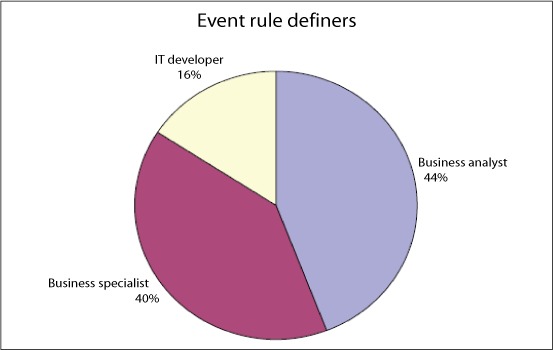

 Event Processing in Action ebook for free
