3 Measuring Your Way to PE Success
This chapter positions measurement as the final, critical pillar for successful platform engineering, tying platform strategy directly to business outcomes. It urges teams to plan for success across five areas from the outset: organizational alignment and structures, end-to-end engineering effectiveness, self-serve product experiences that lower cognitive load, a roadmap that delivers early value while expanding to full SDLC scope, and a clear talent and skills maturation plan. Drawing on lessons from Epetech and cautionary real‑world attempts, it emphasizes Team Topologies, stakeholder engagement, and self-serve boundaries to avoid silo friction, while using a pragmatic decision tree to determine if and when an engineering platform is warranted. Success is ultimately evidenced by accelerated delivery and adoption: faster onboarding, higher deployment cadence, reduced recovery times, increased capability reuse, and improved developer satisfaction that translates to business value.
To scope and prove value, the chapter advocates analyzing the full path to production via value stream mapping, then modeling ROI by quantifying and removing waste. A six-step loop—identify inefficiencies, cost them, simulate returns, secure investment, compare actuals, and adjust—anchors platform value modeling, supported by explicit business and product context, testable assumptions, measures of success, TCO, savings, timelines, and investment metrics. Developer Experience is treated as a first-class signal: cognitive load is measured subjectively and quantitatively, separating intrinsic complexity from extraneous friction. Practical techniques—starter kits and paved paths, unified documentation and portals, and democratized observability—shorten feedback loops and nurture flow, while maintaining “mechanical sympathy” so abstractions teach rather than obscure underlying systems.
The chapter consolidates a common KPI set to track platform health and impact. Adoption metrics (instant onboarding, time to first production deployment, migration/adoption rates), developer sentiment (regular surveys feeding the roadmap), and effectiveness metrics (enhanced DORA: end-to-end lead time including dependency queues, deployment time potential of starter pipelines, MTTD/MTTR, and change failure rate by environment) provide a balanced scorecard. As the platform matures, measures evolve to include cost planning (cloud usage models, licensing, buy‑vs‑build with replaceable components, performance/scalability), continuous risk and compliance scoring, and SDLC-wide telemetry mapped to platform domains. Sustained, evidence-based iteration ensures the roadmap prioritizes the highest ROI capabilities, manages scope to deliver early wins, and systematically scales both platform coverage and organizational skills.
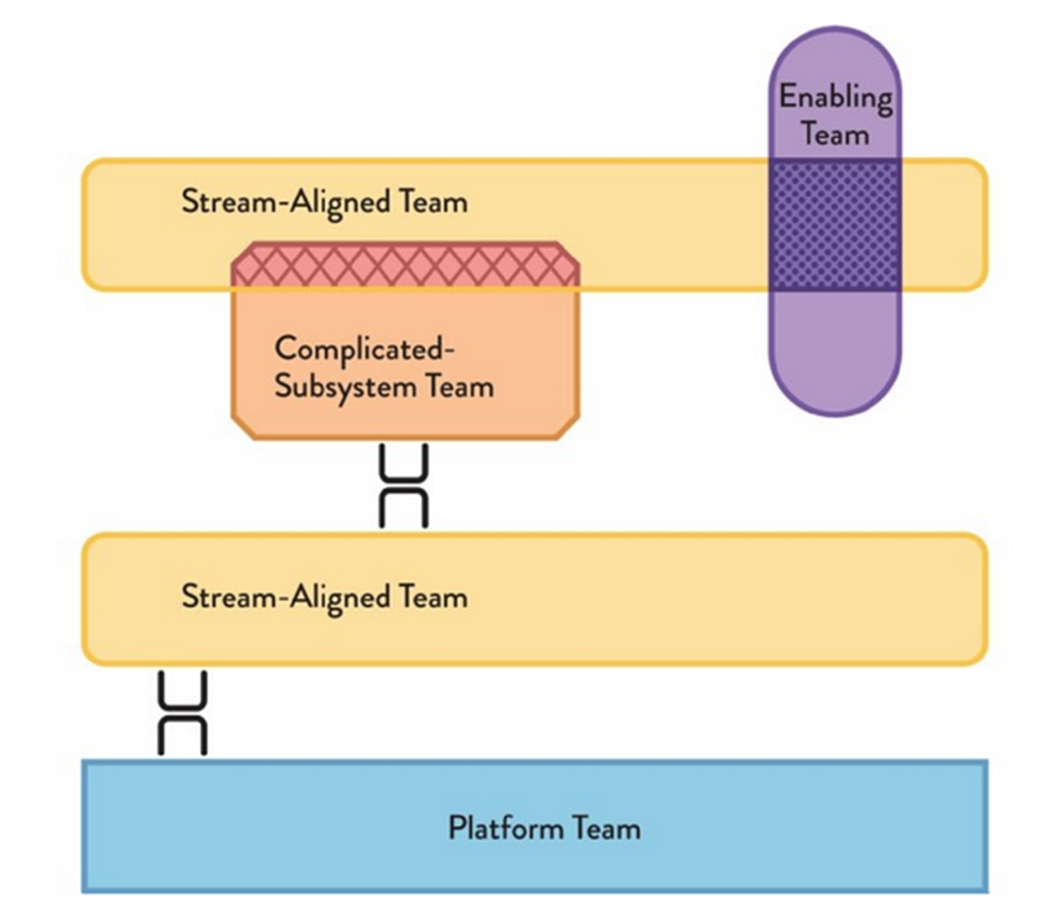
The stream-aligned teams are domain-bounded. But so are the platform team and subsystem team. (Image taken from the book Team Topologies by Matthew Skelton and Manuel Pais, 2019. Used with permission.)
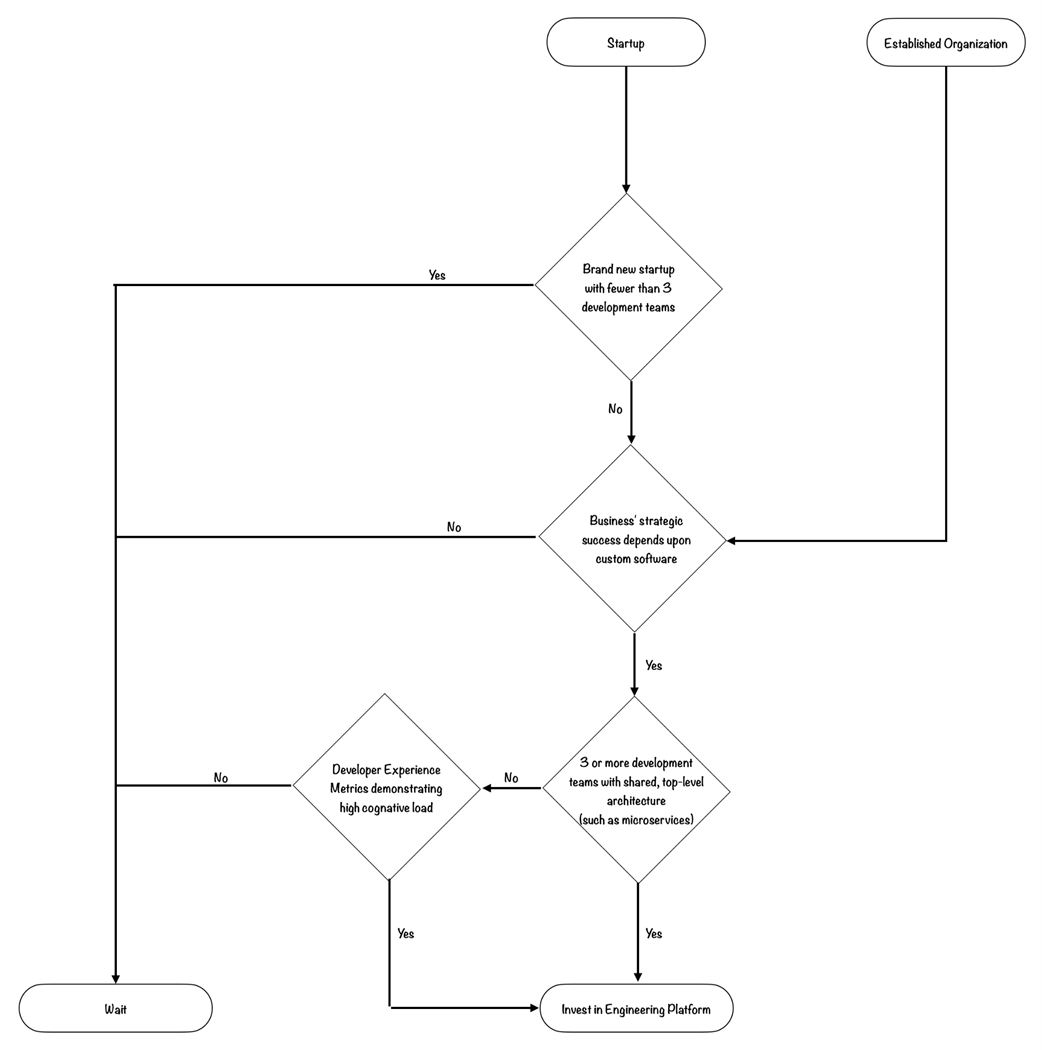
A Decision Tree for Engineering Platform Buildout. This is a question that is often asked about whether an organization is ready for an engineering platform adoption.
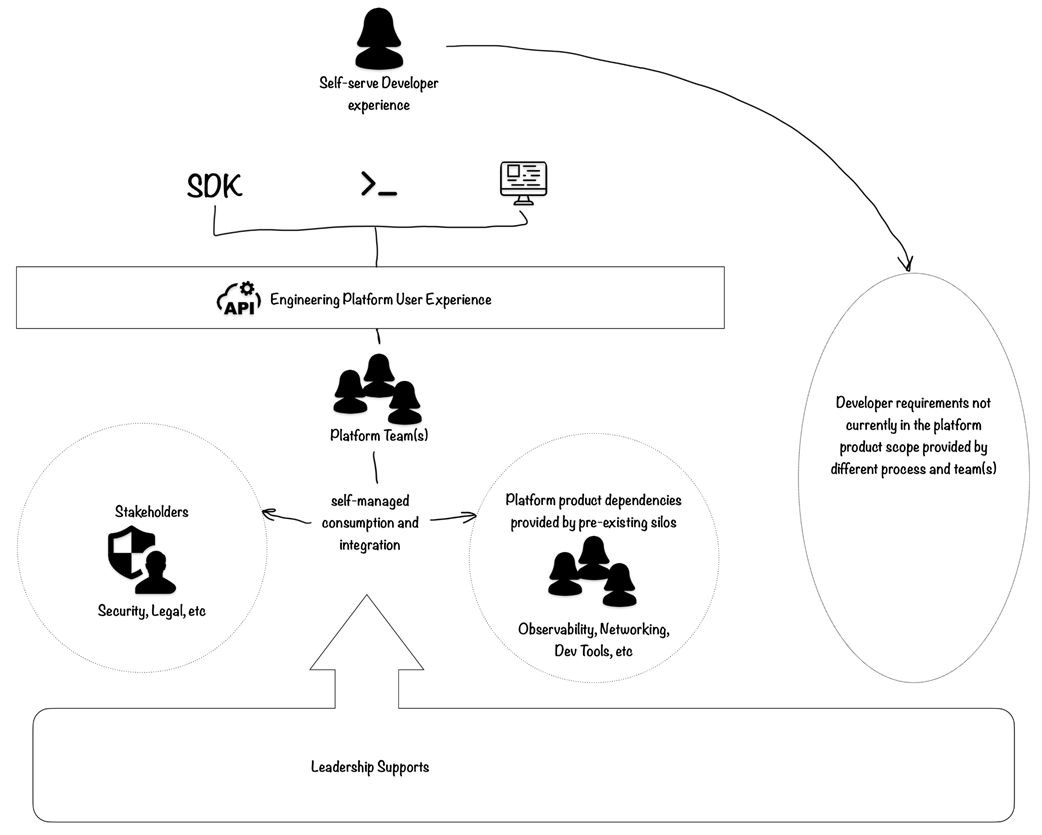
Key organizational prerequisites for building platforms.
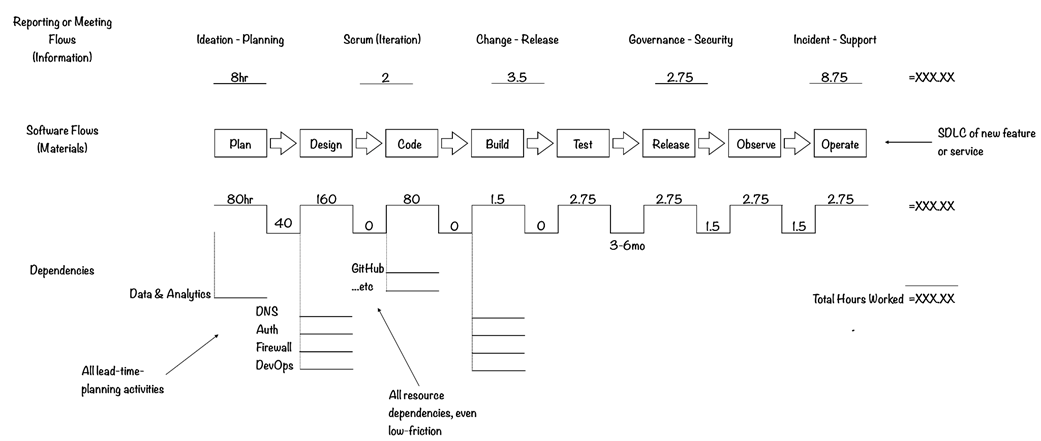
shows An Example of Value Stream Mapping for software delivery. This should account for all tasks or meetings–use average for things that happen on a longer cadence, such as quarterly meetings.
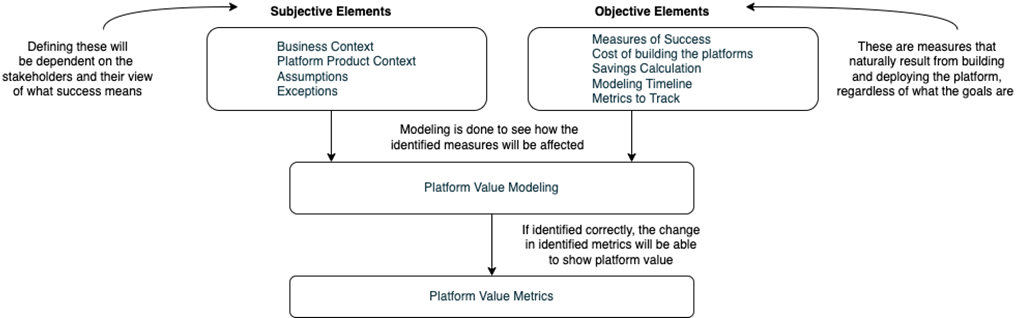
Components of Value Modeling Process. These are both subjective and objective measurements that a TPO should identify by working with stakeholders and engineers, which will be used to show platform value.
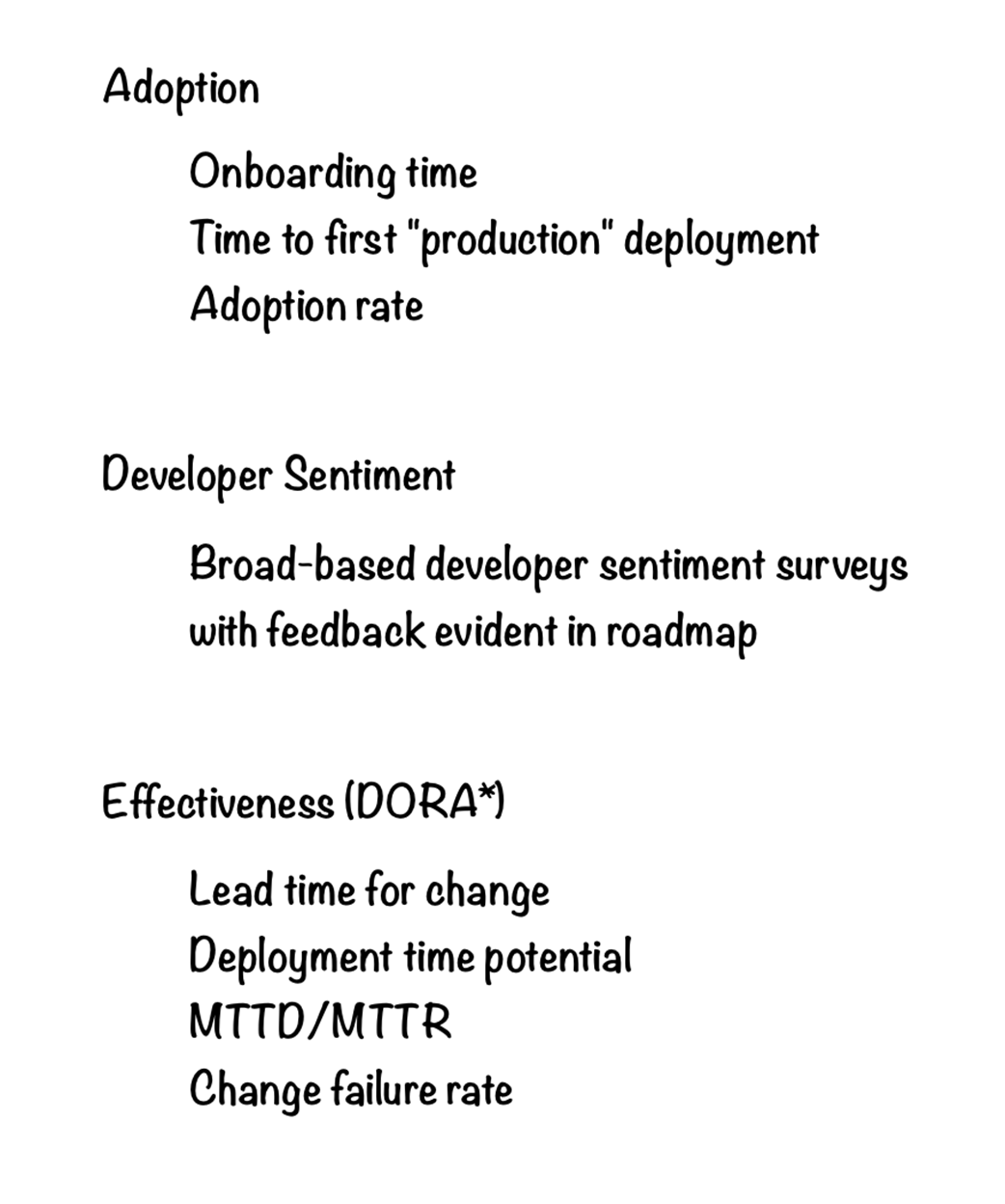
Shared measures for any platform.
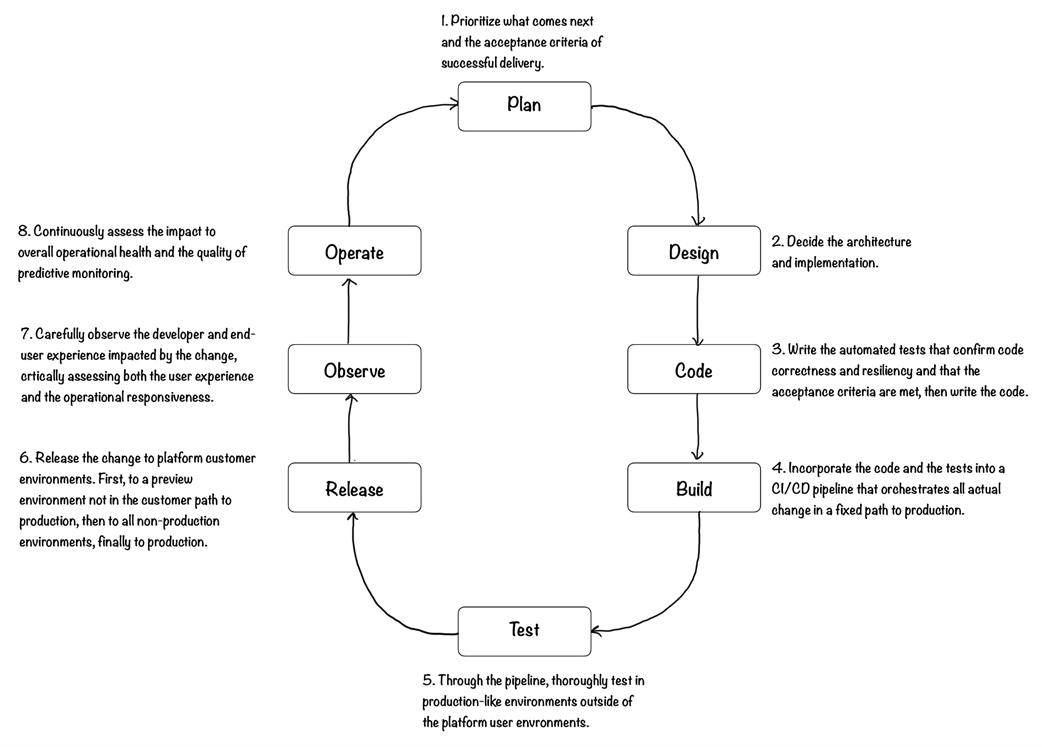
Analyze each step and how it feeds into the next for the measures of success or improvement.
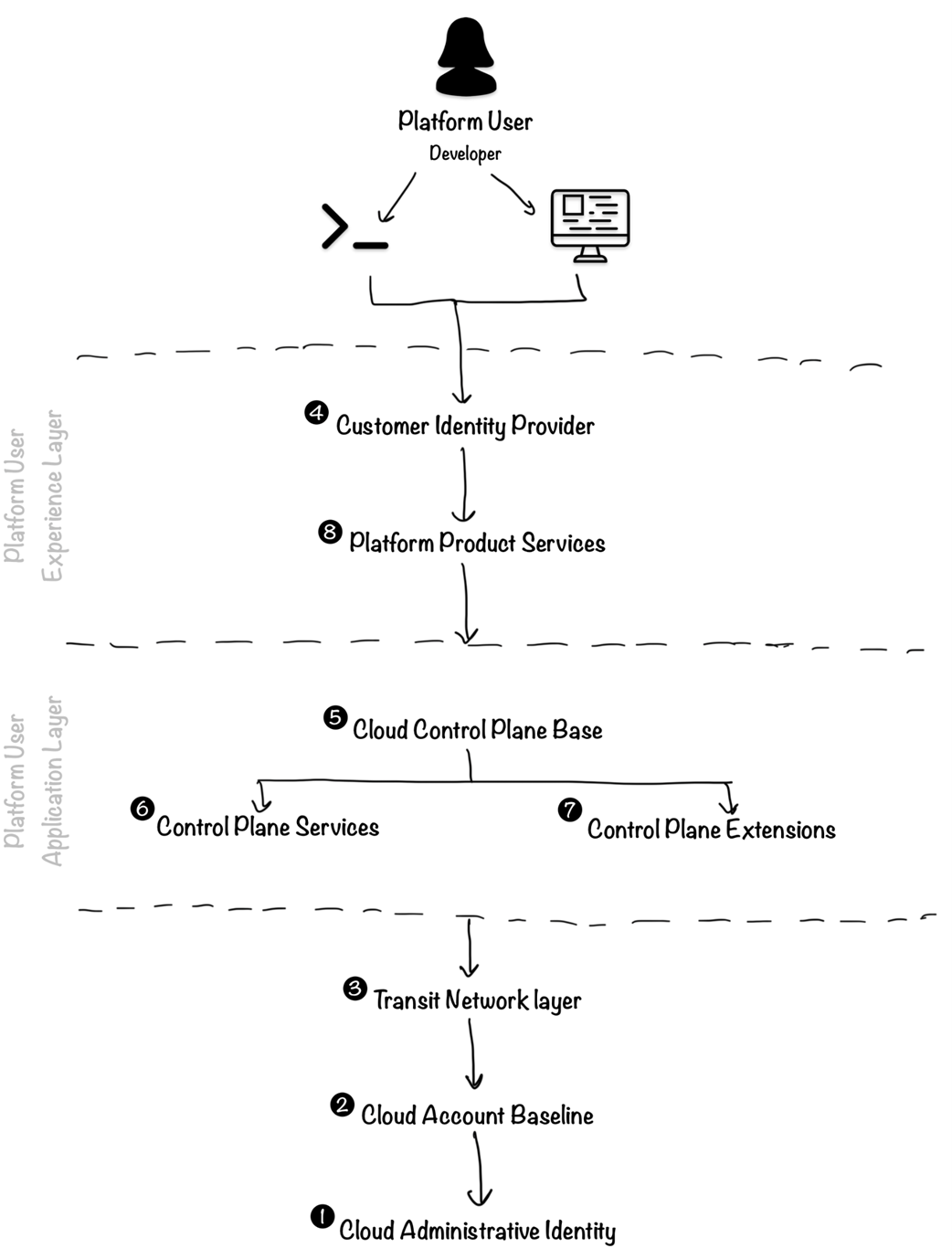
Engineering platform product domains.
Summary
- We should look beyond just revenue as a success metric and also consider employee morale and other factors in platform engineering.
- To determine if our initiatives are effective, we need both objective and subjective assessments, as proven results show the value of our investments.
- We need to set measurement criteria at both the domain level and throughout the SDLC process to get a detailed view of platform engineering metrics.
- By tying measurements to core platform principles, we can assess success across different areas, promoting a product mindset and using tools like end-to-end observability and self-healing mechanisms.
- Simple models and value stream mapping help us quantify returns and justify investments in platform engineering.
- Reducing cognitive load allows developers to focus on high-value tasks, using strategies like simplifying problem domains and promoting data accessibility through observability.
- A capability model for platform engineering streamlines measurement and improves the developer experience.
- Corporate culture has a significant impact on platform engineering, so managing cultural change is essential for successful adoption.
- For effective platform engineering, data-driven improvements and scalable practices like structured automation and cloud-native technologies are crucial.
- We need to define Key Performance Indicators (KPIs) that align with the platform's operating model to measure the platform's value effectively.
FAQ
Why is measurement essential to platform engineering success?
Because it connects engineering work to business outcomes. By tracking faster onboarding, higher deployment cadence, increased platform adoption, shorter incident recovery, and improved developer satisfaction, you can demonstrate accelerated feature delivery and the revenue or cost impact that follows.What organizational changes are prerequisites for a successful platform?
- Adopt clear team boundaries (e.g., stream-aligned, platform, enabling, and complicated-subsystem teams).- Replace siloed handoffs with self-serve interfaces and documented standards.
- Ensure dependent teams can provide service interfaces and admin-level integrations.
- Fund the platform team and remove conflicting “keep-the-lights-on” duties.
- Secure executive sponsorship and mandate early alignment.
How do we decide whether to build an engineering platform now?
Use a simple decision path: if you’re scaling or established, have multiple teams sharing architecture, or your developers report high cognitive load and weak DevEx, building a platform likely pays off. Early-stage startups focused on first-product fit should defer until growth and team count justify the investment.How do we scope a platform using the path-to-production?
Map the end-to-end software value stream (from idea to operations), including people, tools, approvals, and cross-team dependencies. Capture real lead times (including planning and queueing), identify waste, then design a future state that removes friction. This exposes the true platform scope and the highest-leverage opportunities.How do we model platform value and ROI?
Follow a six-step loop: (1) find inefficiencies, (2) quantify their cost, (3) simulate returns via throughput gains or cost reductions, (4) fund based on projected ROI, (5) compare actuals to projections, (6) adjust investments. Include business context, product vision, assumptions, success measures, TCO, savings calculations, timelines, and investment-level metrics.Which adoption and developer experience metrics matter most?
- Onboarding time for teams and individuals should be near-instant and self-serve.- Time to first production (via a guided demo app) gauges cognitive load of the platform.
- Adoption rate across teams surfaces onboarding and usability issues.
- Developer sentiment surveys must feed the platform roadmap with visible follow-through.
How should we adapt DORA-style metrics for platform context?
- Lead time for change should include planning and dependency wait times the platform aims to eliminate.- Measure “deployment time potential” using starter-kit pipelines to isolate platform impact on speed.
- Track MTTD and MTTR across platform capabilities, ensuring the right team is alerted fast.
- Monitor change failure rate per environment; aim for failures to be caught before production.
What is developer cognitive load, and how do we measure and reduce it?
Cognitive load is the mental effort to deliver value. Measure it via developer self-reports and quantitative signals (e.g., time-to-first-prod, friction in docs/flows). Reduce it by providing accelerators/starter kits, a single portal for docs and feedback, and democratized observability to shorten feedback loops.What is mechanical sympathy and why does it matter in platforms?
It’s developers’ practical understanding of underlying systems (e.g., runtime, infrastructure) to write performant, reliable code. Platforms should pave roads without fully hiding fundamentals; otherwise, teams risk fragile or inefficient software despite polished abstractions.How should our measures evolve as the platform matures?
- Cost planning: track TCO (cloud usage, licensing, ops), and run buy-vs-build with composability to avoid lock-in.- Risk: continuously score security, compliance, and governance posture.
- SDLC alignment: define health measures across plan→operate stages.
- Domain fitness: validate loose coupling, service-first design, evolutionary architecture, ubiquitous language, release independence, and accessible domain events.

 Effective Platform Engineering ebook for free
