10 Platform Product Evolution
This chapter explains how organizations evolve platform products to accelerate delivery, boost reliability, and improve developer experience. It argues that treating the platform as a product—guided by user needs, measurable outcomes, and continuous improvement—becomes a powerful differentiator as software ecosystems scale. Through the running example of Epetech’s journey from monolith to microservices, the chapter weaves together measurement, product management, culture, reliability engineering, and modern platform tooling to show how cohesive platform strategy translates into tangible business value.
Success starts with clear metrics aligned to organizational goals, combining adoption, productivity, quality, business, and the DORA key metrics with meaningful leading indicators. Epetech complements this with strong feedback loops—surveys, interviews, forums, and advisory groups—so quantitative signals are grounded in developer insights. Treating the platform as a product brings a defined vision and mission, a transparent roadmap, agile, MVP-driven delivery, and the pivotal role of a Platform Product Manager to align stakeholders and course-correct via KPIs. Cultural transformation underpins the approach: DevOps practices (CI/CD, IaC, observability) and Team Topologies (stream-aligned, platform, and enabling teams with clear interaction modes) reduce friction, shorten feedback cycles, and elevate shared ownership.
Reliability is engineered through SRE practices—SLOs, SLIs, and error budgets—plus proactive monitoring, automation, and data-driven decisions that balance change velocity with stability. The platform experience is amplified by intelligent assistants (as with EpetechBot for deployment, alerts, knowledge access, and code analysis) and by modern orchestration tools that abstract complexity. Finally, the chapter clarifies the complementary roles of Internal Developer Platforms (execution, self-service, automation) and developer portals (discoverability, documentation, collaboration) and shows how integrating them minimizes cognitive load. The outcomes are compelling: faster time-to-market, fewer incidents and quicker recovery, higher developer satisfaction and retention, and clear competitive advantage—sustained by continuous feedback and iterative evolution.
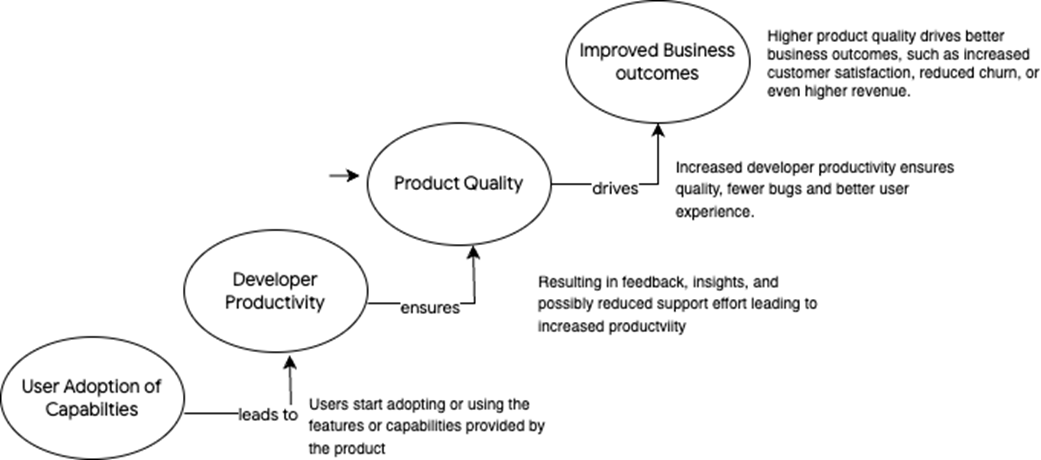
Quantifying the value across multiple levels, from building the capabilities to addressing the business outcomes.
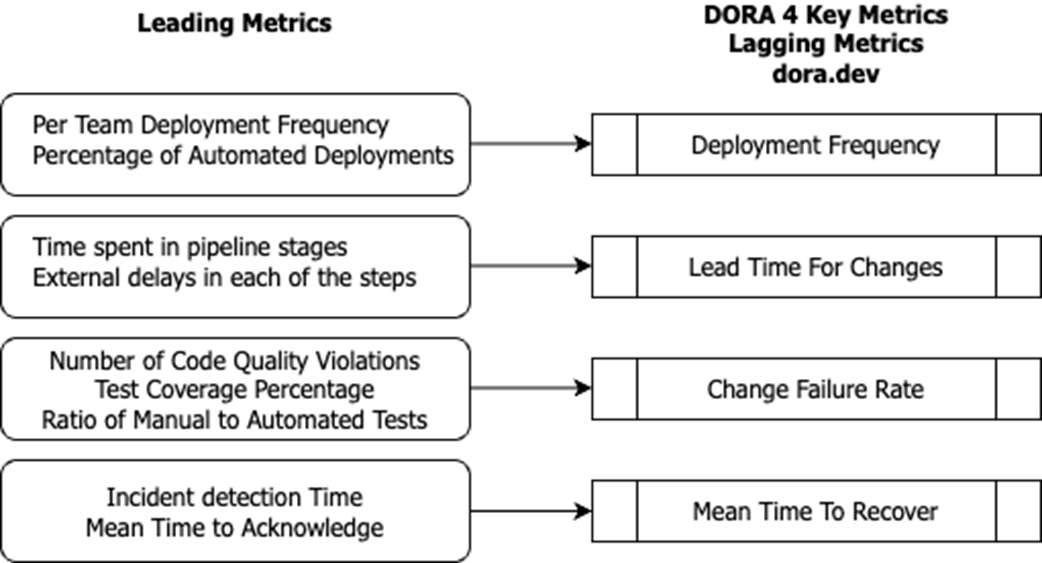
Key leading metrics used by Epetech to understand and use the DORA lagging metrics
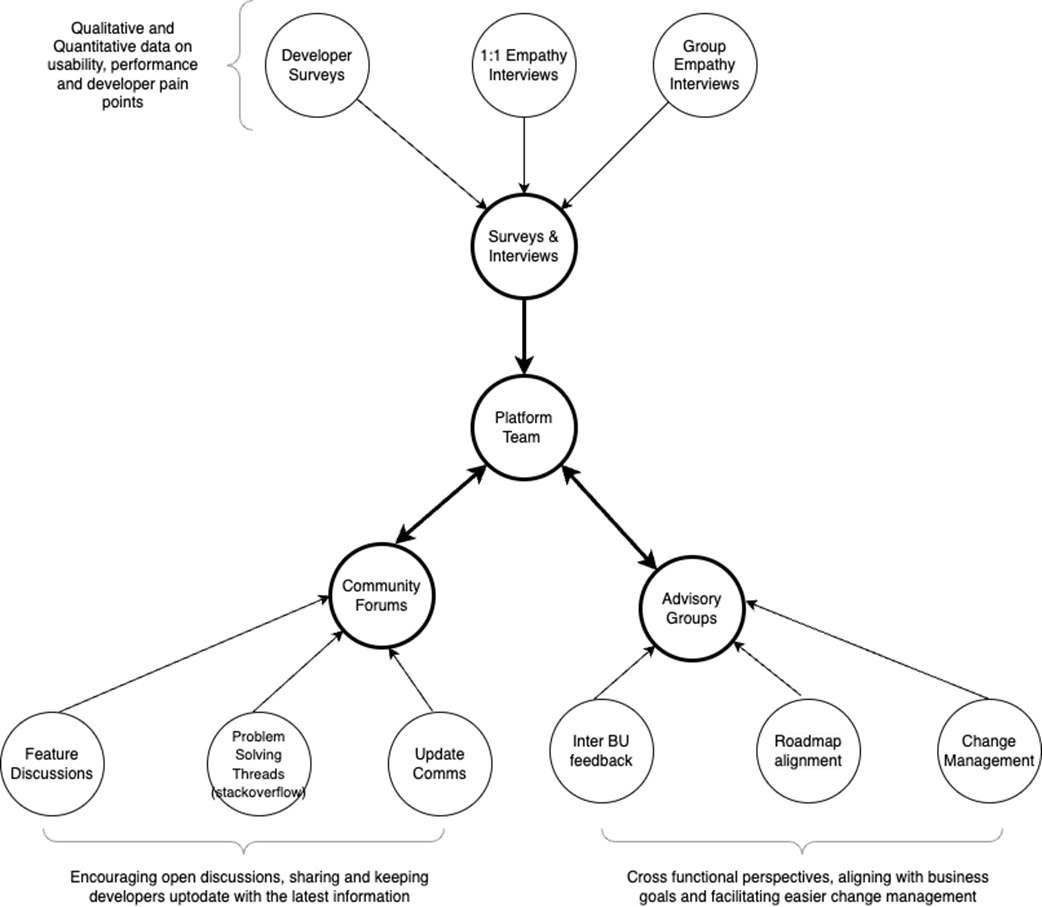
Feedback loop ecosystem for the platform engineering team, enabling comprehensive end-user-driven development
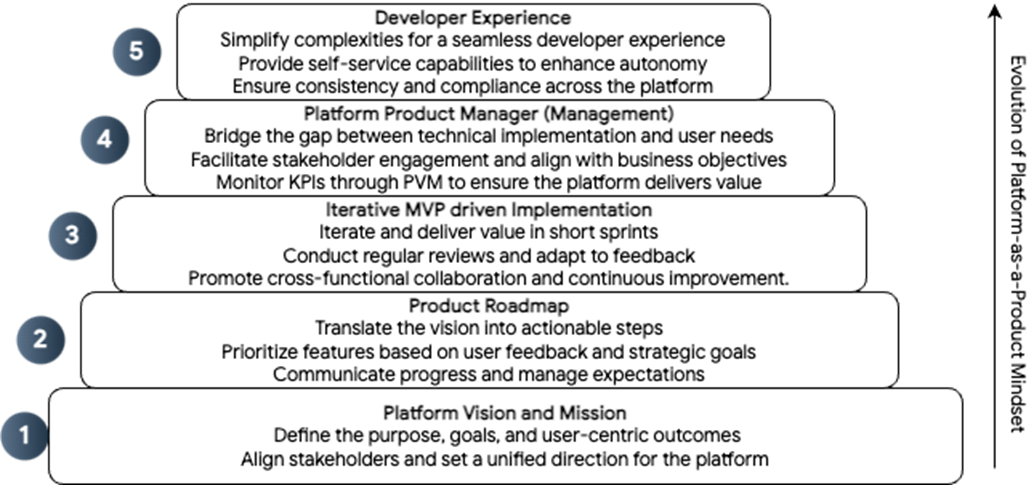
Visual representation of the lifecycle of the platform-as-a-product approach, highlighting how to transition from vision and mission to a fully operational, developer-centric platform
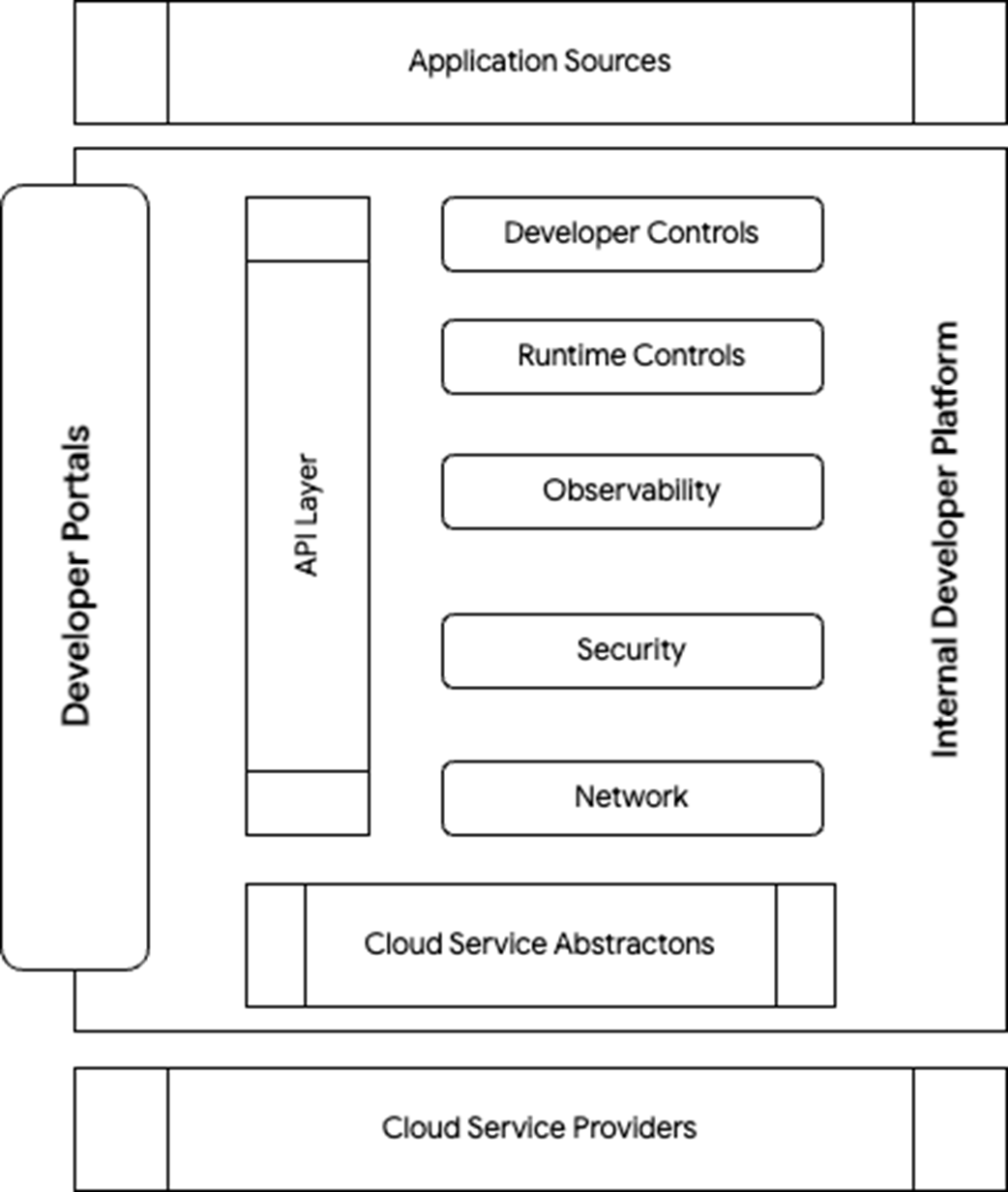
A simplistic view of how Internal Developer Platforms and Developer Portals interact with each other in a platform-engineering-centric organizational construct
Summary
- Measure what matters by establishing clear, business-aligned metrics early to track platform success, using both lagging indicators like the DORA four key metrics and leading indicators such as code quality, test coverage, and developer satisfaction to guide continuous improvement.
- Adopt a platform-as-a-product mindset by treating the platform not just as a toolkit, but as a product with defined users, problems to solve, and measurable value propositions to ensure relevance, adoption, and strategic alignment.
- Define a clear vision and mission that capture long-term goals and the developer experience you want to create, anchoring all platform decisions to prevent scope drift and keep stakeholders aligned.
- Build and maintain a strategic roadmap that translates vision into actionable steps, prioritized through user feedback and business objectives, and use it as both a planning guide and a stakeholder communication tool.
- Iterate with agile practices, delivering platform capabilities in small, validated increments and incorporating continuous feedback loops.
- Empower the platform with the right roles, using a Platform Product Manager to bridge technical execution and business outcomes through user research, stakeholder engagement, and tracking platform KPIs.
- Focus on developer experience by simplifying infrastructure complexity, providing robust self-service capabilities, and enforcing consistency and compliance to reduce cognitive load and speed up delivery.
- Foster a collaborative culture by breaking down silos, adopting DevOps principles, forming cross-functional teams, and applying Team Topologies to improve speed, quality, and team morale.
- Integrate reliability into the platform by applying SRE practices to balance change velocity with stability, using SLOs, SLIs, and error budgets to ensure reliability is a built-in feature.
- Leverage intelligent tools such as automation, AI, and orchestration platforms to reduce manual work, improve decision-making, and accelerate delivery cycles.
- Unify Internal Developer Platforms and Developer Portals to combine operational strengths with discoverability and collaboration benefits, reducing context switching and boosting productivity.
- Deliver tangible business outcomes by accelerating time-to-market, improving reliability, increasing developer satisfaction, strengthening competitive differentiation, and achieving measurable cost savings.
FAQ
What metrics should we use to measure the success of our platform organization?
Track a balanced set across engineering and business outcomes:
- Adoption: % of teams on the platform, active daily/weekly users, use of golden paths.
- Productivity (DORA): Deployment frequency, lead time for changes, change failure rate, MTTR.
- Quality & Reliability: Incident rates, MTTD/MTTR, services with full telemetry.
- Autonomy: Self-service actions without platform team intervention.
- Business: Revenue impact, customer satisfaction, cost/time saved via buy vs. build.
How do leading metrics connect to the DORA Four Key Metrics?
- Deployment Frequency: % automated deployments, deployments per team.
- Lead Time for Changes: Time spent in build/test/approval stages; queue times.
- Change Failure Rate: Code quality violations, test coverage, ratio of manual to automated tests, rollback percentage, corrective action records.
- MTTR: Mean time to acknowledge (MTTA), detection time, alert fidelity.
Use these leading indicators to spot bottlenecks and improve before lagging outcomes degrade.
How do we build effective developer feedback loops for our platform?
- Surveys & Interviews: Periodic sentiment and usability surveys; follow-up 1:1s or group interviews to uncover root causes.
- Community Forums: Open discussions for issues, feature ideas, tips, and release updates.
- Advisory Groups: Cross-functional representatives to prioritize roadmap, align to business goals, and champion change.
Combine qualitative and quantitative inputs; close the loop by publishing decisions and outcomes.
What does “platform as a product” mean, and why is it a differentiator?
It applies product management to the platform: a clear vision/mission, user-centric design, measurable value, and continuous improvement. This mindset increases adoption, reduces cognitive load, and aligns investments to business outcomes—turning the platform into a strategic capability, not just tooling.
How should we create and maintain a platform product roadmap?
- Start with vision and mission tied to developer outcomes and business goals.
- Gather insights: stakeholder mapping, research on pain points and opportunities.
- Prioritize by impact, feasibility, and strategic alignment; deliver via MVPs.
- Communicate transparently: publish plans, progress, and trade-offs; review regularly.
- Continuously adapt based on metrics and feedback.
Which delivery practices and roles help us evolve the platform faster?
- Agile, MVP-first: Short sprints, frequent releases, rapid iteration.
- Continuous feedback: Reviews, retrospectives, telemetry-informed decisions.
- Cross-functional teaming: Dev, Ops, Security, and user reps working together.
- Platform Product Manager: Drives user research, aligns stakeholders, tracks KPIs, and steers the roadmap.
How can DevOps culture and Team Topologies reduce friction?
- DevOps: Shared responsibility, CI/CD, IaC, and observability to speed flow and improve quality.
- Team Topologies: Stream-aligned (own value streams), Platform (self-service abstractions), Enabling (capability building).
- Interaction Modes: Collaboration for complex change, X-as-a-Service for clarity and scale, Facilitation for skill uplift.
Outcomes: Faster delivery, reduced cognitive load, and clearer engagement between teams.
How do we adopt SRE without slowing down delivery?
- Define SLOs and SLIs based on user needs; make them visible.
- Use error budgets to balance release velocity and reliability work.
- Invest in observability, actionable alerts, and automated remediation.
- Review reliability data regularly; adjust priorities with product leadership.
Expect fewer incidents, faster recovery, and data-driven trade-offs that protect customer experience.
How can intelligent assistants improve developer experience on the platform?
- ChatOps for deployments and environment operations.
- Proactive alerts from logs/metrics; guided troubleshooting.
- Instant knowledge base answers and golden-path guidance.
- Code quality and security checks with inline recommendations.
Benefits: Shorter cycle times, fewer errors, faster onboarding, and lower cognitive load.
What’s the difference between an IDP and a Developer Portal, and how do they work together?
- IDP (backend of delivery): Self-service deployment, resource orchestration, policy guardrails, CI/CD integration.
- Developer Portal (frontend experience): Discover APIs/services, documentation, templates, collaboration, and plugins.
- Together: A unified entry point that reduces context switching—find, learn, and do in one place; integrate portal plugins with IDP actions and telemetry.

 Effective Platform Engineering ebook for free
